Artwork
近江八景之内 堅田落雁|Geese Alighting at Katada, Lake Biwa
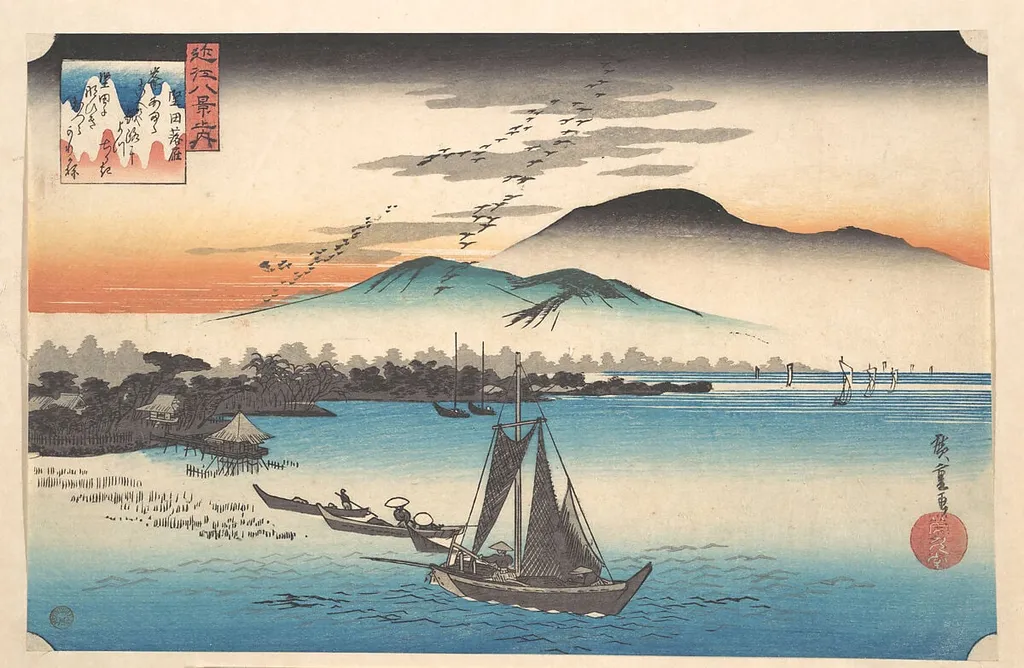
近江八景之内 堅田落雁|Geese Alighting at Katada, Lake Biwa is an ink print by the Romanticist artist Utagawa Hiroshige. It dates from 1835 and is held in the collection of the Metropolitan Museum of Art.
About this work
Overview
Unlike typical ukiyo-e subjects centered on urban culture, this work turns toward quiet natural beauty, emphasizing seasonal change and tranquil atmosphere.
Created around 1835 by Utagawa Hiroshige, this woodblock print is one of eight scenes from the series 'Eight Views of Ōmi,' which captures poetic landscapes around Lake Biwa. Unlike typical ukiyo-e subjects centered on urban culture, this work turns toward quiet natural beauty, emphasizing seasonal change and tranquil atmosphere. The print belongs to a broader tradition of landscape-focused prints that gained popularity in the late Edo period.
Subject & Meaning
The scene depicts migratory geese descending over Lake Biwa near Katada at dusk, a moment long associated in Japanese poetry with autumn’s passage and quiet solitude. The geese, barely more than ink strokes, suggest movement without detail, while the mist-shrouded hills and still water evoke a sense of transience. Human figures in the boats are minimized, reinforcing the landscape’s dominance and the viewer’s contemplative distance.
Technique & Style
Hiroshige employed subtle gradations of color—soft blues, muted oranges, and pale grays—to suggest the fading light and atmospheric haze. The composition uses horizontal bands of water, sky, and distant hills to create depth, while sparse brushwork in the geese and reeds contrasts with the flat, even tones of the background. The print’s quiet restraint reflects the ukiyo-e tradition’s capacity for emotional nuance through minimalism.
History & Provenance
The print was produced as part of a commercially published series, likely printed in multiple editions for a growing middle-class audience interested in travel and nature poetry. While no early ownership records are widely documented, surviving impressions are held in major museum collections, indicating its early and sustained recognition within the ukiyo-e canon.
Context
During the 1830s, Japanese artists increasingly turned to landscape themes as travel became more accessible and literary traditions like the 'Eight Views' gained cultural resonance. Hiroshige’s series responded to this trend, blending poetic references with topographical accuracy. The choice of Lake Biwa—a site of classical literary allusion—anchored the work in a shared cultural imagination beyond mere scenery.
Legacy
This print contributed to the international reputation of Japanese landscape prints in the 19th century, influencing Western artists such as Monet and Van Gogh. Within Japan, it helped redefine ukiyo-e as a vehicle for meditative naturalism rather than just entertainment. Its enduring presence in collections reflects its role as a quiet but pivotal example of Edo-period visual poetry.
Artist & collection
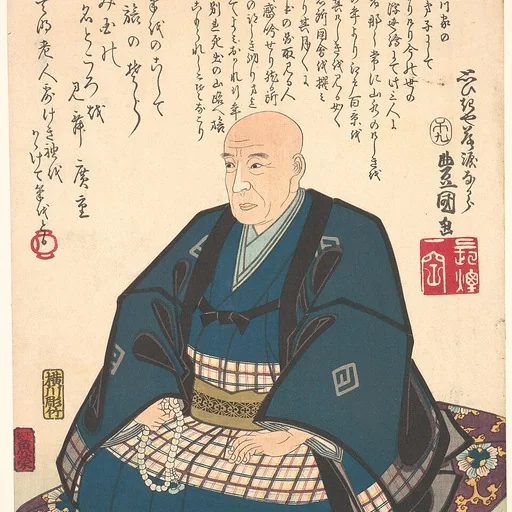
Artist
Utagawa Hiroshige (歌川 広重) or Andō Hiroshige (安藤 広重), born Andō Tokutarō (安藤 徳太郎; 1797 – 12 October 1858), was a Japanese ukiyo-e artist, considered the last great master of that tradition.

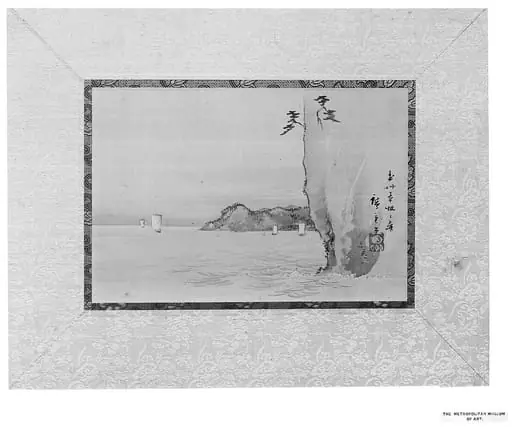
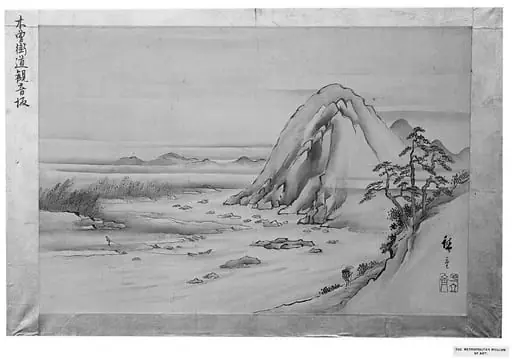
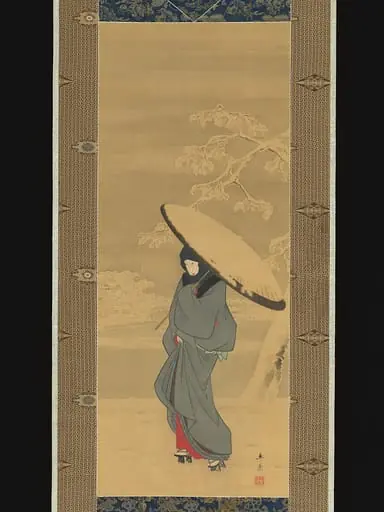
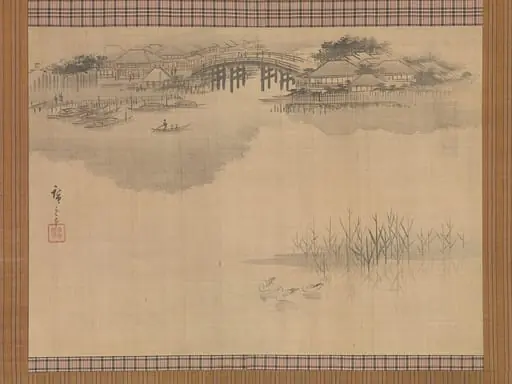
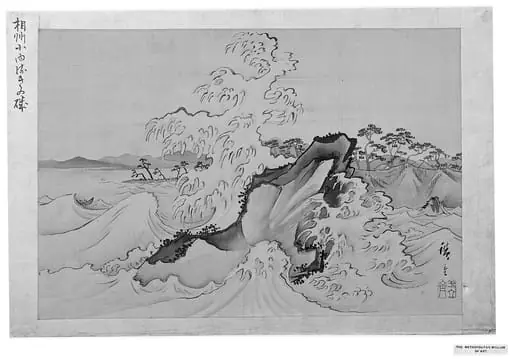
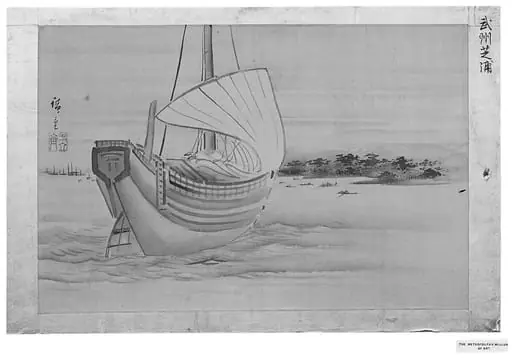
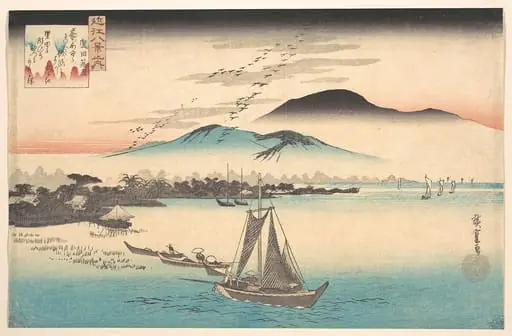 近江八景之内 堅田落雁|Geese Flying Down to Katada
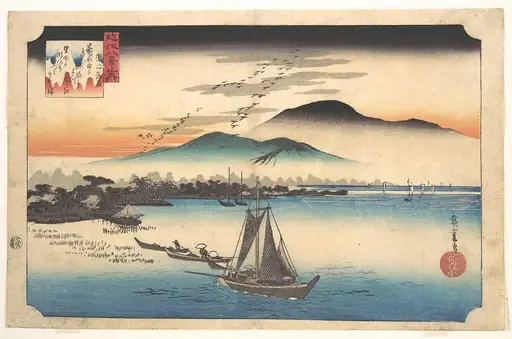 Katada no Rakugan|近江八景之内 堅田落雁|Returning Geese at Katada
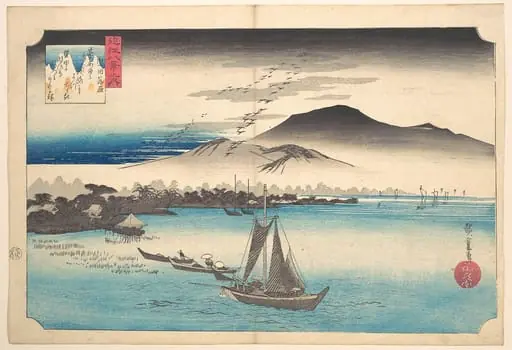 近江八景之内 堅田落雁|Returning Geese at Katada
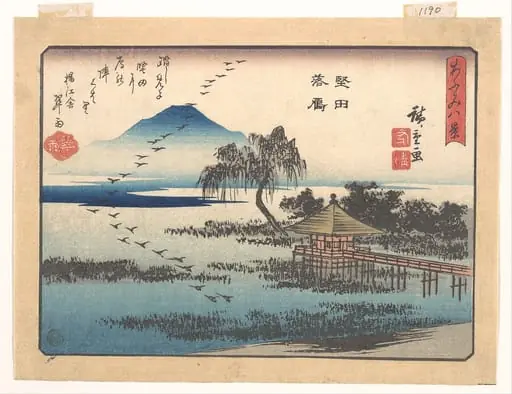 歌川広重画 「あふみ八景 堅田落雁」|Descending Geese at Katada, from the series Eight Views of Ōmi (Ōmi hakkei)
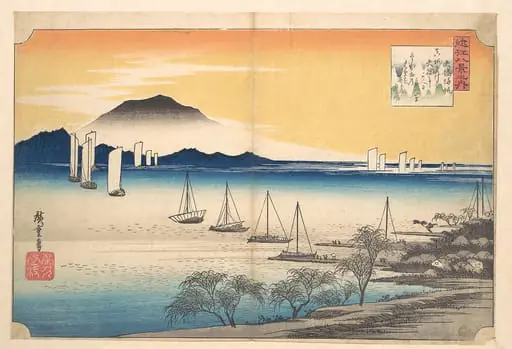 近江八景之内 矢橋帰帆|Sailing Boats Returning to Yabase, Lake Biwa
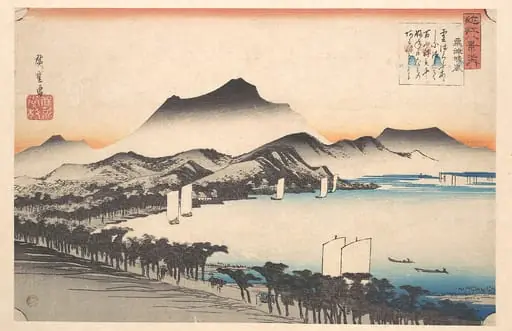 近江八景之内 粟津晴嵐|Clearing Weather at Awazu, Lake Biwa
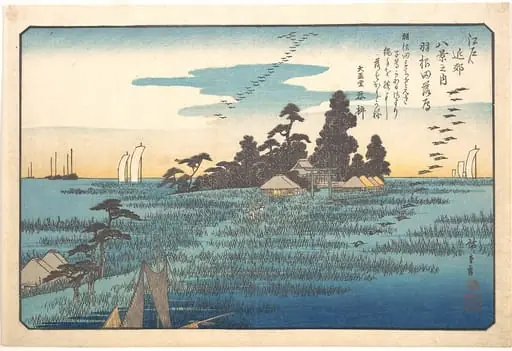 Haneda Rakugan|江戸近郊八景之内 羽根田落雁|Wild Geese at Haneda
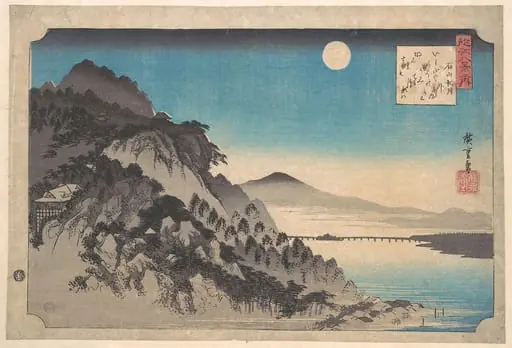 近江八景之内 石山秋月|The Autumn Moon at Ishiyama on Lake Biwa