Artwork
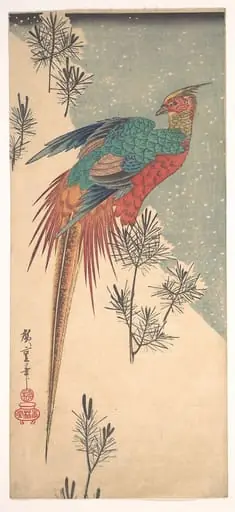
小松にきじ|Pheasant and Pine-trees on Snowy Hillside
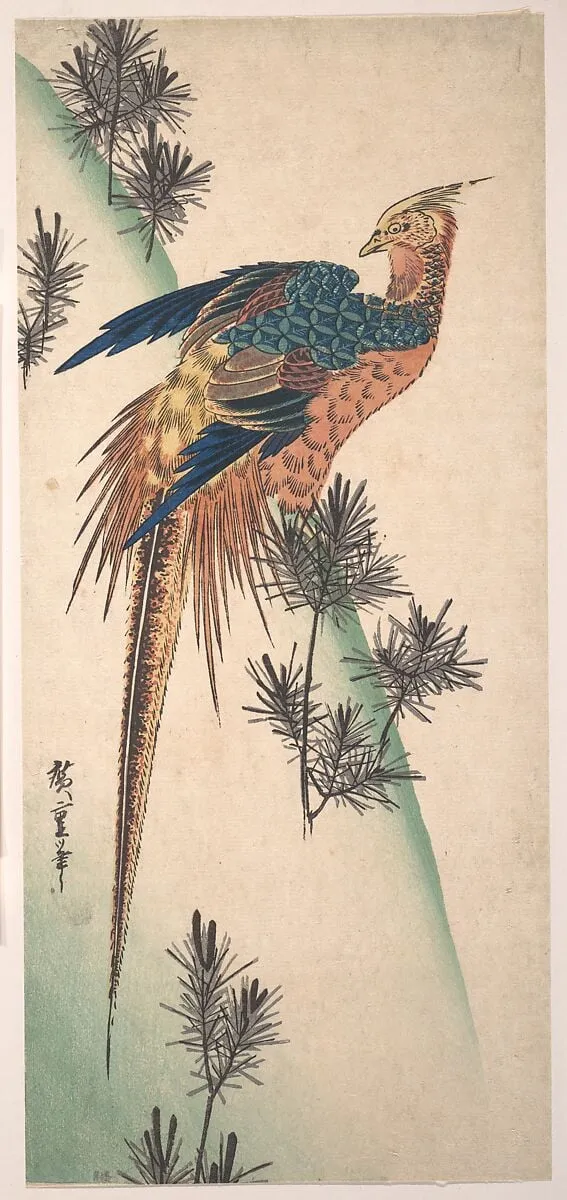
小松にきじ|Pheasant and Pine-trees on Snowy Hillside is an ink print by the Romanticist artist Utagawa Hiroshige. It dates from 1828 and is held in the collection of the Metropolitan Museum of Art.
About this work
Overview
The composition balances delicate detail with simplified forms, characteristic of his mature style during the Edo period.
Created in 1828, this woodblock print by Utagawa Hiroshige belongs to his series of landscape-oriented works that diverged from the more common urban and theatrical themes of ukiyo-e. Executed in ink and color on paper, it reflects his growing focus on nature and seasonal atmosphere. The composition balances delicate detail with simplified forms, characteristic of his mature style during the Edo period.
Subject & Meaning
A male pheasant, its plumage rendered in blue, gold, and brown, rests on a snow-laden pine branch, facing left with its long tail extended. The bird, a symbol of vigilance and natural grace in Japanese culture, is set against a quiet, wintry hillside. The scene evokes solitude and seasonal transition, inviting contemplation rather than narrative—a hallmark of Hiroshige’s poetic approach to nature.
Technique & Style
Hiroshige employed precise carving and layered color printing to achieve contrast between the vivid pheasant and the muted, flat expanse of snow. The pine trees are rendered with sharp, linear needles, standing out against soft, unmodulated backgrounds. Bold outlines and limited tonal variation emphasize form over depth, aligning with traditional ukiyo-e methods while enhancing the print’s quiet, atmospheric mood.
History & Provenance
This print was produced during Hiroshige’s early period of landscape experimentation, before his famous 'Fifty-Three Stations of the Tōkaidō.' It likely circulated as part of a private collection of nature-themed prints, popular among Edo’s literate middle class. Its survival in good condition suggests careful handling and enduring appreciation within Japanese print collecting circles.
Context
In early 19th-century Japan, ukiyo-e artists increasingly turned to nature as a subject, responding to growing interest in seasonal change and rural tranquility. Hiroshige’s focus on birds and winter landscapes aligned with literary traditions of waka poetry and the aesthetic of yūgen—mysterious depth. His work stood apart from contemporaries by prioritizing mood over human activity.
Legacy
This print exemplifies Hiroshige’s influence on later landscape traditions, both in Japan and in the West. His ability to convey atmosphere through minimal means inspired 19th-century European artists, including the Impressionists. Though not his most famous work, it remains a quiet testament to his skill in transforming natural observation into enduring visual poetry.
Artist & collection
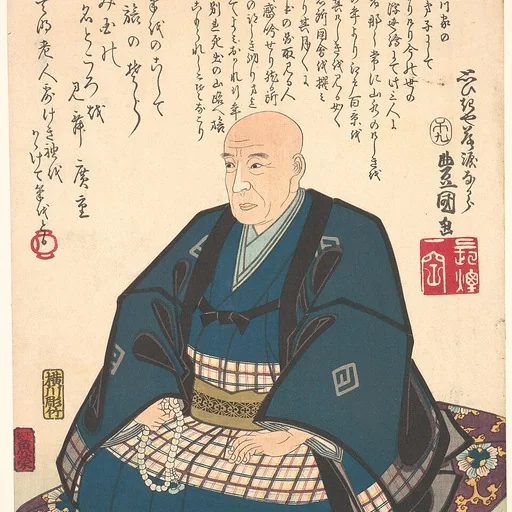
Artist
Utagawa Hiroshige (歌川 広重) or Andō Hiroshige (安藤 広重), born Andō Tokutarō (安藤 徳太郎; 1797 – 12 October 1858), was a Japanese ukiyo-e artist, considered the last great master of that tradition.