Artwork
歌川広重画 朝顔に鶏と傘|Rooster, Umbrella, and Morning Glories
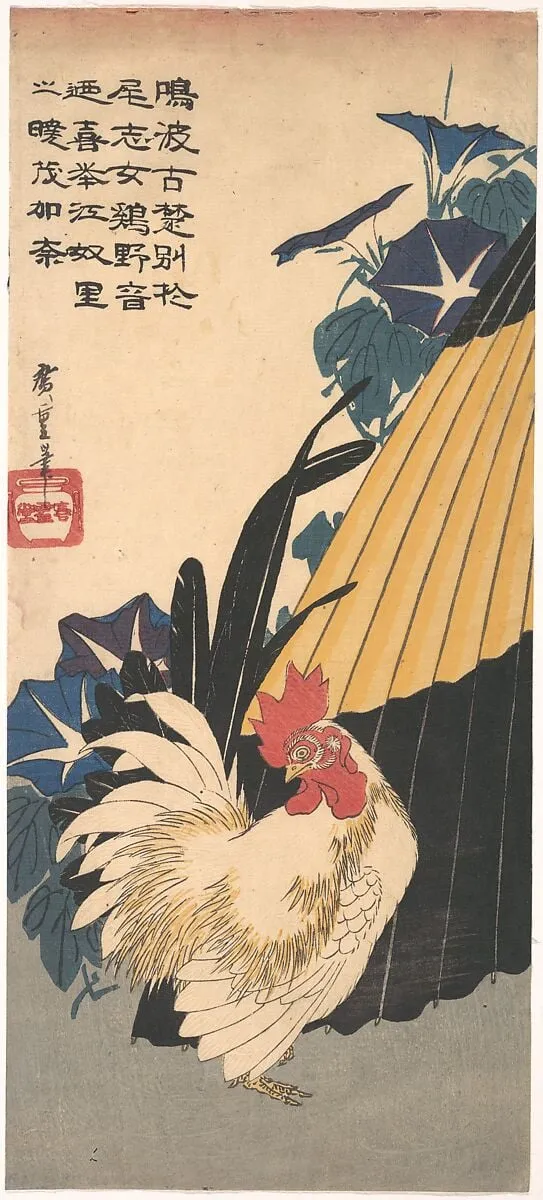
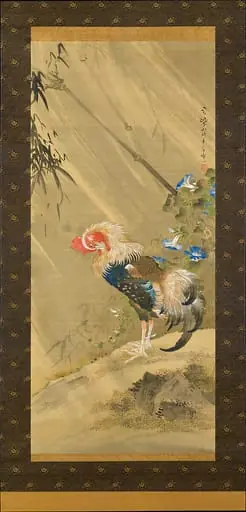
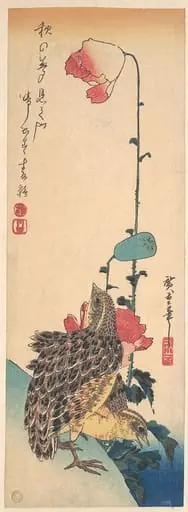
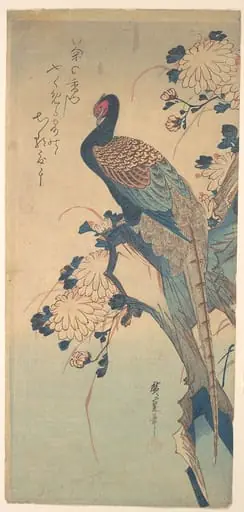
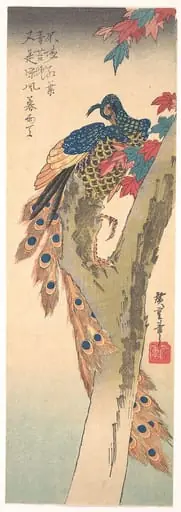
歌川広重画 朝顔に鶏と傘|Rooster, Umbrella, and Morning Glories is an ink print by the Romanticist artist Utagawa Hiroshige. It dates from 1830 and is held in the collection of the Metropolitan Museum of Art.
About this work
Overview
Rendered in ink and color on paper, it reflects Hiroshige’s interest in subtle, everyday scenes rather than bustling urban life.
Created around 1830 by Utagawa Hiroshige, this woodblock print combines natural elements with quiet domestic imagery. Unlike his famed landscape series, this work focuses on a solitary rooster, an open umbrella, and climbing morning glories. Rendered in ink and color on paper, it reflects Hiroshige’s interest in subtle, everyday scenes rather than bustling urban life. The print is part of The Metropolitan Museum of Art’s collection.
Subject & Meaning
The rooster, depicted with vivid red comb and white plumage, strides forward as if in motion, suggesting vigilance or the dawn. The bamboo umbrella, striped in yellow and black, stands upright beside it, its open form implying shelter or transition. Morning glories, their blue blooms and green vines entwining the handle, symbolize transience and renewal. Together, the elements evoke a quiet moment between nature and human presence, possibly tied to seasonal change.
Technique & Style
Hiroshige employs fine, precise lines to render the rooster’s feathers, creating texture through delicate cross-hatching. The umbrella’s bold stripes contrast with the soft gradations of the sky and foliage, balancing graphic clarity with atmospheric depth. Color is applied in flat, layered washes, typical of ukiyo-e, yet the composition avoids clutter, emphasizing spatial harmony. The vines climbing the umbrella suggest a living interaction between object and plant.
History & Provenance
The print dates to Hiroshige’s early career, before his landscape series gained widespread recognition. It likely circulated as a single-sheet print, common in Edo-period print culture. Its survival and eventual acquisition by The Metropolitan Museum of Art reflect its enduring appeal among collectors interested in non-traditional ukiyo-e subjects. No earlier provenance is documented beyond its inclusion in the museum’s holdings.
Context
During the 1830s, ukiyo-e artists increasingly turned to nature and seasonal themes beyond courtesans and actors. Hiroshige’s focus on flora and fauna aligned with a broader cultural appreciation for transient beauty, influenced by poetry and haiku. This print reflects a shift toward intimate, contemplative imagery, resonating with urban audiences seeking solace in nature’s quiet rhythms.
Legacy
Though less known than his landscapes, this print exemplifies Hiroshige’s ability to infuse ordinary scenes with poetic stillness. Its emphasis on natural forms and subtle composition influenced later generations of Japanese printmakers and Western artists drawn to Japanese aesthetics. The work remains a quiet testament to the expressive potential of everyday subjects in Edo-period art.
Artist & collection
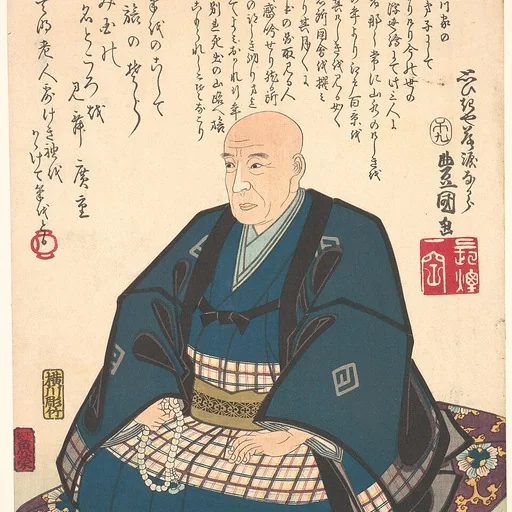
Artist
Utagawa Hiroshige (歌川 広重) or Andō Hiroshige (安藤 広重), born Andō Tokutarō (安藤 徳太郎; 1797 – 12 October 1858), was a Japanese ukiyo-e artist, considered the last great master of that tradition.