Artwork
Shinshu-sarashina tagoto no tsuki|本朝名所 信州更科田毎之月|Reflections of the Moon in the Rice Fields of Sarashina in Shinshu
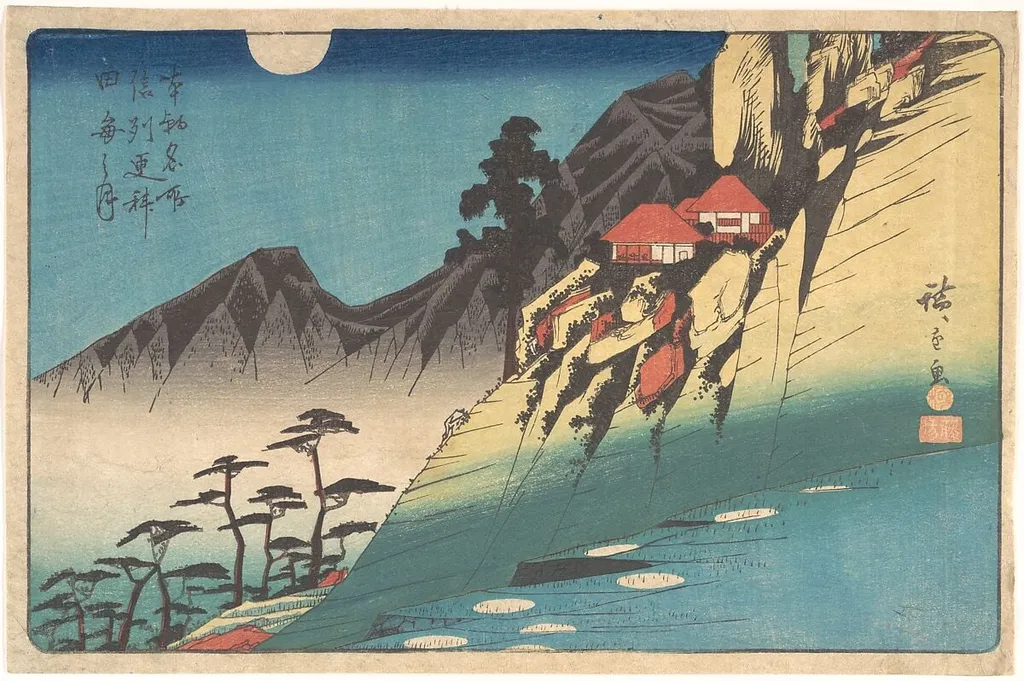
Shinshu-sarashina tagoto no tsuki|本朝名所 信州更科田毎之月|Reflections of the Moon in the Rice Fields of Sarashina in Shinshu is an ink print by the Romanticist artist Utagawa Hiroshige. It dates from 1832 and is held in the collection of the Metropolitan Museum of Art.
About this work
Overview
Created circa 1832 by Utagawa Hiroshige, this woodblock print belongs to the ukiyo-e tradition of the Edo period. It portrays a moonlit night over the rice paddies of Sarashina in the Shinshu region, offering a calm, nocturnal landscape that contrasts with the genre’s more common urban scenes.
Subject & Meaning
The composition centers on a low, luminous moon that illuminates a dark mountain and spreads a cool blue glow across the water and fields. Small boats drift on the still surface, while a cluster of trees and a modest village with red‑tiled roofs sit at the water’s edge, suggesting a serene, agricultural life under the night sky.
Technique & Style
Hiroshige employs precise line work to convey wind‑ruffled foliage and rippling water, while the palette combines muted blues, greens, and reds that stand out against the dark background. The use of bold yet restrained color blocks and fine cross‑hatching creates depth and atmospheric perspective typical of his landscape series.
History & Provenance
The print is part of Hiroshige’s broader series of rural vistas, produced during a period when he turned his attention from bustling cityscapes to Japan’s countryside. It was issued as a single sheet by a Edo‑based publisher and later entered museum collections as an example of early 19th‑century Japanese printmaking.
Artist & collection
Artist
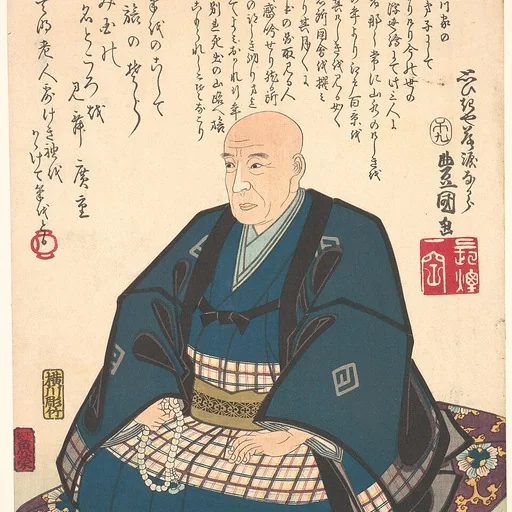
Utagawa Hiroshige (歌川 広重) or Andō Hiroshige (安藤 広重), born Andō Tokutarō (安藤 徳太郎; 1797 – 12 October 1858), was a Japanese ukiyo-e artist, considered the last great master of that tradition.

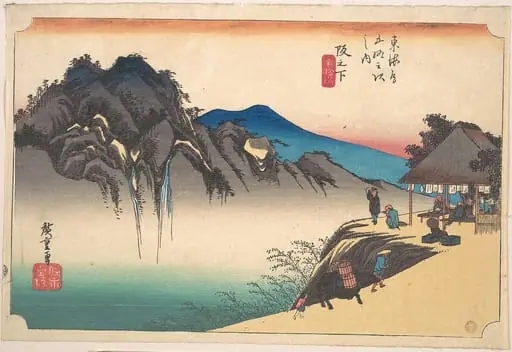 東海道五十三次之内 阪之下 筆捨嶺|Saka-no-shita, Fude-sute Mine
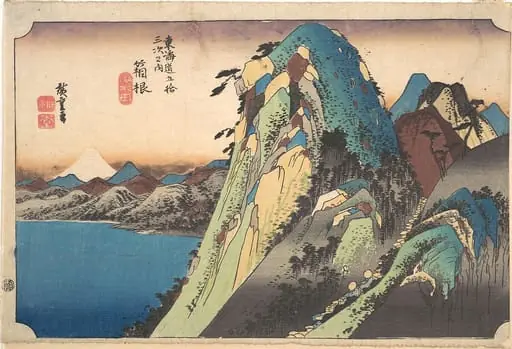 東海道五十三次之内 箱根 湖水図|Hakone; Kosui
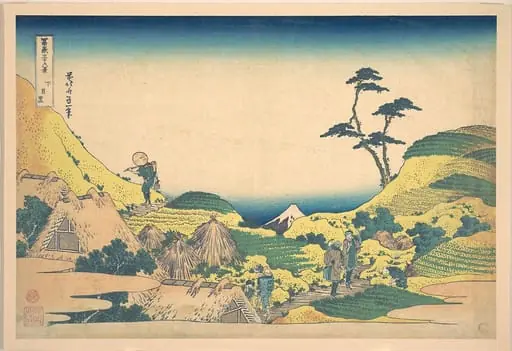 冨嶽三十六景 下目黒|Lower Meguro (Shimo Meguro), from the series Thirty-six Views of Mount Fuji (Fugaku sanjūrokkei)
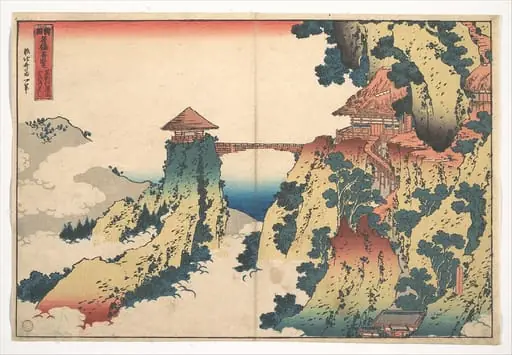 諸國名橋奇覧 足利行道山くものかけはし|The Hanging-cloud Bridge at Mount Gyōdō near Ashikaga (Ashikaga Gyōdōzan kumo no kakehashi), from the series Remarkable Views of Bridges in Various Provinces (Shokoku meikyō kiran)
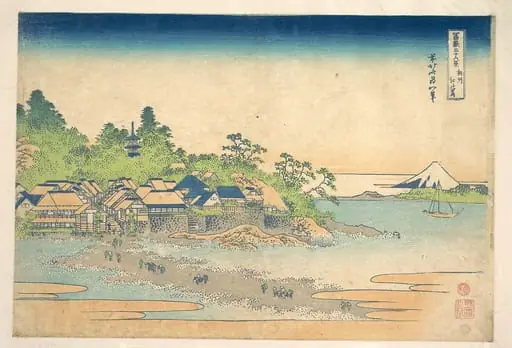 冨嶽三十六景 相州江の島|Enoshima in Sagami Province (Sōshū Enoshima), from the series Thirty-six Views of Mount Fuji (Fugaku sanjūrokkei)
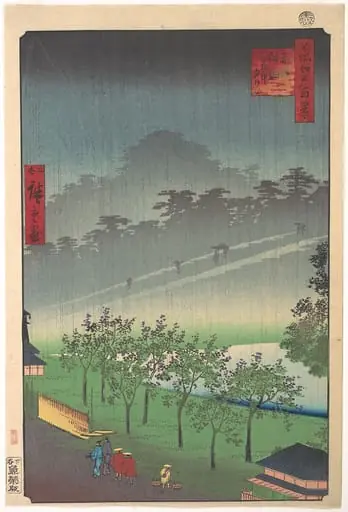 Untitled
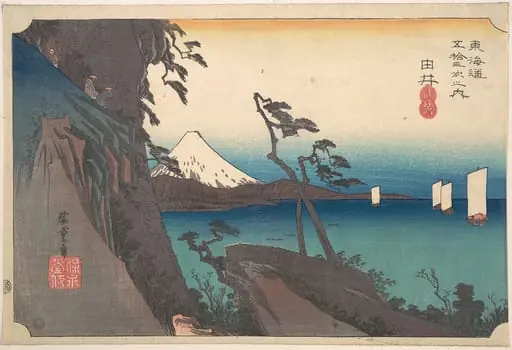 東海道五十三次之内 由井 薩埵嶺|Satta Peak at Yui