Artwork
東海道五十三次之内 阪之下 筆捨嶺|Saka-no-shita, Fude-sute Mine
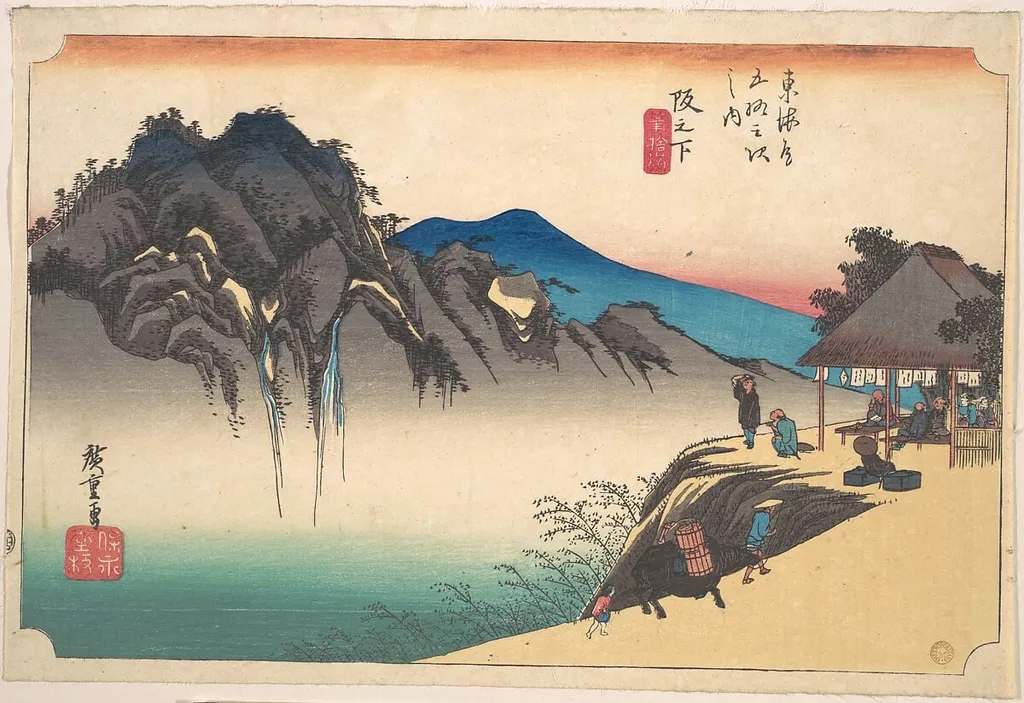
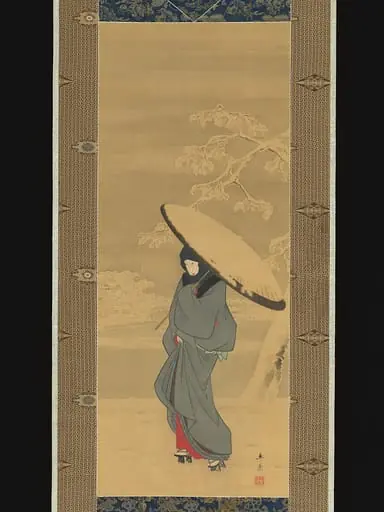
東海道五十三次之内 阪之下 筆捨嶺|Saka-no-shita, Fude-sute Mine is an ink print by the Romanticist artist Utagawa Hiroshige. It dates from 1834 and is held in the collection of the Metropolitan Museum of Art.
About this work
Overview
This woodblock print, Saka-no-shita, Fude-sute Mine, is part of Utagawa Hiroshige's series The Fifty-three Stations of the Tōkaidō, created around 1834. It depicts a mountain pass along Japan's main eastern road.
Subject & Meaning
The print shows travelers resting near a wooden hut at a mountain pass, where a steep path and waterfall are visible. The location's name, Fude-sute Mine, refers to a discarded writing brush. The image combines scenic detail with poetic observation, capturing the natural and cultural landscape.
Technique & Style
The print was made using woodblock technique, with designs carved into wood and ink applied to paper. Sharp lines convey texture, such as tree bark and clothing folds. Layered lines build shadows, creating depth in the misty mountain scene.
Artist & collection
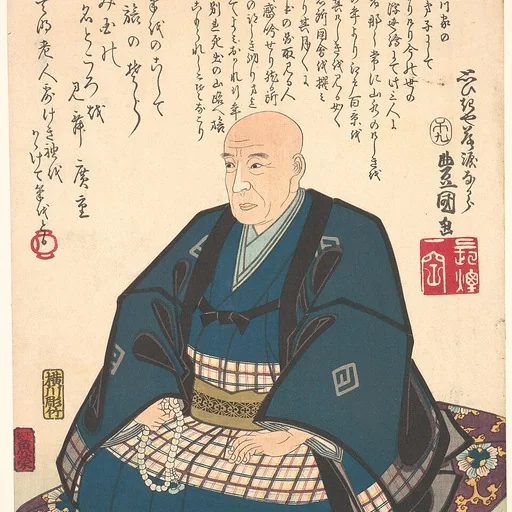
Artist
Utagawa Hiroshige (歌川 広重) or Andō Hiroshige (安藤 広重), born Andō Tokutarō (安藤 徳太郎; 1797 – 12 October 1858), was a Japanese ukiyo-e artist, considered the last great master of that tradition.

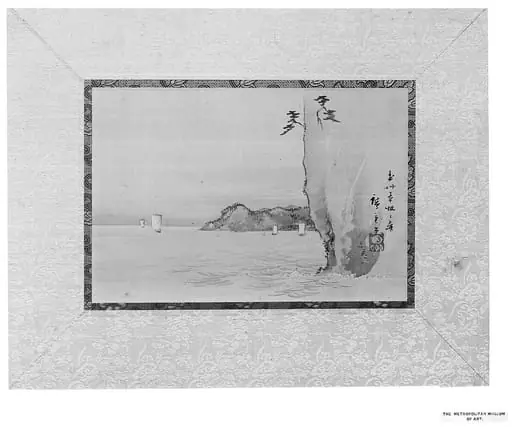
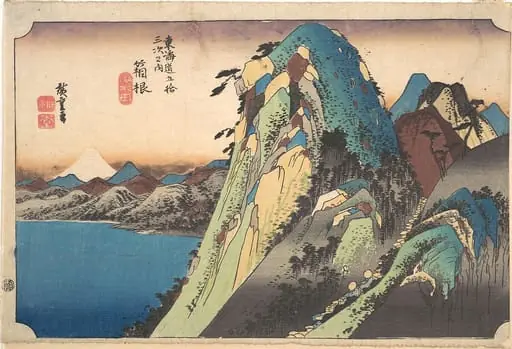 東海道五十三次之内 箱根 湖水図|Hakone; Kosui
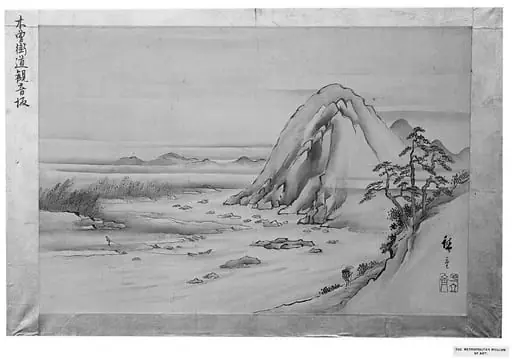
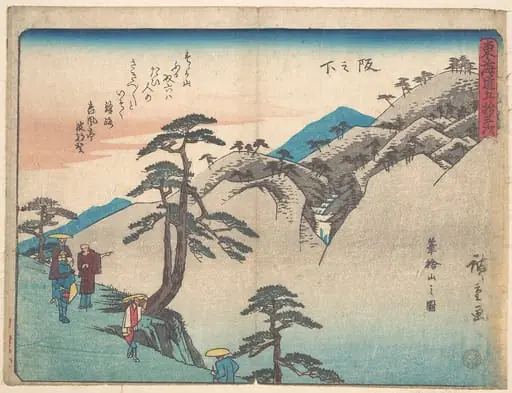 東海道五十三次 坂下|Saka-no-shita
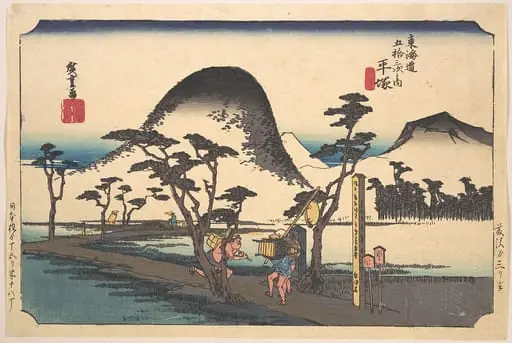 東海道五十三次之内 平塚 縄手道|Hiratsuka, Nawate Do
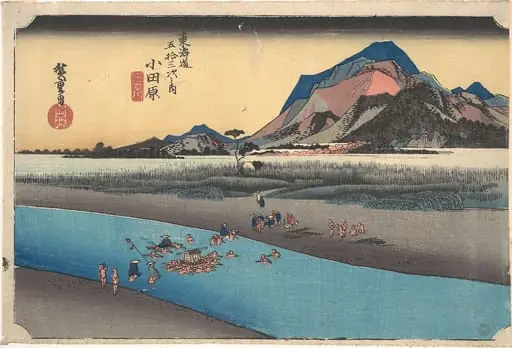 東海道五十三次之内 小田原 酒匂川|Odawara; Sakogawa
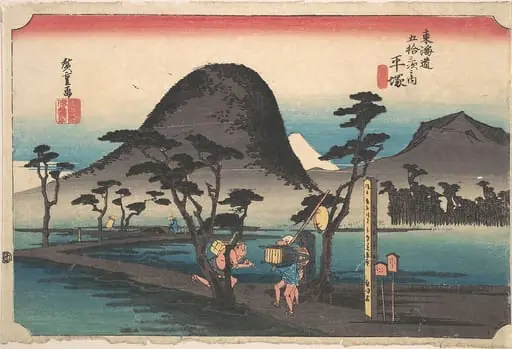 東海道五十三次之内 平塚 縄手道|Hiratsuka; Nawate Do
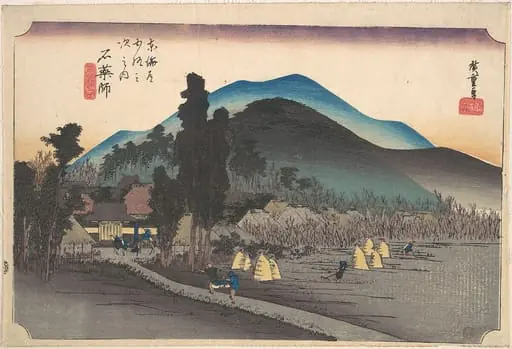 東海道五十三次之内 石薬師 石薬師寺|Ishiyakushi, Ishiyakushi Ji
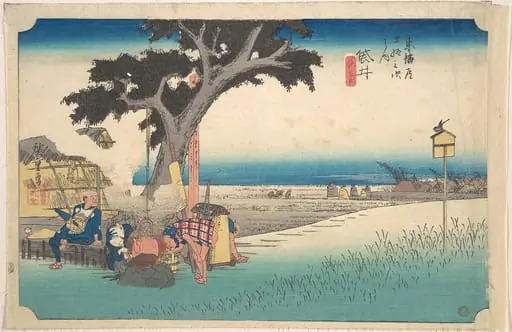 東海道五十三次之内 袋井 出茶屋の図|Fukuroi; De Chaya
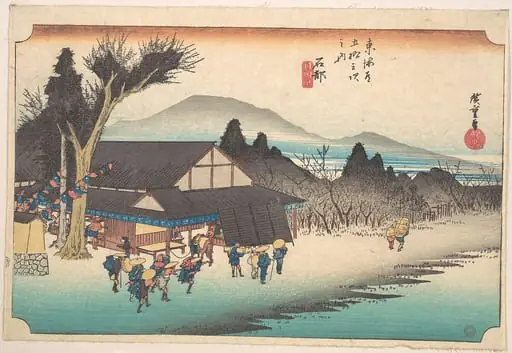 東海道五十三次之内 石部 目川の里|Ishibe, Megawa Sato
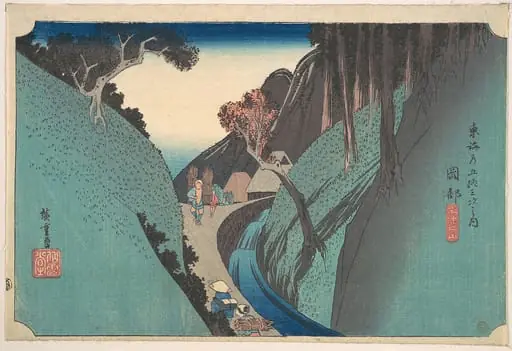 東海道五十三次之内 岡部 宇津の山|Okabe; Utsu no Yama
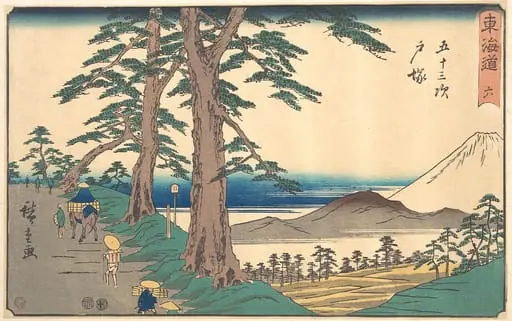 東海道五十三次 戸塚|Totsuka