Artwork
東海道五十三次・庄野 白雨|Sudden Shower at Shōno, from the series Fifty-three Stations of the Tōkaidō
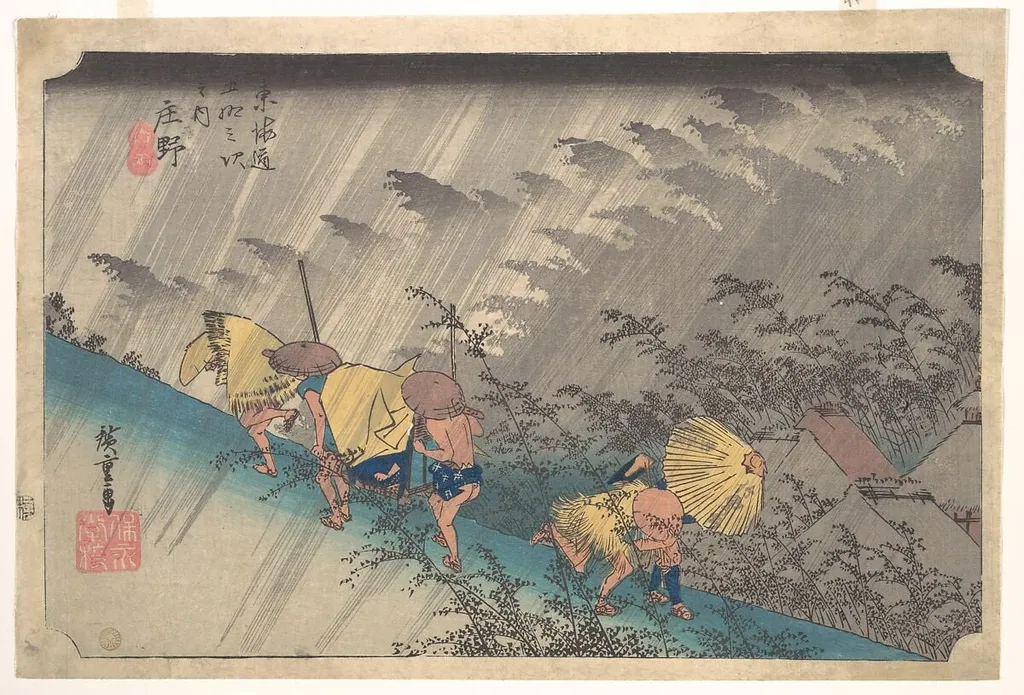
東海道五十三次・庄野 白雨|Sudden Shower at Shōno, from the series Fifty-three Stations of the Tōkaidō is an ink print by the Romanticist artist Utagawa Hiroshige. It dates from 1834 and is held in the collection of the Metropolitan Museum of Art.
About this work
Overview
Unlike many ukiyo-e works focused on urban life, Hiroshige turned his attention to the quiet drama of the natural world and the people moving through it.
Created in 1834 by Utagawa Hiroshige, this woodblock print is part of the series Fifty-three Stations of the Tōkaidō, which documents the journey along Japan’s main coastal road between Edo and Kyoto. Rendered in ink and color on paper, the horizontal composition captures a fleeting moment of nature’s intervention on a busy travel route. Unlike many ukiyo-e works focused on urban life, Hiroshige turned his attention to the quiet drama of the natural world and the people moving through it.
Subject & Meaning
The scene portrays four travelers caught in a sudden rainstorm near the station of Shōno. Two men huddle under yellow umbrellas, one carrying a staff, the other a bundle; a woman in a pink kimono struggles with a large, torn umbrella. Their postures convey vulnerability to the elements, emphasizing the physical toll of travel. The image reflects the everyday realities of the road, transforming a common weather event into a quiet meditation on endurance and transience.
Technique & Style
Hiroshige employed bold, simplified forms and flat areas of color to evoke mood rather than detail. Rain is suggested by rapid, diagonal lines that cut across the composition, creating a sense of motion and chill. The dark, wet landscape behind the figures is rendered with minimal brushwork, enhancing the feeling of atmospheric pressure. The use of negative space and asymmetry draws the eye toward the figures, while the lack of perspective deepens the print’s emotional immediacy.
History & Provenance
The print was produced during the early 1830s as part of Hiroshige’s most celebrated series, commissioned for mass distribution among travelers and urban residents. Woodblock prints like this were affordable and widely circulated, making landscape imagery accessible beyond elite circles. Its popularity helped establish Hiroshige as a leading figure in ukiyo-e, shifting public taste toward serene, nature-centered scenes over traditional depictions of courtesans and actors.
Context
The Tōkaidō was the most important travel route in Edo-period Japan, used by merchants, pilgrims, and daimyō processions. Stations like Shōno served as rest stops, and their depiction in prints catered to a growing interest in domestic tourism. Hiroshige’s focus on weather and terrain reflected a broader cultural appreciation for seasonal change and the impermanence of human activity within nature’s rhythms.
Legacy
This print, along with others in the series, influenced later Western artists, including Impressionists and Post-Impressionists, who admired its compositional clarity and emotional subtlety. It helped redefine landscape as a subject worthy of artistic focus in Japanese printmaking. Today, it remains a key example of how everyday moments, rendered with restraint, can convey profound atmosphere and human presence.
Artist & collection
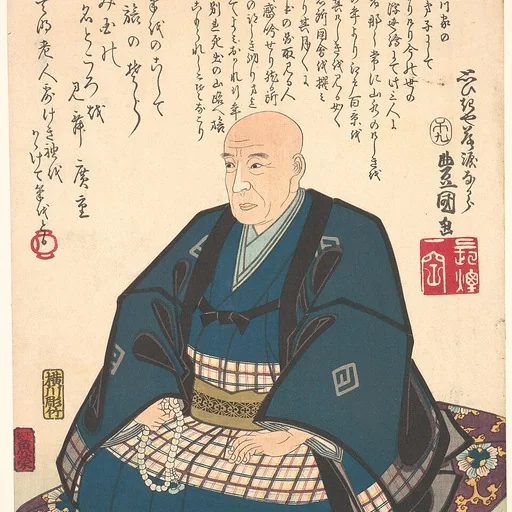
Artist
Utagawa Hiroshige (歌川 広重) or Andō Hiroshige (安藤 広重), born Andō Tokutarō (安藤 徳太郎; 1797 – 12 October 1858), was a Japanese ukiyo-e artist, considered the last great master of that tradition.


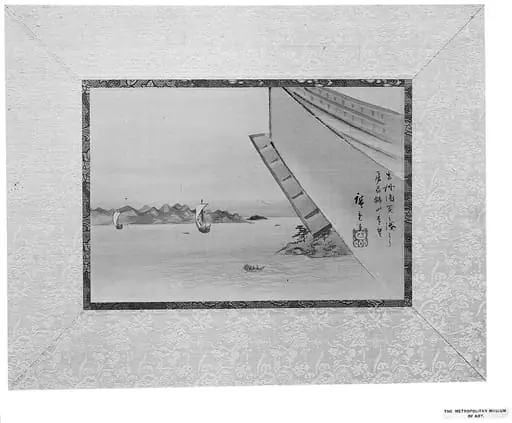
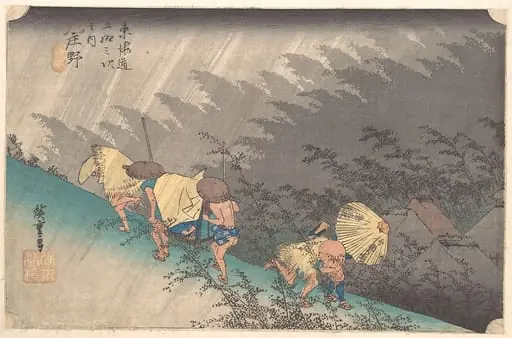 東海道五十三次之内 庄野 白雨|Shower at Shōno
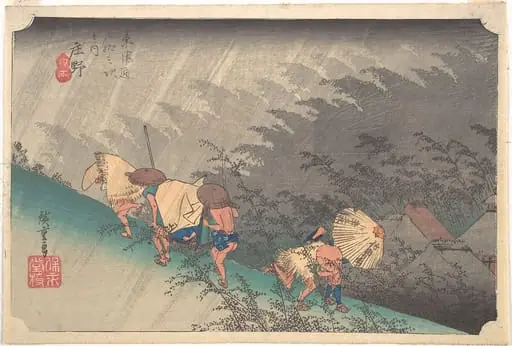 東海道五十三次之内 庄野 白雨|Sudden Shower in Shōno
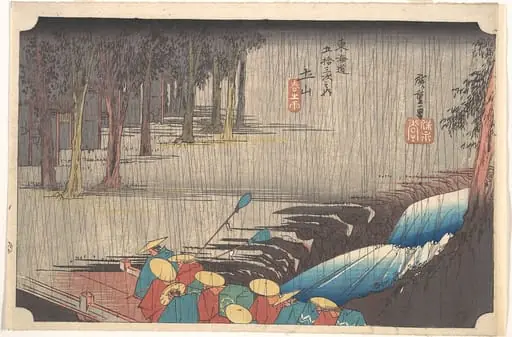 東海道五十三次 土山 春の雨|Spring Rain at Tsuchiyama, from the series Fifty-three Stations of the Tōkaidō
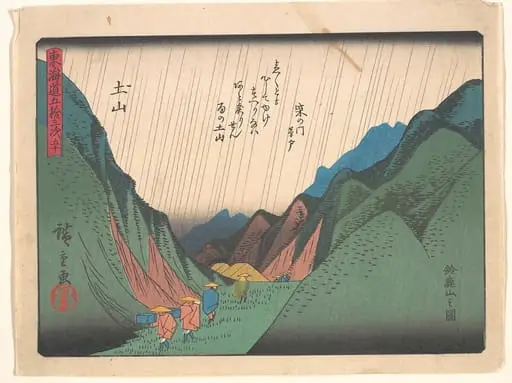 東海道五十三次 土山|Tsuchiyama, from the series The Fifty-three Stations of the Tōkaidō Road
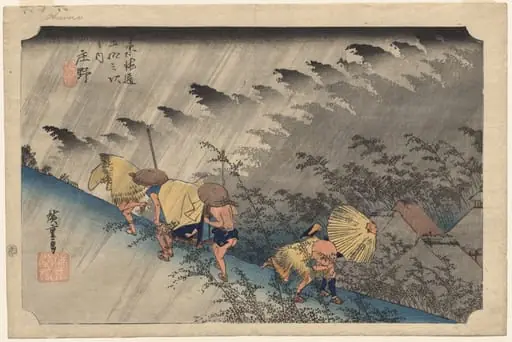 Driving Rain at Shōno, from Fifty-Three Stations of the Tokaidō
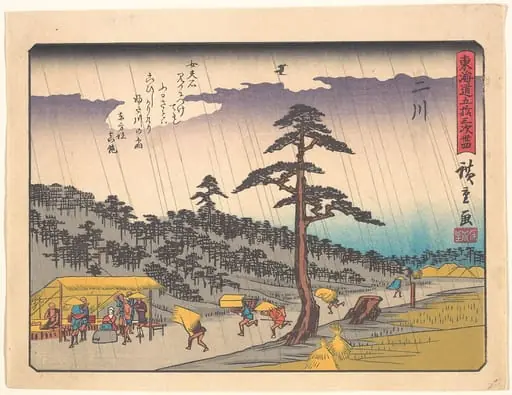 東海道五十三次 二川|Futakawa, from the series The Fifty-three Stations of the Tōkaidō Road
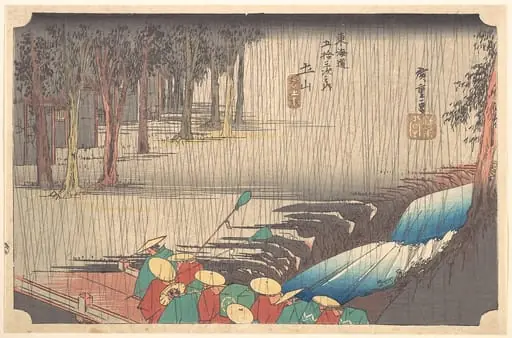 Tsuchiyama Haru no Ame|東海道五十三次之内 土山 春の雨|Spring Rain at Tsuchiyama (50th Station of the Tōkaidō)
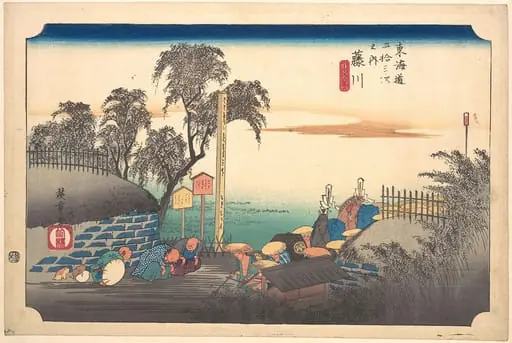 東海道五十三次之内 藤川 棒鼻の図|Station Thirty-Eight: Fujikawa, Scene at the Border, from the Fifty-Three Stations of the Tokaido
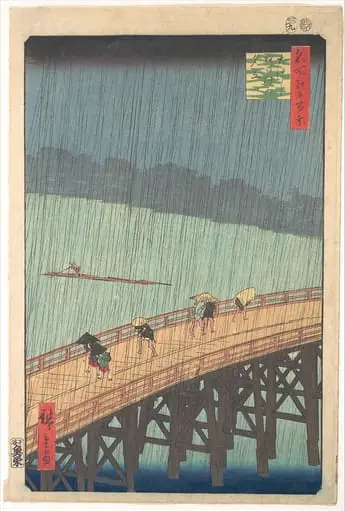 名所江戶百景 大はしあたけの夕立|Sudden Shower over Shin-Ōhashi Bridge and Atake (Ōhashi Atake no yūdachi), from the series One Hundred Famous Views of Edo (Meisho Edo hyakkei)