Artwork
Tsuchiyama Haru no Ame|東海道五十三次之内 土山 春の雨|Spring Rain at Tsuchiyama (50th Station of the Tōkaidō)
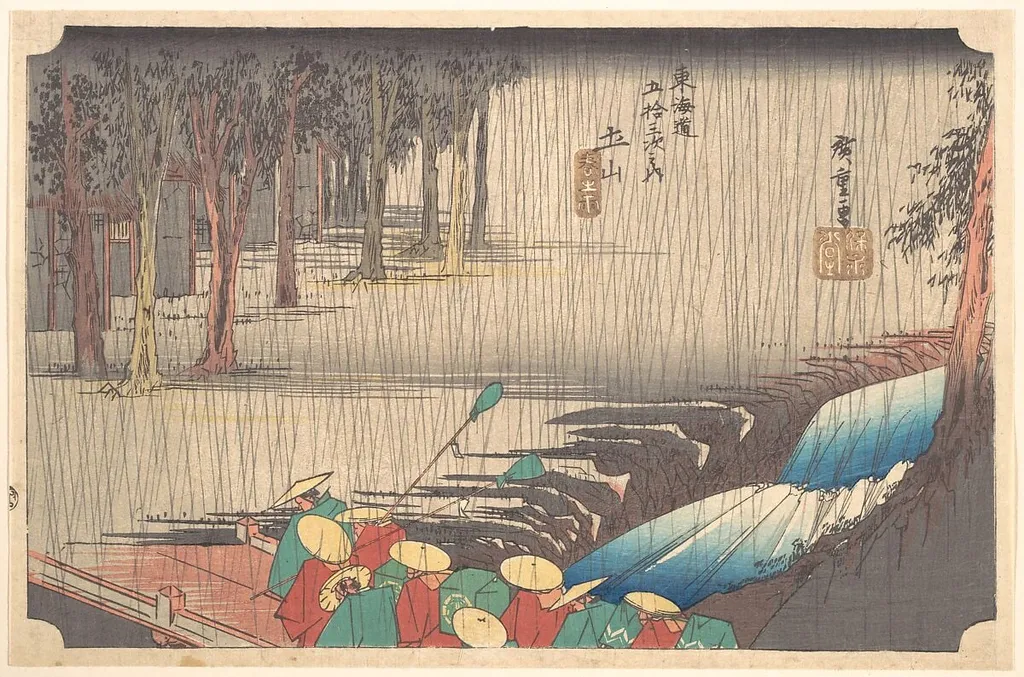
Tsuchiyama Haru no Ame|東海道五十三次之内 土山 春の雨|Spring Rain at Tsuchiyama (50th Station of the Tōkaidō) is an ink print by the Romanticist artist Utagawa Hiroshige. It dates from 1828 and is held in the collection of the Metropolitan Museum of Art.
About this work
Overview
Created in 1828 by Utagawa Hiroshige, this woodblock print is the fiftieth in the series *The Fifty-three Stations of the Tōkaidō*. It captures a quiet moment along the historic road connecting Edo and Kyoto, rendered in ink and color on paper. Unlike many ukiyo-e works centered on city life, Hiroshige turned his focus to the landscape and the rhythms of travel, emphasizing mood over narrative.
Subject & Meaning
Figures in simple robes, their hats damp, shelter together near the structure, suggesting a pause in journey rather than a destination.
The scene shows travelers pausing under a red wooden bridge as spring rain falls gently. Figures in simple robes, their hats damp, shelter together near the structure, suggesting a pause in journey rather than a destination. The quiet intimacy of the moment reflects the contemplative nature of travel in Edo-period Japan, where rest stops offered respite and reflection amid the demands of the road.
Technique & Style
Hiroshige employed subtle gradations of color and soft, blurred lines to suggest falling rain and mist. The muted palette—soft greens, grays, and the occasional red of clothing and bridge—creates a hushed, atmospheric tone. Woodblock carving allowed for precise yet delicate rendering of textures: wet stone, dripping foliage, and the faint script on a distant wall, all contributing to a sense of quiet realism.
History & Provenance
The print was produced during the early phase of Hiroshige’s career, shortly after the first edition of *The Fifty-three Stations of the Tōkaidō* was published. It quickly gained popularity among travelers and urban dwellers who admired its evocative depiction of the countryside. Original impressions were widely distributed, and surviving examples remain among the most collected ukiyo-e prints from the period.
Context
The Tōkaidō was the most traveled route in Japan, lined with post stations that served merchants, pilgrims, and officials. Hiroshige’s series documented these stops with poetic precision, aligning with a growing Edo-period interest in domestic travel and seasonal change. His focus on weather and landscape reflected broader cultural appreciation for nature’s transient beauty, a theme rooted in classical Japanese aesthetics.
Legacy
Hiroshige’s approach influenced later generations of artists, both in Japan and abroad, particularly in the way he conveyed atmosphere through composition and color. His prints helped shift ukiyo-e from portraiture and theater toward landscape as a serious subject. The series remains a touchstone for understanding how everyday travel and nature were rendered with emotional depth in 19th-century Japanese art.
Artist & collection
Artist
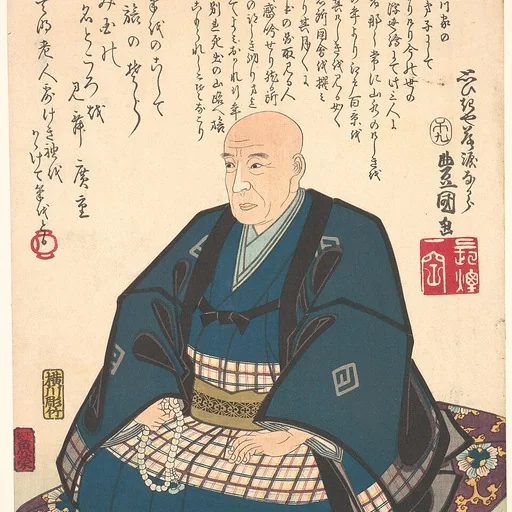
Utagawa Hiroshige (歌川 広重) or Andō Hiroshige (安藤 広重), born Andō Tokutarō (安藤 徳太郎; 1797 – 12 October 1858), was a Japanese ukiyo-e artist, considered the last great master of that tradition.

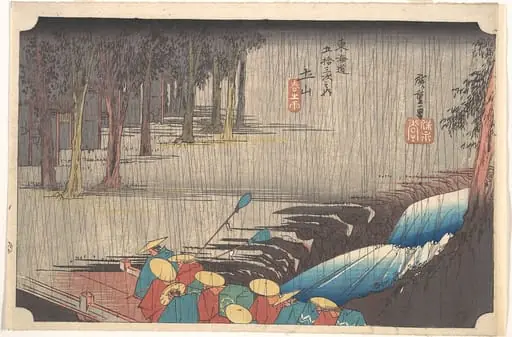 東海道五十三次 土山 春の雨|Spring Rain at Tsuchiyama, from the series Fifty-three Stations of the Tōkaidō
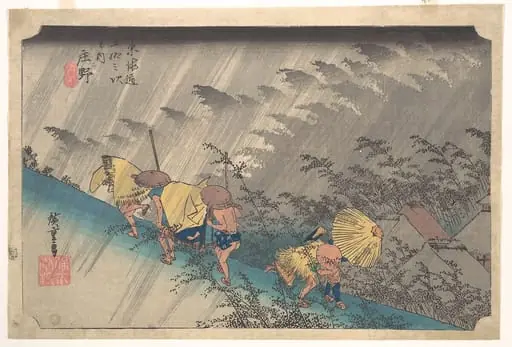 東海道五十三次・庄野 白雨|Sudden Shower at Shōno, from the series Fifty-three Stations of the Tōkaidō
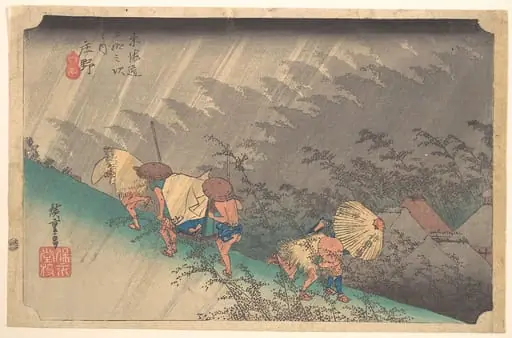 Shōno Hakuu|東海道五十三次之内 庄野 白雨|White Rain at Shōno
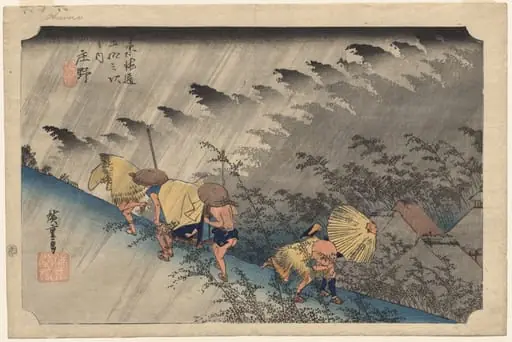 Driving Rain at Shōno, from Fifty-Three Stations of the Tokaidō
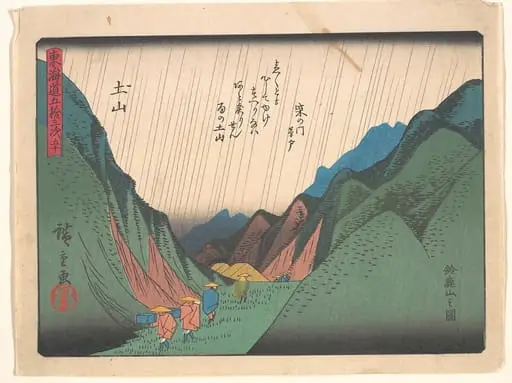 東海道五十三次 土山|Tsuchiyama, from the series The Fifty-three Stations of the Tōkaidō Road
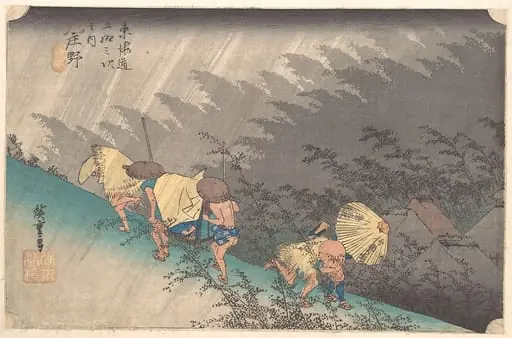 東海道五十三次之内 庄野 白雨|Shower at Shōno
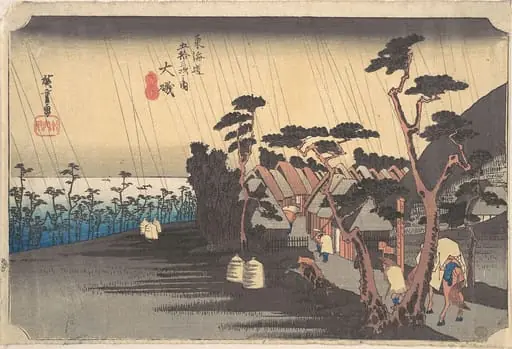 東海道五十三次之内 大磯 虎ケ雨|Tiger Rain at Ōiso Station
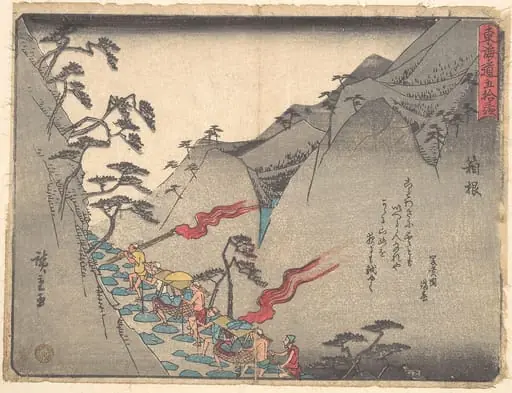 東海道五十三次 箱根|Hakone
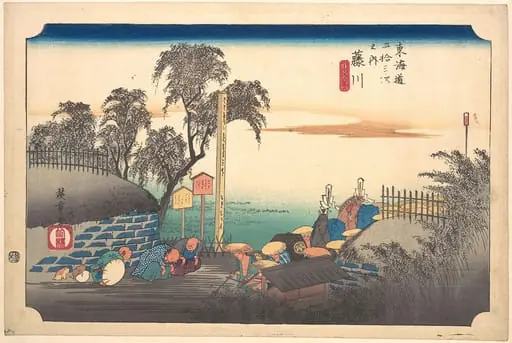 東海道五十三次之内 藤川 棒鼻の図|Station Thirty-Eight: Fujikawa, Scene at the Border, from the Fifty-Three Stations of the Tokaido
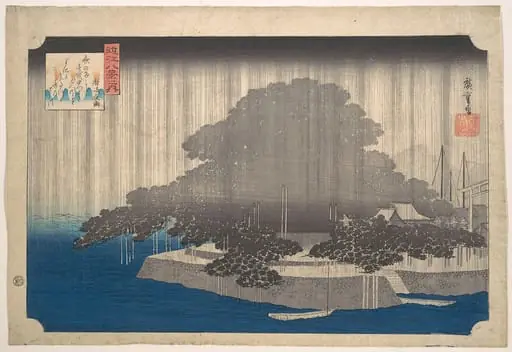 近江八景之内 唐崎夜雨|Evening Rain on the Karasaki Pine