Artwork
東海道五十三次之内 藤川 棒鼻の図|Station Thirty-Eight: Fujikawa, Scene at the Border, from the Fifty-Three Stations of the Tokaido
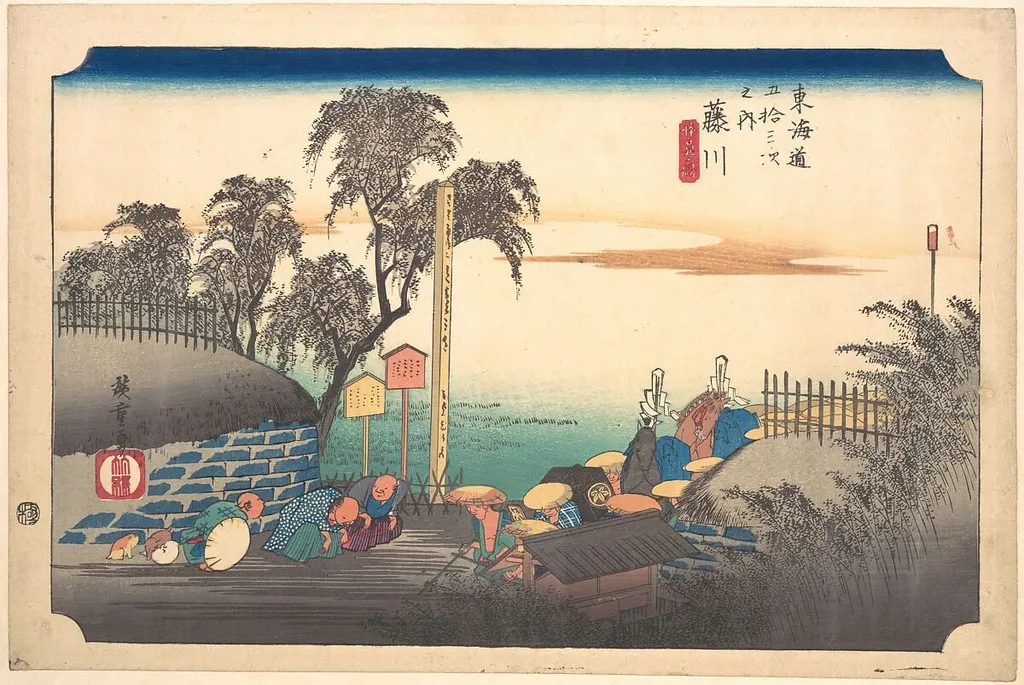
東海道五十三次之内 藤川 棒鼻の図|Station Thirty-Eight: Fujikawa, Scene at the Border, from the Fifty-Three Stations of the Tokaido is an ink print by the Romanticist artist Utagawa Hiroshige. It dates from 1834 and is held in the collection of the Metropolitan Museum of Art.
About this work
Overview
Created around 1834 by Utagawa Hiroshige, this woodblock print is the thirty-eighth station in the series *The Fifty-Three Stations of the Tōkaidō*.
Created around 1834 by Utagawa Hiroshige, this woodblock print is the thirty-eighth station in the series *The Fifty-Three Stations of the Tōkaidō*. It depicts a quiet stretch of the Tōkaidō, the primary road linking Edo and Kyoto during the Edo period. Unlike many ukiyo-e works centered on urban entertainment, this series captures the rhythms of travel and the natural landscape, offering a contemplative view of Japan’s countryside.
Subject & Meaning
The scene portrays travelers resting beside a river, sheltered under umbrellas, their postures suggesting fatigue and quiet resignation. A small hut, a few animals, and sparse trees frame the setting, emphasizing solitude and the passage of time. The border-like location of Fujikawa hints at transition—both geographic and emotional—between destinations. The image conveys the dignity of ordinary journeys rather than grand spectacle.
Technique & Style
Hiroshige employed fine, restrained lines and flat areas of color typical of ukiyo-e woodblock printing. The palette is subdued yet deliberate, with soft washes of blue, green, and ochre suggesting atmospheric light. Compositionally, the horizontal format and low horizon line draw the eye along the path, reinforcing the sense of a journey unfolding. The lack of dramatic detail invites quiet observation over narrative excitement.
History & Provenance
The print was produced during the early 1830s as part of Hiroshige’s first major landscape series, commissioned by the publisher Hoeidō. It was widely distributed as a popular travel souvenir, reflecting growing interest in pilgrimage and tourism among Japan’s urban middle class. Surviving impressions are held in major collections worldwide, including the British Museum and the Metropolitan Museum of Art.
Context
During the Edo period, the Tōkaidō was a vital artery for commerce, communication, and pilgrimage. While official travelers moved swiftly, commoners often paused at stations like Fujikawa to rest. Hiroshige’s series responded to this cultural moment, transforming functional waystations into poetic vignettes. His focus on weather, light, and quiet human activity marked a shift from traditional ukiyo-e themes of courtesans and actors.
Legacy
Hiroshige’s *Fifty-Three Stations* influenced later generations of artists, including Western Impressionists who admired its compositional clarity and atmospheric tone. The series helped establish landscape as a legitimate subject in Japanese printmaking, elevating the genre beyond decorative art. Its enduring presence in global collections attests to its quiet resonance across cultures and centuries.
Artist & collection
Artist
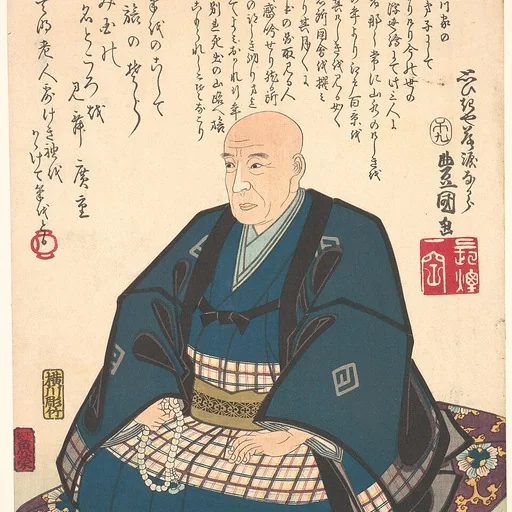
Utagawa Hiroshige (歌川 広重) or Andō Hiroshige (安藤 広重), born Andō Tokutarō (安藤 徳太郎; 1797 – 12 October 1858), was a Japanese ukiyo-e artist, considered the last great master of that tradition.

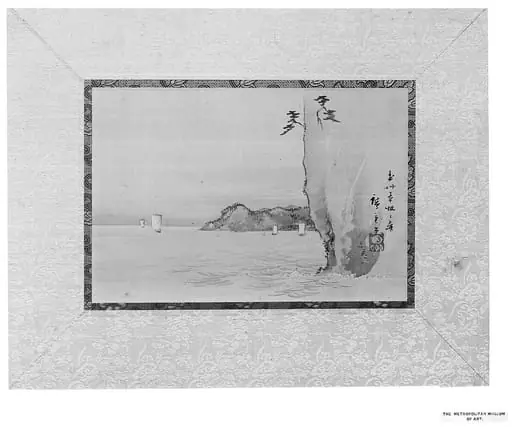
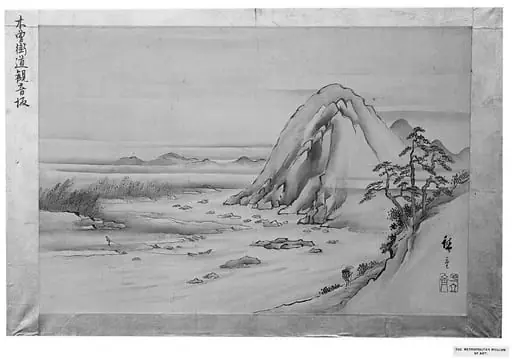
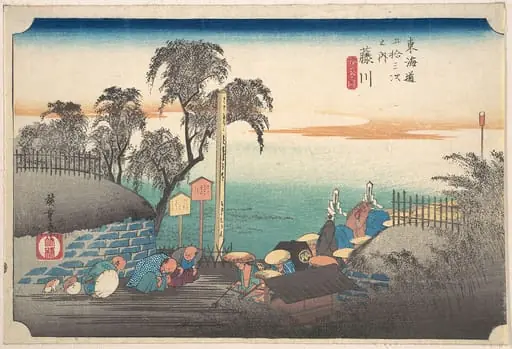 東海道五十三次之内 藤川 棒鼻の図|Fujikawa, Bo Bana
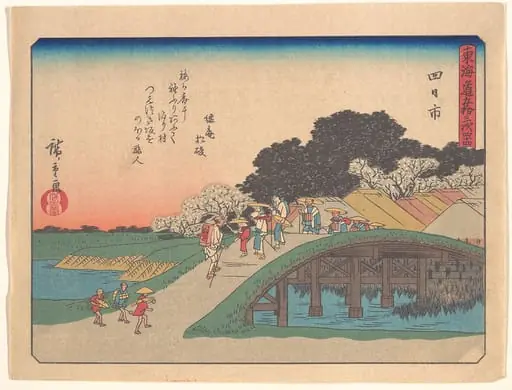 東海道五十三次 四日市|Yokkaichi, from the series The Fifty-three Stations of the Tōkaidō Road
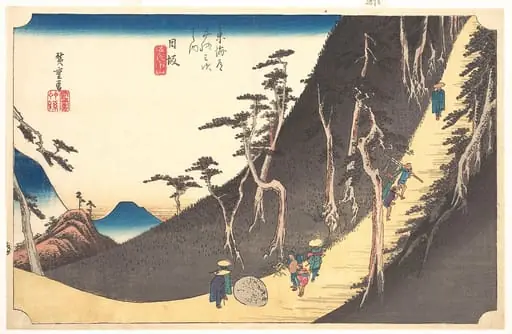 Nissaka-sayo no Naka Yama|東海道五十三次之内 日坂 佐夜の中山|Station Twenty-six: Nissaka, Sayo no Nakayama, from the Fifty-three Stations of the Tokaido
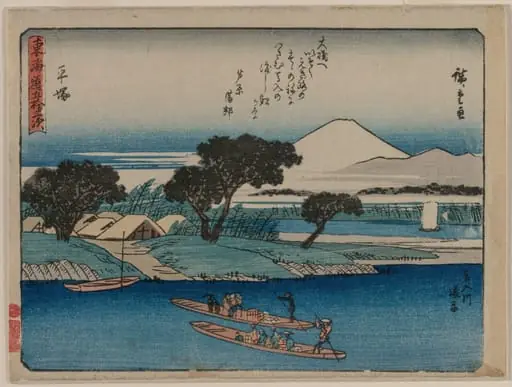 The Fifty-Three Stations of the Tokaido: Hiratsuka
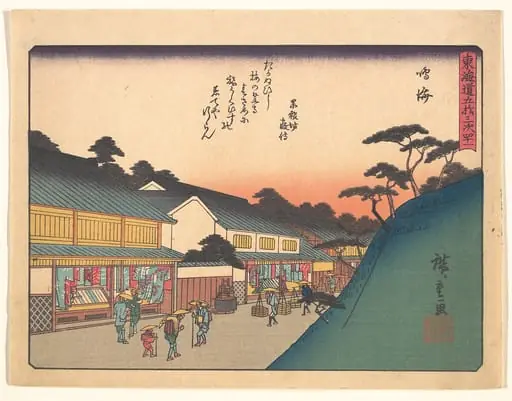 東海道五十三次 鳴海|Narumi, from the series The Fifty-three Stations of the Tōkaidō Road
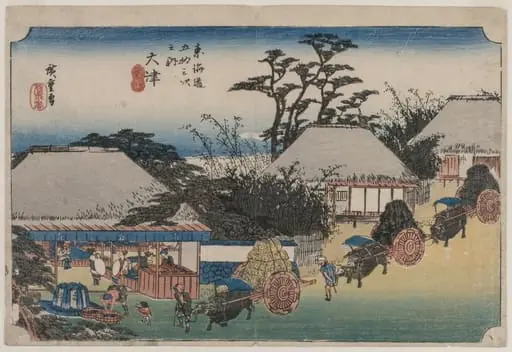 The Fifty-Three Stations of the Tokaido: Otsu