Artwork
近江八景 石山秋月|The Autumn Moon on Ishiyama
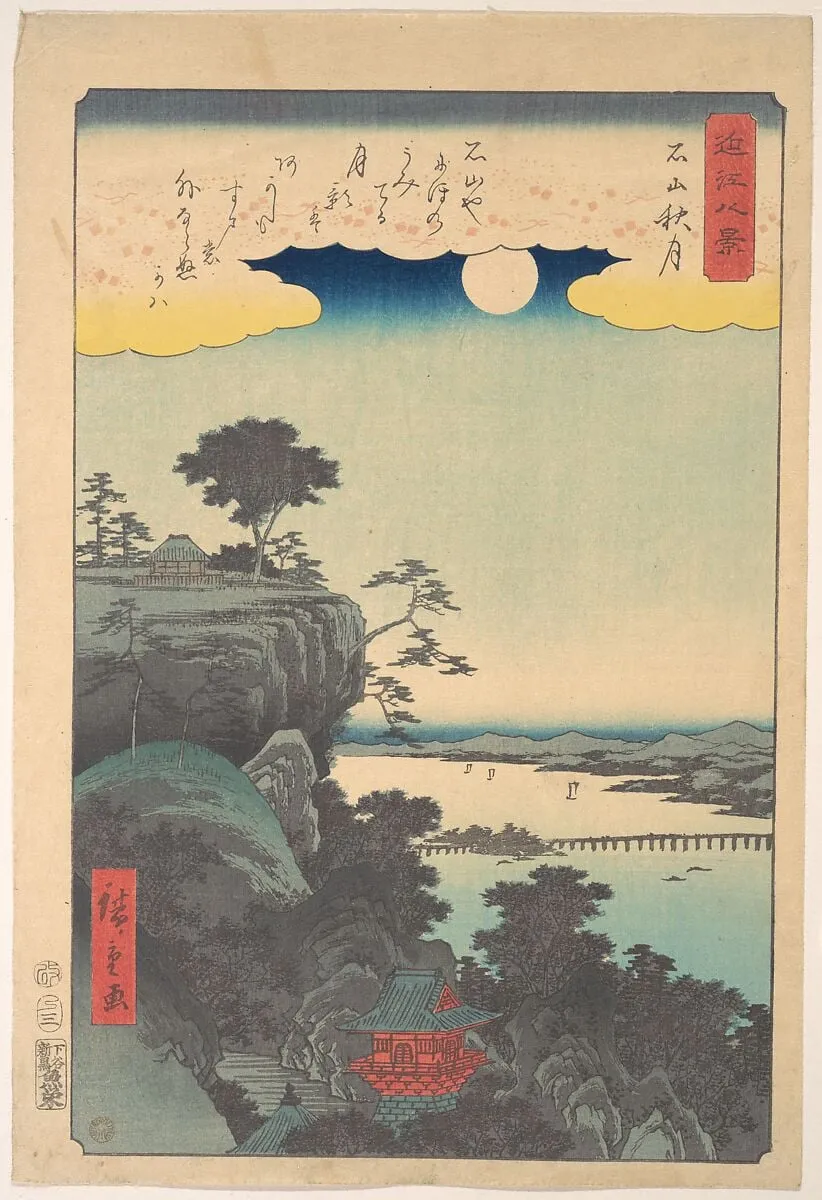
近江八景 石山秋月|The Autumn Moon on Ishiyama is an ink print by the Impressionist artist Utagawa Hiroshige. It dates from 1857 and is held in the collection of the Metropolitan Museum of Art.
About this work
Overview
Created in 1857, this woodblock print is part of Utagawa Hiroshige’s series *Eight Views of Ōmi*. It portrays a tranquil nocturnal landscape at Ishiyama, where a moonlit sky illuminates a cliff, a modest building, and a distant bridge over water. The composition balances natural elements with a subtle architectural presence, characteristic of Hiroshige’s later scenic works.
Subject & Meaning
The scene captures an autumn night on the banks of Lake Biwa, emphasizing the quietude of the countryside rather than the bustling urban life typical of many ukiyo‑e prints. The reflected moon, appearing as two luminous discs, underscores the interplay of light and water, inviting contemplation of nature’s fleeting beauty.
Technique & Style
Executed with ink and color on paper, the print employs bold, saturated hues—deep blues for the water, vivid reds for the roof, and soft yellows for the moonlight. Hiroshige’s use of flat color areas and delicate line work creates a clear visual contrast, while the subtle gradation of sky tones conveys atmospheric depth.
History & Provenance
The work belongs to Hiroshige’s mature period, when he increasingly focused on landscape motifs. It entered the collection of The Metropolitan Museum of Art, where it is catalogued as part of the museum’s Japanese prints holdings, reflecting the broader 19th‑century interest in Japanese art among Western collectors.
Context
*Eight Views of Ōmi* adapts a classical Chinese theme of eight celebrated vistas, reinterpreted for a Japanese audience. Hiroshige’s rendition of the Ishiyama moon scene aligns with the series’ aim to depict seasonal and atmospheric variations across the Ōmi province, contributing to the Edo‑period tradition of travel‑inspired imagery.
Artist & collection
Artist
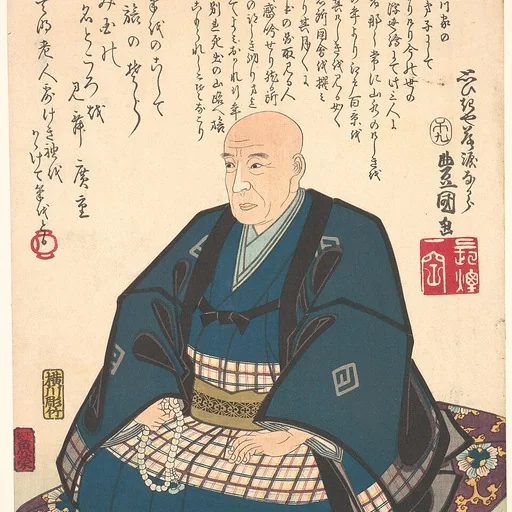
Utagawa Hiroshige (歌川 広重) or Andō Hiroshige (安藤 広重), born Andō Tokutarō (安藤 徳太郎; 1797 – 12 October 1858), was a Japanese ukiyo-e artist, considered the last great master of that tradition.

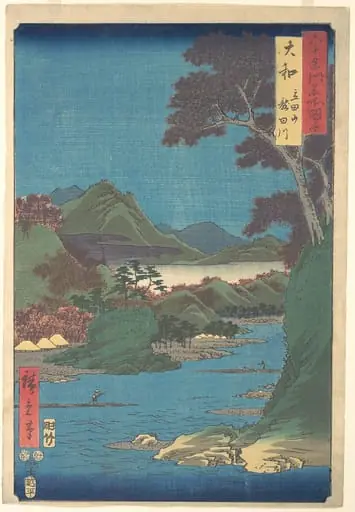 六十余州名所図会 大和 立田山 龍田川|Yamato, Tatsutayama, Tatsutagawa
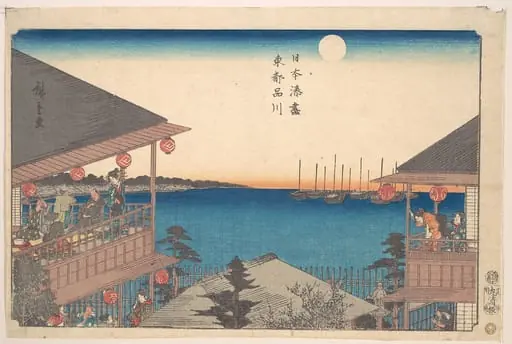 日本湊尽 東都品川|Toto, Shinagawa
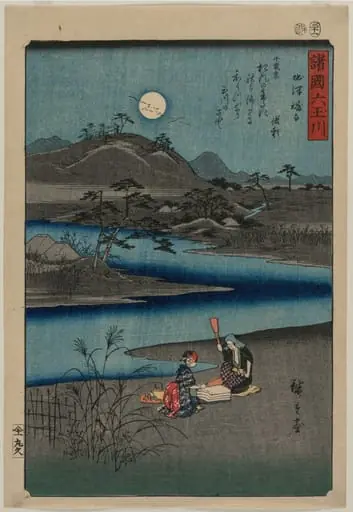 Cloth Fulling Jewel River in Settsu, from the series Six Jewel Rivers of the Various Provinces
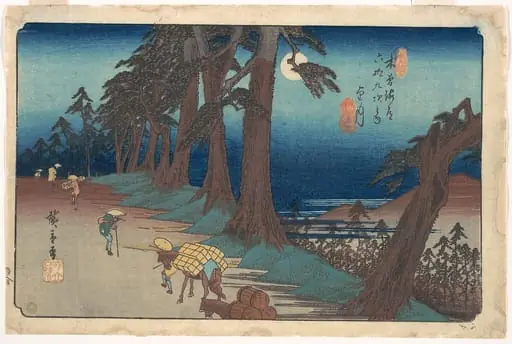 木曽海道六拾九次之内 望月|Mochizuki Station
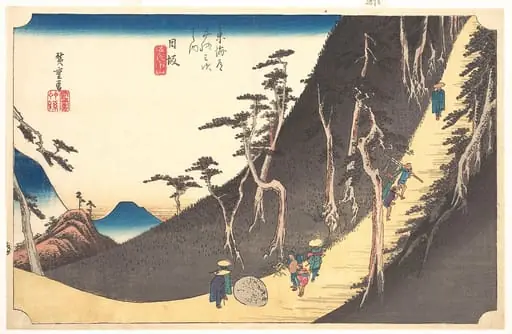 Nissaka-sayo no Naka Yama|東海道五十三次之内 日坂 佐夜の中山|Station Twenty-six: Nissaka, Sayo no Nakayama, from the Fifty-three Stations of the Tokaido
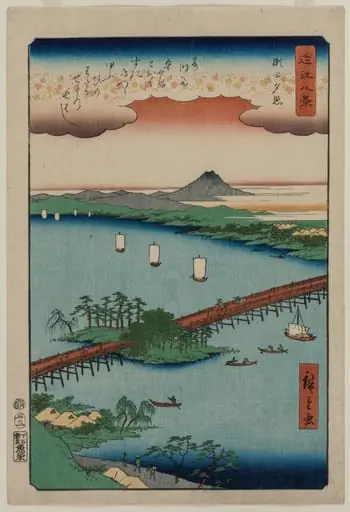 Evening Glow at Seta, from the series Eight Views of Ōmi
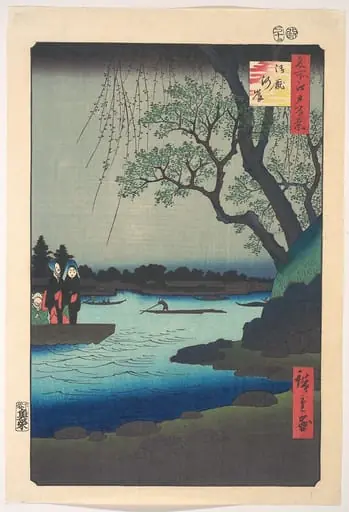 名所江戸百景 御厩河岸|Ommayagashi, Sumida River