Artwork
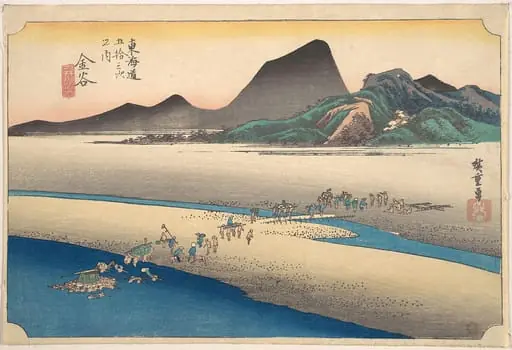
東海道五十三次之内 金谷 大井川遠岸|The Far Bank of the Ōi River at Kanaya
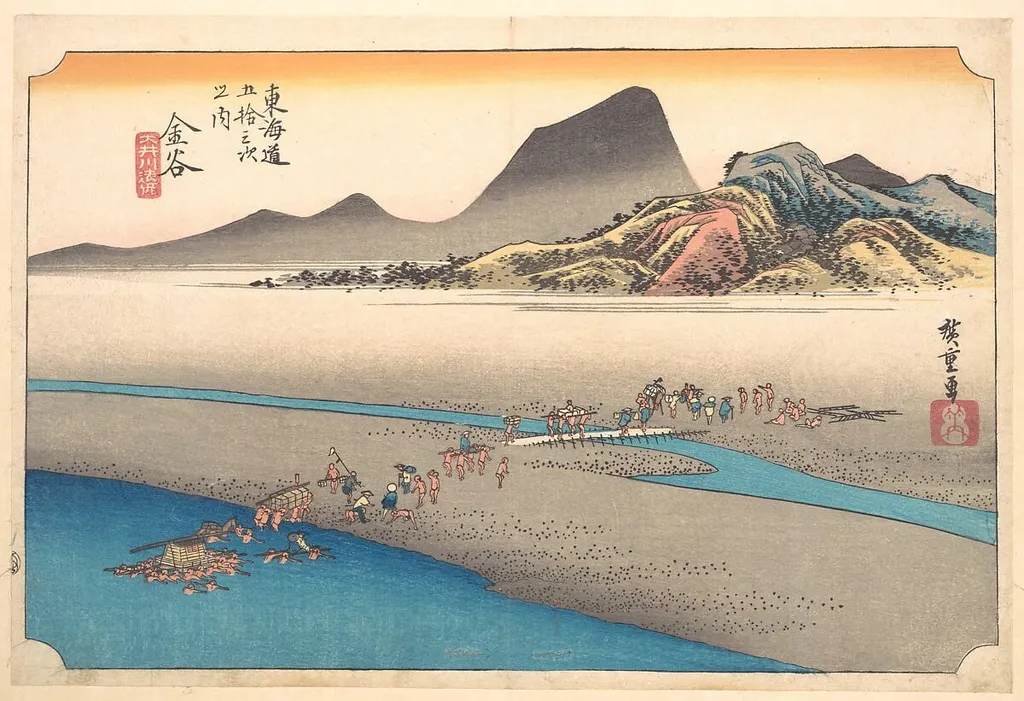
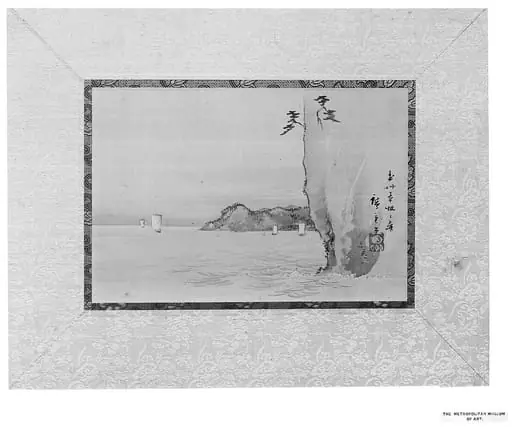
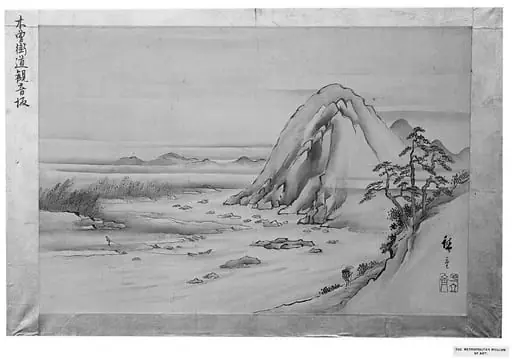
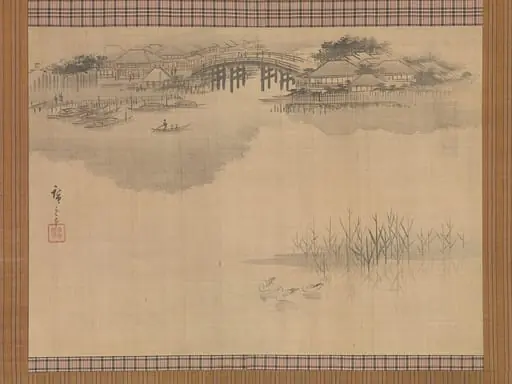
東海道五十三次之内 金谷 大井川遠岸|The Far Bank of the Ōi River at Kanaya is an ink print by the Romanticist artist Utagawa Hiroshige. It dates from 1834 and is held in the collection of the Metropolitan Museum of Art.
About this work
Overview
Unlike many ukiyo-e works focused on urban life, Hiroshige turned his attention to the natural and rural landscapes encountered on the journey.
Created in 1834 by Utagawa Hiroshige, this woodblock print is part of the series *The Fifty-three Stations of the Tōkaidō*, which documents stops along the major road connecting Edo and Kyoto. Rendered in ink and color on paper, it captures a quiet moment at Kanaya, where travelers encounter the wide Ōi River. Unlike many ukiyo-e works focused on urban life, Hiroshige turned his attention to the natural and rural landscapes encountered on the journey.
Subject & Meaning
The scene portrays laborers on the riverbank, some wading in the water with baskets, others standing along the shore. The calm activity suggests the daily rhythms of travel and trade along the Tōkaidō. Distant mountains, softly shaded in cool blues and grays, frame the composition, reinforcing a sense of stillness and endurance. The image reflects the harmony between human effort and the natural environment, central to the series’ contemplative tone.
Technique & Style
Hiroshige employed layered washes of color to suggest atmospheric depth—cool blues and grays for the mountains, warm ochres and yellows for sunlit areas. The river’s surface is rendered with subtle gradations, enhancing its reflective quality. Fine linework defines figures and reeds, while the use of *bokashi*—gradated ink blending—creates a hazy, luminous sky. These techniques convey mood over detail, characteristic of Hiroshige’s lyrical approach to landscape.
History & Provenance
The print was produced during the early 1830s as part of Hiroshige’s most celebrated series, commissioned for widespread distribution among travelers and urban dwellers. It entered the collection of The Metropolitan Museum of Art through documented acquisitions in the 20th century, preserving its original condition. As a mass-produced print, it reflects the commercial success of ukiyo-e and the growing public interest in scenic travel during the Edo period.
Context
The Tōkaidō was a vital route for merchants, officials, and pilgrims, and its stations were well-known landmarks. Hiroshige’s series responded to a cultural fascination with travel and regional identity. Unlike earlier ukiyo-e that emphasized courtesans or actors, his focus on nature and seasonal change aligned with emerging tastes for introspective, poetic imagery, influencing later generations of Japanese and Western artists.
Legacy
Hiroshige’s *Tōkaidō* prints, including this one, became foundational to the global appreciation of Japanese landscape art. Their compositional quietude and attention to light influenced 19th-century European painters, particularly the Impressionists. Today, the work remains a key example of how everyday scenes, rendered with sensitivity, can convey enduring emotional resonance beyond their original function as popular prints.
Artist & collection
Artist
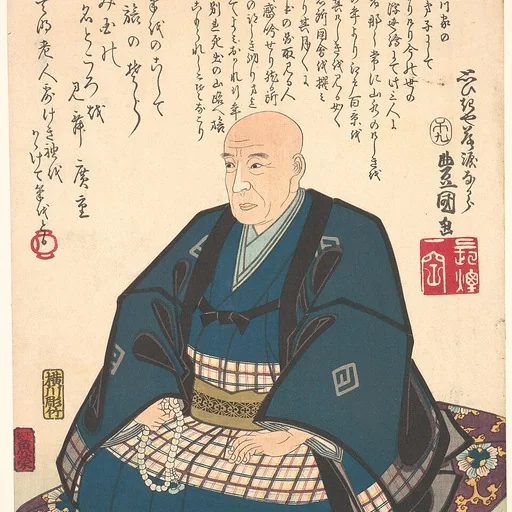
Utagawa Hiroshige (歌川 広重) or Andō Hiroshige (安藤 広重), born Andō Tokutarō (安藤 徳太郎; 1797 – 12 October 1858), was a Japanese ukiyo-e artist, considered the last great master of that tradition.