Artwork
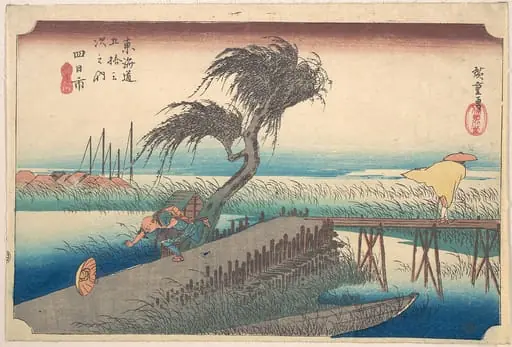
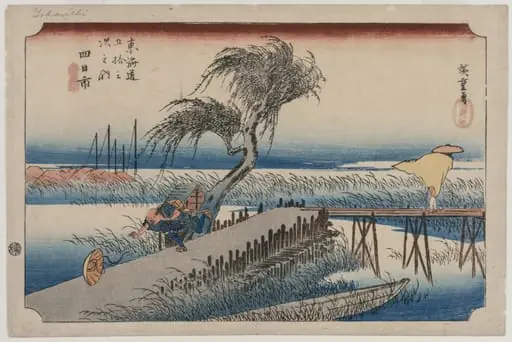
東海道五十三次之内 四日市 三重川|Mie River at Yokkaichi
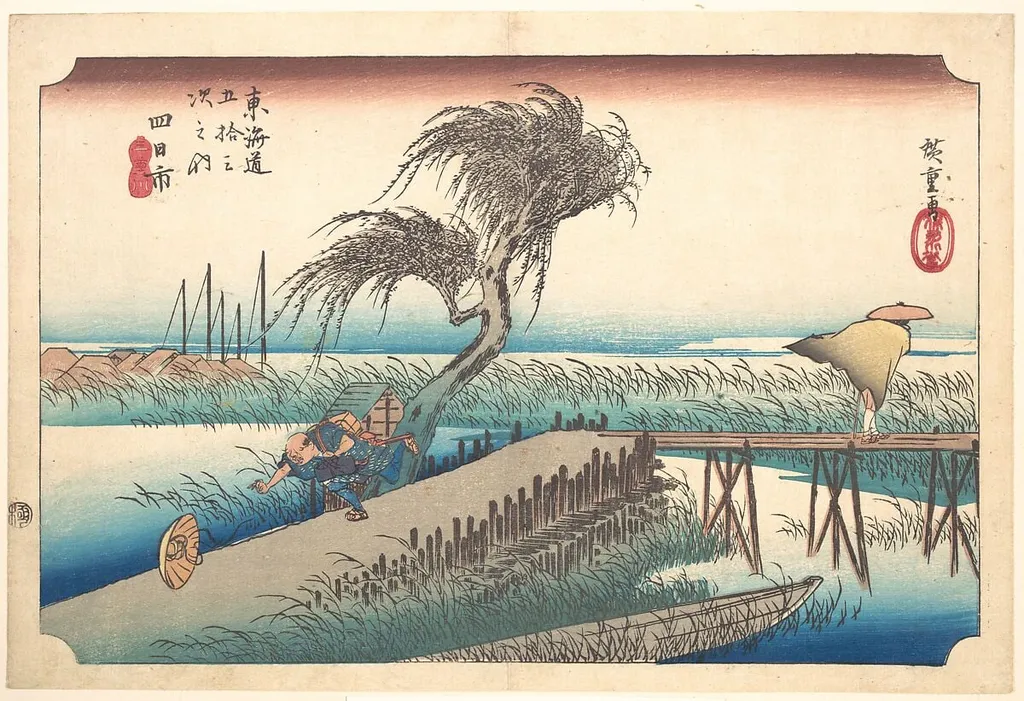
東海道五十三次之内 四日市 三重川|Mie River at Yokkaichi is an ink print by the Romanticist artist Utagawa Hiroshige. It dates from 1834 and is held in the collection of the Metropolitan Museum of Art.
About this work
Overview
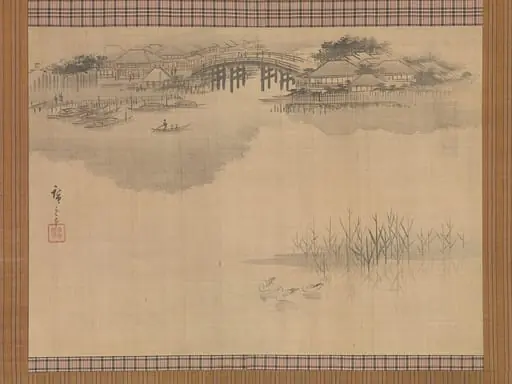
Created in 1834 by the ukiyo‑e master Utagawa Hiroshige, this woodblock print portrays a stretch of the Mie River at Yokkaichi, one of the stations along the historic Tōkaidō road. The image captures a quiet riverside with a low bridge, a solitary tree bent by wind, and a figure hurrying across the span, all rendered in muted blues and greens.
Subject & Meaning
Rather than focusing on bustling towns, Hiroshige emphasizes the natural environment of the riverbank. The wind‑tossed branches and the hurried traveler suggest the transitory nature of travel, while the calm water and reeds convey a moment of stillness within the larger journey of the Tōkaidō.
Technique & Style
The print employs traditional multicolor woodblock techniques, with separate blocks for each hue. Hiroshige’s composition balances foreground grasses, a central bridge, and distant foliage, creating depth. Subtle gradations of blue and green convey water and sky, while the crisp line work defines the moving figure and the swaying tree.
History & Provenance
Part of Hiroshige’s celebrated series The Fifty‑three Stations of the Tōkaidō, the work reflects the early‑mid Edo period shift toward landscape subjects in ukiyo‑e. The print entered the collection of the Metropolitan Museum of Art, where it is catalogued among the museum’s holdings of Japanese prints.
Artist & collection
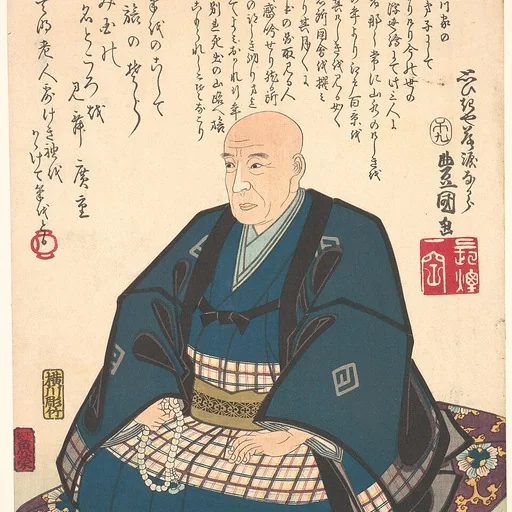
Artist
Utagawa Hiroshige (歌川 広重) or Andō Hiroshige (安藤 広重), born Andō Tokutarō (安藤 徳太郎; 1797 – 12 October 1858), was a Japanese ukiyo-e artist, considered the last great master of that tradition.