Artwork
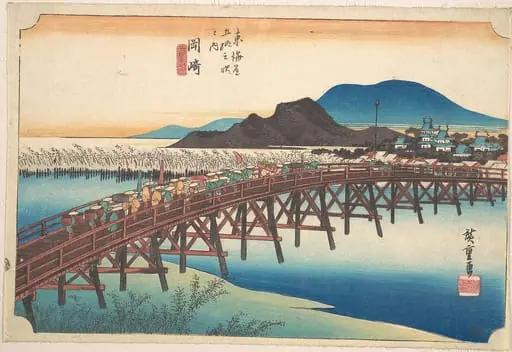
東海道五十三次 岡崎 矢はぎ川|Okazaki
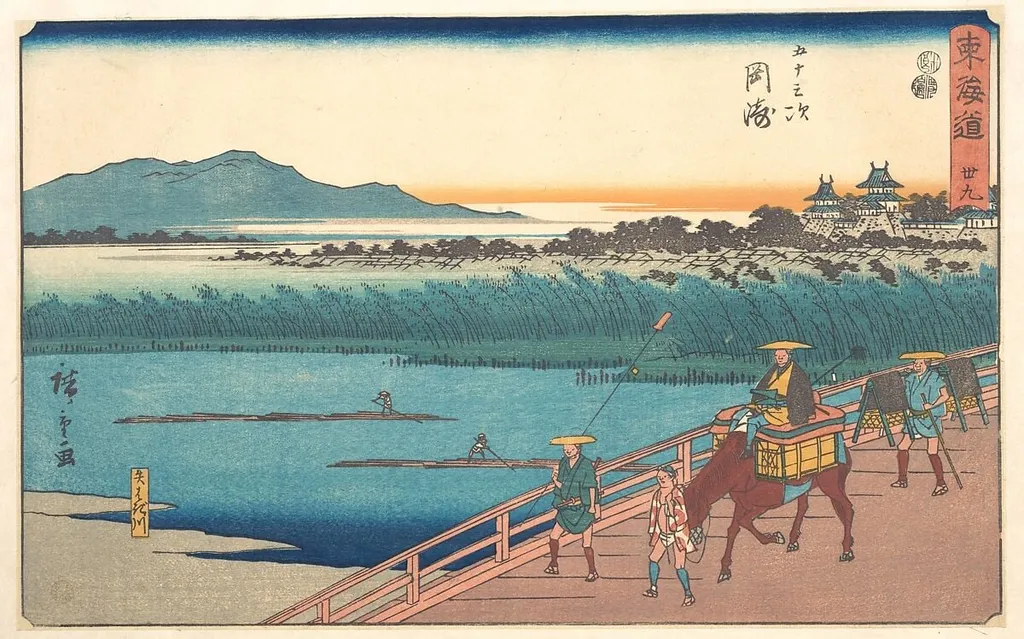
東海道五十三次 岡崎 矢はぎ川|Okazaki is an ink print by the Romanticist artist Utagawa Hiroshige. It dates from 1840 and is held in the collection of the Metropolitan Museum of Art.
About this work
Overview
Okazaki is a woodblock print from Utagawa Hiroshige's *The Fifty-three Stations of the Tōkaidō* series, created circa 1840. It captures a serene riverside moment along the historic Tōkaidō road.
Subject & Meaning
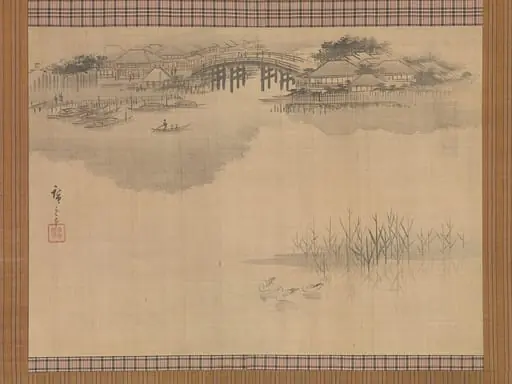
The print depicts everyday life along the Minagi River near Okazaki, showcasing a wooden bridge, travelers, and a distant castle under a soft sunset. It highlights ordinary moments in a renowned travel route.
Technique & Style
Hiroshige employed bold colors and simple shapes to convey a sense of peaceful movement. The composition blends trees and buildings into the background, emphasizing the scene's tranquility and activity.
History & Provenance
Created around 1840 by Utagawa Hiroshige, a prominent Edo period ukiyo-e artist, as part of his innovative landscape series that diverged from typical urban ukiyo-e themes.
Context
Part of *The Fifty-three Stations of the Tōkaidō*, this work reflects Hiroshige's focus on nature and travel, contrasting with the prevalent urban subjects in ukiyo-e at the time.
Artist & collection
Artist
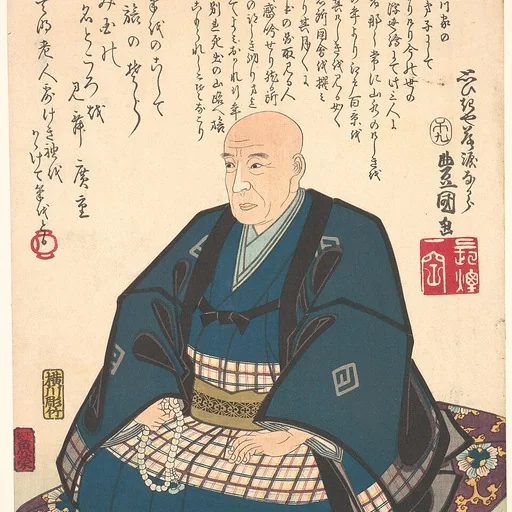
Utagawa Hiroshige (歌川 広重) or Andō Hiroshige (安藤 広重), born Andō Tokutarō (安藤 徳太郎; 1797 – 12 October 1858), was a Japanese ukiyo-e artist, considered the last great master of that tradition.

 東海道五十三次之内 岡崎 矢矧の橋|Okazaki, Tenshin no Hashi
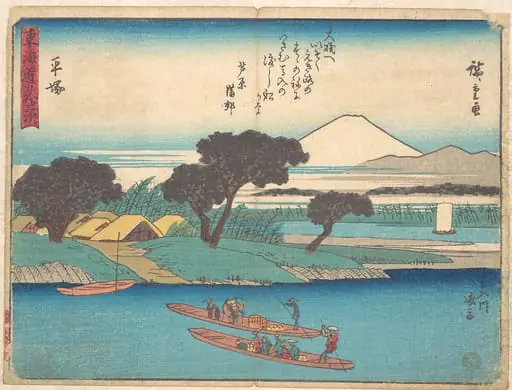 東海道五十三次 平塚|Hiratsuka
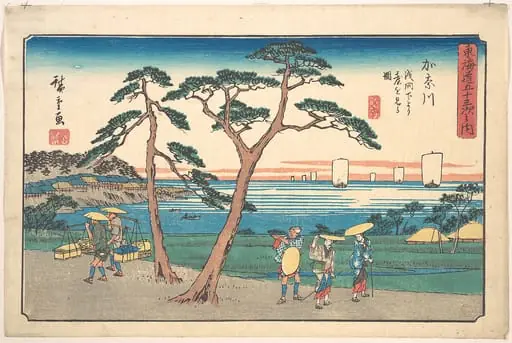 東海道五十三次之内 神奈川 浅間下より台を見る図|Kanazawa
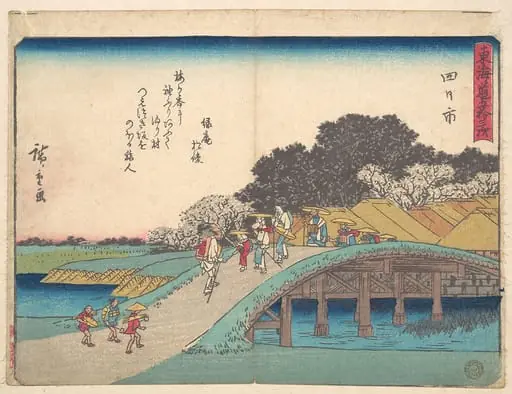 東海道五十三次 四日市|Yokkaichi
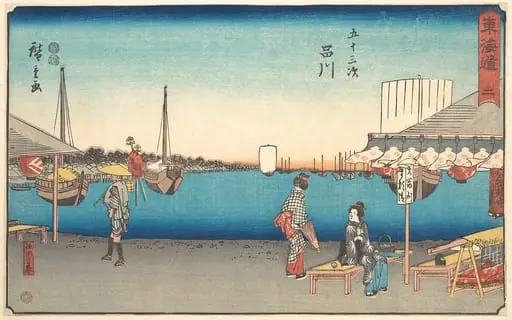 東海道五十三次 品川 鮫州の茶や|Shinagawa
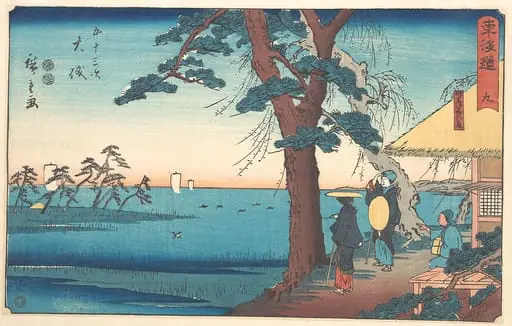 東海道五十三次 大磯 鴫立沢西行庵|Ōiso
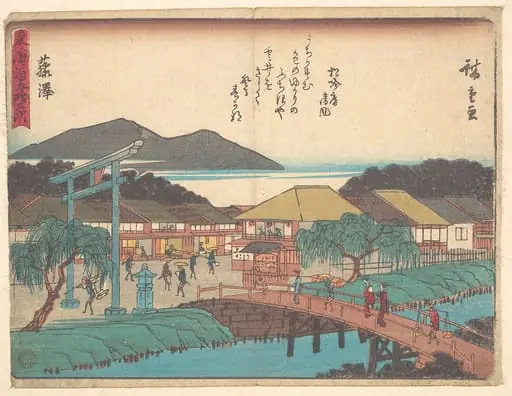 東海道五十三次 藤沢|Fujisawa
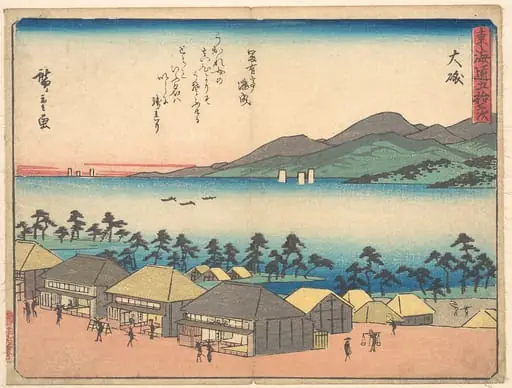 東海道五十三次 大磯|Ōiso
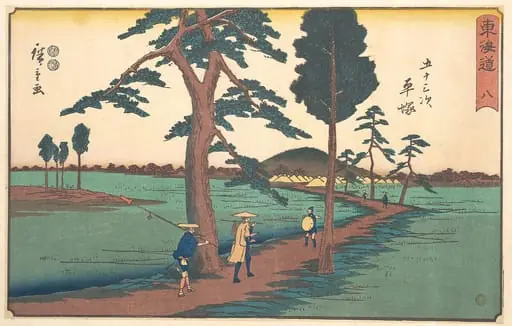 東海道五十三次 平塚|Hiratsuka
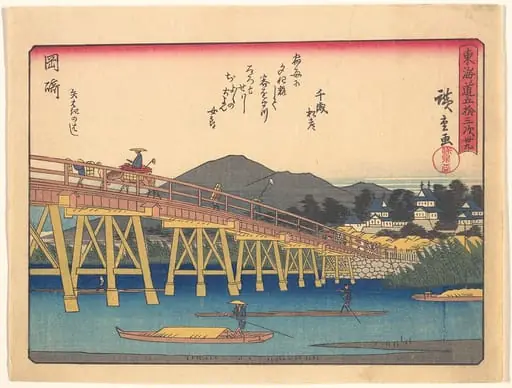 東海道五十三次 岡崎|Okazaki, from the series The Fifty-three Stations of the Tōkaidō Road
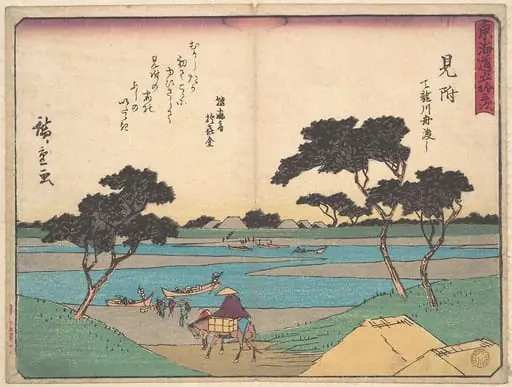 東海道五十三次 見附|Mitsuki