Artwork
忠臣蔵 十一段目 夜打 押寄|The Loyal Ronin Crossing the Long Bridge to Embark for the Night Attack upon Moronao
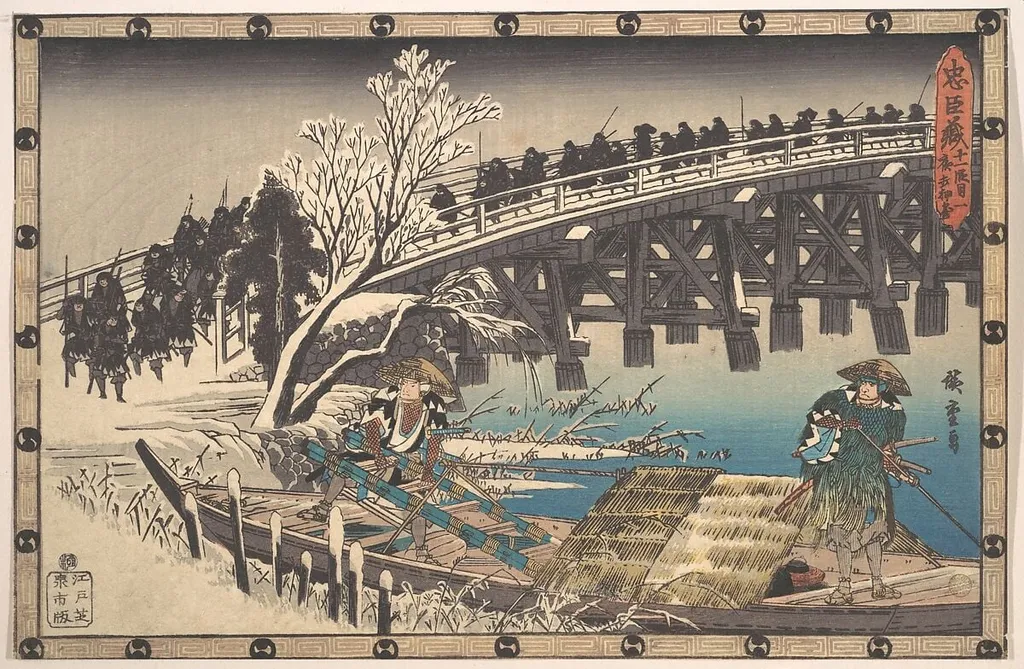
忠臣蔵 十一段目 夜打 押寄|The Loyal Ronin Crossing the Long Bridge to Embark for the Night Attack upon Moronao is an ink print by the Romanticist artist Utagawa Hiroshige. It dates from 1840 and is held in the collection of the Metropolitan Museum of Art.
About this work
Overview
Created around 1840 by Utagawa Hiroshige, this woodblock print illustrates a moment from the eleventh act of the kabuki play 'Chūshingura.
Created around 1840 by Utagawa Hiroshige, this woodblock print illustrates a moment from the eleventh act of the kabuki play 'Chūshingura.' It captures a group of ronin crossing a bridge under cover of night, en route to confront their enemy. Though Hiroshige is best known for landscapes, this work demonstrates his engagement with historical and theatrical narratives, expanding the scope of ukiyo-e beyond scenes of daily life and pleasure districts.
Subject & Meaning
The scene portrays the loyal retainers of the Akō domain preparing for a covert assault on Kira Yoshinaka, a pivotal moment in the legendary tale of vengeance. The quiet tension of the night crossing reflects the disciplined resolve of the ronin, their mission shrouded in secrecy. The bridge becomes a symbolic threshold between justice and retribution, anchoring the print in a cultural narrative of honor and sacrifice deeply resonant in Edo-period Japan.
Technique & Style
Hiroshige employs fine linework and layered color washes to convey atmosphere rather than action. The composition uses receding diagonals of the bridge and sparse foliage to suggest depth, while the muted palette of indigo, gray, and pale ochre enhances the nocturnal mood. Figures are rendered with subtle detail in their attire and posture, avoiding theatrical exaggeration in favor of restrained realism characteristic of his mature style.
History & Provenance
The print was produced during Hiroshige’s peak years as a printmaker, likely as part of a series illustrating scenes from popular kabuki dramas. It was published by a commercial printer in Edo, intended for mass distribution among urban audiences familiar with the Chūshingura story. Surviving impressions are held in major collections, including the British Museum and the Metropolitan Museum of Art, indicating its early and sustained circulation.
Context
During the 1840s, the Chūshingura tale was a cultural touchstone, frequently adapted in theater and print. Though officially censored for its depiction of samurai rebellion, the story persisted in disguised forms. Hiroshige’s print reflects this underground resonance, using the visual language of ukiyo-e to honor a narrative that celebrated loyalty beyond legal boundaries, appealing to public sentiment despite government restrictions.
Legacy
This print exemplifies Hiroshige’s ability to infuse historical drama with quiet lyricism, distinguishing his work from more flamboyant contemporaries. It contributed to the legitimization of narrative subjects within ukiyo-e, influencing later artists to explore literary and theatrical themes with greater nuance. Its restrained aesthetic continues to inform modern perceptions of Japanese printmaking as a medium of emotional subtlety rather than spectacle.
Artist & collection
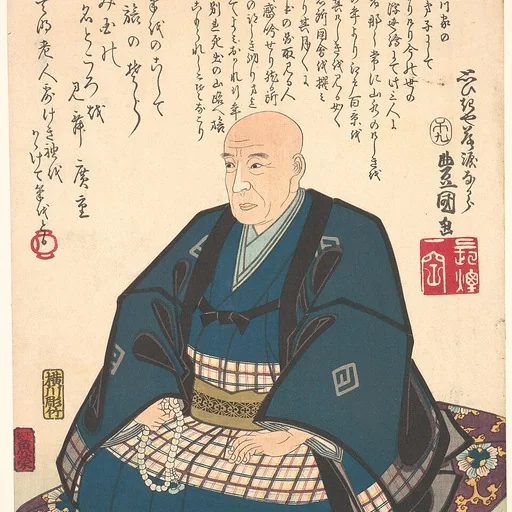
Artist
Utagawa Hiroshige (歌川 広重) or Andō Hiroshige (安藤 広重), born Andō Tokutarō (安藤 徳太郎; 1797 – 12 October 1858), was a Japanese ukiyo-e artist, considered the last great master of that tradition.

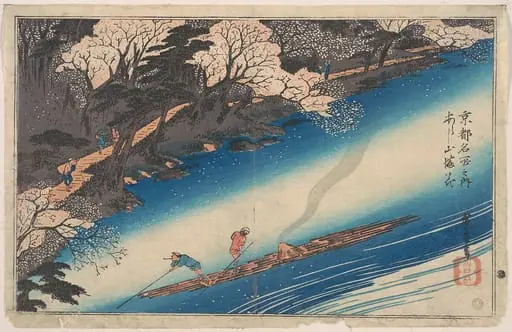 京都名所之内 あらし山満花|Cherry Blossoms at Arashiyama, from the series Famous Places of Kyōto
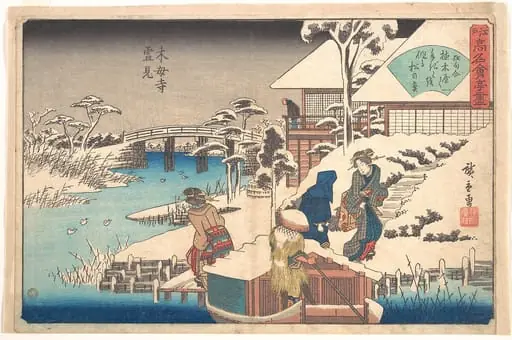 Mokuboji Yukimi (Uekiya)|江戸高名会亭尽 木母寺雪見 植木屋|Uekiya Restaurant at Mokuboji
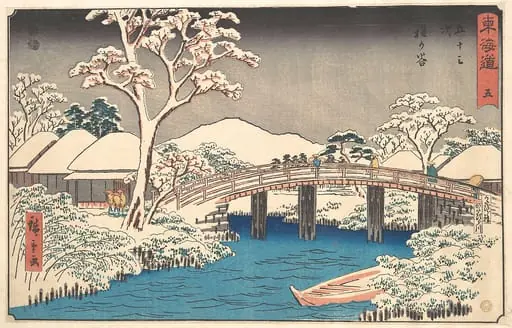 東海道五十三次 程ヶ谷 かたびら橋 かたびら川|Hodogaya
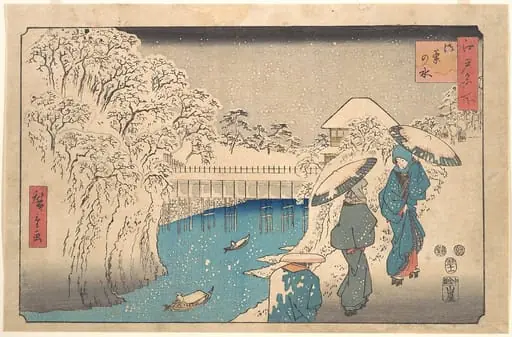 江戸名所 御茶の水|Meguro
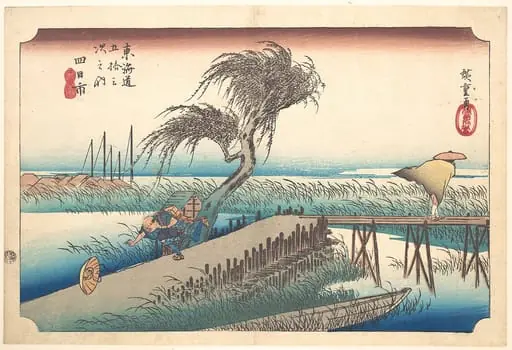 東海道五十三次之内 四日市 三重川|Mie River at Yokkaichi
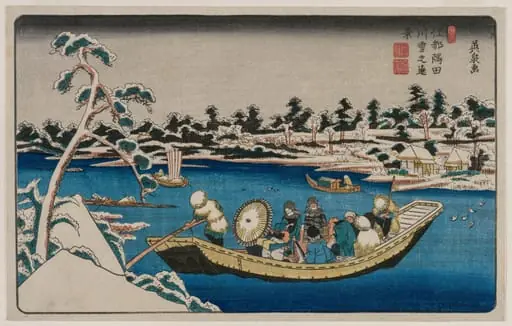 A Distant View of Snow on the Sumida River in Edo
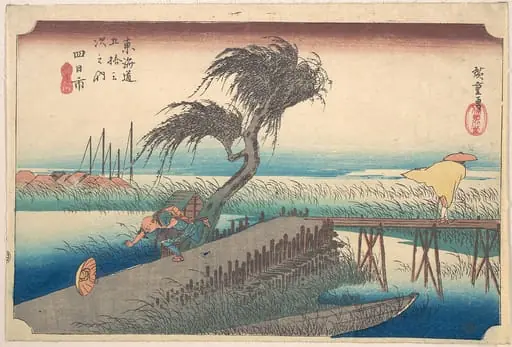 東海道五十三次之内 四日市 三重川|Yokkaichi, Sanchokawa
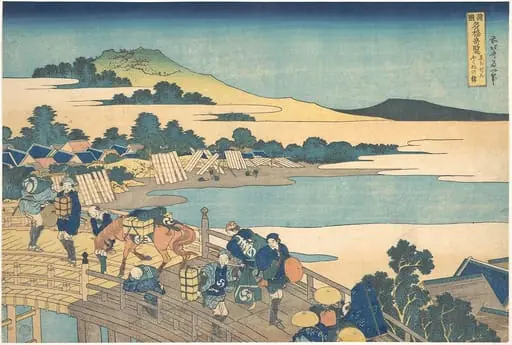 諸國名橋奇覧 ゑちぜんふくゐの橋|Fukui Bridge in Echizen Province (Echizen Fukui no hashi), from the series Remarkable Views of Bridges in Various Provinces (Shokoku meikyō kiran)
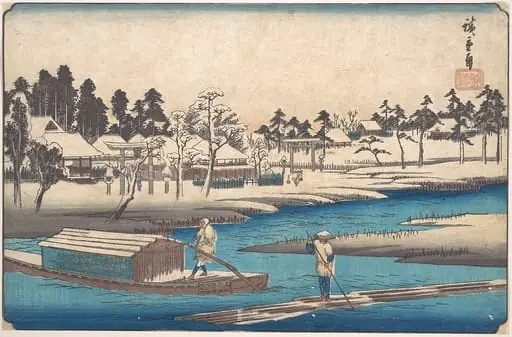 東都名所 真崎雪晴ノ図|Clearing Weather after Snow at Massaki
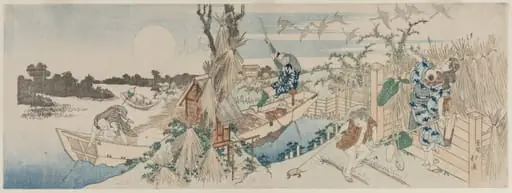 Landscape with Ferry Boat, Geese and Full Moon