Artwork
歌川広重画 梅に鶯|Warbler on a Plum Branch
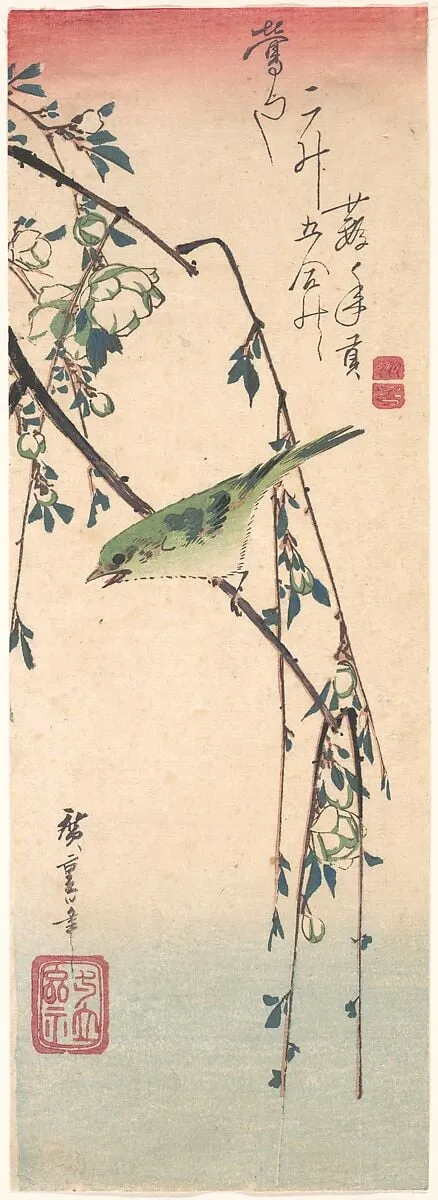
歌川広重画 梅に鶯|Warbler on a Plum Branch is an ink print by the Romanticist artist Utagawa Hiroshige. It dates from 1835 and is held in the collection of the Metropolitan Museum of Art.
About this work
Overview
Utagawa Hiroshige's *Warbler on a Plum Branch* (c. 1835) is a woodblock print from the Edo period, deviating from typical ukiyo-e subjects of urban life to focus on natural scenery.
Subject & Meaning
A bird perched on a plum branch symbolizes the arrival of spring, a common motif in Japanese art. The composition emphasizes harmony and balance, with the bird and branch forming a serene, elegant whole.
Technique & Style
The print showcases Hiroshige's attention to atmospheric detail. The bird's green plumage with black markings, delicate leaves, and blossoms contrast against a soft, muted background, achieving quiet elegance.
History & Provenance
Created around 1835, the work is part of Hiroshige's seasonal imagery body of work, characteristic of his departure from traditional ukiyo-e themes towards landscape and natural motifs.
Context
While often associated with broader artistic movements, this piece specifically reflects traditional Japanese seasonal themes rather than European movements like Romanticism, despite superficial visual similarities.
Legacy
As part of Hiroshige's nature-focused prints, *Warbler on a Plum Branch* contributes to the artist's influence on later Japanese art and global perceptions of ukiyo-e's capacity for serene, naturalistic depiction.
Artist & collection
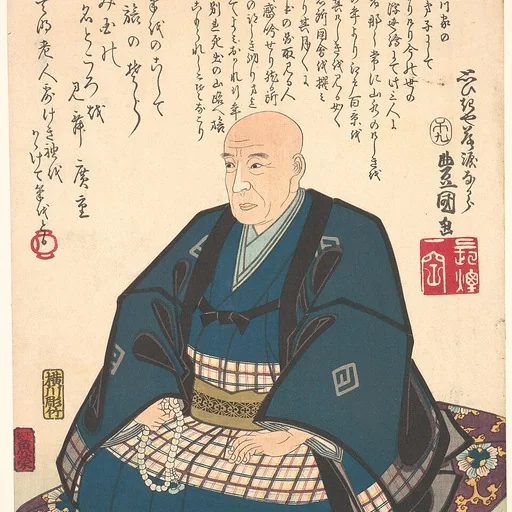
Artist
Utagawa Hiroshige (歌川 広重) or Andō Hiroshige (安藤 広重), born Andō Tokutarō (安藤 徳太郎; 1797 – 12 October 1858), was a Japanese ukiyo-e artist, considered the last great master of that tradition.

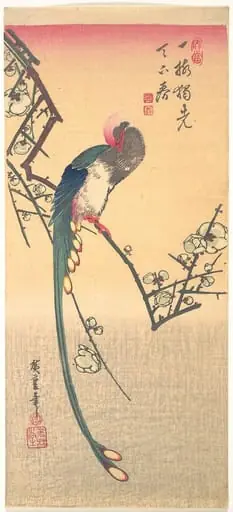 梅に三光鳥|Bird on a Plum Branch
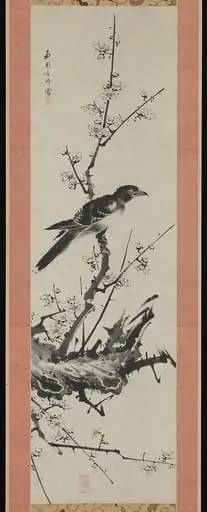 西園方済筆 梅に叭叭鳥図|Mynah Bird on Plum Branch
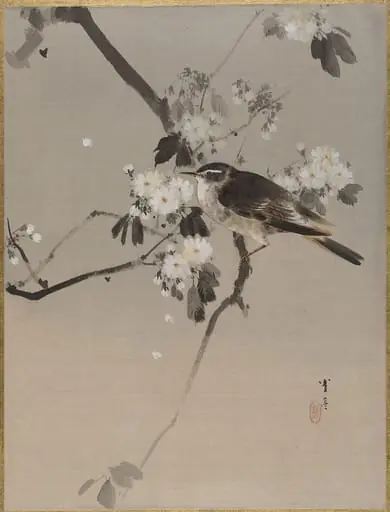 桜に小禽図|Birds on a Flowering Branch
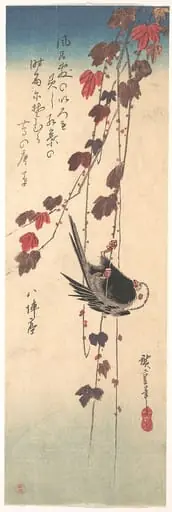 歌川広重画 蔦に柄長鳥|Long-tailed Tit on Autumn Ivy
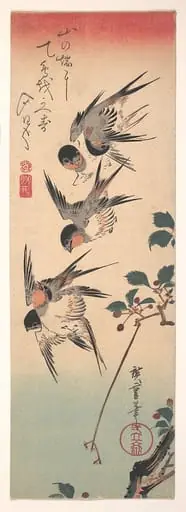 歌川広重画 山桜に燕|Swallows and Budding Wild Cherry
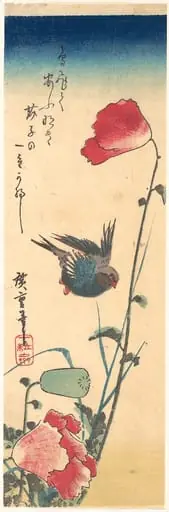 歌川広重画 芥子に瑠璃鳥|A Bluebird and Poppies
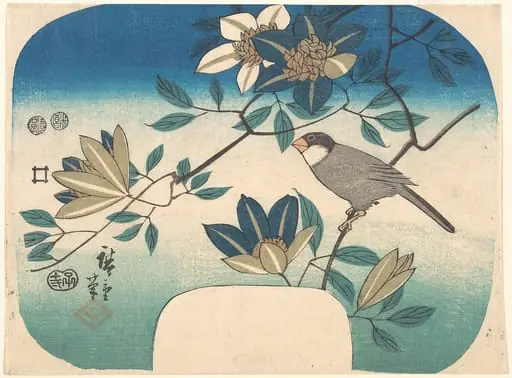 歌川広重画 鉄線花に鳥|Clematis and Bird
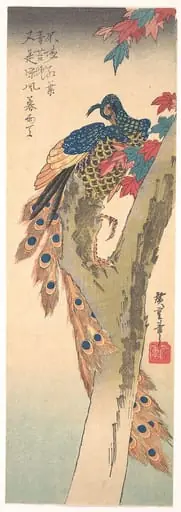 歌川広重画 楓に孔雀|A Peacock Perched on a Maple Tree
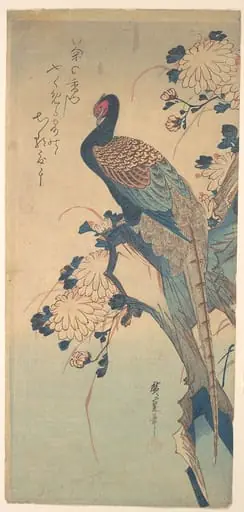 歌川広重画 菊に雉|Pheasant with Chrysanthemums
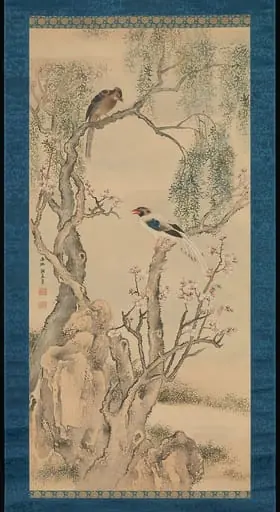 与謝蕪村筆 柳緑桃紅図|Birds in Willows and Blossoming Peach Tree