Artwork
花菖蒲に白鷺|White Heron and Iris
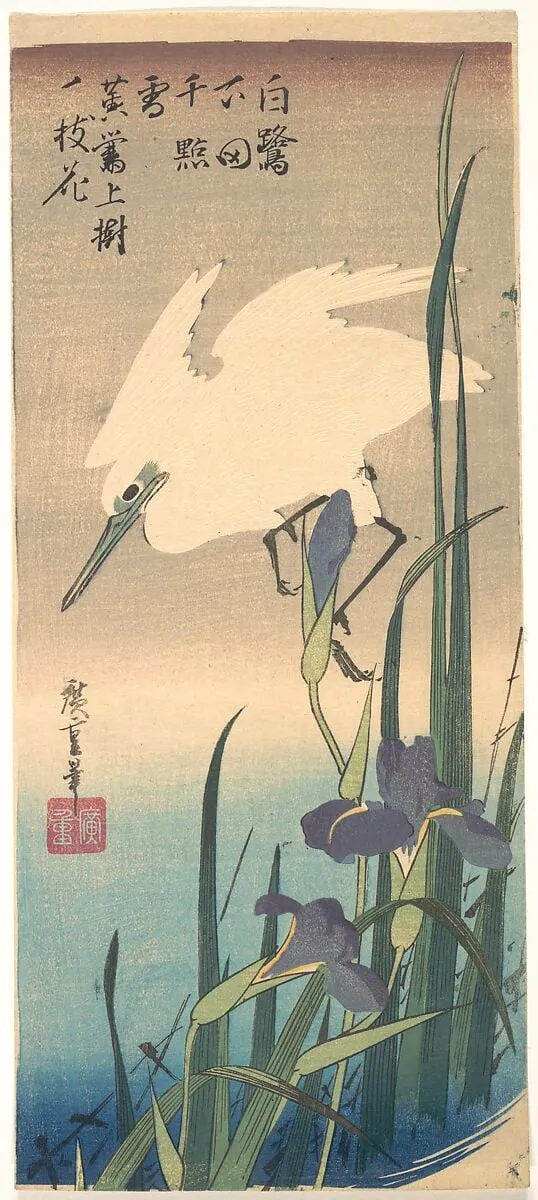
花菖蒲に白鷺|White Heron and Iris is an ink print by the Romanticist artist Utagawa Hiroshige. It dates from 1829 and is held in the collection of the Metropolitan Museum of Art.
About this work
Overview
Utagawa Hiroshige's *White Heron and Iris* (1829) is a woodblock print executed in ink and color on paper, exemplifying the artist's unique contribution to the ukiyo-e tradition.
Subject & Meaning
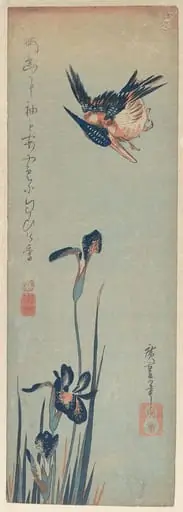
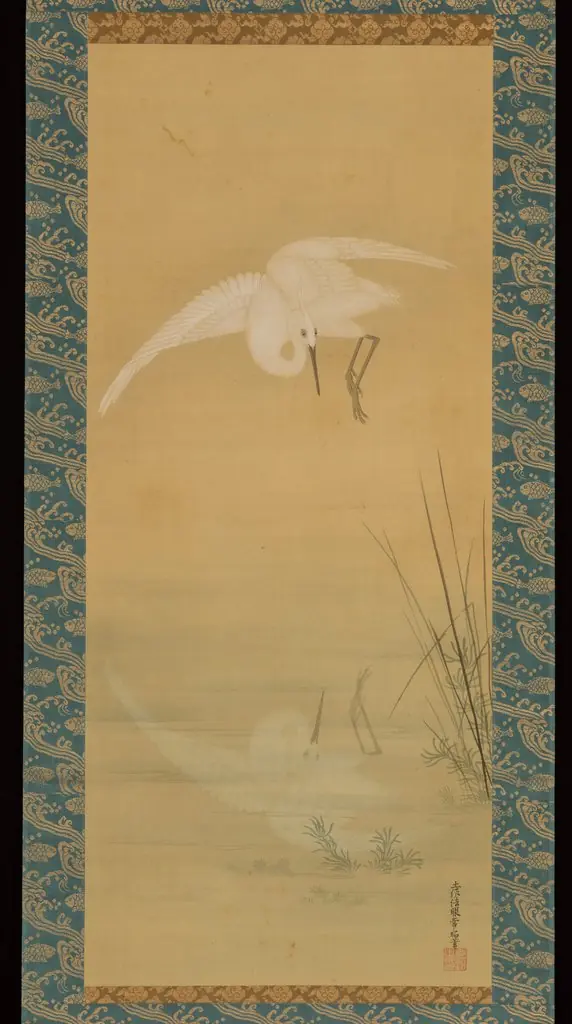
The print depicts a serene natural scene: a white heron with slightly spread wings perched on tall green reeds, accompanied by blooming purple irises in the foreground against a pale blue background. The composition emphasizes the heron's graceful form, particularly its long neck and sharp beak, while the irises introduce a vibrant accent.
Technique & Style
Characterized by simple, clean lines and flat colors, the work showcases Hiroshige's distinctive approach to natural subjects. The rendering of the heron conveys a sense of weightlessness, suspended above the reeds.
History & Provenance
Created in 1829 by Utagawa Hiroshige (born Andō Tokutarō in 1797), a prominent ukiyo-e artist known for his landscapes, which diverged from the genre's common urban themes.
Context
*White Heron and Iris* reflects Hiroshige's departure from conventional ukiyo-e depictions of the time, instead focusing on serene, natural compositions that would become a hallmark of his style.
Legacy
This print contributes to Hiroshige's reputation as a leading figure in ukiyo-e, particularly in his innovative portrayal of natural landscapes, influencing subsequent generations of artists.
Artist & collection
Artist
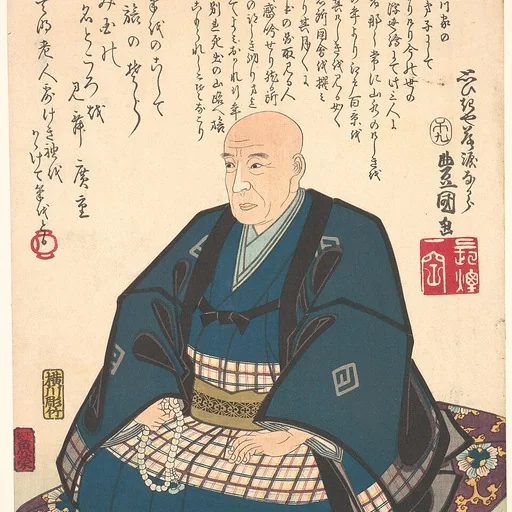
Utagawa Hiroshige (歌川 広重) or Andō Hiroshige (安藤 広重), born Andō Tokutarō (安藤 徳太郎; 1797 – 12 October 1858), was a Japanese ukiyo-e artist, considered the last great master of that tradition.