Artwork
椿に目白と四十雀図|Japanese White-eye and Titmouse on a Camellia Branch
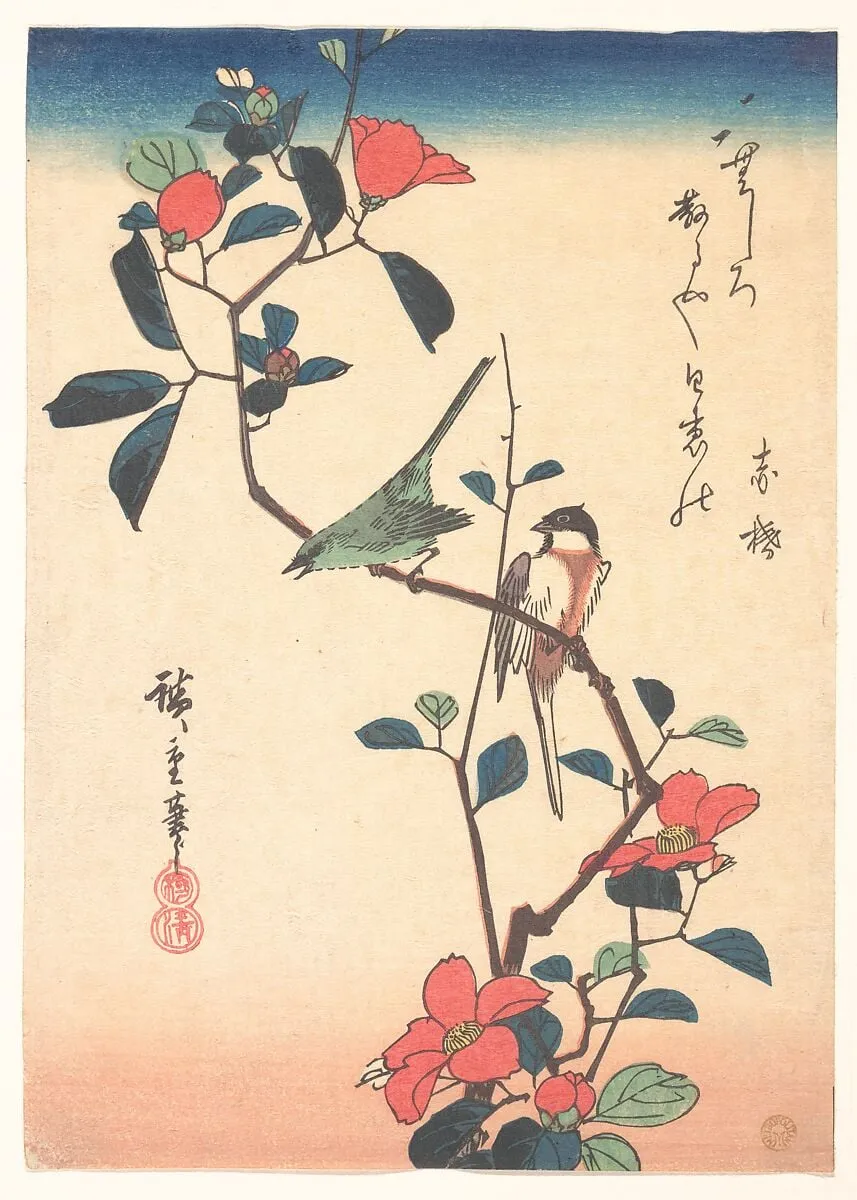
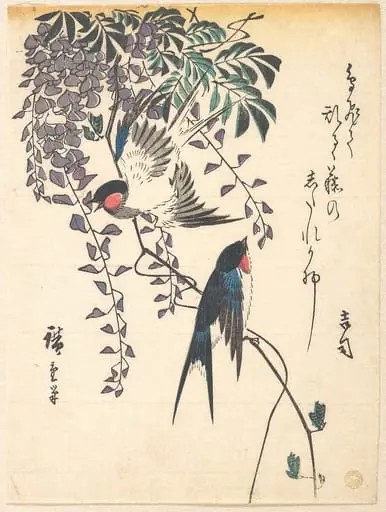
椿に目白と四十雀図|Japanese White-eye and Titmouse on a Camellia Branch is an ink print by the Romanticist artist Utagawa Hiroshige. It dates from 1840 and is held in the collection of the Metropolitan Museum of Art.
About this work
Overview
Utagawa Hiroshige, a prominent ukiyo-e artist of the late Edo period, created *Japanese White-eye and Titmouse on a Camellia Branch* circa 1840. This woodblock print diverges from the genre's typical urban focus, instead showcasing the artist's penchant for natural subjects.
Subject & Meaning
The print features a Japanese white-eye and a titmouse perched on a camellia branch, highlighting Hiroshige's interest in depicting birds and nature. The scene conveys a sense of serene coexistence between the avian subjects and their floral environment.
Technique & Style
Characterized by clean lines and flat, bold colors (including deep blues, soft yellows, and vibrant reds), the print exemplifies traditional woodblock print techniques. Notable is the artist's attention to light, lending a near-three-dimensional quality to the leaves and flowers.
History & Provenance
Created around 1840, this work is part of Hiroshige's broader output that included renowned landscape series. Specific provenance details for this piece are not provided.
Context
Within Hiroshige's oeuvre, this print reflects his expansion of ukiyo-e beyond urban landscapes, towards a more nuanced exploration of Japan's natural beauty. It aligns with his celebrated series, such as *The Fifty-three Stations of the Tōkaidō* and *One Hundred Famous Views of Edo*.
Legacy
This print contributes to Hiroshige's legacy as a pioneer in ukiyo-e's naturalistic depictions, influencing subsequent generations of artists in their representation of wildlife and botanical subjects.
Artist & collection
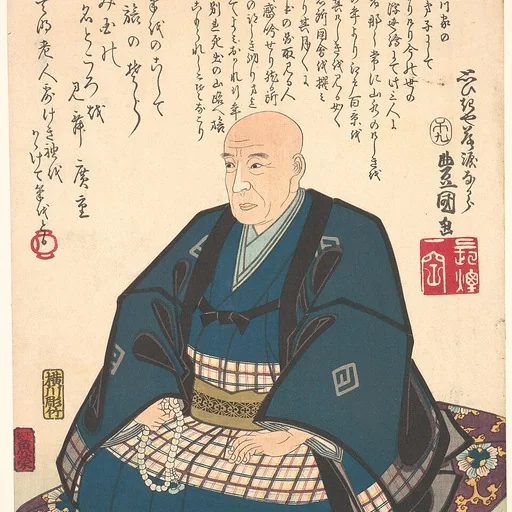
Artist
Utagawa Hiroshige (歌川 広重) or Andō Hiroshige (安藤 広重), born Andō Tokutarō (安藤 徳太郎; 1797 – 12 October 1858), was a Japanese ukiyo-e artist, considered the last great master of that tradition.