Artwork
歌川芳盛画 「五ケ国之内 アメリカ]|“America,” from the series Five Nations
![歌川芳盛画 「五ケ国之内 アメリカ]|“America,” from the series Five Nations, by Utagawa Yoshimori, ink, 1860](https://artifactworldgallery.com/img/utagawa-yoshimori--america-from-the-series-five-nations--cda6a88dd74d0da3-w1024.webp)
歌川芳盛画 「五ケ国之内 アメリカ]|“America,” from the series Five Nations is an ink print by the Impressionist artist Utagawa Yoshimori. It dates from 1860 and is held in the collection of the Metropolitan Museum of Art.
About this work
Overview
Created in 1860 by Utagawa Yoshimori, this woodblock print is part of the series Five Nations, which depicts foreign powers through a Japanese lens.
Created in 1860 by Utagawa Yoshimori, this woodblock print is part of the series Five Nations, which depicts foreign powers through a Japanese lens. Executed in nishiki-e, a multi-color printing technique, it measures vertically in the ōban format. The print is held in the collection of The Metropolitan Museum of Art, where it serves as a visual record of mid-19th century Japanese perceptions of global powers.
Subject & Meaning
The central figure represents America, rendered as a mounted rider in an elaborate, brightly striped robe and white head covering. The imagery blends real and imagined elements, reflecting Japanese curiosity and limited direct contact with the United States at the time. The inset of ships at sea alludes to transoceanic travel and foreign arrival, framing the rider as an emblem of distant, maritime power rather than a literal portrait.
Technique & Style
The print employs traditional ukiyo-e woodblock methods with vibrant mineral pigments and fine linework. The rider’s robe and horse’s blanket feature intricate swirling patterns, while the background uses abstract dot and line motifs to suggest texture without naturalism. The inset scene is framed within the composition, a common device in Japanese prints to imply narrative context without disrupting the main image’s focus.
History & Provenance
Produced during a period of Japan’s gradual opening to the West after centuries of isolation, the print emerged from a Tokyo-based publishing house active in the 1850s–60s. It was likely distributed as part of a popular series intended for urban audiences. The Metropolitan Museum of Art acquired it in the 20th century, preserving it as an artifact of early cross-cultural representation in Japanese printmaking.
Context
The Five Nations series responded to rising Western influence in Asia, particularly following Commodore Perry’s 1853–54 expedition to Japan. Each print in the series personified a foreign nation—America, Russia, England, France, and Holland—through stylized figures. These images were not diplomatic portraits but cultural interpretations, blending observation, rumor, and imagination to satisfy public interest in the outside world.
Legacy
Yoshimori’s print contributes to a broader body of work that documents Japan’s evolving engagement with global powers during the Bakumatsu era. While not widely known outside specialist circles, it remains a valuable example of how Japanese artists visually negotiated foreign identity during a time of profound political and cultural transition. Its stylistic choices reflect both artistic convention and the limits of contemporary knowledge about the West.
Artist & collection

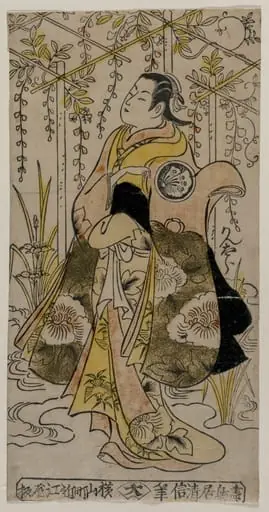 Sanjo Kantaro as a Young Woman Standing in a Wisteria Arbor
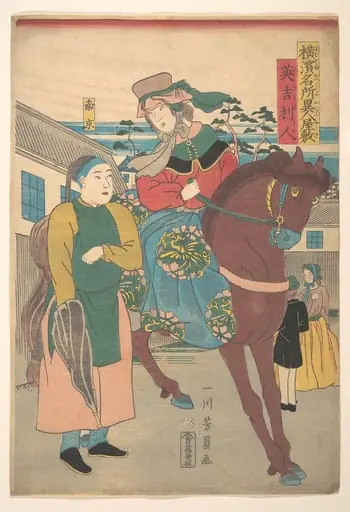 Igirisujin|An English Woman with a Chinese Servant in the Foreign District, from the series Famous Places in Yokohama
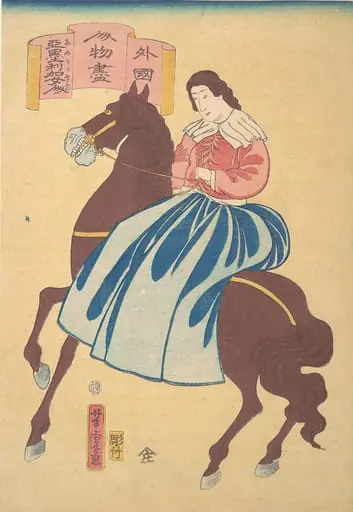 Amerika nyōjin|American Horsewoman
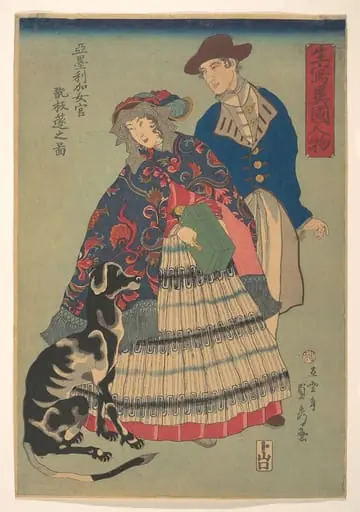 「生寫異國人物」|American Woman Playing a Concertina, from the series Life Drawings of People from Foreign Nations
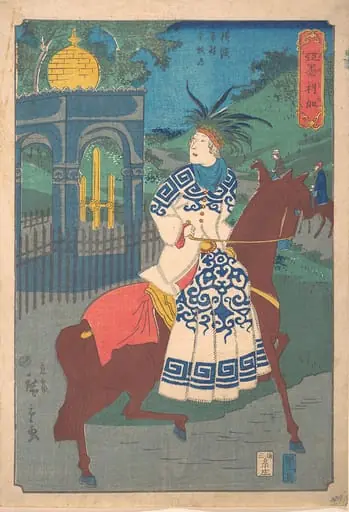 二代歌川広重画 『亜墨利加 横浜本村本牧道』|American Woman Riding Side-Saddle on the Road at Honmoku, Motomura, Yokohama (America Yokohama Motomura Honmoku michi)
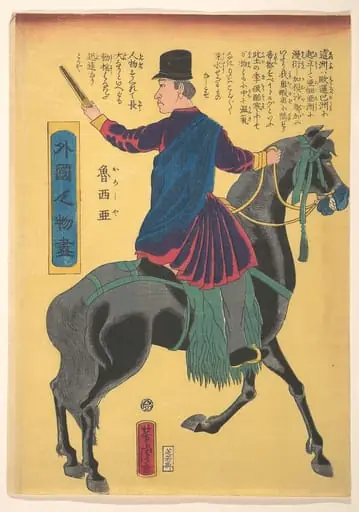 Orosia|Mounted Russian
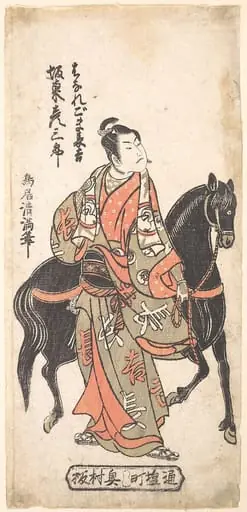 Untitled
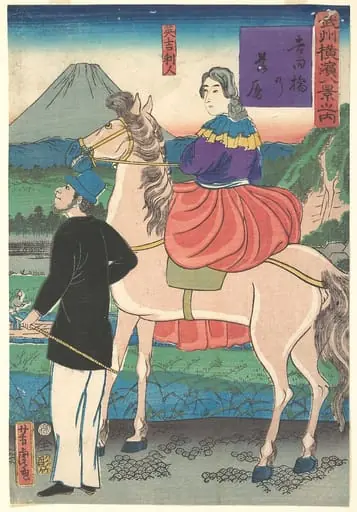 Untitled
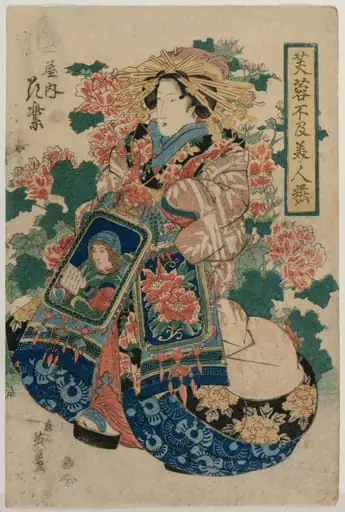 The Courtesan Hanamurasaki of the Tsuchiya (from the series Beauties in their Finery amid Mallow Flowers)
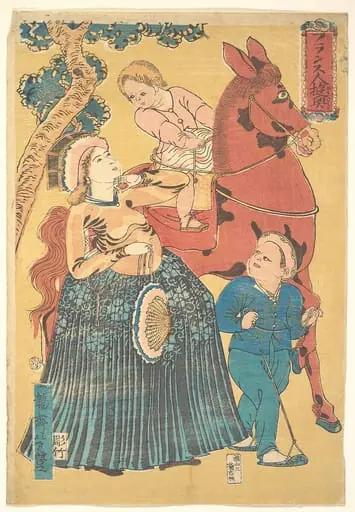 Furansu-jin Yukyo|フランス人遊興|French Pastimes
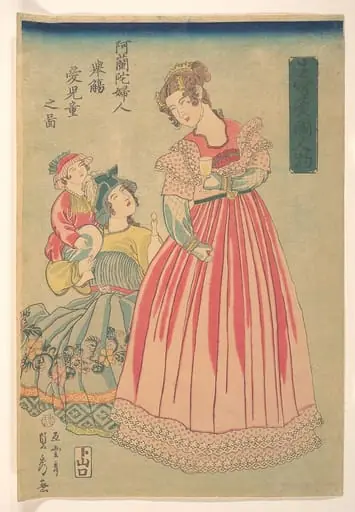 歌川五雲亭貞秀画 『生写異国人物 阿蘭陀婦人舉觴 愛児童之図』|Dutch Woman and Child (Seisha ikoku jinbutsu Oranda fujin aijidō no zu)
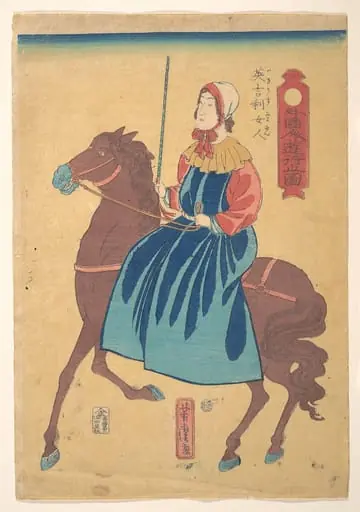 Igirisu nyōjin|Englishmen Woman on Horseback