Artwork
Furansu-jin Yukyo|フランス人遊興|French Pastimes
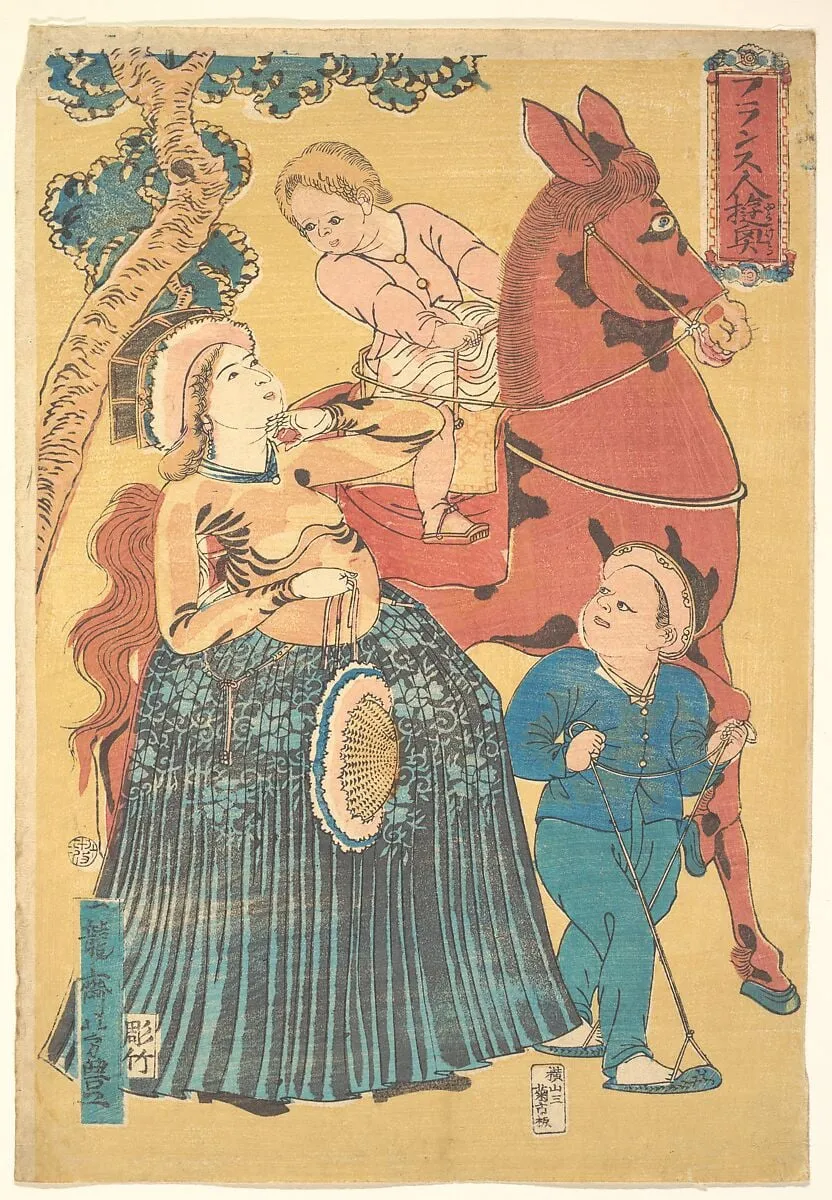
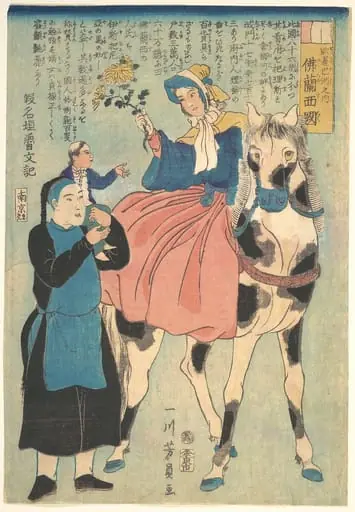
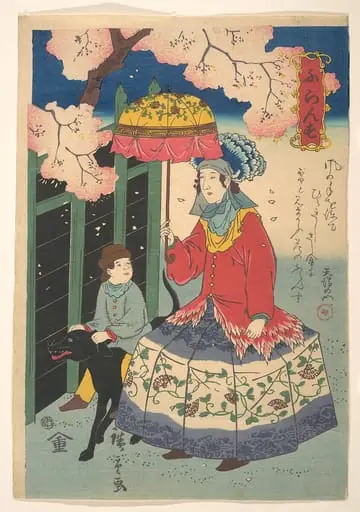
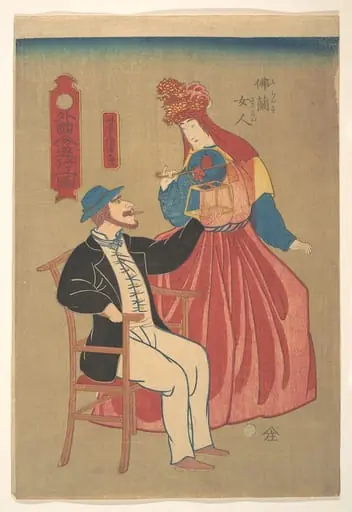
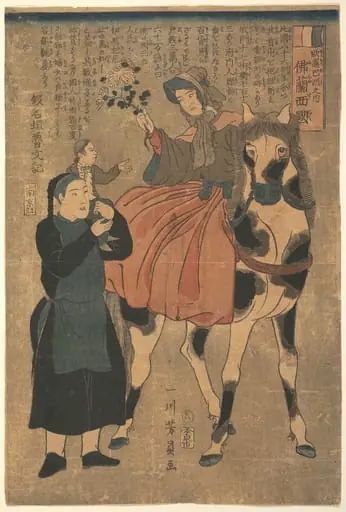
Furansu-jin Yukyo|フランス人遊興|French Pastimes is an ink print by the Impressionist artist Ichiryūsai Yoshitoyo. It dates from 1860 and is held in the collection of the Metropolitan Museum of Art.
About this work
Overview
Furansu‑jin Yukyo (French Pastimes) is a woodblock print executed by Ichiryūsai Yoshitoyo in 1860. The work, rendered in ink and color on paper, is part of the collection of the Metropolitan Museum of Art. It presents a domestic scene populated by a woman, children, and a donkey, set against a stylised architectural backdrop.
Subject & Meaning
The composition depicts a woman in a patterned, long‑sleeved dress cradling an infant, while a young boy stands nearby. A red donkey, equipped with a saddle and a small red box, carries a diminutive seated figure. The arrangement suggests a leisurely outing or family excursion, reflecting a fascination with Western‑style leisure activities that circulated in Japan during the late Edo period.
Technique & Style
Yoshitoyo employs the traditional ukiyo‑e woodblock process, using bold outlines and flat areas of colour to define forms. Shading is minimal, achieved through simple cross‑hatching and line work. The palette is bright yet restrained, and the background features stylised clouds and a building with a sign, underscoring the print’s decorative rather than naturalistic approach.
History & Provenance
Created in 1860, the print emerged during a time when Japanese artists increasingly incorporated foreign motifs into their work. It entered the Metropolitan Museum of Art’s collection through acquisition in the early 20th century, where it has been catalogued as an example of cross‑cultural visual exchange in Japanese printmaking.
Context
The image belongs to a broader trend of late‑period ukiyo‑e that portrayed Western subjects, responding to Japan’s opening to foreign trade after 1853. Such prints catered to domestic curiosity about European customs, while also serving as souvenirs for foreign visitors, illustrating the complex cultural dialogue of the era.
Artist & collection


 Untitled
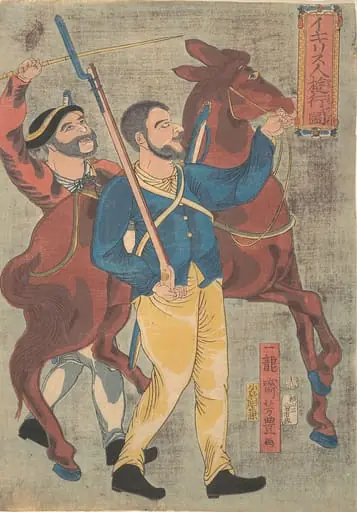 Igirisujin ryōkō no zu|Englishman Walking for Pleasure
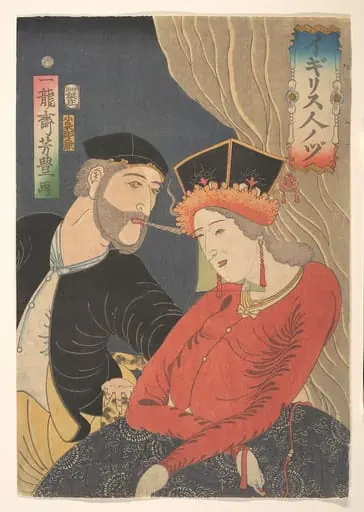 英吉利人之図|Illustration of English People (Igirisujin no zu)
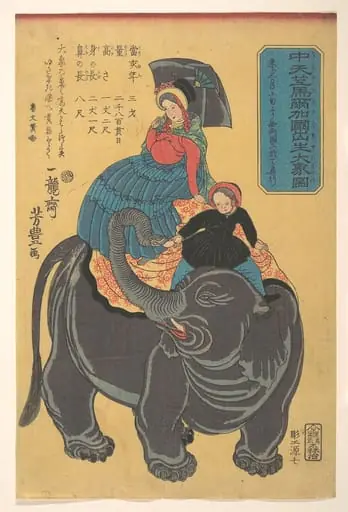 Chū tenjiku Maruka koku shūsshō daizō zu|Picture of an Elephant Born in Maruka in Central India
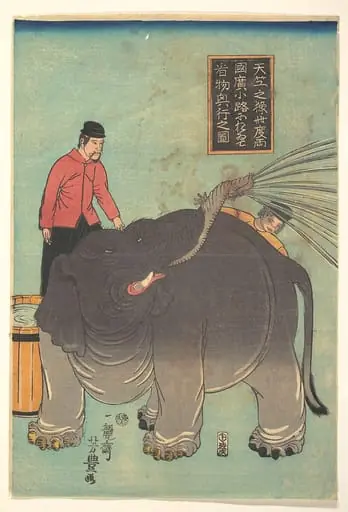 Untitled
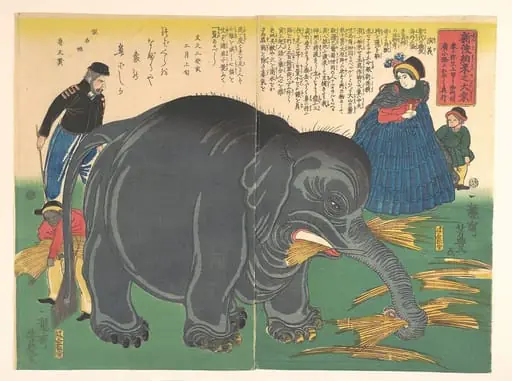 一龍斎芳豊画 「新渡舶来之大象」|Newly Imported Great Elephant (Shinto hakurai no daizō)
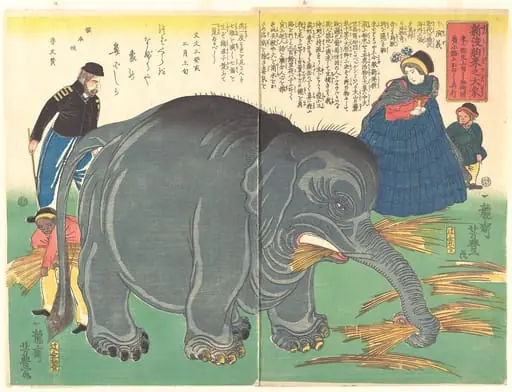 Untitled
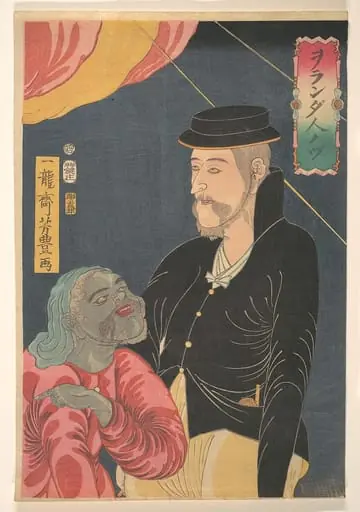 Orandajin no zu|Dutchman with Black Servant