Artwork
外国人之図|Views of Foreigners (Gaikokujin no zu)
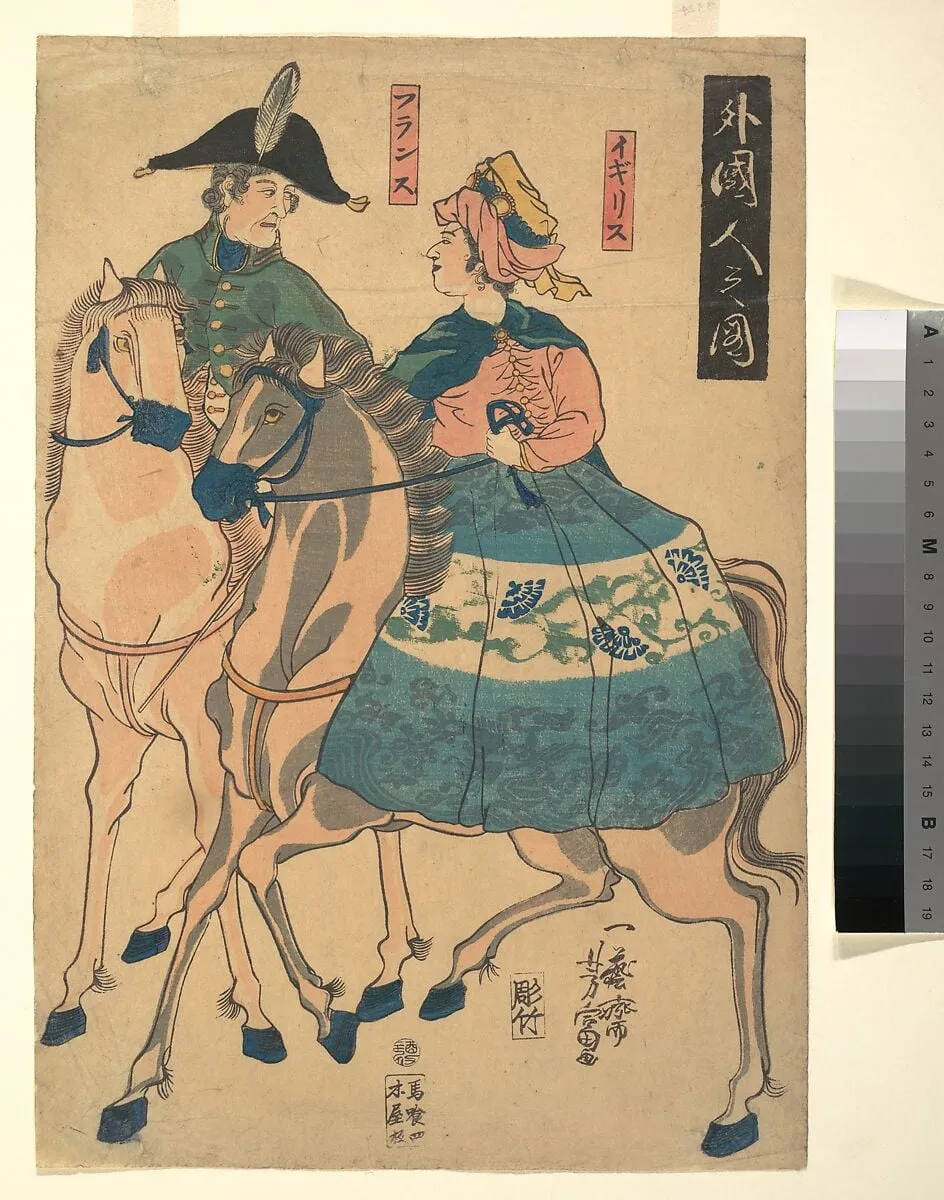
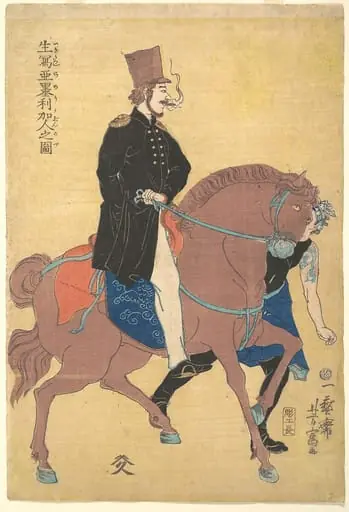
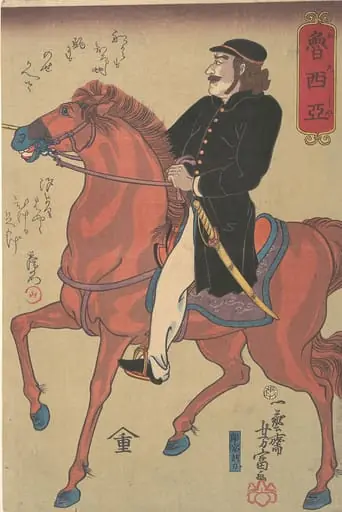
外国人之図|Views of Foreigners (Gaikokujin no zu) is an ink print by the Impressionist artist Utagawa Yoshitomi. It dates from 1861 and is held in the collection of the Metropolitan Museum of Art.
About this work
Overview
Created in 1861 by the ukiyo‑e artist Utagawa Yoshitomi, this woodblock print titled *Views of Foreigners* (Gaikokujin no zu) depicts a brief encounter between two Western visitors and a Japanese setting. Executed with ink and color on paper, the image is part of the Metropolitan Museum of Art’s collection of mid‑nineteenth‑century Japanese prints.
Subject & Meaning
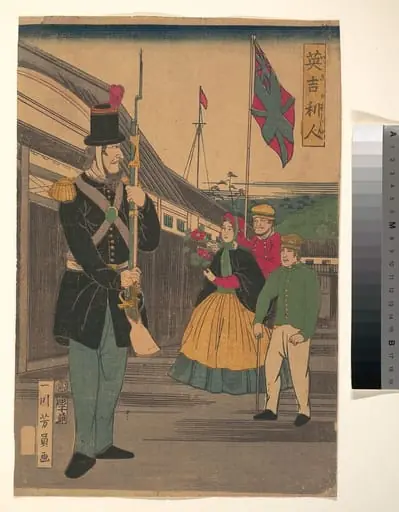
Red labels on the print read “France” and “England,” suggesting the figures represent foreign travelers observed in Japan during the late Edo period.
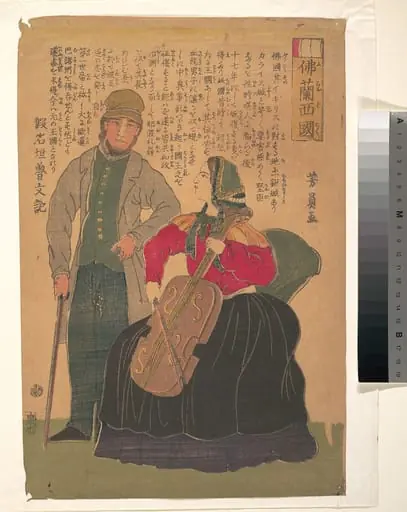
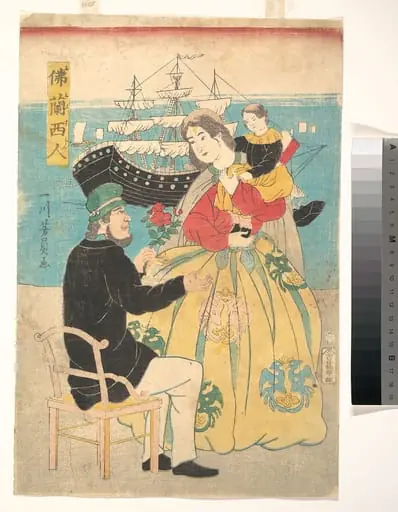
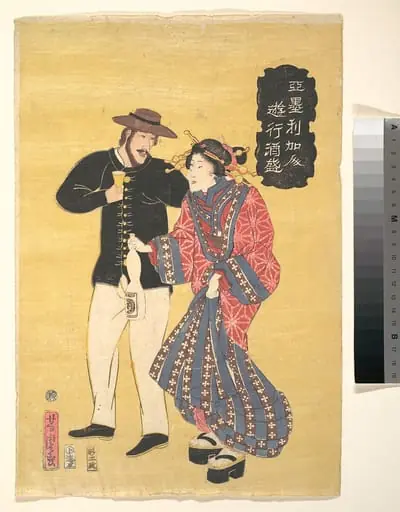
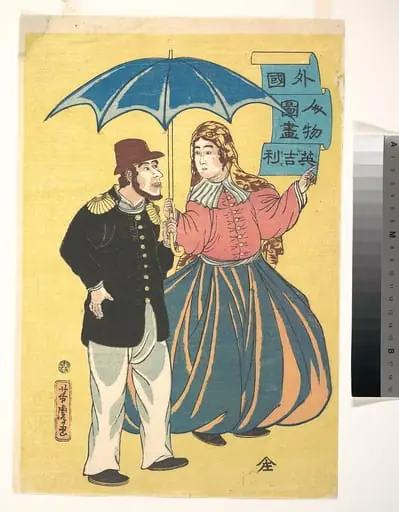
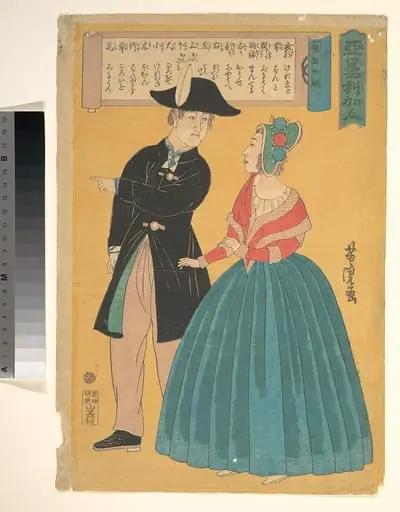
The scene shows a man and a woman sharing a single horse. The man, dressed in a green coat and a tall black hat topped with a feather, bears a solemn expression. The woman’s face is painted a vivid pink; she wears blue‑green robes patterned with clouds and an elaborate headdress. Red labels on the print read “France” and “England,” suggesting the figures represent foreign travelers observed in Japan during the late Edo period.
Technique & Style
Yoshitomi employed the traditional ukiyo‑e woodblock process, carving separate blocks for line work and each color. The composition balances bold outlines with delicate coloration, especially in the woman’s patterned kimono and the horse’s weary stance, where one foreleg is lifted. The use of contrasting reds for the geographic tags highlights the print’s narrative focus on cross‑cultural encounter.
History & Provenance
The print was produced amid Japan’s opening to the West following the 1850s treaties, a period that generated a market for images of foreigners. After changing hands among collectors, it entered the Metropolitan Museum of Art’s holdings, where it is displayed alongside other works illustrating Japan’s rapid social and visual transformations in the early Meiji era.
Artist & collection