Artwork
Igirisujin|英吉利人|Englishmen
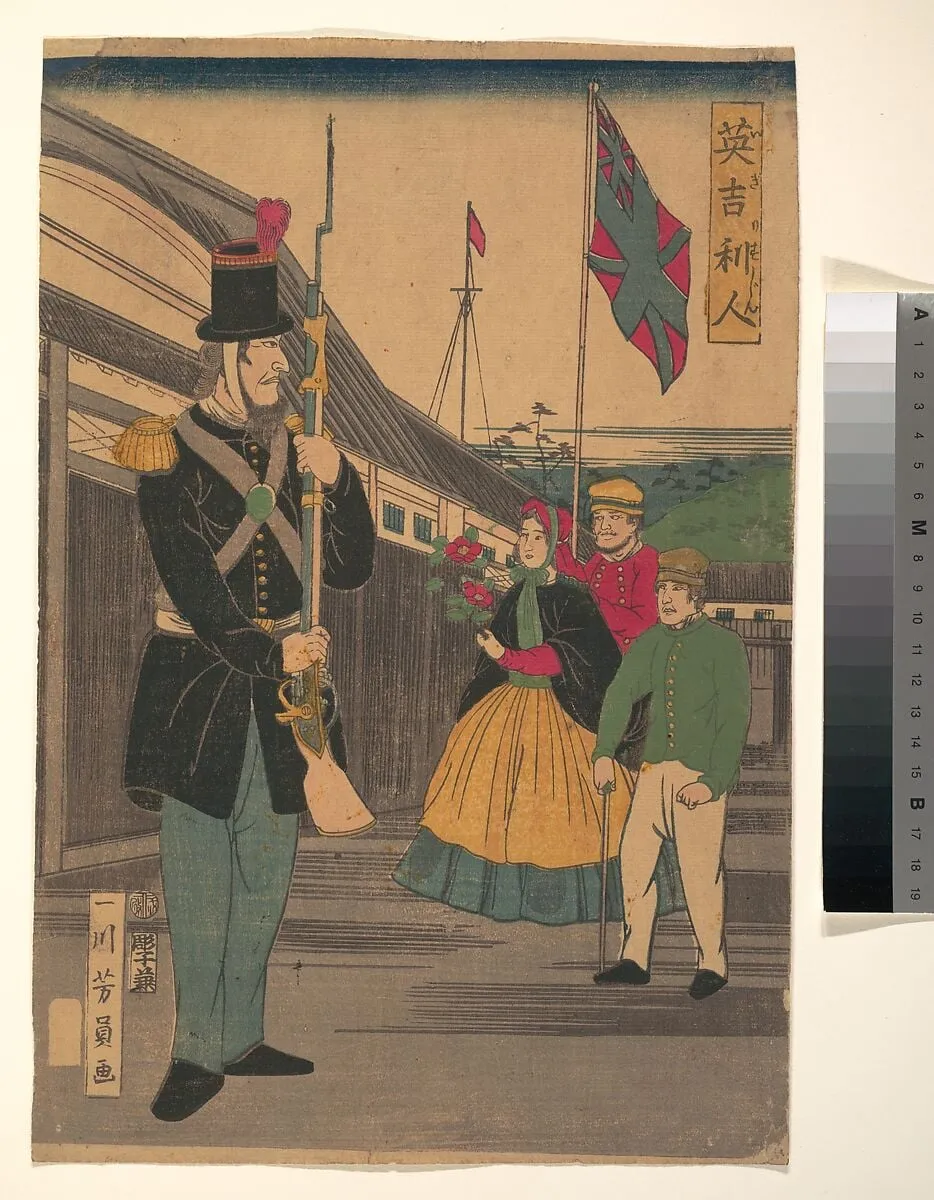
Igirisujin|英吉利人|Englishmen is an ink print by the Impressionist artist Utagawa Yoshikazu. It dates from 1862 and is held in the collection of the Metropolitan Museum of Art.
About this work
Overview
Created around 1862 by Utagawa Yoshikazu, this woodblock print captures a moment of quiet observation involving foreign figures in Japan.
Created around 1862 by Utagawa Yoshikazu, this woodblock print captures a moment of quiet observation involving foreign figures in Japan. Produced during a period of limited foreign presence, the work reflects Japanese artists’ engagement with newly encountered Westerners. Rendered in ink and color on paper, it belongs to a genre of prints that documented foreign visitors and their customs, offering a domestic perspective on international exchange.
Subject & Meaning
The print portrays three foreign individuals—two men and a woman—standing before a building with a sloping roof, the British flag visible behind them. The figures, dressed in distinct Western attire, appear still and composed, suggesting a moment of pause rather than action. The scene avoids dramatic narrative, instead emphasizing cultural curiosity and the quiet presence of outsiders in a Japanese context, possibly reflecting the tension between isolation and emerging contact.
Technique & Style
The composition employs restrained lines and muted tones, typical of late Edo-period woodblock printing. Figures are arranged with deliberate spacing, creating a sense of stillness. Details like the top hat, rifle, and cane are rendered with clarity but without excessive ornamentation. The flat perspective and minimal background suggest influence from traditional Japanese aesthetics, balancing observation with stylization rather than naturalistic realism.
History & Provenance
The print was produced during the final years of Japan’s sakoku policy, as limited foreign interaction increased through designated ports like Nagasaki. Utagawa Yoshikazu, a lesser-known artist of the Utagawa school, contributed to a wave of prints documenting foreigners, often based on secondhand descriptions or rare sightings. The work entered The Metropolitan Museum of Art’s collection through documented acquisitions in the 20th century, preserving its role as a cultural artifact of cross-cultural encounter.
Context
In the early 1860s, Japan was transitioning from centuries of isolation to forced openness following treaties with Western powers. Prints like this one responded to public fascination with foreigners, who were both feared and intriguing. While not propaganda, such images served as visual records of the unfamiliar, shaped by Japanese conventions of representation rather than direct observation, revealing more about Japanese perception than Western reality.
Legacy
This print contributes to a broader corpus of ukiyo-e works that captured Japan’s encounter with the West during its opening. Though not widely known outside specialist circles, it remains a valuable example of how Japanese artists interpreted foreign presence through their own visual language. Its preservation in major collections underscores its role as a historical document of cultural perception during a pivotal era.
Artist & collection

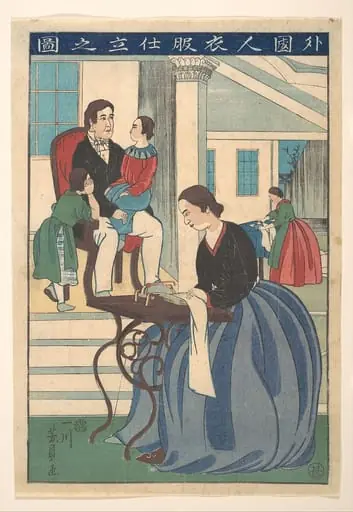 歌川芳員画 『外国人衣服仕立之図』|Foreign Family with Wife Making Clothes (Gaikokujin ifuku shitate no zu)
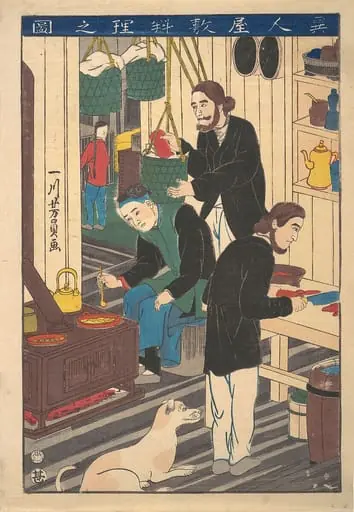 Ijiin Yashiki ryōri no zu|Inside a Foreign Restaurant
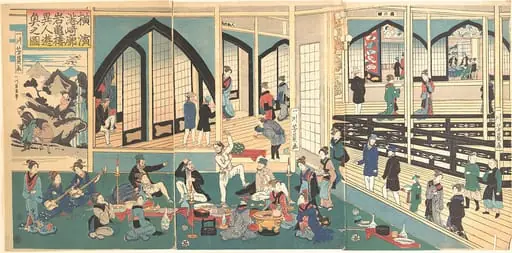 Yokohama Miyozaki-kaku Gankirō ijin yūkyō no zu|Foreigners Enjoying a Party at the Gankirō Tea House
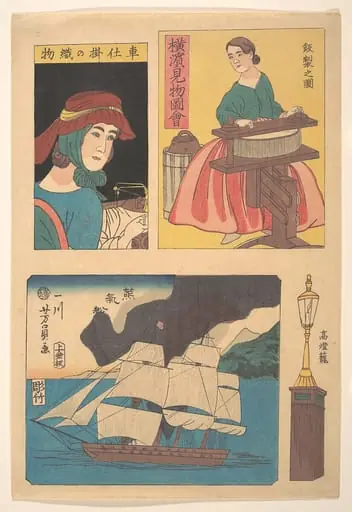 Yokohama kenbutsu zue|Picture of Sights in Yokohama: Woman with a Ringer, Lamp Post, a Steamboat at Full Sail and a Woman with a Sewing Machine
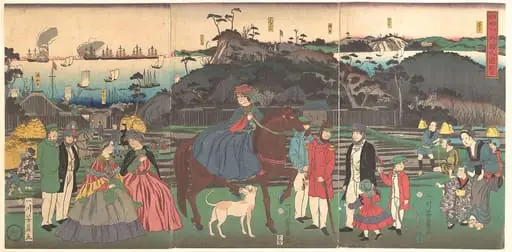 Kanagawa Gongenyama Gaikokujin yūran|Foreigners Visiting the Famous Site of Mt. Gongen in Kanagawa
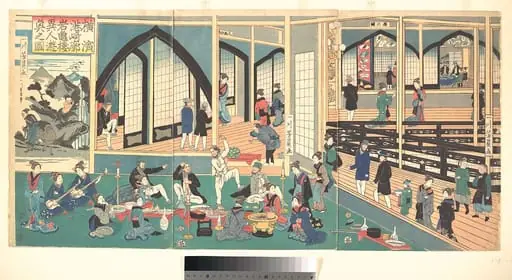 Untitled
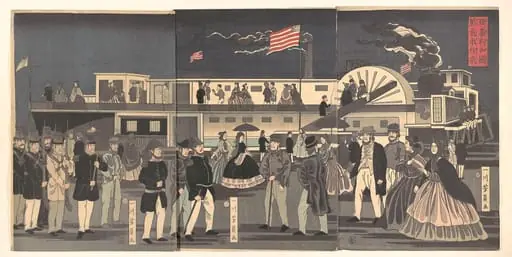 「亞墨利加國蒸氣車往来」|“America”: A Steamship in Transit
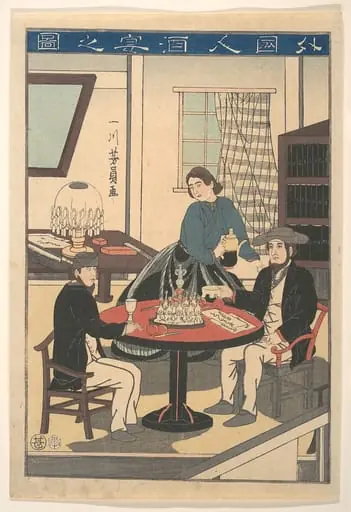 Gaikokujin Sake no zu|A Foreigner's Wine Party (Gaikokujin shuen no zu), from an untitled series of foreigners at home
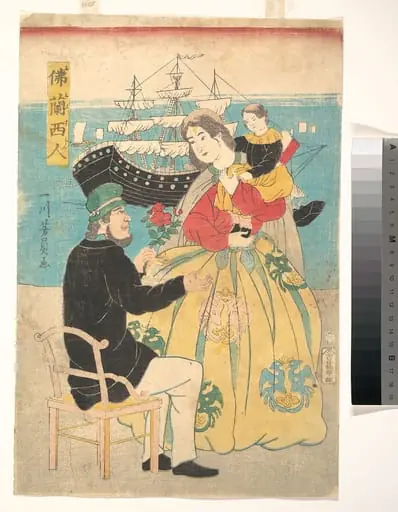 Untitled
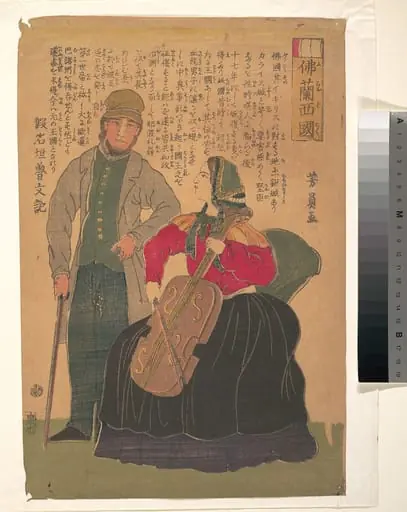 Untitled
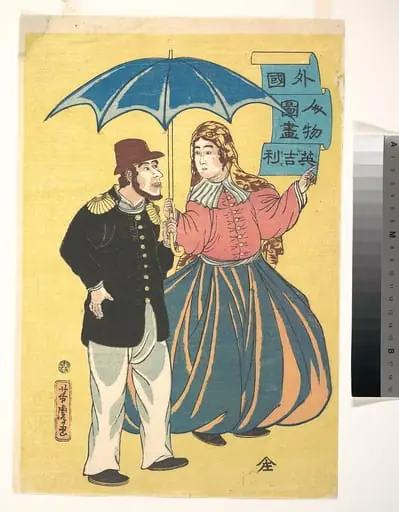 Untitled
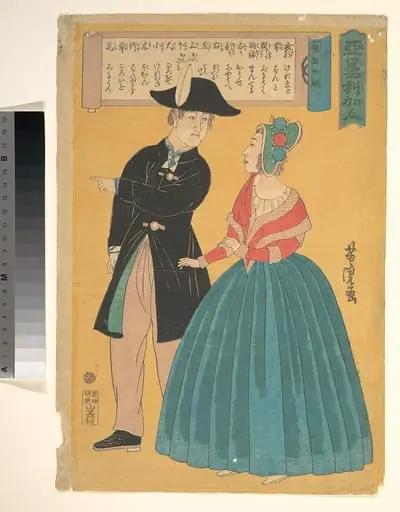 Untitled
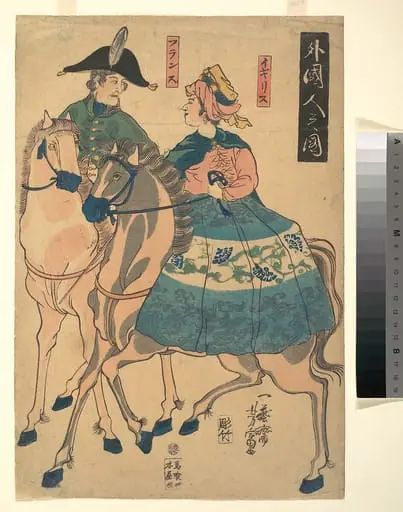 外国人之図|Views of Foreigners (Gaikokujin no zu)
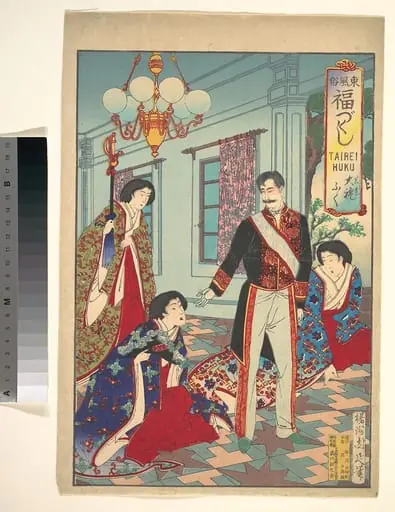 『東風俗福づくし 大 礼ふく』|“Ceremonial Attire” from the series An Array of Auspicious Customs of Eastern Japan (Azuma fūzoku, fukuzukushi: Tairei fuku)
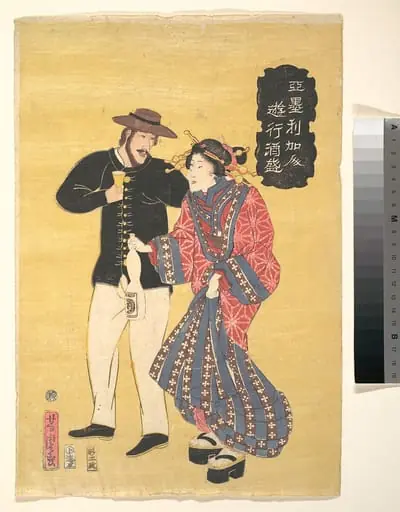 Amerika jin Yuko Sakamori|An American Carousing
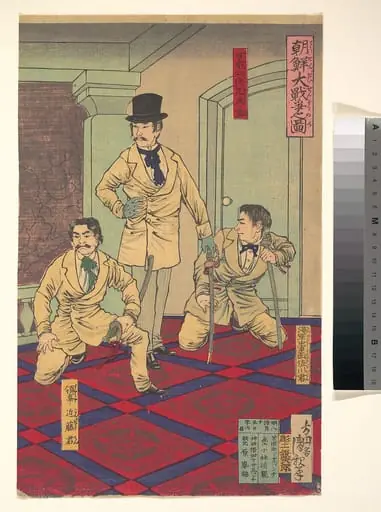 朝鮮大戦争之図|Illustration of the Great Korean War (Chōsen dai sensō no zu)
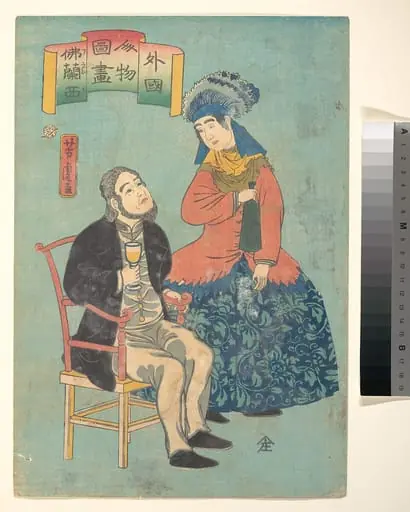 外国人物図畫仏蘭西|France, from the series Pictures of People from Foreign Lands (Gaikoku jinbutsu zuga)
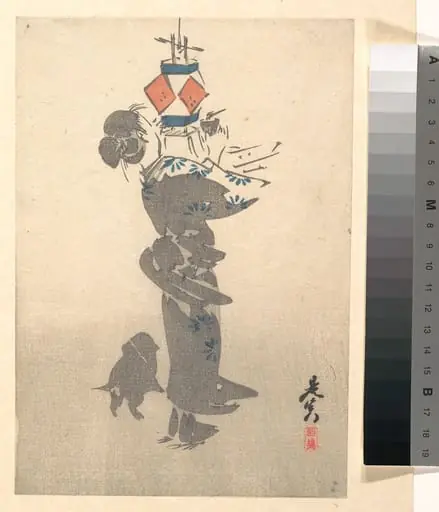 お盆燈籠の火付|Lighting a Hanging Lantern for the Obon Festival