Artwork
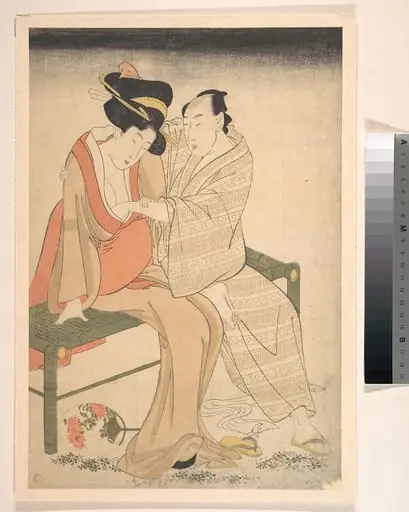
名取酒六家選 大もんぢや内浅じふ 木綿屋七ッ梅|A Courtesan
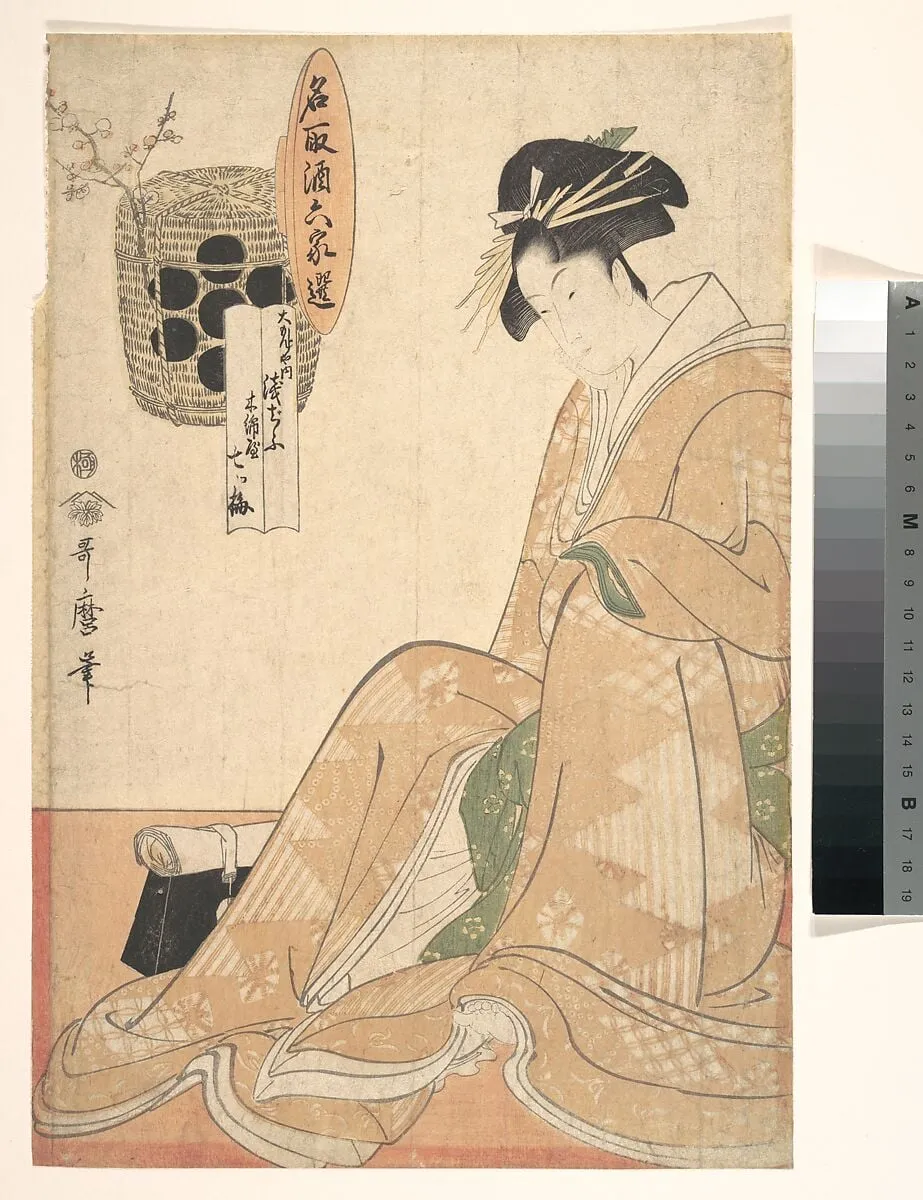
名取酒六家選 大もんぢや内浅じふ 木綿屋七ッ梅|A Courtesan is an ink print by the Romanticist artist Kitagawa Utamaro. It dates from 1780 and is held in the collection of the Metropolitan Museum of Art.
About this work
Overview
Kitagawa Utamaro’s woodblock print, dated 1780, presents a single figure—a woman dressed in a patterned kimono—standing beneath a willow branch. She holds a fan, her hair styled in an elevated coiffure, and the composition conveys a moment of quiet repose. The work is executed in ink and color on paper, typical of Edo‑period prints.
Subject & Meaning
The figure belongs to a series that portrayed actual courtesans of Edo, offering a realistic glimpse into their daily lives rather than idealized representations. Utamaro captures an individualized expression and mood, suggesting a private, introspective instant rather than a staged performance, thereby humanizing the subject within the social context of the pleasure districts.
Technique & Style
Utamaro employs fine, delicate line work to delineate the kimono’s pattern and the woman’s features, while a restrained palette of soft colors creates a subtle atmospheric effect. The interplay of ink outlines and muted pigments enhances the sense of depth and intimacy, characteristic of his approach to portraiture in ukiyo‑e.
History & Provenance
Created in the late eighteenth century, the print was part of a broader series documenting real courtesans in Edo, reflecting contemporary interest in the lives of women of the licensed quarters. It remains an example of Utamaro’s contribution to the genre of bijin-ga, and survives in museum collections that preserve Edo‑period woodblock prints.
Artist & collection


 Untitled
 Untitled
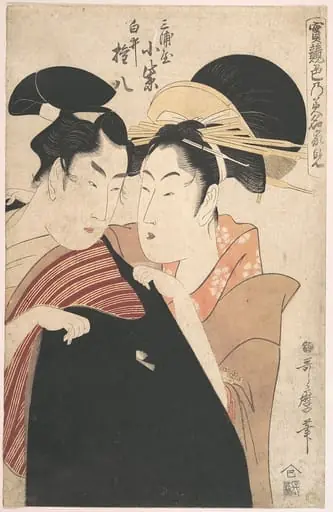 実競色乃美名家見 三浦屋小紫 白井権八|The Lovers Miura-ya Komurasaki and Shirai Gonpachi.
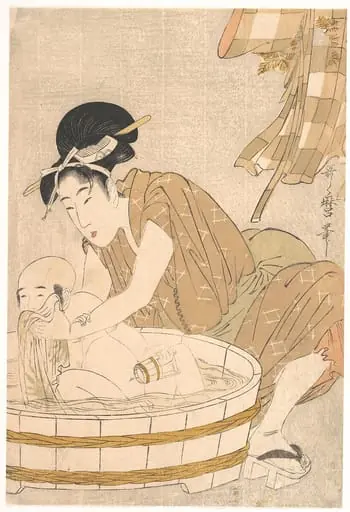 行水|Bathtime (Gyōzui)
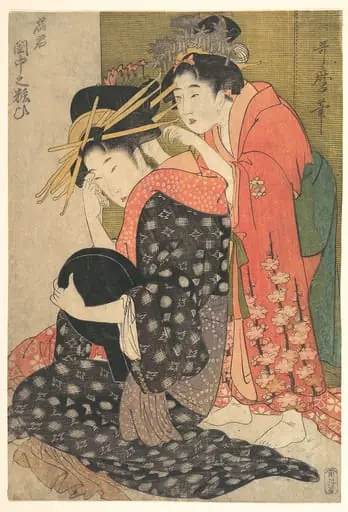 名君 閨中の粧ひ|The Oiran Yoso-oi Seated at Her Toilet
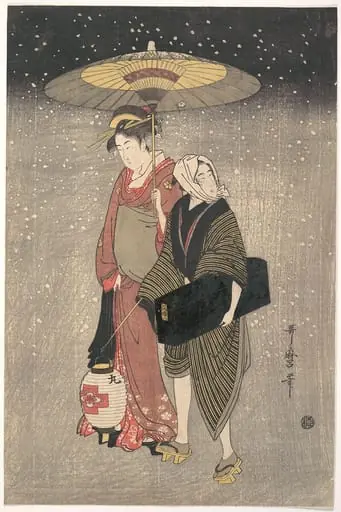 Untitled
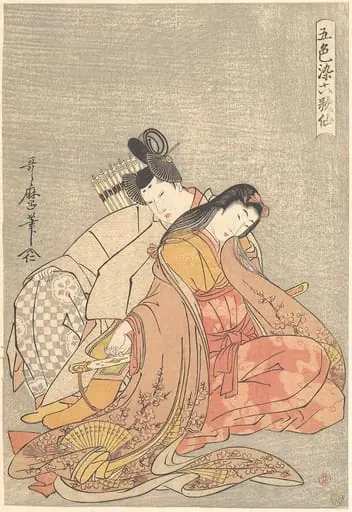 『五色染六歌仙』 在原業平と小野小町|“The Poet Ariwara no Narihira (825–880) and Ono no Komachi,” from the series Five Colors of Love for the Six Poetic Immortals (Goshiki-zome rokkasen)
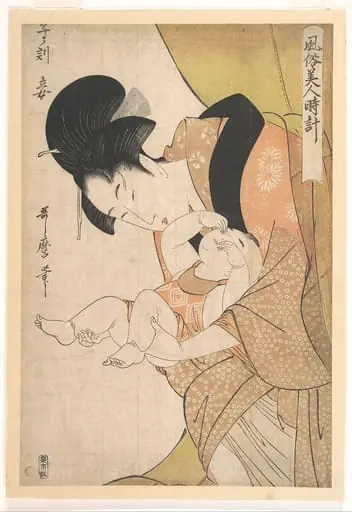 風俗美人時計 子ノ刻 妾|Midnight: Mother and Sleepy Child
 Untitled
 Untitled
 Untitled
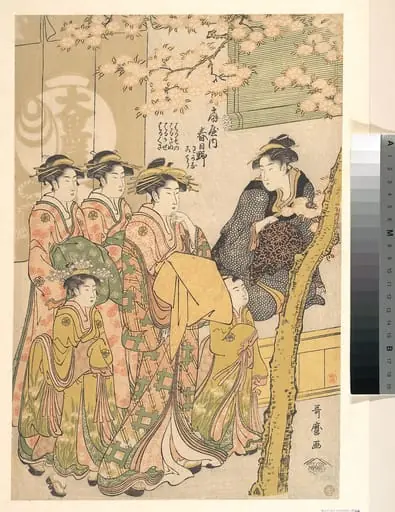 扇屋内春日野|The Oiran Kasugano of Ogiya on Parade under Blossoming Cherry Trees
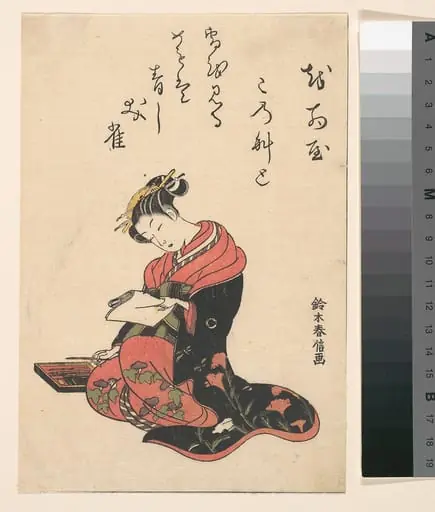 青楼美人合|The Courtesan Kasugano Writing a Letter
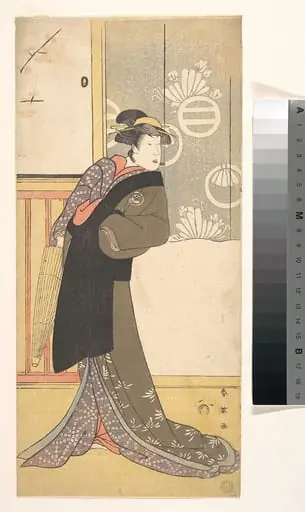 Untitled
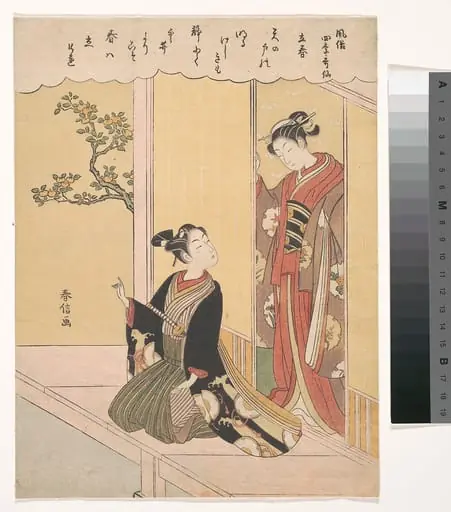 鈴木春信画「風俗四季歌仙 立春」|The First Day of Spring (Risshun), from the series Fashionable Poetic Immortals of the Four Seasons (Fūzoku shiki Kasen)
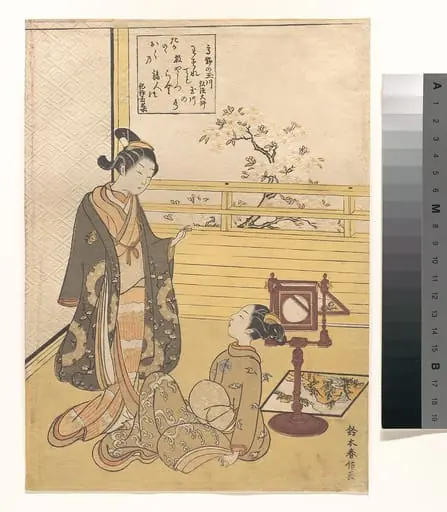 鈴木春信画 覗き絡繰り・「高野の玉川 弘法大師」|A Teenage Boy and Girl with a Viewer for an Optique Picture (Nozoki-karakuri); Kōbō Daishi’s Poem on the Jewel River of Kōya (Kōya no Tamagawa: Kōbō Daishi)
 Untitled
 Untitled
 Untitled
 Untitled