Artwork
Untitled
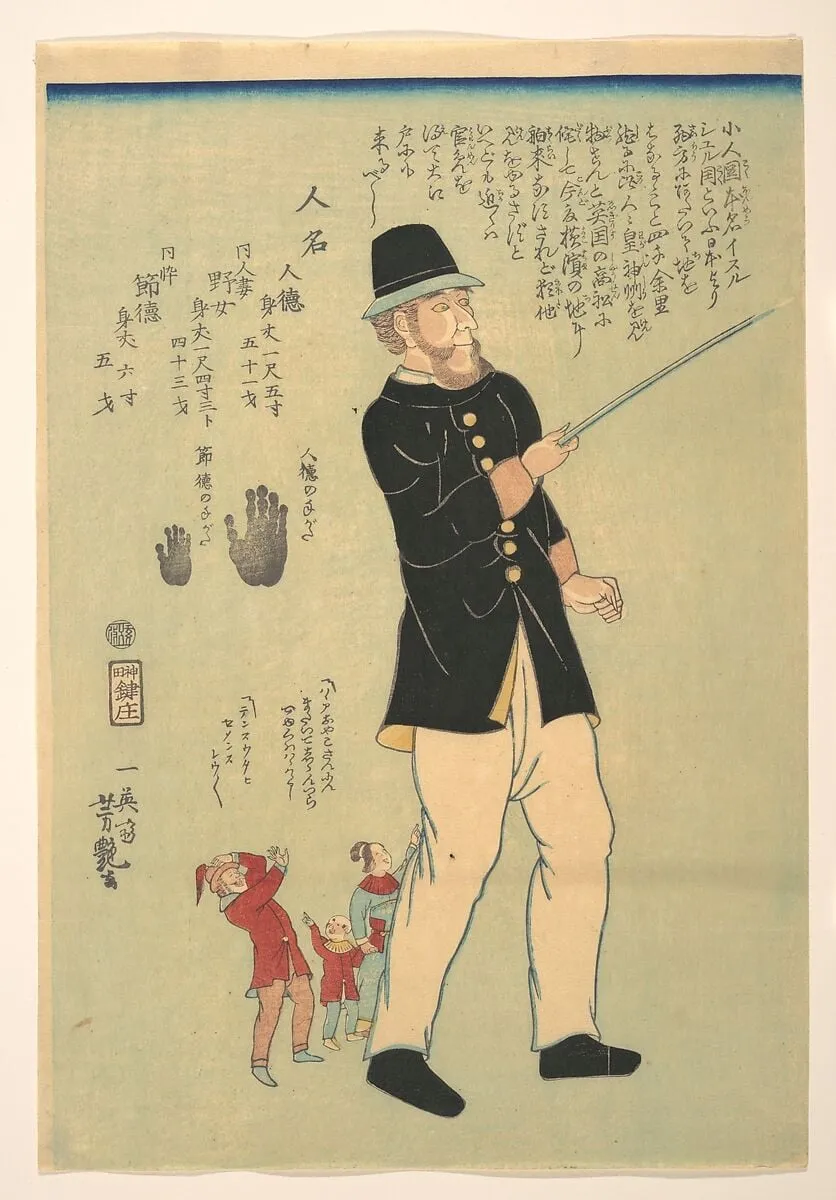
Untitled is an ink print by the Impressionist artist Utagawa Yoshitsuya. It dates from 5 and is held in the collection of the Metropolitan Museum of Art.
About this work
Overview
The composition is framed by Japanese script and minimal illustrative elements, suggesting narrative context without detailed scenery.
This woodblock print, attributed to Utagawa Yoshitsuya and dated to the mid-19th century, is rendered in ink and color on paper. It depicts a solitary, tall figure in a dark, antiquated coat and hat, gesturing with a stick toward an unseen point. Three children in vivid red and blue garments observe him from a distance. The composition is framed by Japanese script and minimal illustrative elements, suggesting narrative context without detailed scenery.
Subject & Meaning
The central figure, dressed in outdated attire, may represent a folk performer, itinerant storyteller, or historical character from popular theater. The children’s attentive posture implies a moment of transmission—perhaps a tale, warning, or lesson. The surrounding text likely identifies the figure or summarizes the scene, while the small sketches of hands and a face may symbolize commentary or moral cues common in Edo-period visual storytelling.
Technique & Style
The print employs bold, clean outlines and flat areas of color, typical of ukiyo-e woodblock printing. The contrast between the dark, elongated figure and the bright clothing of the children creates visual emphasis. Background details are reduced to symbolic elements rather than naturalistic rendering, prioritizing clarity and symbolic resonance over spatial depth. The hand-carved blocks suggest a workshop production, consistent with commercial print traditions of the era.
History & Provenance
The work is part of the collection at The Metropolitan Museum of Art, acquired as part of a broader grouping of Japanese prints from the late Edo period. While the exact date of creation is uncertain, stylistic features align with Yoshitsuya’s activity around the 1850s. Its provenance traces to private Japanese collections before entering Western institutional holdings in the 20th century.
Context
Produced during a time of social change in Japan, such prints often blended traditional folklore with contemporary public figures. Yoshitsuya, known for actor portraits and genre scenes, occasionally incorporated narrative elements drawn from kabuki or民间 tales. The inclusion of text alongside imagery reflects a culture where visual and literary modes of storytelling were closely intertwined, especially in mass-produced prints.
Legacy
Though less widely known than his contemporaries, Yoshitsuya’s prints contribute to the understanding of regional ukiyo-e production outside Edo’s dominant studios. This work exemplifies how everyday narratives were visually codified for a broad audience, preserving folk motifs and performance culture during Japan’s transition into modernity. Its preservation allows continued study of visual literacy in 19th-century Japan.
Artist & collection

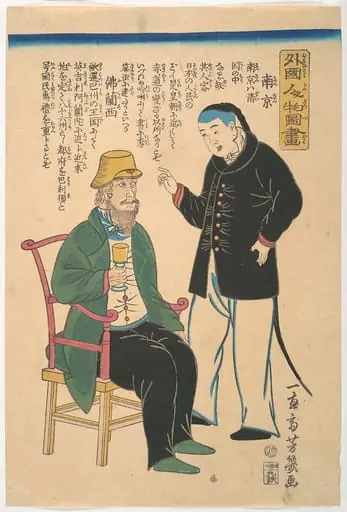 Oroshia|Chinese Servant and Frenchman
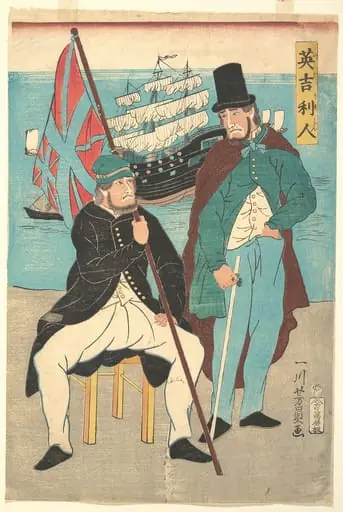 Igirisujin|Englishmen
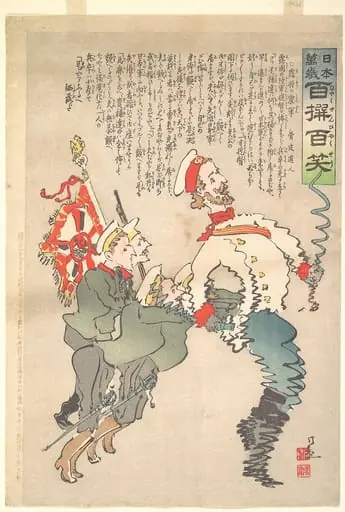 Untitled
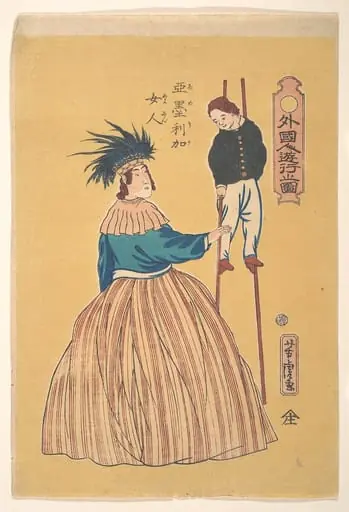 Amerika nyōjin|American Woman with Her Child on Stilts
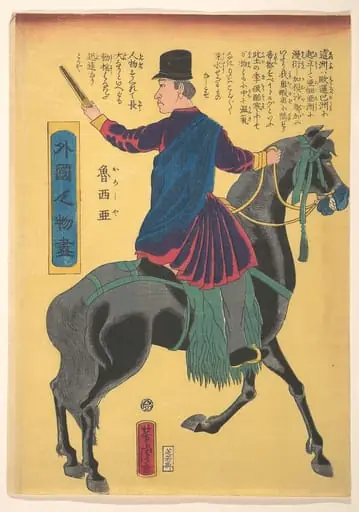 Orosia|Mounted Russian
![Nōgei no seiran|Returning Sails at Nōgei [American couple riding over the Nōgei Bridge], by Utagawa Yoshitora](https://artifactworldgallery.com/img/utagawa-yoshitora--nogei-no-seiran-returning-sails-at-nogei-american-couple-rid--332c5cab5263a5c5-w320.webp) Nōgei no seiran|Returning Sails at Nōgei [American couple riding over the Nōgei Bridge]
Nōgei no seiran|Returning Sails at Nōgei [American couple riding over the Nōgei Bridge]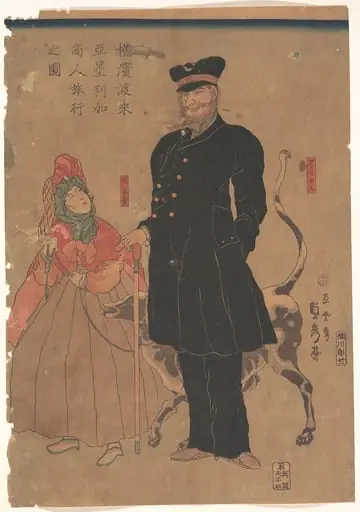 Yokohama torai Amerika shonin ryoko no zu|横浜渡來亜墨利加商人旅行之図|American Merchant Strolling in Yokohama
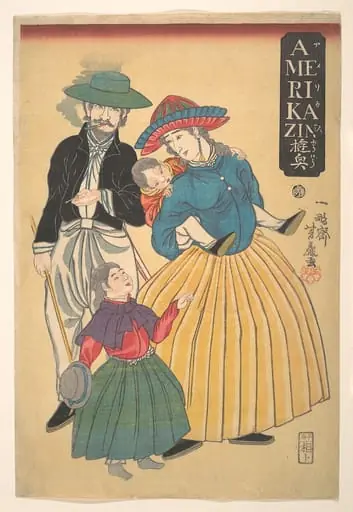 一鵬斎芳藤画 「AMERIKAZIN (アメリカ人)遊興」|Americans on an Outing (Amerikajin yūgyō)
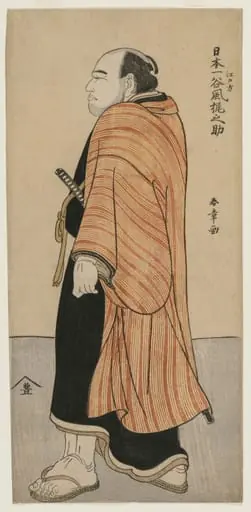 Tanikaze Kajinosuke
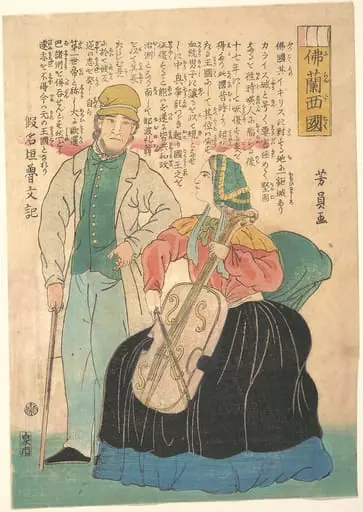 Furansukoku|仏蘭西国|France
![Motomura no yūdachi|Evening Glow at Motomura [Two Englishmen looking at the sunset], by Utagawa Yoshitora](https://artifactworldgallery.com/img/utagawa-yoshitora--motomura-no-yudachi-evening-glow-at-motomura-two-englishmen--2e8bfdf3deec941b-w320.webp) Motomura no yūdachi|Evening Glow at Motomura [Two Englishmen looking at the sunset]
Motomura no yūdachi|Evening Glow at Motomura [Two Englishmen looking at the sunset]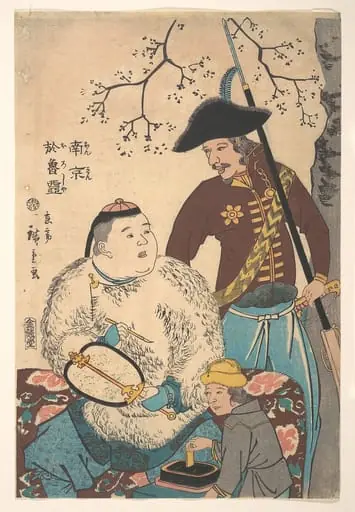 南京 於魯西亜|Russians and a Chinese Inscribing a Fan