Artwork
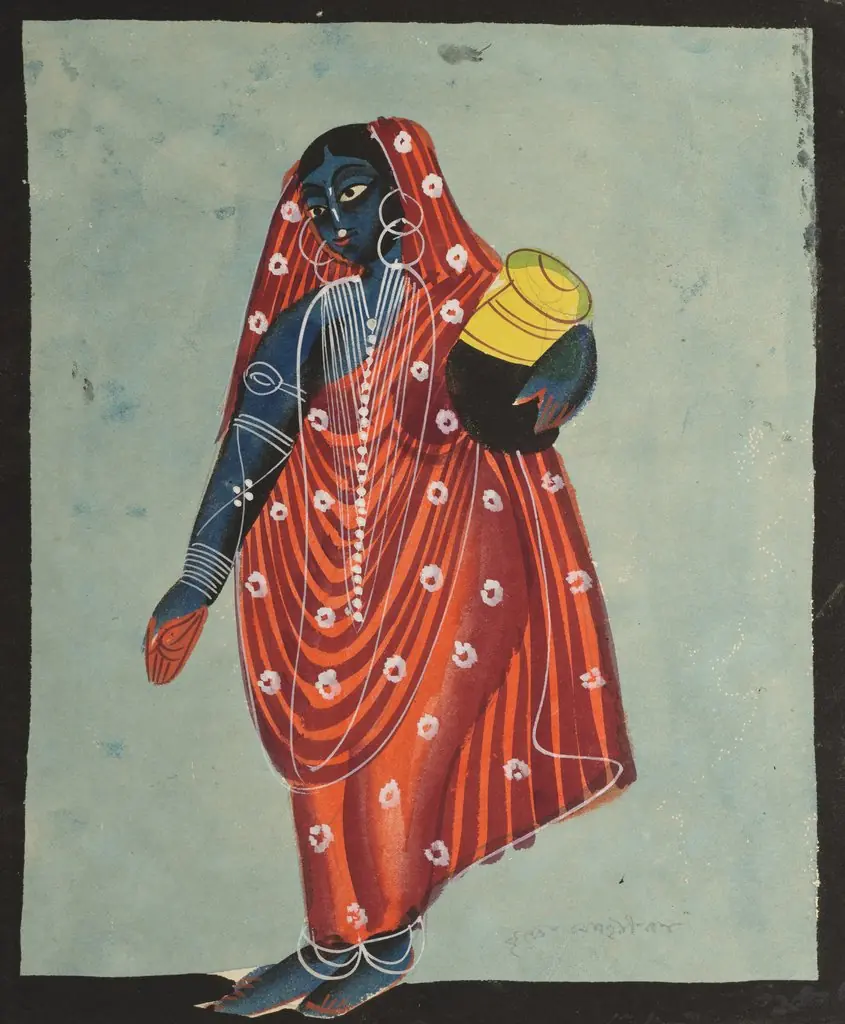
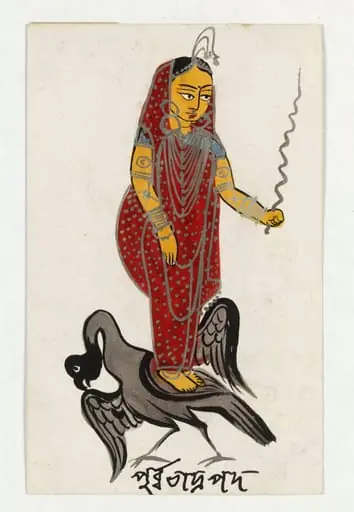
A woman churning milk
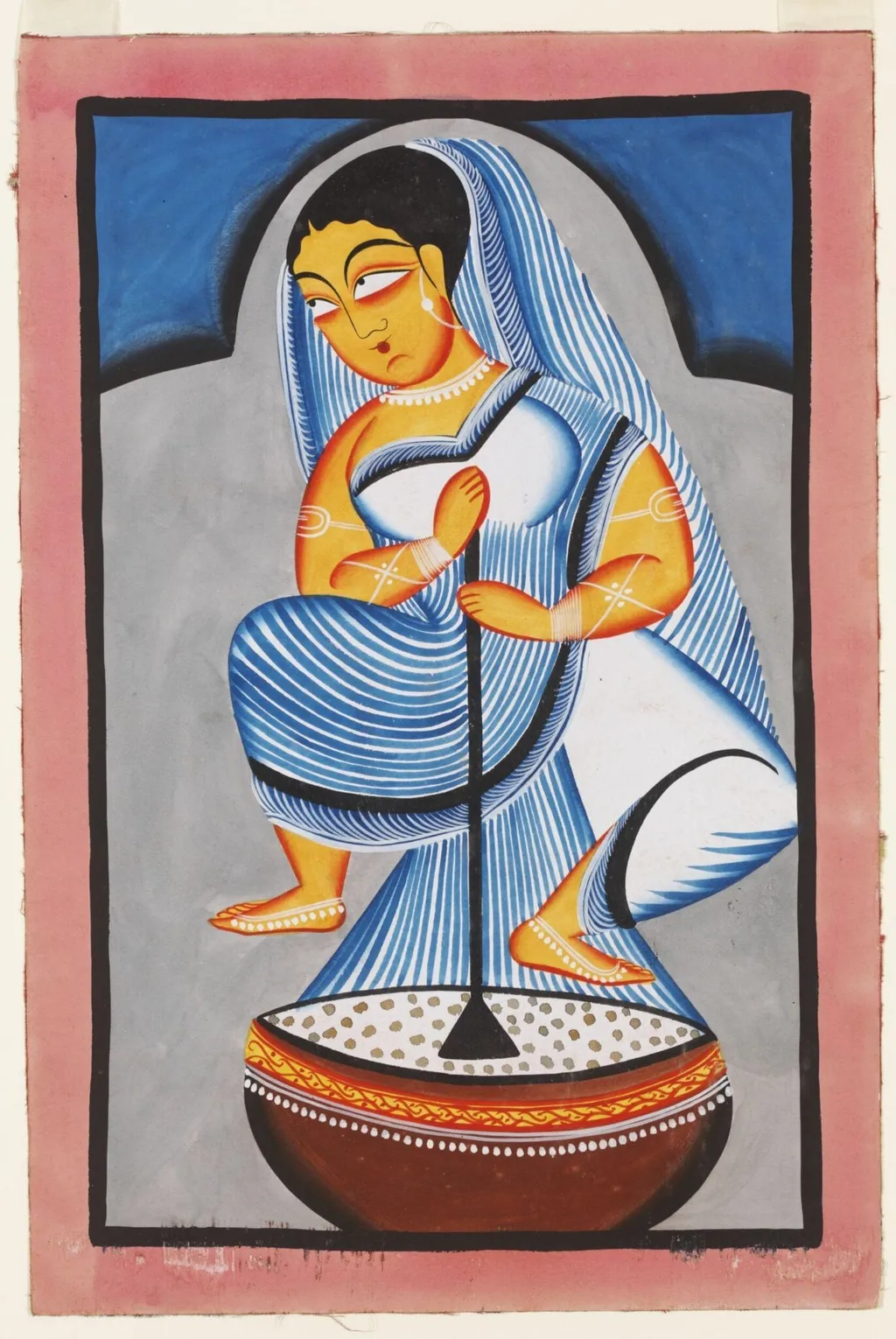
A woman churning milk is a paint painting by Uttam Chitrakar. It dates from 2009 and is held in the collection of the Victoria and Albert Museum.
About this work
You can learn more about this style by looking at the work of Uttam Chitrakar.
This painting is called "A woman churning milk" by Uttam Chitrakar.
It was made in 2009 using the Kalighat painting style.
The painting shares some similarities with other works, like those by the Ghosh brothers, in its use of color and decoration, which is interesting because it shows how artists can influence each other.
You can learn more about this style by looking at the work of Uttam Chitrakar.
Overview
Created in 2009 by Uttam Chitrakar, this work is a contemporary interpretation of the Kalighat painting tradition. Though produced in the modern era, it deliberately echoes the visual language of 19th-century Bengali folk art, maintaining the genre’s characteristic flat planes, bold outlines, and restrained palette. The subject—a woman engaged in the daily task of churning milk—reflects the tradition’s focus on ordinary life.
Subject & Meaning
The scene captures a routine domestic activity, elevating it through deliberate composition and stylized form. Churning milk, a task historically associated with women’s labor, is rendered without sentimentality or idealization. The focus on mundane work aligns with Kalighat’s broader tendency to depict everyday figures, subtly honoring the dignity of routine existence rather than mythic or royal narratives.
Technique & Style
The painting employs a limited palette of blue, black, and white, with subtle metallic accents along the figure’s ornaments and clothing. These choices mirror 19th-century Kalighat works, particularly those by the Ghosh brothers, suggesting a conscious revival of historical conventions. Brushwork is precise, forms are simplified, and spatial depth is minimized, reinforcing the flat, decorative quality typical of the style.
History & Provenance
Uttam Chitrakar, a descendant of Kalighat’s artisan lineage, continues a practice that declined with the rise of print media. This piece was made in Kolkata, where the tradition was once centered. While not an antique, it is part of a living effort to preserve the technique through contemporary practice, linking it to earlier works in collections like the V&A’s.
Context
Kalighat painting emerged near the Kalighat temple in Kolkata as affordable devotional art, later expanding to secular subjects. By 2009, the tradition was nearly extinct, but artists like Chitrakar revived it by adapting old forms to new contexts. This work reflects a broader cultural movement to sustain indigenous art forms through reinterpretation rather than replication.
Legacy
Chitrakar’s work contributes to the ongoing reclamation of Kalighat as a dynamic, evolving tradition rather than a historical relic. By applying its visual grammar to modern subjects, he affirms its relevance. His paintings serve as bridges between 19th-century artisans and contemporary audiences, ensuring the style’s survival through active practice.
Artist & collection
Artist

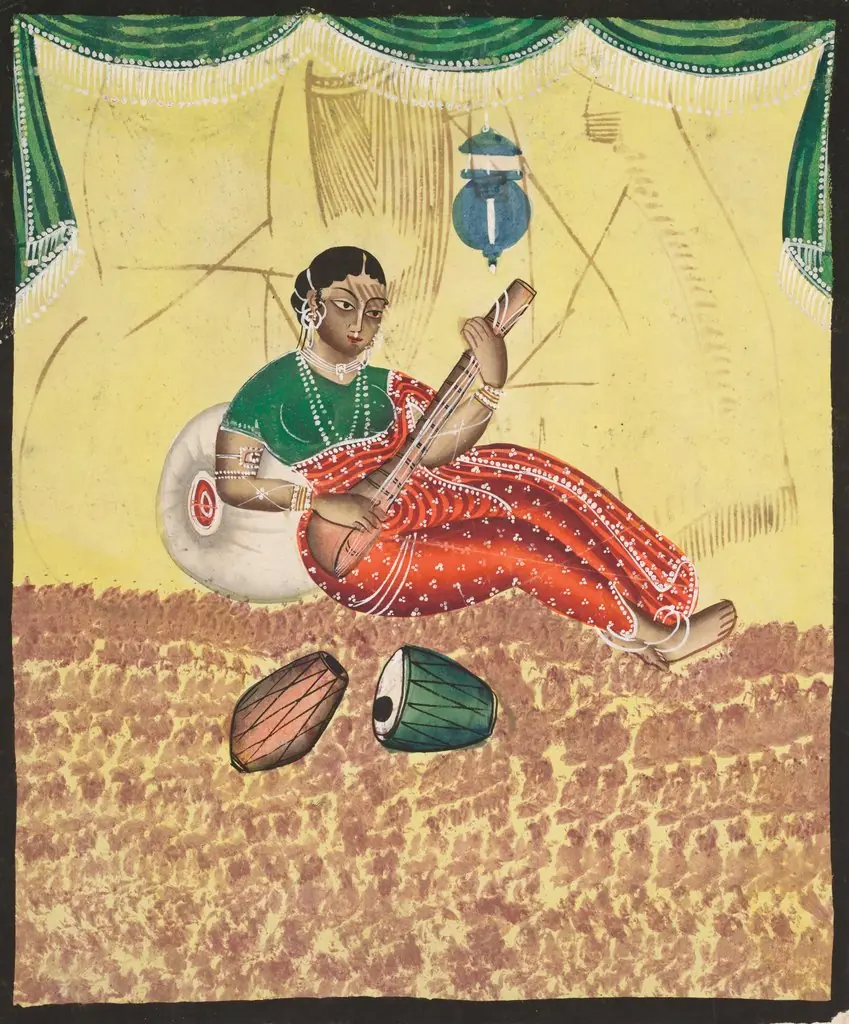 Woman Playing Music (recto), from a Kalighat album
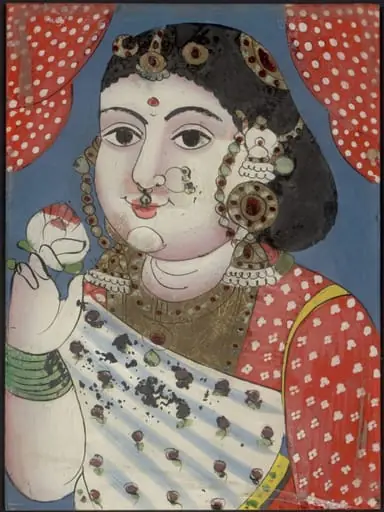 One of two portraits.
 Woman Playing Music (recto), from a Kalighat album
 Vishnu in Female Form of Mohini Carrying Amrita for the Gods
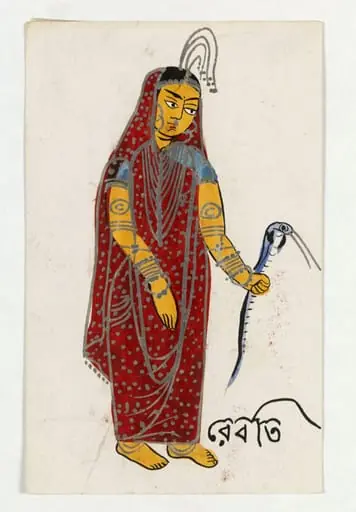 Revati
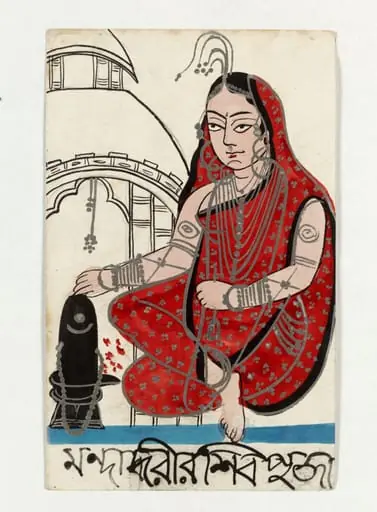 Mandodari
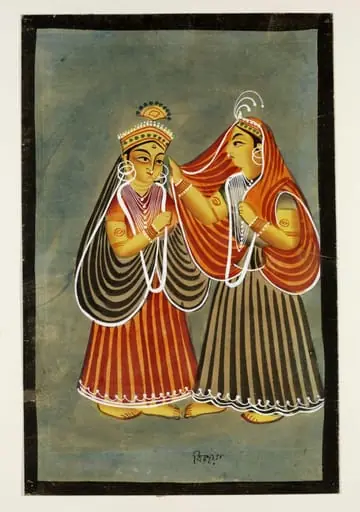 Uma
Uma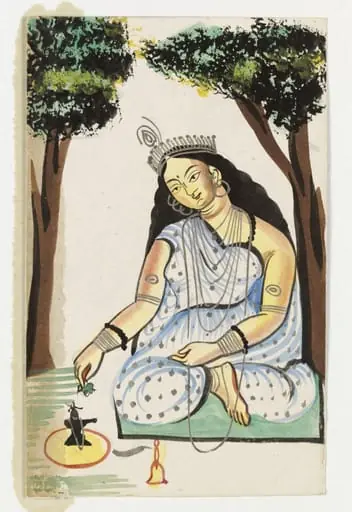 Shanti Devi
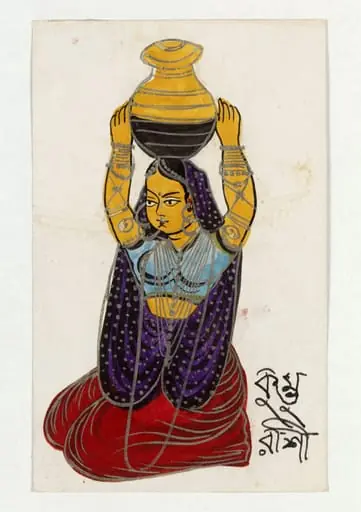 Kumbharashi
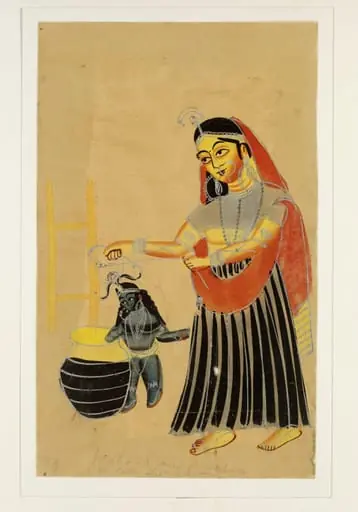 Krishna and Jasoda
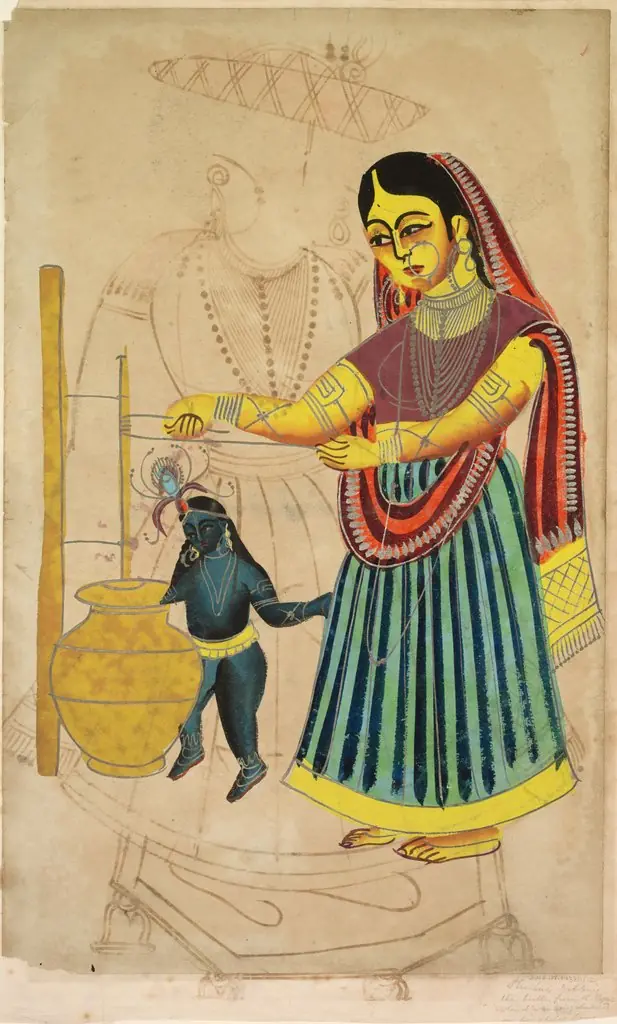 Yasoda Churning Butter (verso), from a Kalighat album
 Purvabhadrapad