Artwork
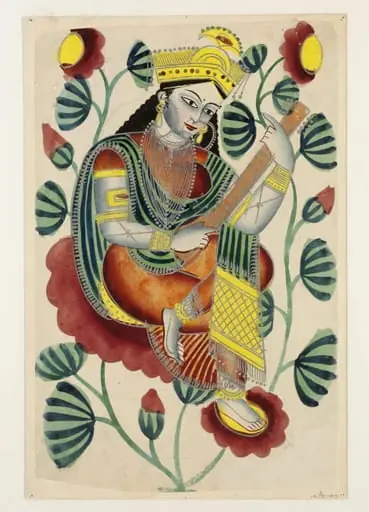
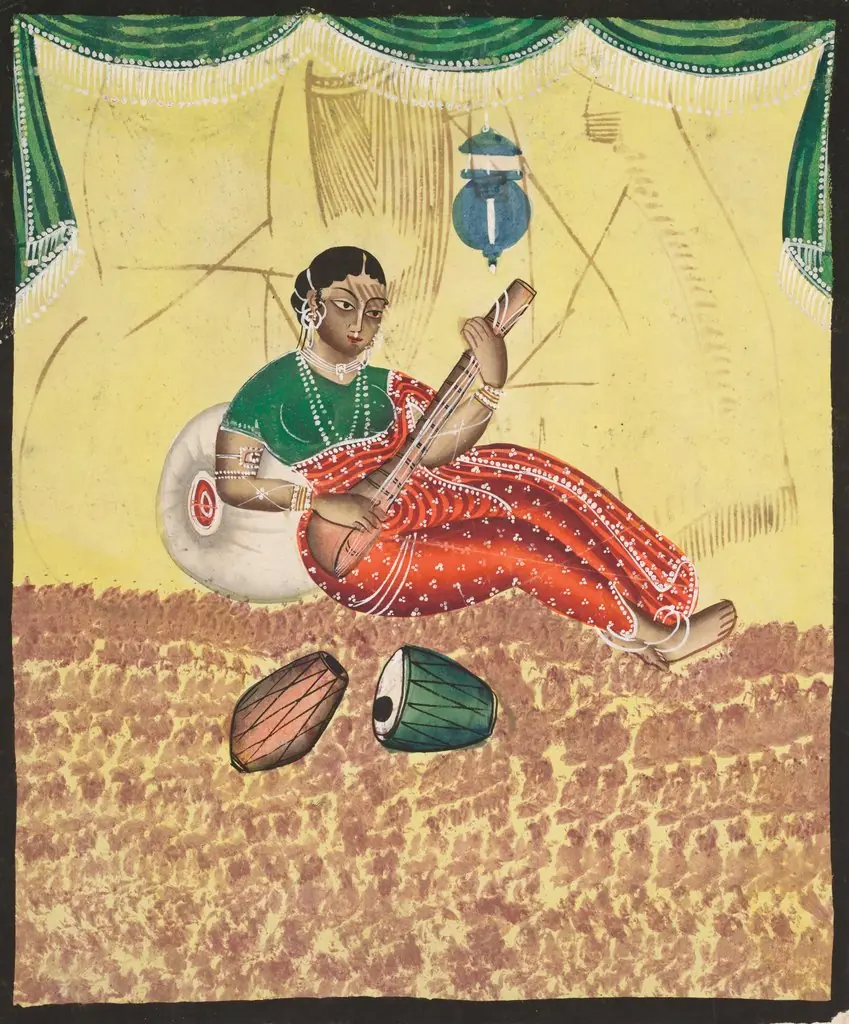
Woman Playing Music (recto), from a Kalighat album
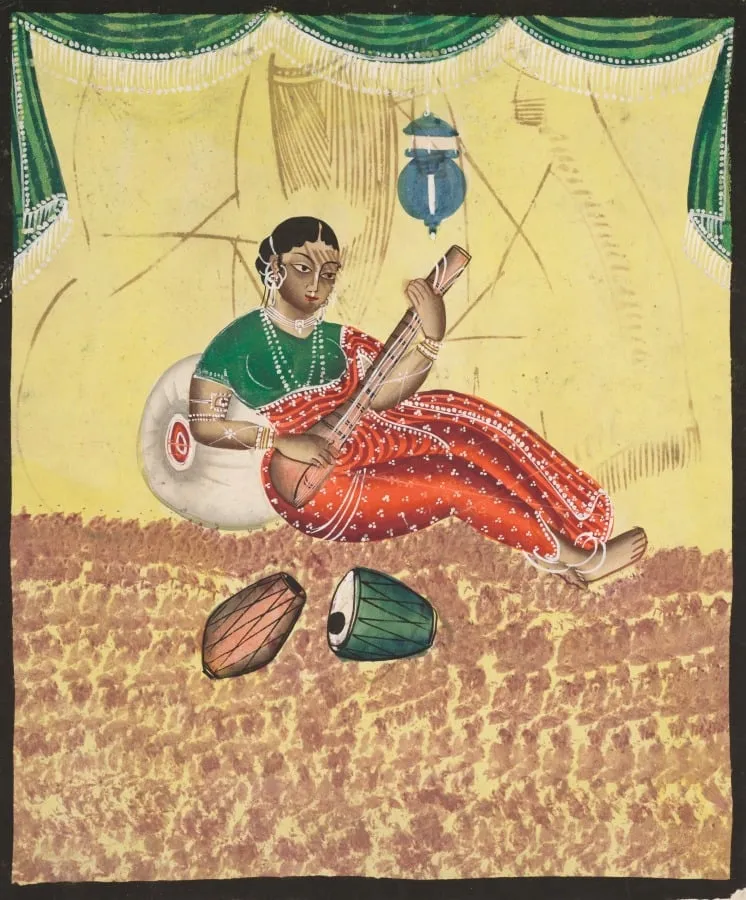
Woman Playing Music (recto), from a Kalighat album is an unspecified painting by the Patna School of Painting artist Unknown. It dates from 1890 and is held in the collection of the Cleveland Museum of Art. This painting is one panel from a small album of works produced in the Kalighat region near Kolkata during the 19th century.
About this work
Overview
This painting is one panel from a small album of works produced in the Kalighat region near Kolkata during the 19th century.
This painting is one panel from a small album of works produced in the Kalighat region near Kolkata during the 19th century. Executed in watercolor on paper, it depicts a solitary woman engaged in musical performance. The composition is flattened, with minimal spatial depth, and the background is rendered as a solid golden field, typical of the Kalighat aesthetic that prioritized symbolic clarity over naturalism.
Subject & Meaning
The figure is a domestic musician, likely a courtesan or itinerant performer, captured in a quiet moment of personal expression. The presence of a coconut and small drum suggests ritual or ceremonial context, while the lantern and canopy imply an indoor or sacred space. The scene reflects the blending of everyday life with spiritual undertones common in Kalighat art, where ordinary figures carried layered cultural significance.
Technique & Style
The painting employs bold outlines and flat areas of unmodulated color—red, green, gold, and blue—applied with swift, confident brushwork. Details like the white-dot pattern on the skirt and the intricate canopy design are rendered with precision, contrasting with the simplified forms of the body and instrument. The style avoids shading and perspective, emphasizing decorative rhythm and visual clarity over realism.
History & Provenance
Created in the mid- to late-1800s, this work likely originated from a Kalighat artist’s studio that produced albums for domestic and colonial collectors. Such albums were often bound and sold as souvenirs or ethnographic curiosities. The painting’s survival in a bound format suggests it was valued as part of a curated set, rather than as an isolated image.
Context
Kalighat paintings emerged near the Kalighat Temple in Kolkata, where artists adapted traditional scroll-painting techniques to meet the demand of pilgrims and British residents. These works depicted religious icons, social types, and scenes of daily life with sharp observation and satirical edge. This piece reflects the genre’s focus on women’s roles, both as performers and cultural symbols in a rapidly changing urban society.
Legacy
Though initially dismissed as folk art, Kalighat paintings are now recognized for their role in documenting 19th-century Bengali life and influencing modern Indian art. This work exemplifies how local artistic traditions responded to commercial pressures and cross-cultural exchange, preserving visual narratives that might otherwise have been lost to history.
Artist & collection

 Domestic Scene
 Giacomo and Cardinal Marco, investing Andrea, Abbot of San Zeno, with his Benefice
 The Nymph of Fontainebleau
 Portrait of a Woman
 Madonna and Child with Saints in the Enclosed Garden
 Venus and Minerva
 Family Group of Four on Sofa
 Wall painting from Room H of the Villa of P. Fannius Synistor at Boscoreale
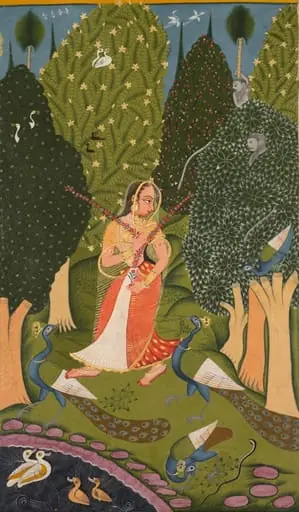 Gaudi Ragini, page from a Ragamala series
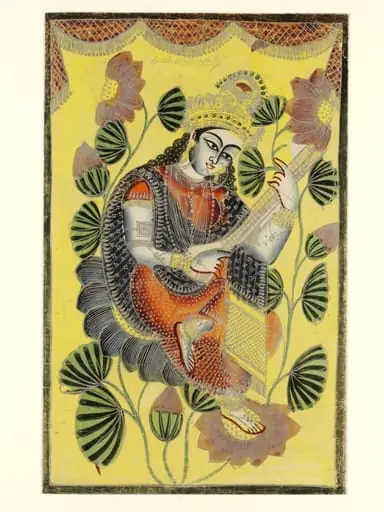 Saraswati
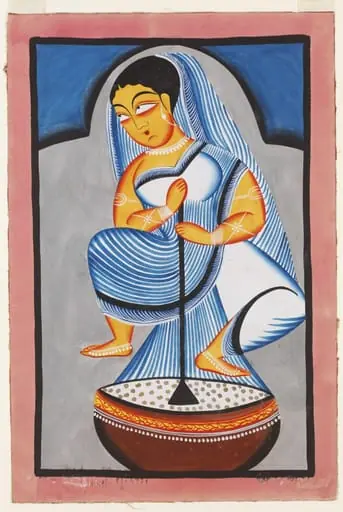 A woman churning milk
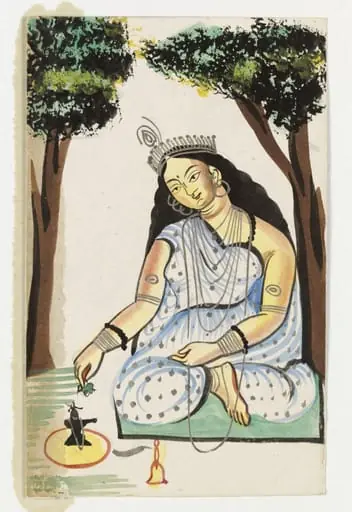 Shanti Devi
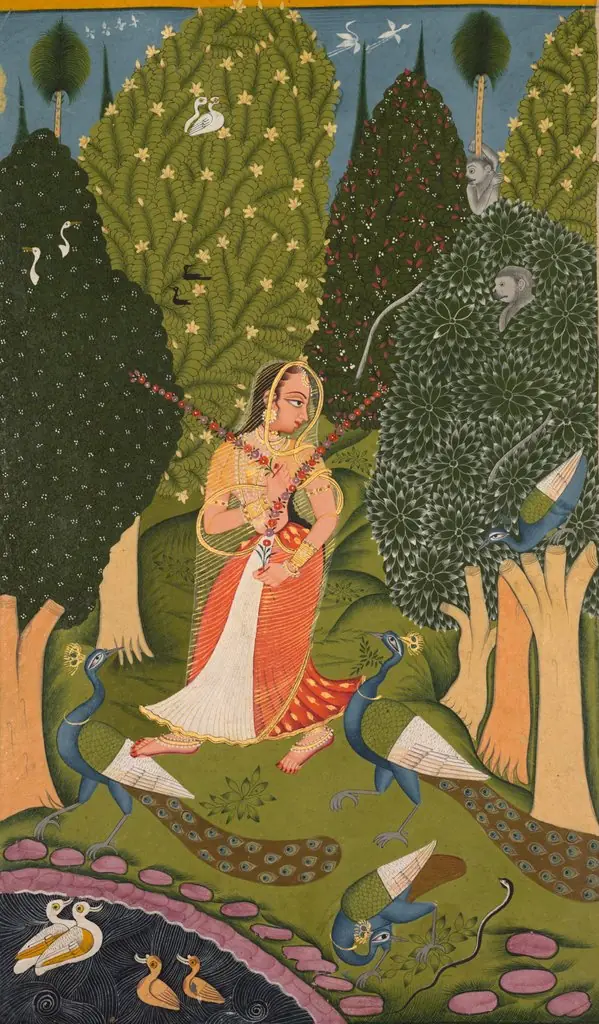 Gaudi Ragini, page from a Ragamala series
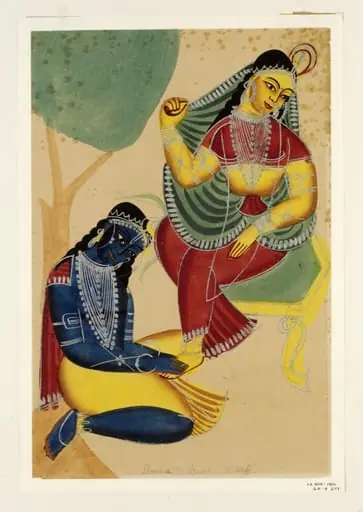 Krishna and Radha
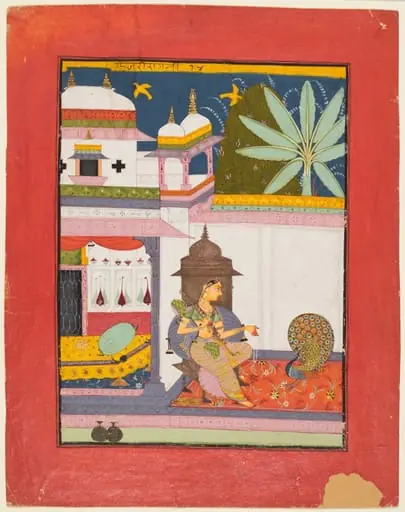 Woman Addressing a Peacock: Gujari Ragini of Megh, from a Ragamala
 Untitled
 Asavari Ragini
 A Disconsolate Lady on a Terrace with Attendants
 Saraswati
 Woman Playing Music (recto), from a Kalighat album