Artwork
Haymakers at dinner
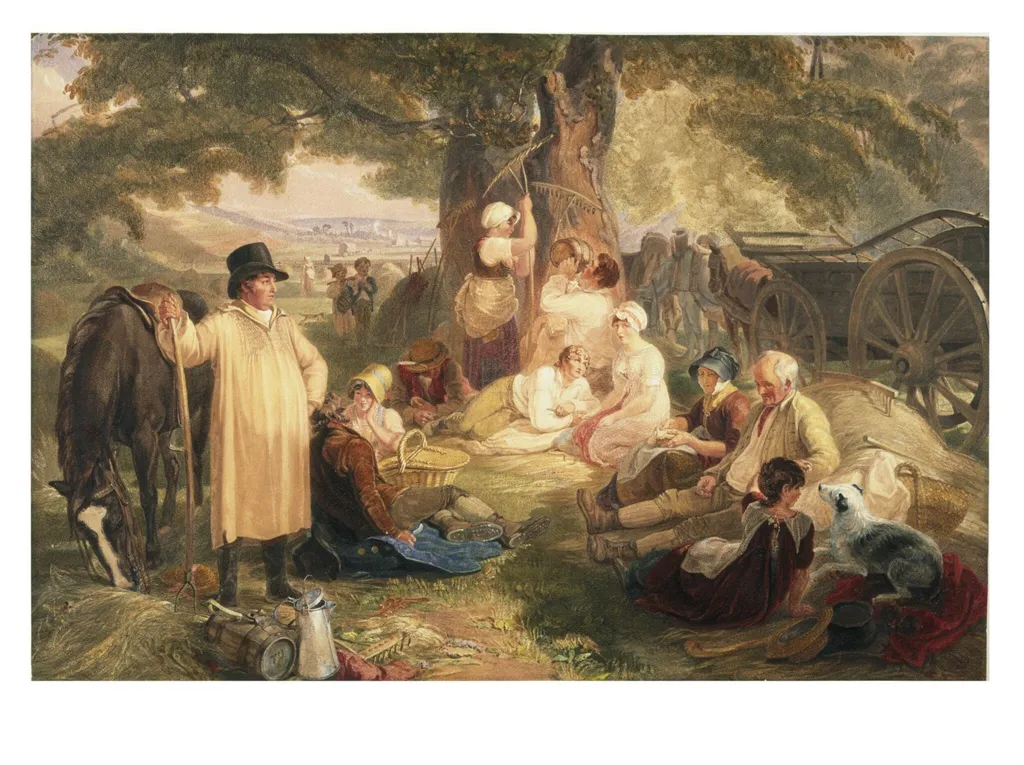
Haymakers at dinner is a watercolor work on paper by the Romanticist artist Thomas Uwins. It dates from 1812 and is held in the collection of the Victoria and Albert Museum.
About this work
Overview
Set beneath a sprawling tree, the scene unfolds with naturalistic ease, avoiding theatricality in favor of observed daily life.
Thomas Uwins painted *Haymakers at Dinner* in 1812 using watercolour on paper. The work captures a quiet moment of rest among agricultural laborers during harvest. Set beneath a sprawling tree, the scene unfolds with naturalistic ease, avoiding theatricality in favor of observed daily life. The medium’s transparency allows light to permeate the composition, reinforcing its intimate, unposed atmosphere.
Subject & Meaning
The painting depicts rural workers taking a midday meal, their postures relaxed yet unidealized. Figures are arranged informally—some seated on the ground, others leaning against a wagon—while a dog rests near a child and a horse stands nearby, tethered. No narrative climax is implied; instead, the focus lies in the dignity of routine, reflecting a quiet reverence for labor and communal respite in the countryside.
Technique & Style
Uwins employed loose, fluid brushwork to suggest form through tone rather than outline. Washes of pale ochre, green, and grey convey the texture of grass, fabric, and sky with minimal detail. The soft, diffused light and hazy clouds indicate an awareness of atmospheric effects, typical of early 19th-century watercolour practice. The technique prioritizes mood over precision, aligning with contemporary preferences for evocative simplicity.
History & Provenance
Created in 1812, the work emerged during Uwins’s early career, before his later appointments at the Royal Academy. It was likely made as a personal study or small-scale commission, common among watercolourists of the period. The painting remained in private hands for much of the 19th century and entered public collection in the 20th, where it is now held as an example of British topographical watercolour.
Context
In the early 1800s, British watercolourists increasingly turned to rural scenes as industrialization reshaped the landscape. Uwins’s work reflects this shift, aligning with Romantic-era interests in nature and ordinary life. Unlike grand historical subjects, this painting finds value in the unremarkable, echoing broader cultural movements that sought authenticity in the everyday and the pastoral.
Legacy
Though not widely exhibited in its time, *Haymakers at Dinner* exemplifies the quiet sophistication of British watercolour during its formative decades. Uwins’s restrained approach influenced later artists who favored observational realism over sentimentality. The work endures as a modest but significant record of rural labor, preserved not for spectacle but for its unembellished humanity.
Artist & collection


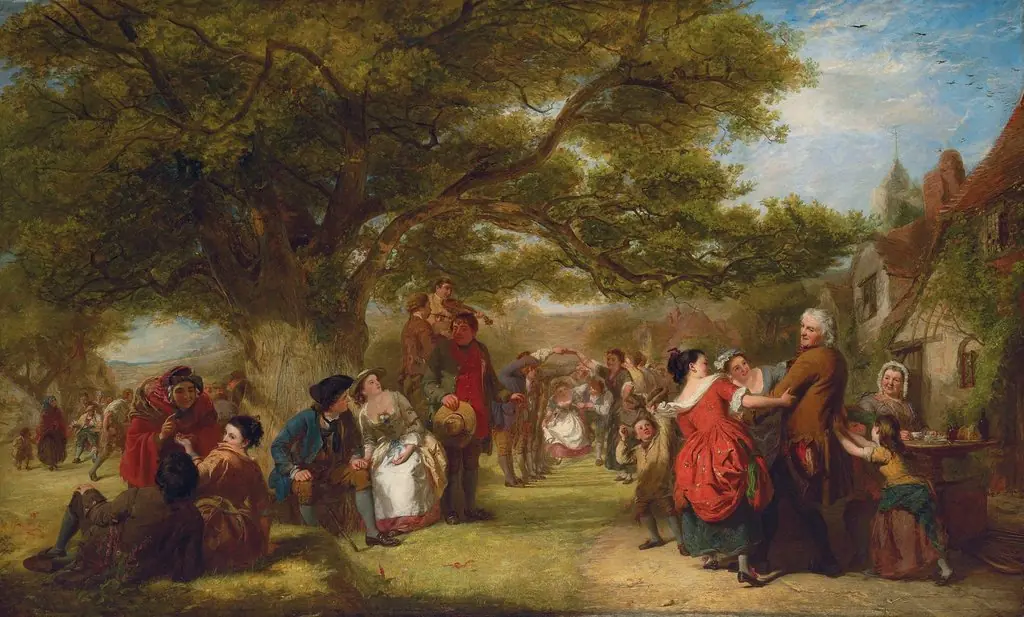 An English Merrymaking a Hundred Years Ago
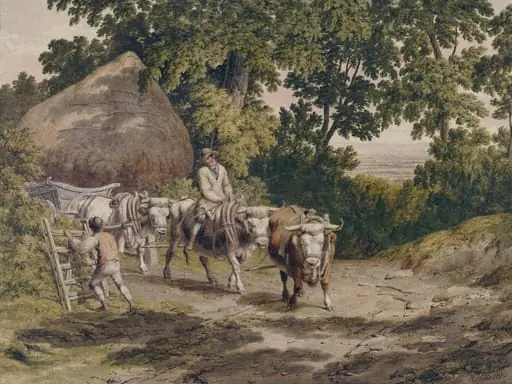 The Ox Team
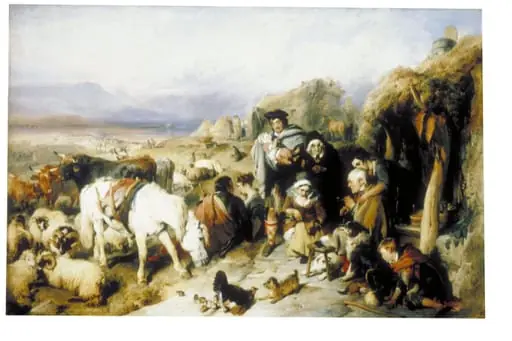 The Drover's Departure: A Scene in the Grampians
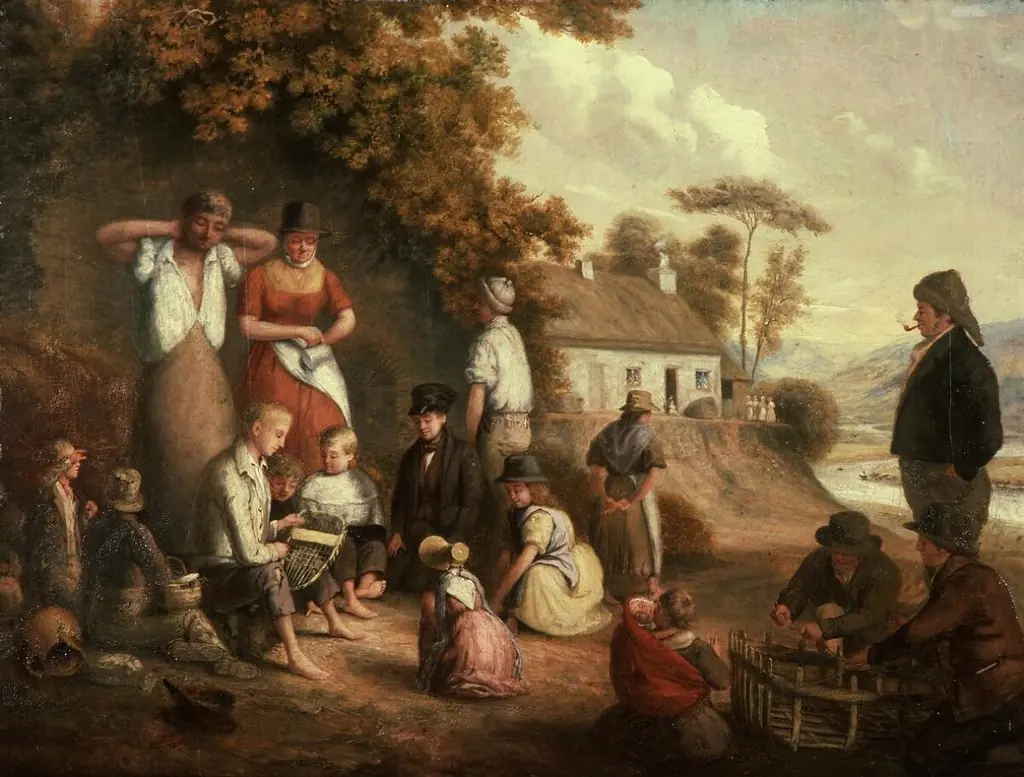 Coracle makers
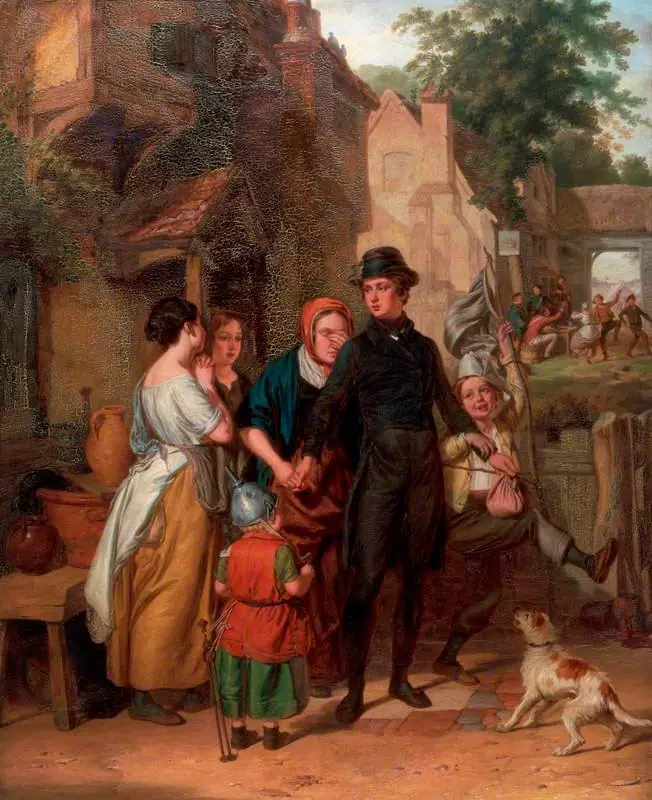 The Parting: A Recruit Taking Leave of His Family
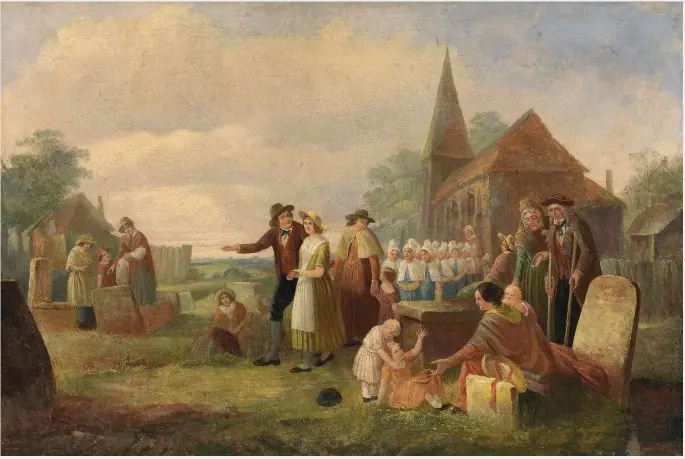 The Village Orphans
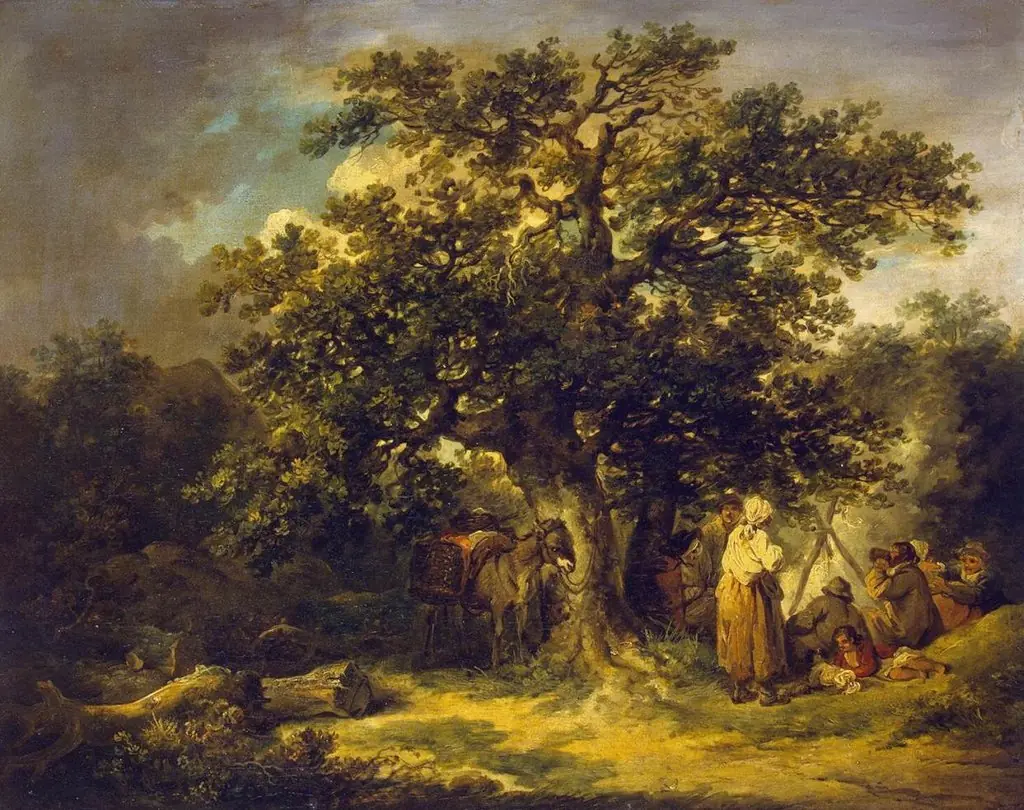 Gipsies
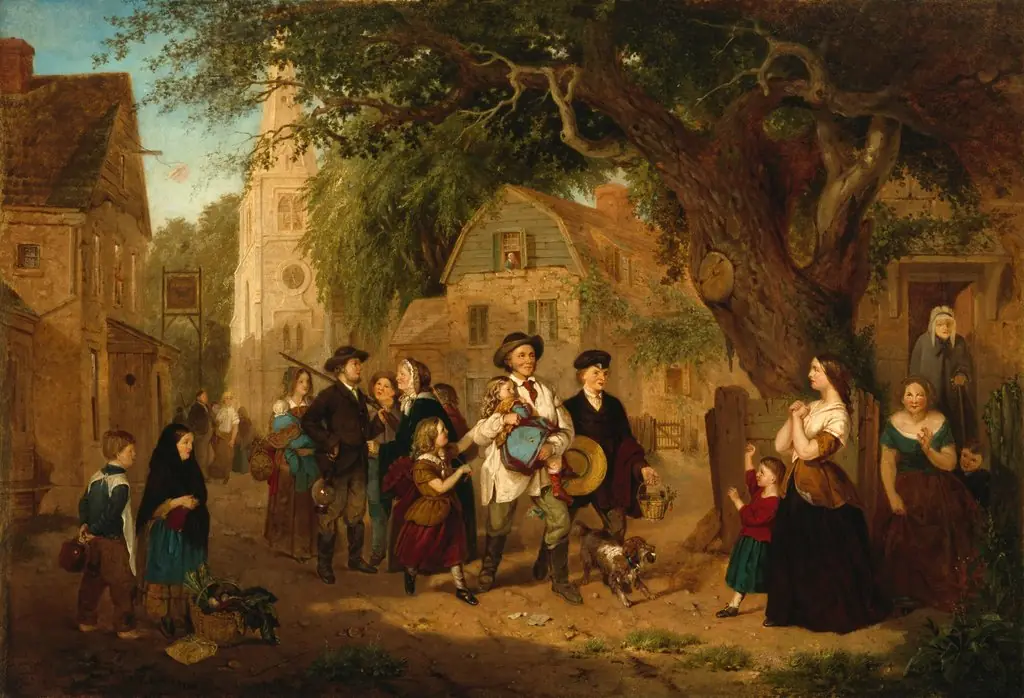 The Lost Child Returned
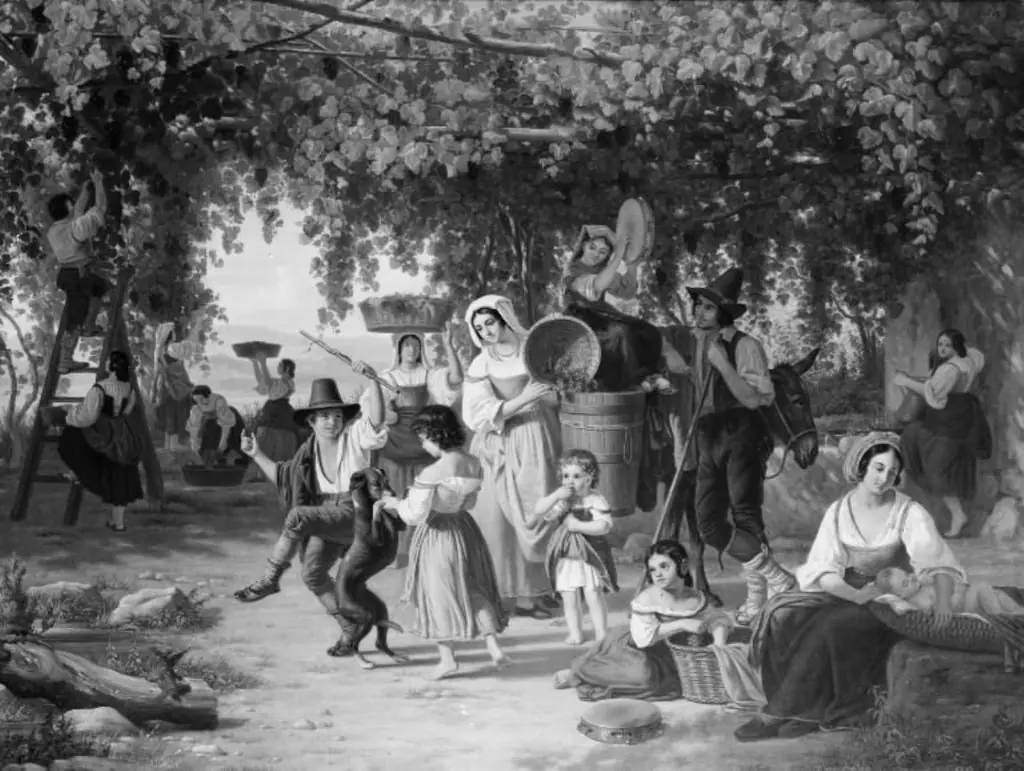 Vintage in Italy
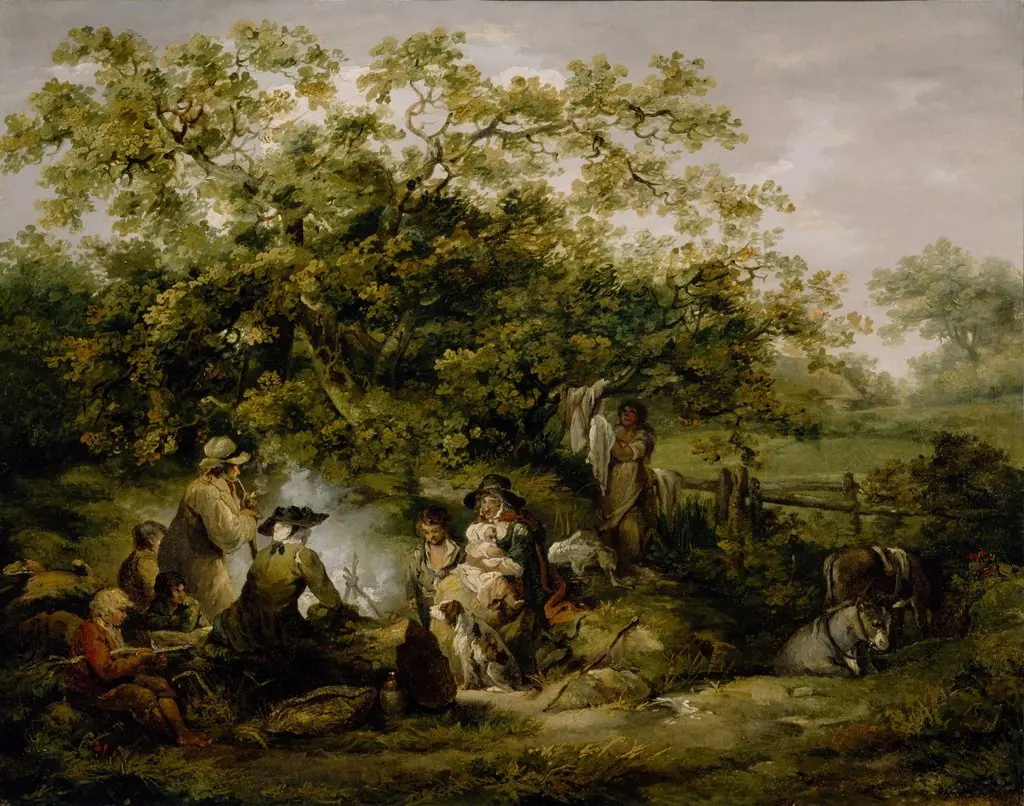 Gypsy Encampment
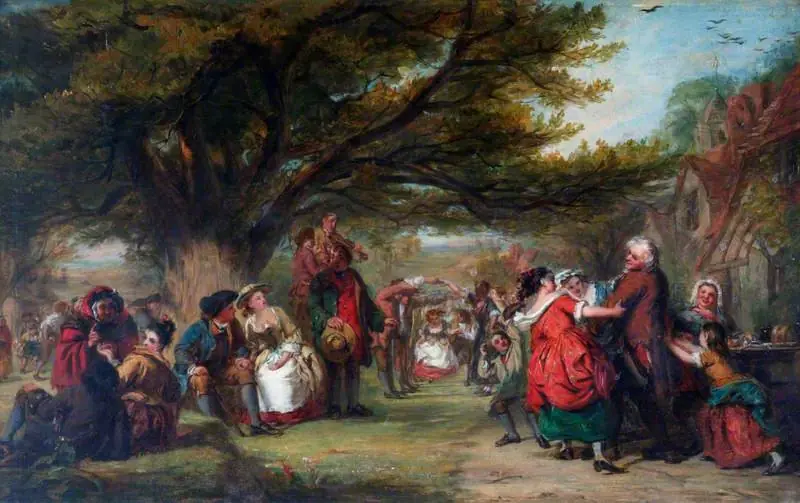 An English Merry-Making, a Hundred Years Ago
 Vintage in Italy