Artwork
Gipsies
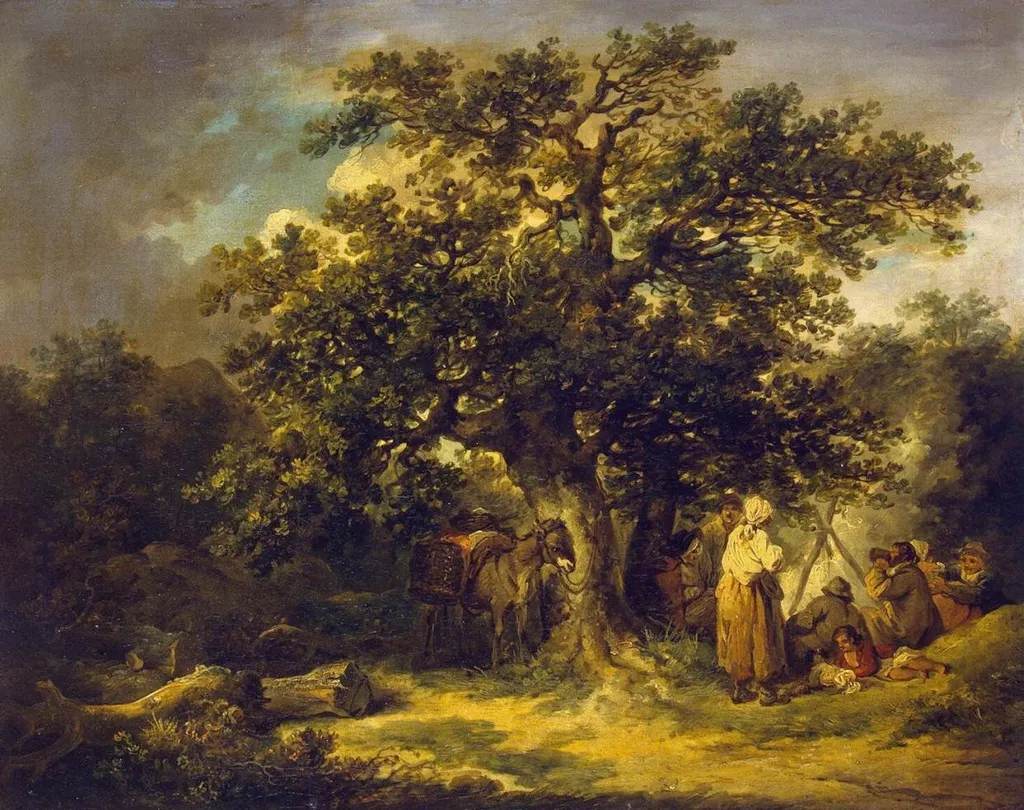
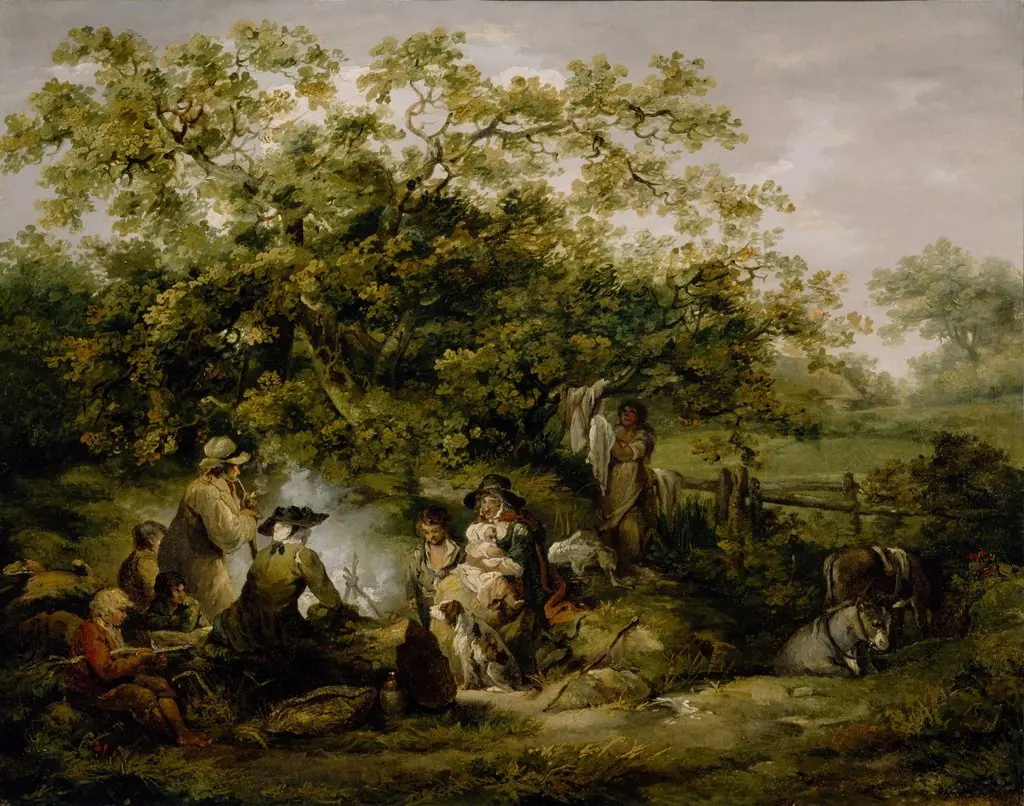
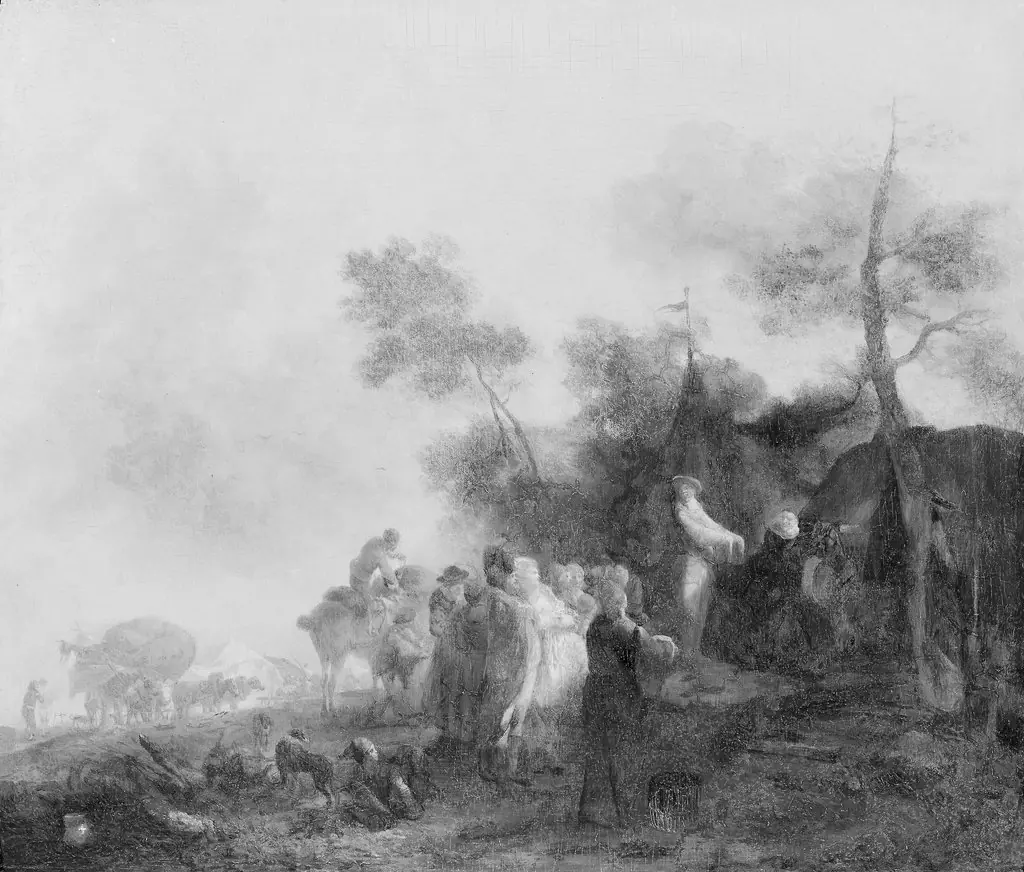
Gipsies is an oil painting by George Morland. It dates from 1800 and is held in the collection of the Hermitage Museum.
About this work
Overview
George Morland’s oil painting *Gipsies*, executed in 1800 and now held by the State Hermitage Museum, portrays a small group of itinerant figures gathered beneath a tree. A tethered horse and a laden cart complete the outdoor setting, while a cloudy sky and distant hills frame the scene, giving it a rustic, pastoral atmosphere.
Subject & Meaning
The work depicts a moment in the daily life of travelling people, identified as gypsies, engaged in communal activity. Some figures sit on the ground, others stand, suggesting a pause in a journey or a temporary camp. The inclusion of a horse and a cart laden with baskets hints at the practical aspects of their nomadic existence.
Technique & Style
Morland employs a warm, earthy palette dominated by browns and greens, rendering the landscape and figures with meticulous detail. The composition reflects the influence of Dutch genre painting, especially in its naturalistic treatment of light and texture, while the brushwork remains tight enough to convey a realistic, almost documentary quality.
History & Provenance
Created during the later phase of Morland’s career, the painting entered the Russian imperial collection and ultimately became part of the State Hermitage Museum’s holdings. Morland, a prolific English artist known for rustic scenes, often saw his works reproduced as prints, which helped disseminate images of itinerant life across Europe.
Context
At the turn of the 19th century, British art frequently turned to genre subjects that illustrated the lives of the lower classes and marginal groups. Morland’s focus on smugglers, gypsies, and rural laborers aligned with contemporary tastes for moralizing yet empathetic depictions of everyday people, drawing on visual conventions established by earlier Dutch masters.
Artist & collection
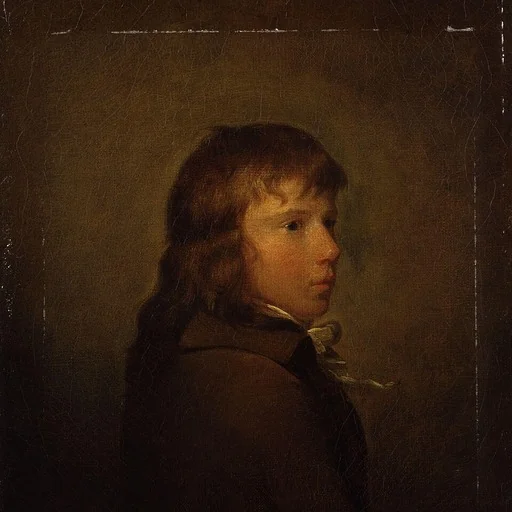
Artist
George Morland (26 June 1763 – 29 October 1804) was an English painter. His early work was influenced by Francis Wheatley, but after the 1790s he came into his own style. His best compositions focus on rustic scenes:…