Artwork
Expulsion of the Money-Changers from the Temple
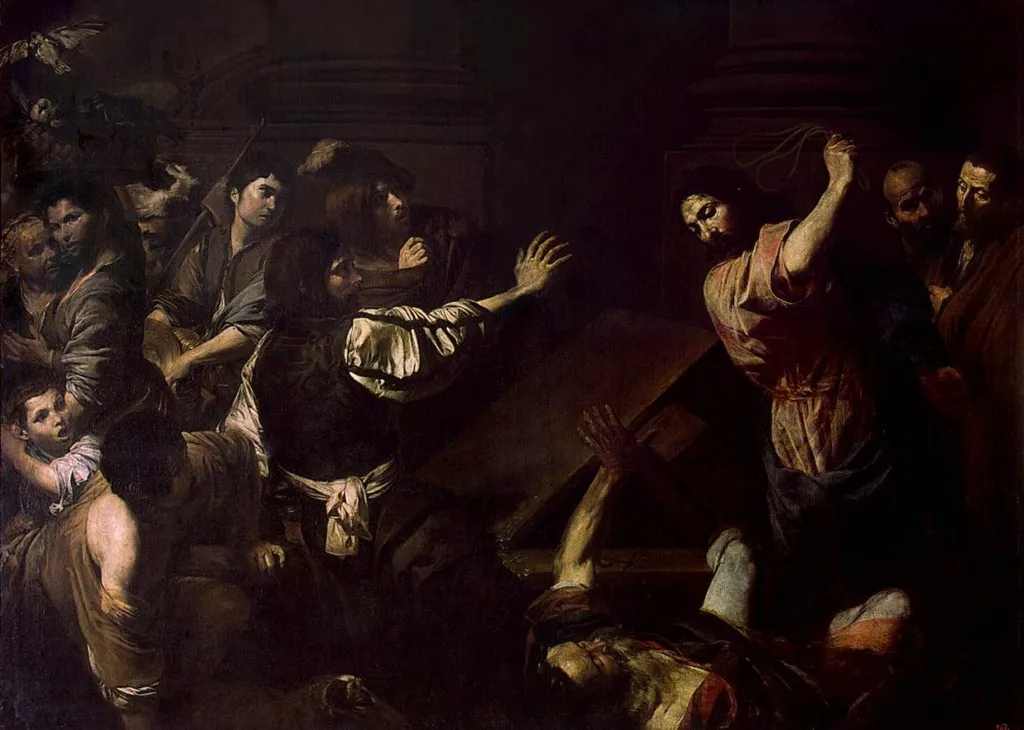
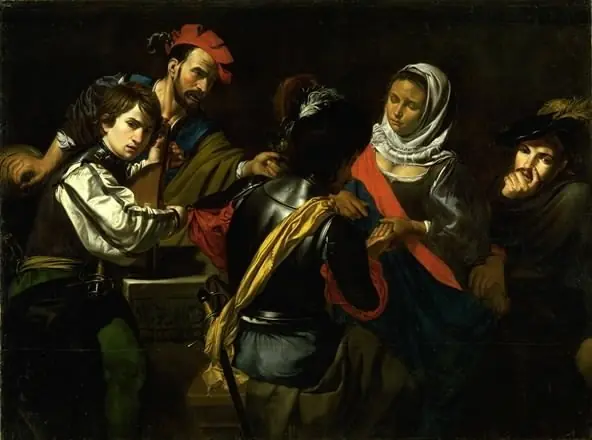
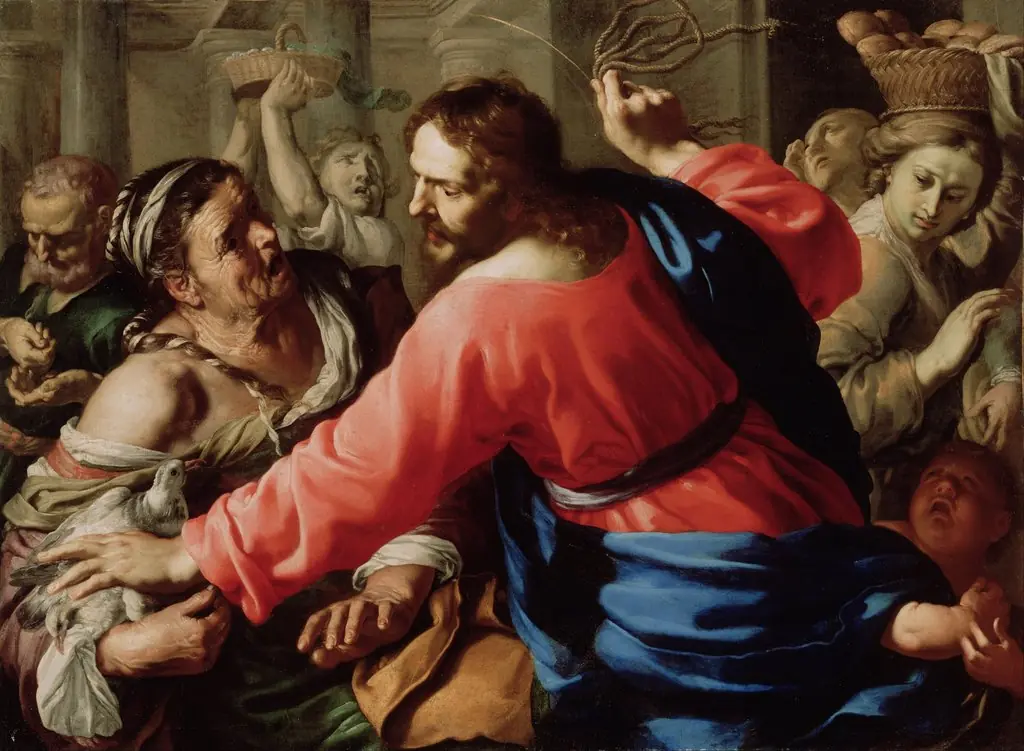
Expulsion of the Money-Changers from the Temple is an oil painting by the Early Baroque Italian artist Valentin de Boulogne. It dates from 1620 and is held in the collection of the Hermitage Museum.
About this work
Overview
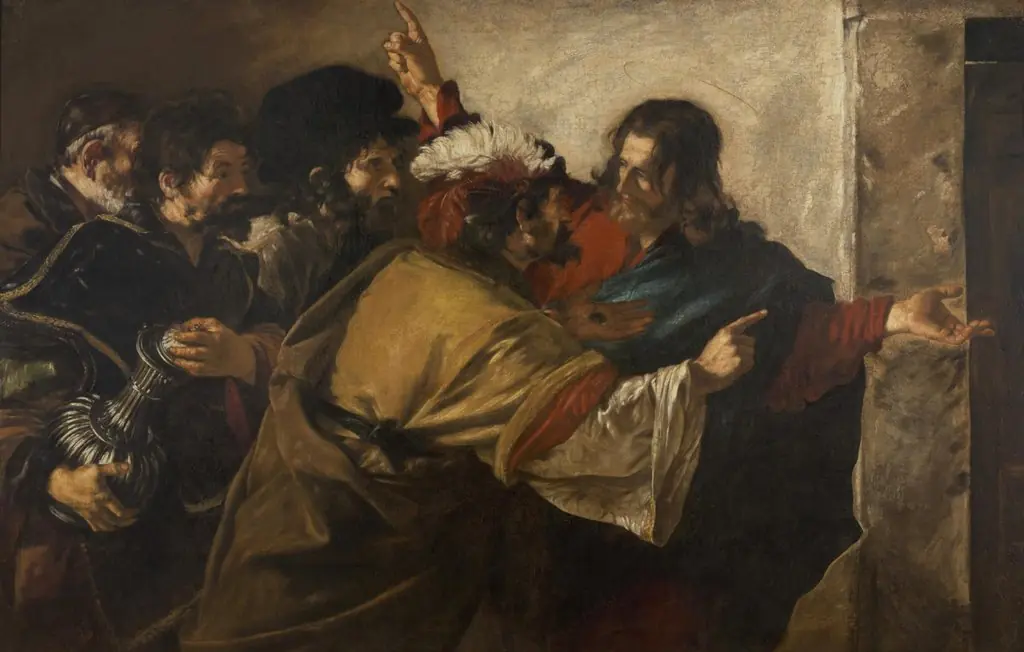
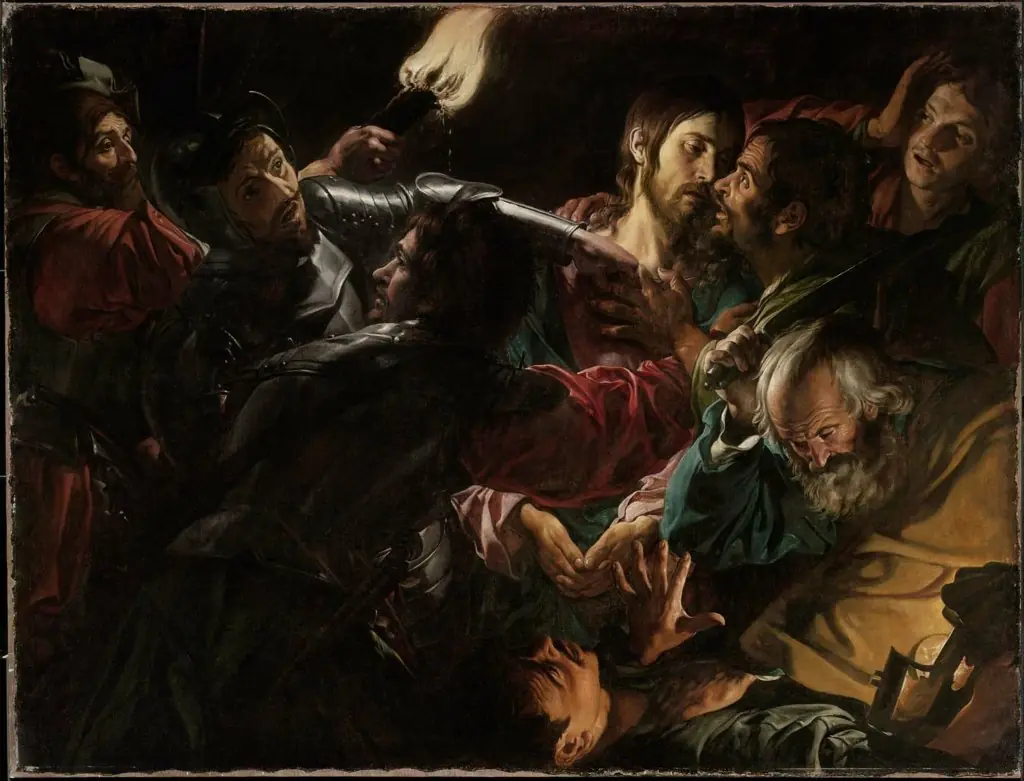
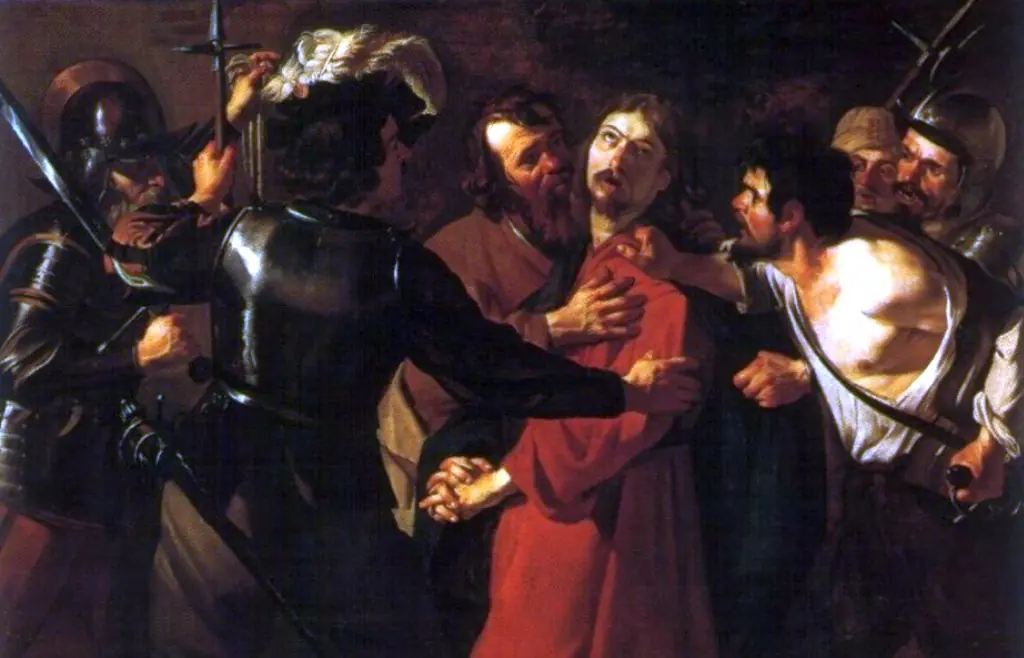
Valentin de Boulogne’s *Expulsion of the Money‑Changers from the Temple* (1620) is an oil painting that captures a moment of violent removal within a sacred interior. Executed while the French artist was active in Italy, the work exemplifies the early Baroque period and now belongs to the collection of the State Hermitage Museum in St. Petersburg.
Subject & Meaning
The composition portrays a chaotic episode from the Gospel narrative in which merchants and money‑lenders are driven from the temple precincts. In the foreground a figure is seized and pulled away, while another onlooker watches with alarm, emphasizing the moral clash between sacred space and commercial exploitation.
Technique & Style
De Boulogne employs a tenebristic approach, using pronounced chiaroscuro to model the figures against a deep, shadowed background. The stark illumination isolates the central actors, creating a three‑dimensional effect that heightens the scene’s tension and underscores the dramatic contrast between light and darkness.
History & Provenance
Painted in 1620 during de Boulogne’s Italian period, the canvas later entered the Russian imperial collection and was transferred to the State Hermitage Museum. Its presence in the Hermitage reflects the 18th‑ and 19th‑century interest in Baroque works by foreign artists, securing its public display for contemporary audiences.
Artist & collection
Artist
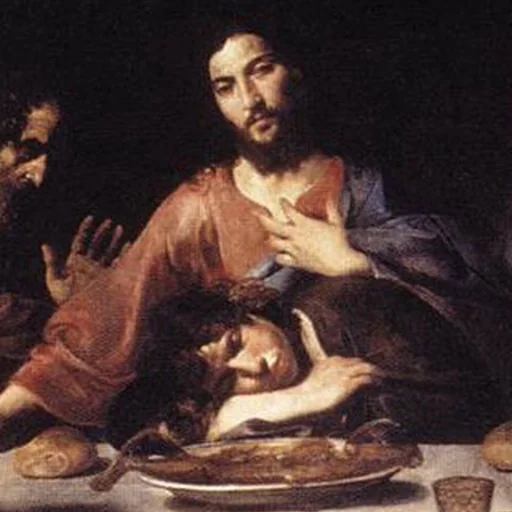
Valentin de Boulogne (before 3 January 1591 – 19 August 1632), sometimes referred to as Le Valentin, was a French painter in the tenebrist style.