Artwork
Untitled
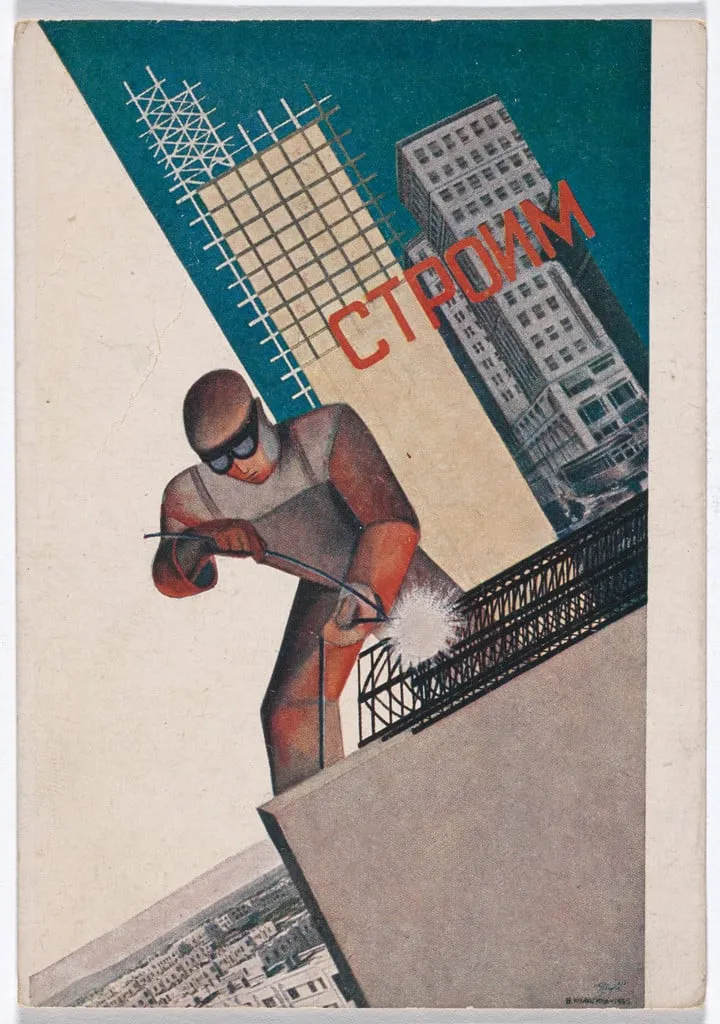
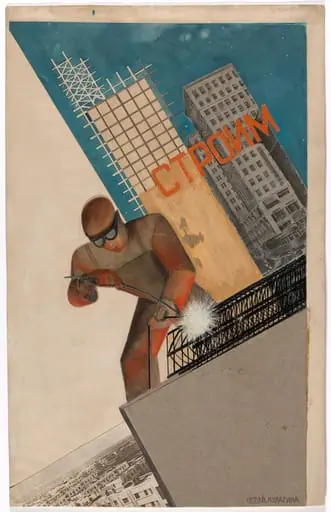
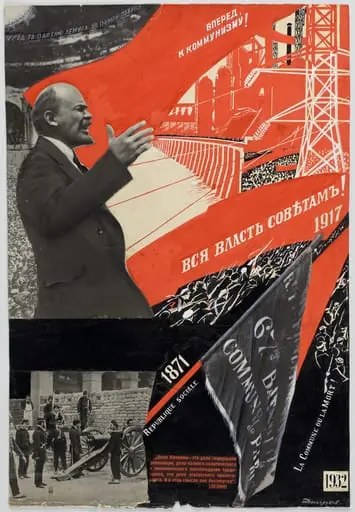
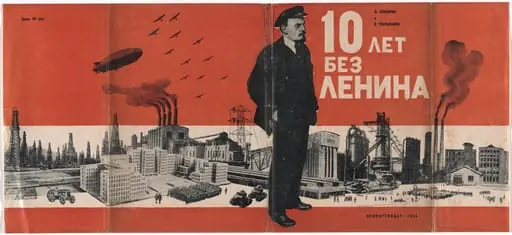
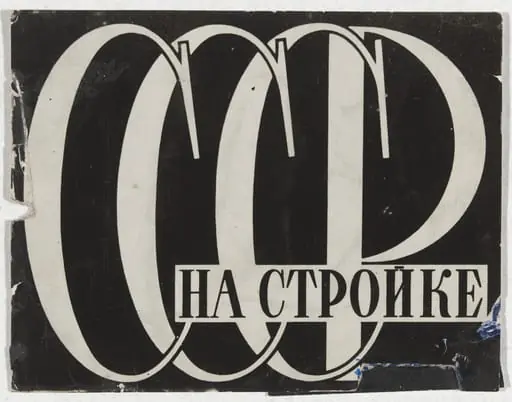
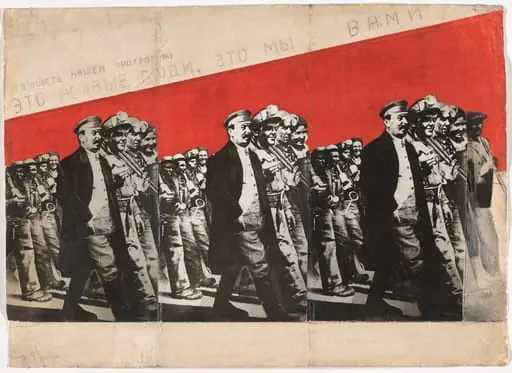
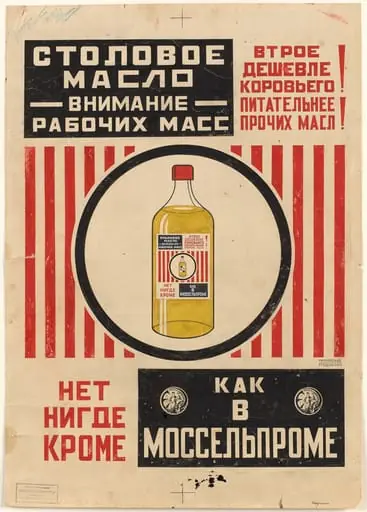
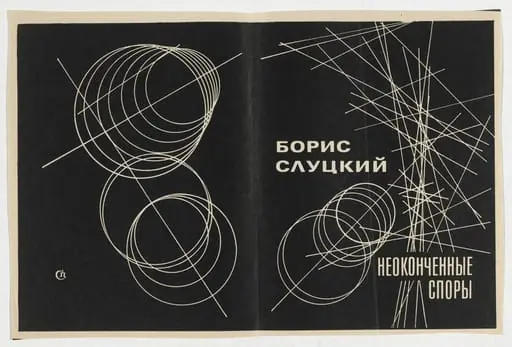
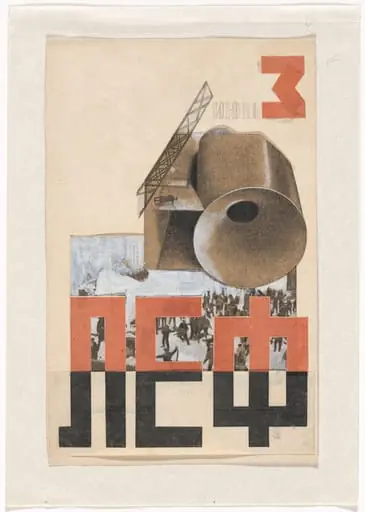
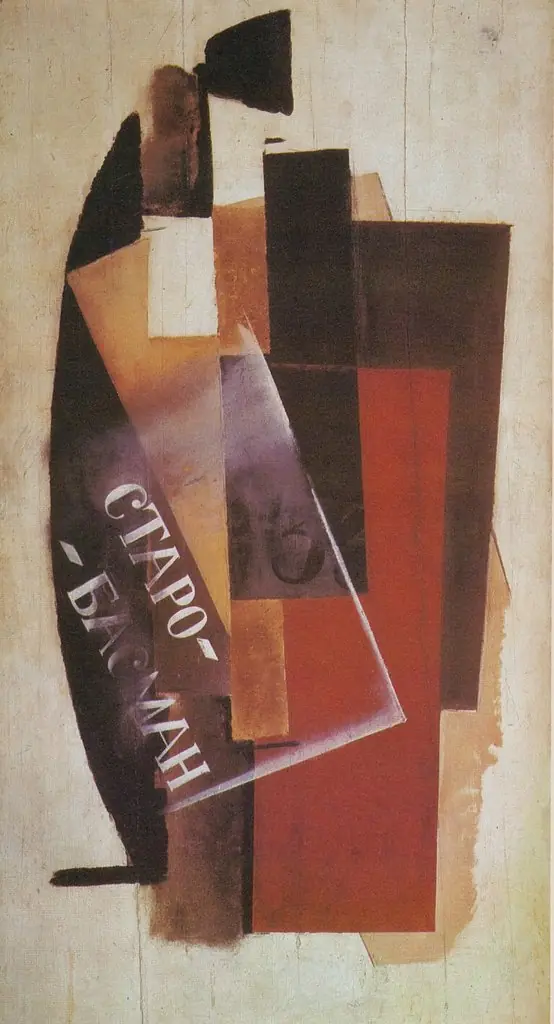
Untitled is a print by Valentina Kulagina. It dates from 1930 and is held in the collection of the Museum of Modern Art.
About this work
Overview
The work is held in the collection of The Museum of Modern Art and exemplifies the era’s graphic experimentation with typography, scale, and symbolic imagery.
This letterpress-printed postcard, dated around 1930, is attributed to Valentina Kulagina, a Russian designer active in the Constructivist movement. Produced as part of Soviet visual propaganda, it was distributed to promote industrial progress and collective labor ideals. The work is held in the collection of The Museum of Modern Art and exemplifies the era’s graphic experimentation with typography, scale, and symbolic imagery.
Subject & Meaning
The image depicts a worker engaged in welding on a high-rise structure, his figure isolated against a vast, unfinished skyscraper. Below, the city is rendered in miniature, emphasizing the worker’s monumental role. A large red Cyrillic word dominates the sky, likely conveying a slogan of labor or progress. The scene transforms industrial labor into a heroic act, aligning individual effort with the broader goals of state-driven modernization.
Technique & Style
Kulagina employed letterpress printing to achieve sharp, bold forms typical of Constructivist design. The composition uses flat planes of color—especially the uniform blue sky—and stark contrasts to heighten visual impact. Sparks from the welder are stylized as radiant bursts, echoing fireworks rather than realistic metal fragments. Scale distortion and geometric simplification reinforce ideological clarity over naturalism.
History & Provenance
Created during the early Stalinist period, the postcard emerged from a state-supported network of artists producing mass communication materials. Kulagina worked closely with her husband Gustav Klutsis and other Constructivists to translate political messaging into accessible visual language. The object was likely circulated publicly, though its specific distribution history remains undocumented. It entered MoMA’s collection as part of a broader acquisition of Soviet graphic works.
Context
In the late 1920s and early 1930s, Soviet artists were mobilized to visualize the Five-Year Plans and the cult of industrial labor. Constructivist design, with its emphasis on abstraction and typography, became the preferred mode for propaganda. Kulagina’s work reflects this shift from revolutionary experimentation to state-sanctioned imagery, where individual creativity was subordinated to collective narrative goals.
Legacy
Kulagina’s postcards remain significant as artifacts of state-sponsored visual culture during a period of intense ideological consolidation. While her contributions were often overshadowed by male contemporaries, her work exemplifies the integration of design and politics in early Soviet society. Today, such pieces are studied for their formal innovation and their role in shaping public perception through mass media.
Artist & collection
Artist
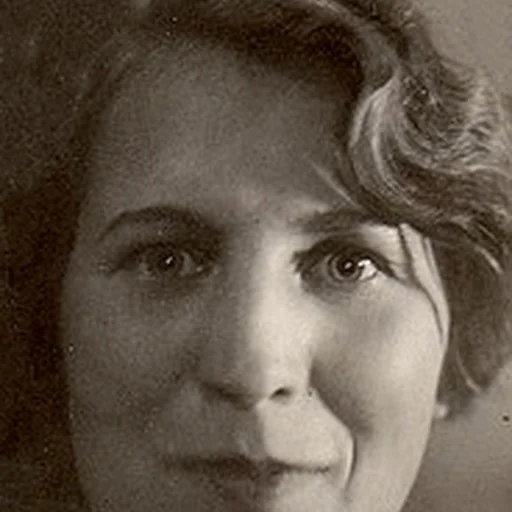
Valentina Kulagina, full name Valentina Nikiforovna Kulagina-Klutsis (Russian: Валентина Никифоровна Кулагина-Клуцис, 1902–1987) was a Russian painter and book, poster, and exhibition designer.