Artwork
Untitled
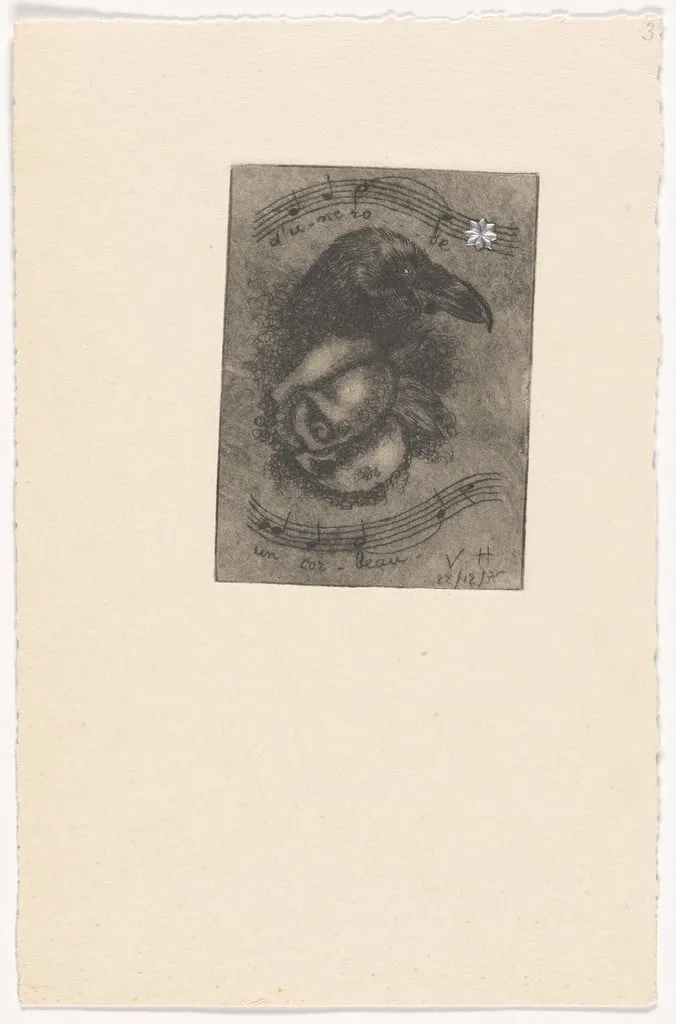
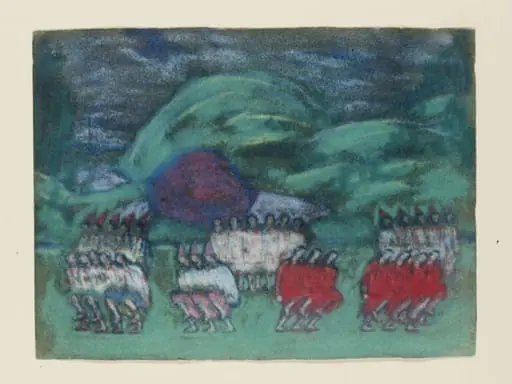
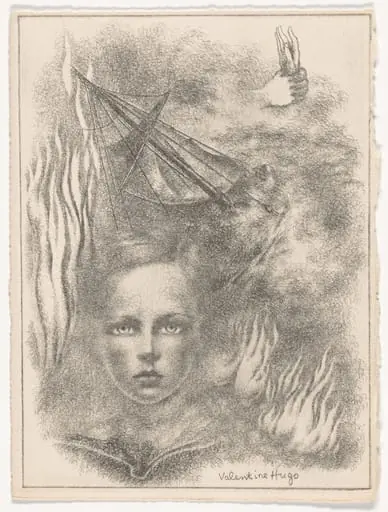
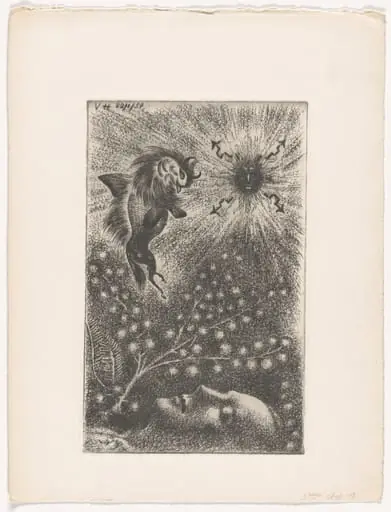
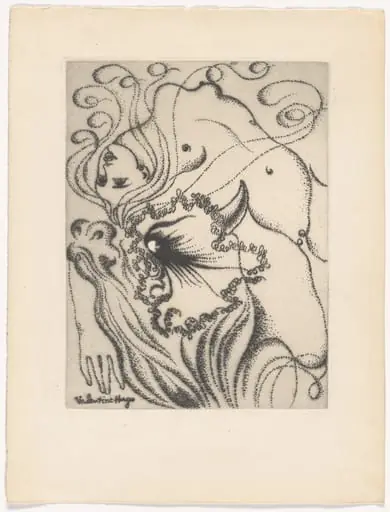
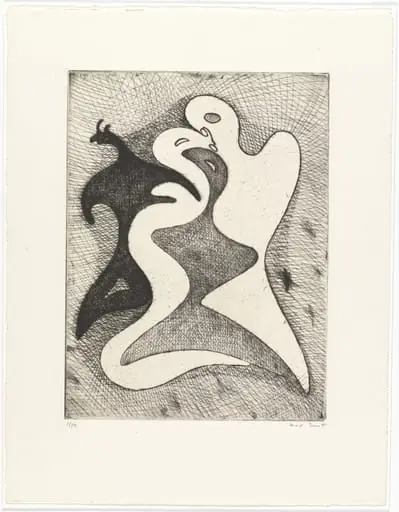
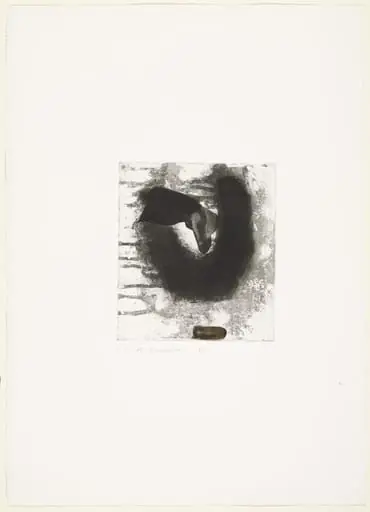
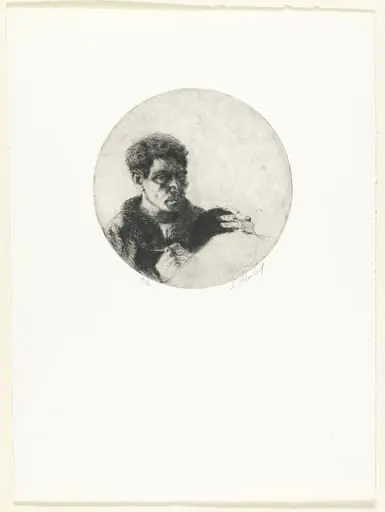
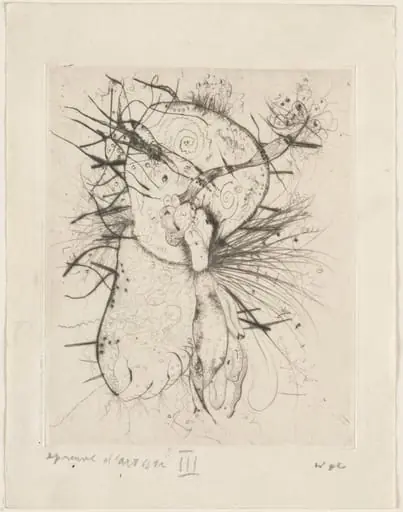
Untitled is an ink print by Valentine Gross. It dates from 1936 and is held in the collection of the Museum of Modern Art. Created in 1936 by French artist Valentine Hugo, this etching incorporates applied paper elements to produce a layered, tactile surface.
About this work
Overview
Its small scale and mixed-media approach reflect an experimental attitude toward printmaking, blending traditional techniques with unconventional materials.
Created in 1936 by French artist Valentine Hugo, this etching incorporates applied paper elements to produce a layered, tactile surface. The work belongs to a body of prints made during a period when Hugo was deeply engaged with avant-garde circles in Paris. Its small scale and mixed-media approach reflect an experimental attitude toward printmaking, blending traditional techniques with unconventional materials.
Subject & Meaning
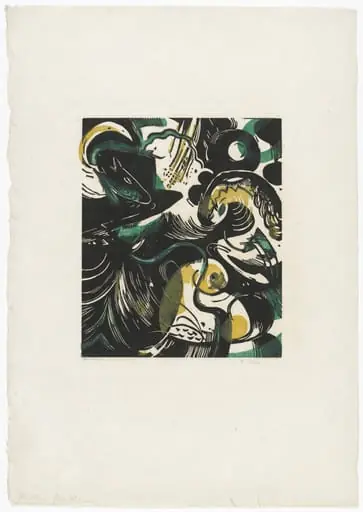
A dark, angular bird—possibly a crow or raven—dominates the composition, its beak sharply defined and feathers rendered in coarse, scratchy lines. Surrounding it are abstracted musical notations and a single star, suggesting a symbolic fusion of sound, celestial imagery, and avian motifs. The looping script encircling the figure evokes incantation or poetic fragment, hinting at themes of mystery, transformation, or the occult common in Surrealist iconography.
Technique & Style
Hugo employed etching as a base, then added hand-pasted paper fragments to introduce texture and contrast. The lines are deliberately rough and urgent, as if drawn in rapid succession, enhancing the sense of spontaneity. The integration of non-printed materials disrupts the uniformity of the plate, creating a hybrid object that blurs the line between print and collage, characteristic of Surrealist material experimentation.
History & Provenance
The work entered the collection of The Museum of Modern Art as part of its broader effort to document Surrealist and experimental print practices of the 1930s. Hugo’s association with figures like André Breton and her involvement in stage design for ballet productions contributed to the recognition of her graphic work within institutional circles. Its preservation reflects its significance as a personal yet culturally resonant artifact of the era.
Context
In mid-1930s Paris, artists increasingly merged visual art with literary and performative practices. Hugo, active in both Surrealist gatherings and theatrical design, used printmaking as a space for intimate expression. This piece aligns with contemporaneous works that favored symbolic ambiguity and tactile experimentation over narrative clarity, responding to a broader cultural interest in the subconscious and the poetic fragment.
Legacy
Though less widely known than some of her male contemporaries, Hugo’s prints contributed to the expansion of printmaking as a medium for personal and experimental expression within Surrealism. Her use of collage elements in etching influenced later artists exploring material hybridity. This work remains a quiet but distinct example of how women artists shaped the movement’s visual language through subtle, layered techniques.
Artist & collection
Artist
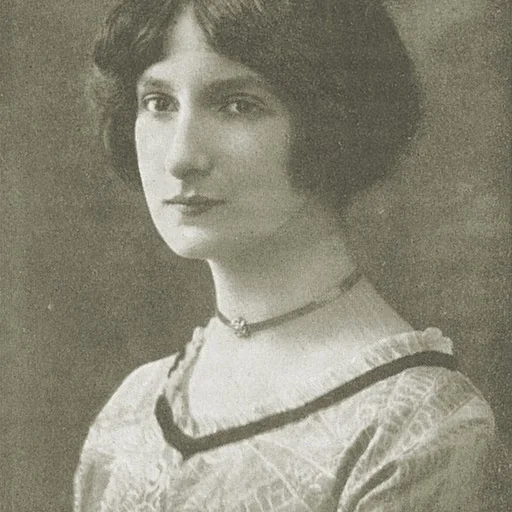
Valentine Hugo (French pronunciation: ; 1887–1968) was a French artist and writer.