Artwork
Landscape composition with an angler and two female figures in foreground
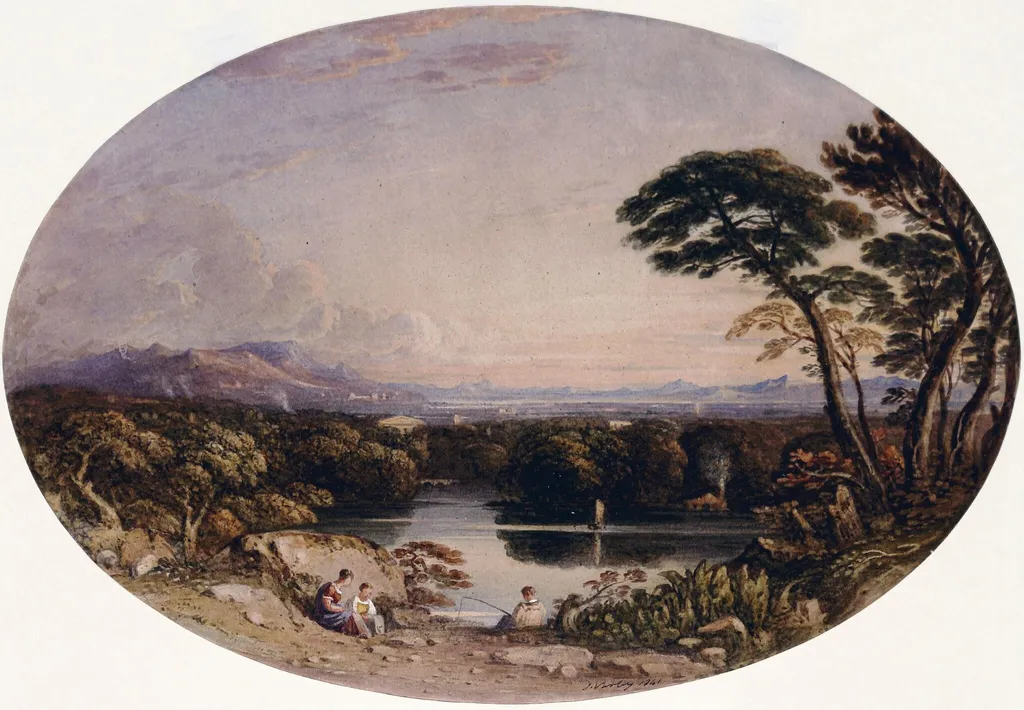
Landscape composition with an angler and two female figures in foreground is a watercolor work on paper by the British Romanticist artist John Varley. It dates from 1841 and is held in the collection of the Victoria and Albert Museum.
About this work
Overview
An oval watercolour by John Varley, dated 1841, presents a tranquil riverside scene.
An oval watercolour by John Varley, dated 1841, presents a tranquil riverside scene. The work is signed by the artist and executed in delicate, translucent washes. Its composition centers on three figures in the foreground, set against a softly rendered backdrop of trees, a distant bridge, and rolling hills under a muted sky. The format and tonal restraint reflect Varley’s interest in atmospheric quietude.
Subject & Meaning
Three figures populate the foreground: two women seated on a rocky bank and a child holding a fishing rod. Their stillness and spatial arrangement suggest a moment of repose rather than activity. The scene evokes contemplation, with no overt narrative or drama. The angler’s presence, subtle and unobtrusive, reinforces a theme of quiet communion with nature, typical of early 19th-century British landscape sensibilities.
Technique & Style
Varley employed soft watercolour washes to create a seamless transition between land, water, and sky. Muted greens and earthy browns dominate, with minimal contrast to preserve a hazy, atmospheric effect. The brushwork is loose yet deliberate, avoiding sharp outlines in favor of blended tones that enhance the sense of depth and stillness. The oval format directs focus inward, intensifying the intimate mood.
History & Provenance
Created in 1841, near the end of Varley’s career, the work aligns with his later focus on lyrical, small-scale landscapes. It bears his signature, confirming authorship. While its early ownership is undocumented, it entered the Victoria and Albert Museum’s collection as part of a broader acquisition of 19th-century British watercolours, reflecting institutional interest in the medium’s artistic merit.
Context
Varley’s work emerged during a period when watercolour was gaining recognition as a serious artistic medium in Britain, distinct from oil painting. His landscapes often drew from the picturesque tradition, emphasizing harmony and subdued emotion. This piece reflects contemporary tastes for serene, uneventful natural scenes, contrasting with the dramatic sublime favored by earlier Romantic artists.
Legacy
Though not widely exhibited, the work exemplifies Varley’s contribution to the evolution of British watercolour. His use of tone and composition influenced later artists who sought emotional restraint over spectacle. The piece remains a quiet testament to the medium’s capacity for atmospheric suggestion, preserved in a major public collection for study and quiet appreciation.
Artist & collection
Artist
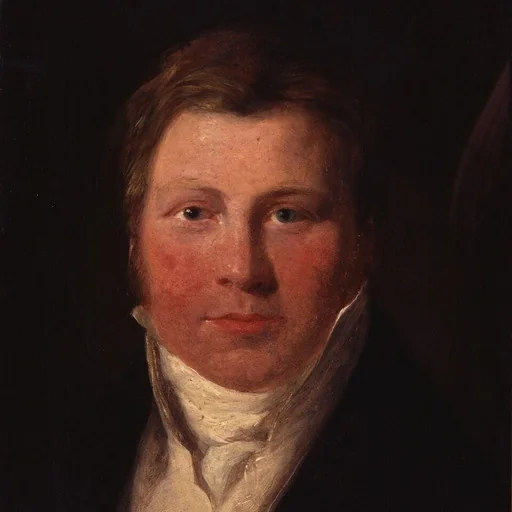
John Varley (17 August 1778 – 17 November 1842) was an English watercolour painter and astrologer, and a close friend of William Blake.

![Study of a Head in Profile [verso], by John Varley](https://artifactworldgallery.com/img/john-varley--study-of-a-head-in-profile-verso--3e16e84b6ceccae1-w320.webp)
![Two Studies of a Figure Holding a Basket [verso], by John Varley](https://artifactworldgallery.com/img/john-varley--two-studies-of-a-figure-holding-a-basket-verso--7e8aaeb3f643e9b3-w320.webp)
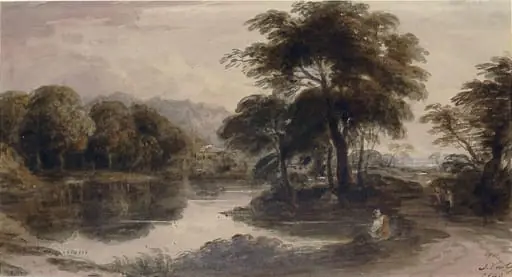 Landscape with pond
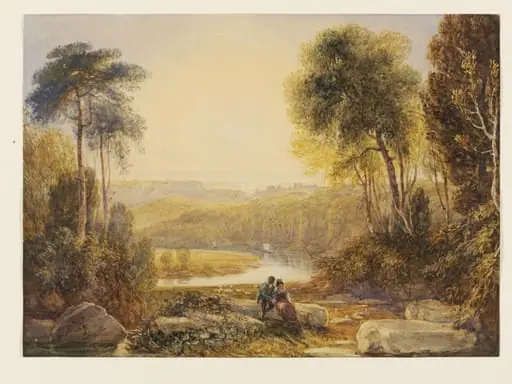 Wyndcliffe on the Wye
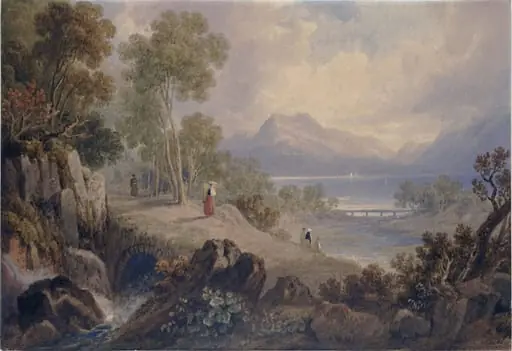 Lago Maggiore
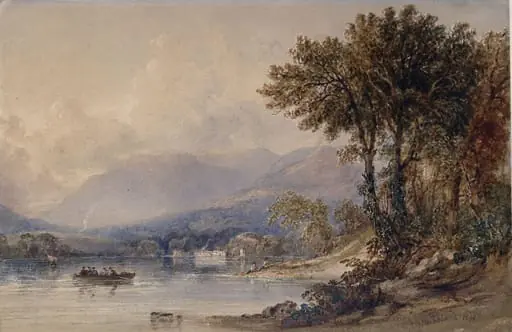 The Rydal mountains near the head of Windermere
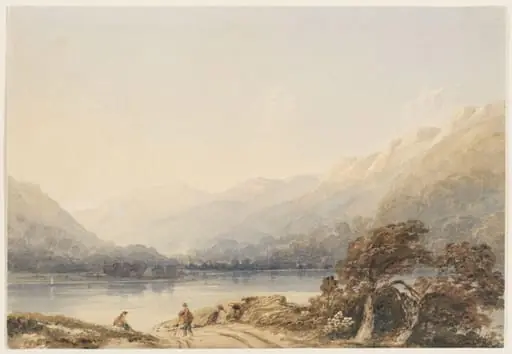 Lake scene with mountains
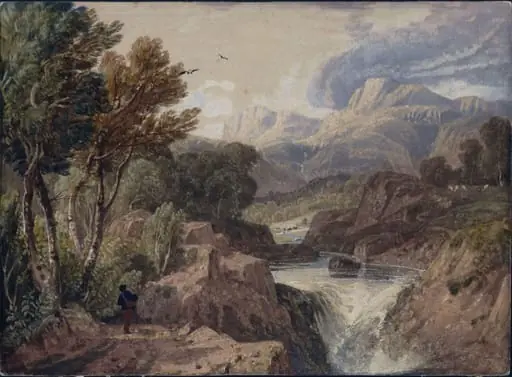 Landscape
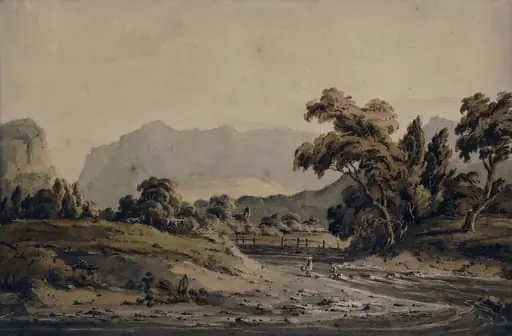 Rydal Head, Ambleside, Westmorland
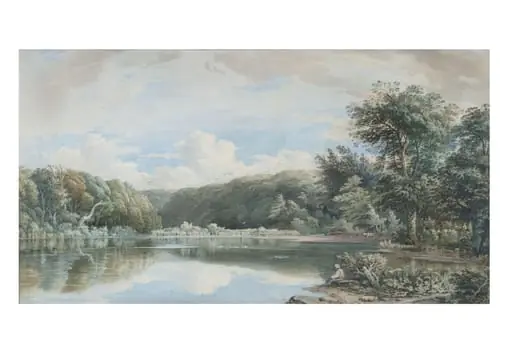 Pool and woods at Wotton, near Dorking
 Landscape with Lake and Mountains
 Untitled
 Tal-y-Llyn, with Cader Idris in the background
 Landscape with river and mountains