Artwork
The three Maries at the tomb of Jesus Christ
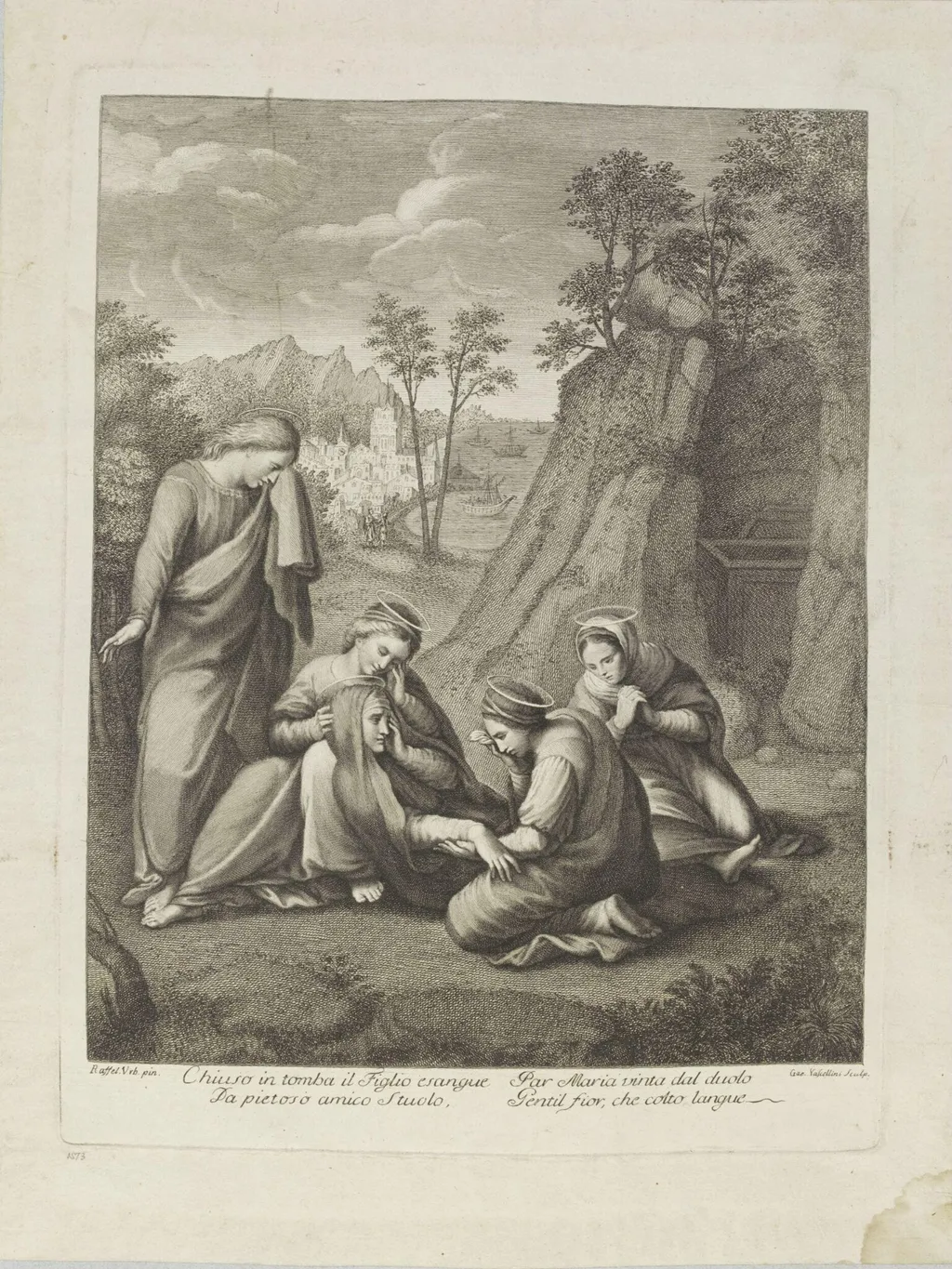
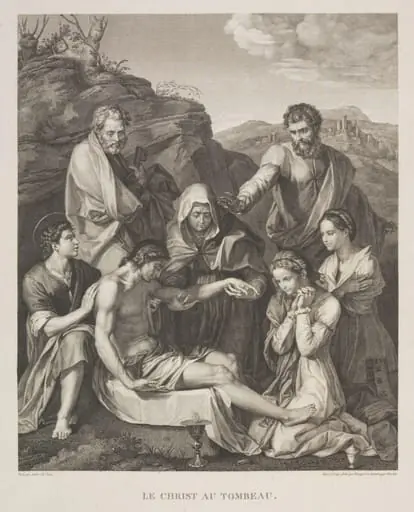
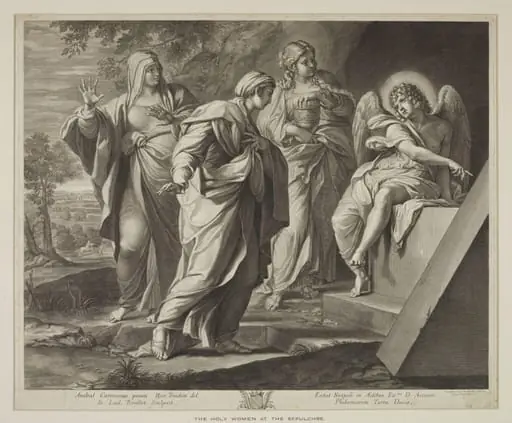
The three Maries at the tomb of Jesus Christ is a print by Gaetano Vascellini. It dates from 1850 and is held in the collection of the Victoria and Albert Museum. This print portrays a biblical scene of women at Christ’s tomb, derived from a composition originally designed by Raphael.
About this work
Overview
The landscape behind them includes distant hills, trees, and water with small boats, framing the scene in a serene, naturalistic setting.
This print portrays a biblical scene of women at Christ’s tomb, derived from a composition originally designed by Raphael. Executed on paper, it captures a quiet moment of contemplation following the resurrection. The figures are arranged with one standing and three kneeling, their postures suggesting reverence and discovery. The landscape behind them includes distant hills, trees, and water with small boats, framing the scene in a serene, naturalistic setting.
Subject & Meaning
The scene references the Gospel account of women visiting Christ’s tomb on the morning of his resurrection. The standing figure, often identified as Mary Magdalene, appears to be observing the others, perhaps in response to an unseen revelation. The kneeling figures, likely the other Marys, express sorrow or awe. The ambiguity of what lies on the ground—possibly the empty shroud or an angel—invites reflection on absence and divine presence.
Technique & Style
The print employs tonal contrasts to suggest depth and mood, echoing the chiaroscuro tradition associated with Renaissance painting. Light falls selectively across the figures, emphasizing their gestures and drapery while leaving parts of the background in shadow. Lines are controlled and precise, typical of engraved or etched reproductive prints, balancing clarity with emotional restraint.
History & Provenance
The image is a reproductive print based on Raphael’s lost or altered design, likely produced in the 16th or early 17th century by an anonymous engraver. Such prints circulated widely among collectors and religious communities, serving as devotional aids and artistic references. Its survival suggests continued interest in Raphael’s compositions beyond his lifetime, even as the original painting faded from view.
Context
During the Renaissance, biblical scenes were frequently adapted into prints for broader accessibility. Raphael’s compositions, prized for their harmony and emotional nuance, became common sources for engravers. This print reflects a period when visual narratives of the Resurrection were central to both public worship and private meditation, bridging sacred texts and everyday piety.
Legacy
Though not attributed to a major master, the print preserves a key moment in the transmission of High Renaissance imagery into print culture. It demonstrates how Raphael’s visual language endured through reproduction, influencing later depictions of sacred subjects. Its quiet composition and restrained drama remain a quiet testament to the power of indirect artistic influence.
Artist & collection
Artist
Gaetano Vascellini made 18th–19th-century religious prints. One print here shows “The three Maries at the tomb of Jesus Christ,” a scene from the Bible where women find Jesus’ empty tomb. These prints belong to the old…