Artwork
Abraham Kneeling before the Three Angels
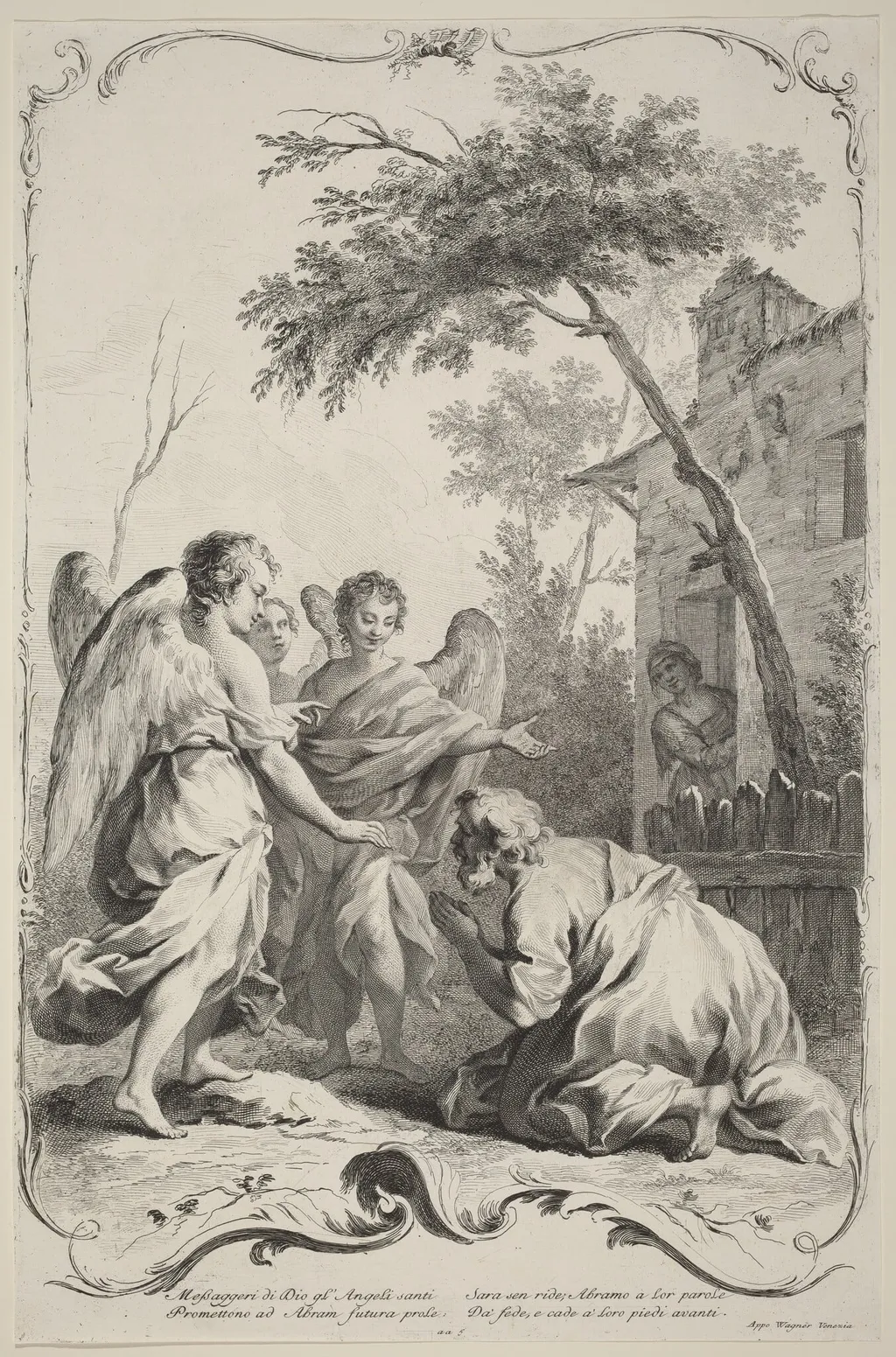
Abraham Kneeling before the Three Angels is an ink print by the Baroque artist Joseph Wagner. It dates from 1745 and is held in the collection of the National Gallery of Art.
About this work
Overview
Abraham Kneeling before the Three Angels is a print created by Joseph Wagner around 1745, utilizing etching and engraving techniques on laid paper.
Subject & Meaning
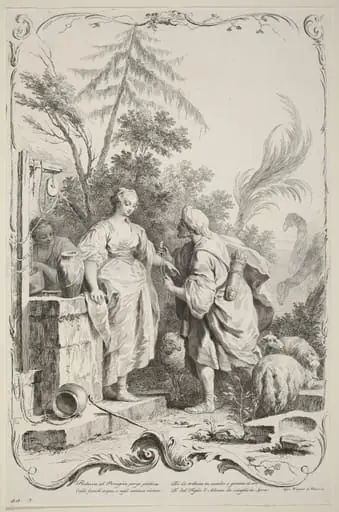
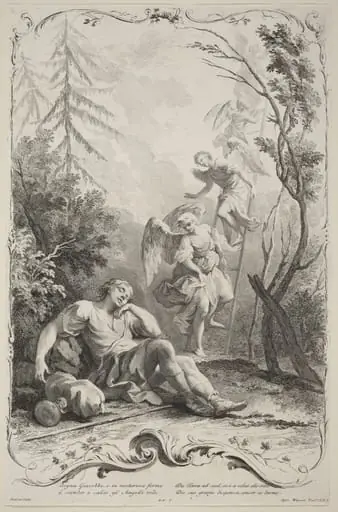
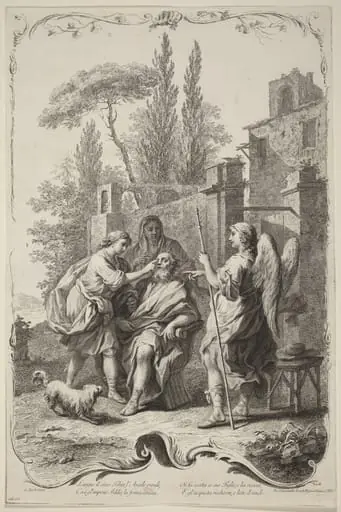
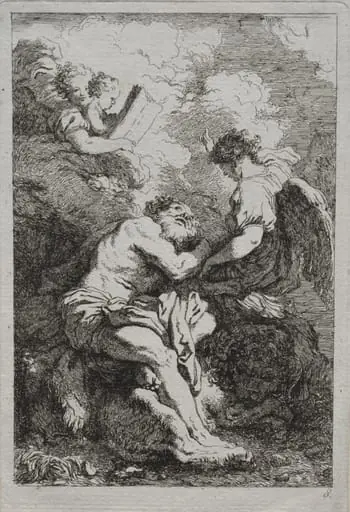
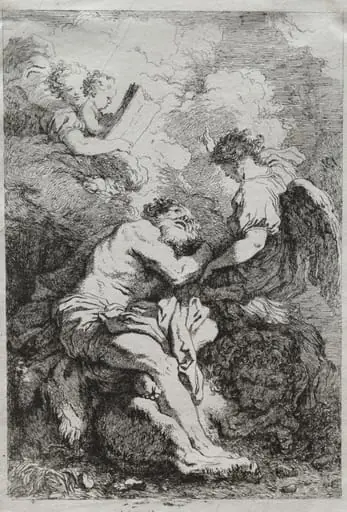
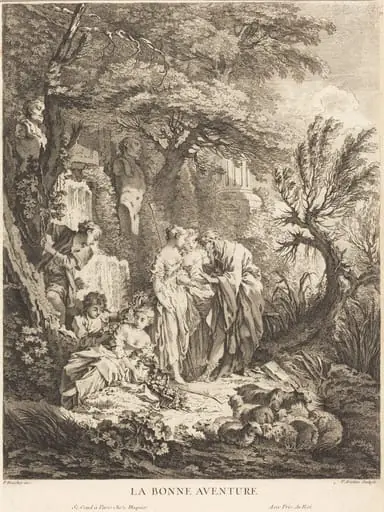
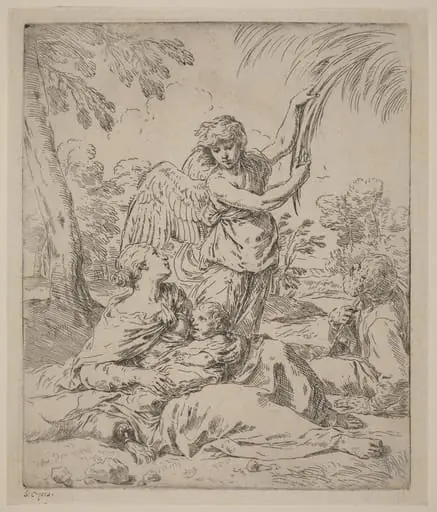
The print depicts a scene from biblical narrative where Abraham, kneeling with a staff, receives divine messengers—three winged angels—under a tree. A comforting figure, possibly Sarah, touches his shoulder, while a child and sheep embody innocence nearby. The angels' gestures imply the delivery of significant news, likely the announcement of Isaac's birth.
Technique & Style
The work showcases meticulous line work and shading, characteristic of etching and engraving. These techniques, common in book illustration of the era, allowed for precise details and textures, evident in the rendering of figures, foliage, and architectural elements in the background.
History & Provenance
Created circa 1745 by Joseph Wagner, specific details about the print's ownership history and exhibitions are not provided in the available information.
Context
This engraving reflects 18th-century artistic interpretations of biblical themes, combining religious narrative with serene, natural settings—a common practice during the period.
Legacy
While specific influences or notable reproductions of 'Abraham Kneeling before the Three Angels' are not detailed, it contributes to the broader legacy of religious art in print form from the 18th century.
Artist & collection