Artwork
Original designs for modern goldsmith's work, chiefly in the style of the Renaissance
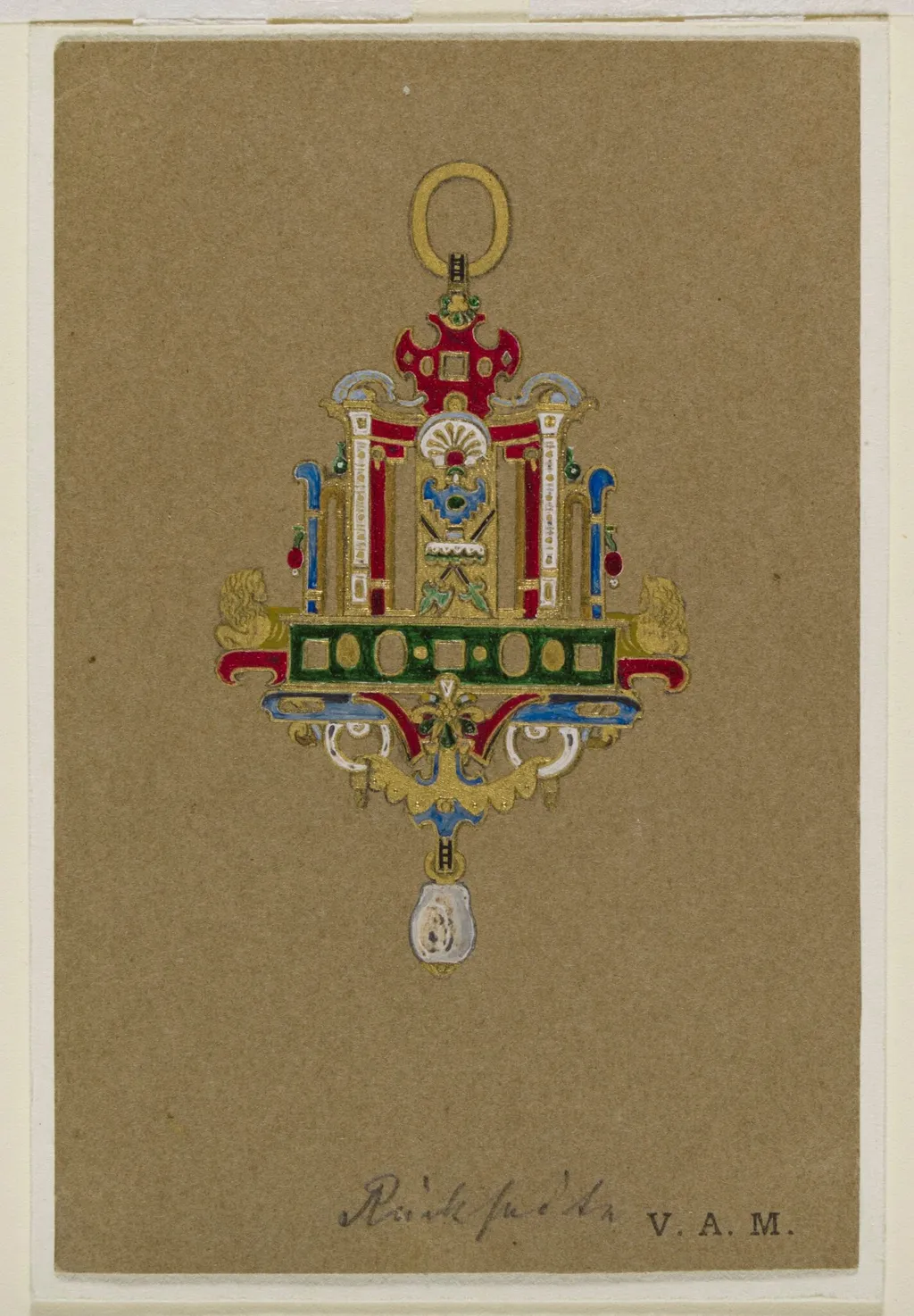
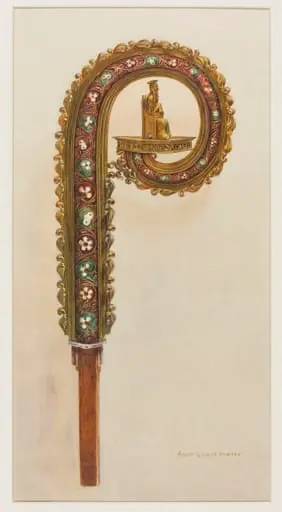
Original designs for modern goldsmith's work, chiefly in the style of the Renaissance is a drawing by Reinhold of Aachen Vasters. It dates from 1909 and is held in the collection of the Victoria and Albert Museum. The drawing is a preparatory study created in 1909 for a contemporary goldsmith, employing pencil, pen and ink to explore decorative motifs.
About this work
There are lions on the sides, a sun in the middle, and some odd-shaped objects hanging off the bottom.
This drawing shows a fancy gold design for a piece of jewelry. It looks like a crown or a fancy frame with red, gold, and blue colors. There are lions on the sides, a sun in the middle, and some odd-shaped objects hanging off the bottom.
The artist made this in 1909 as a sketch for a goldsmith. It copies the look of old Renaissance work but is actually new.
Look up the Victoria and Albert Museum to see more like this.
Overview
The drawing is a preparatory study created in 1909 for a contemporary goldsmith, employing pencil, pen and ink to explore decorative motifs. It presents a stylised ornamental framework reminiscent of Renaissance metalwork, featuring a central sun motif, flanking lion figures, and a palette of red, gold and blue elements that suggest a jeweled setting.
Subject & Meaning
The composition functions as a design proposal for a piece of jewellery or ceremonial object, evoking the grandeur of Renaissance ecclesiastical and courtly adornments. The inclusion of heraldic lions and solar imagery aligns with traditional symbols of authority and divine light, while the overall arrangement suggests a crown‑like or framing device for a pendant.
Technique & Style
Executed with precise line work, the artist combines delicate pencil shading with bold ink outlines to delineate ornamental patterns and surface textures. The style deliberately mirrors Renaissance goldsmith conventions, such as intricate scrollwork, enamel‑like colour fields, and the integration of animal and celestial motifs, translating historic metalworking language into a two‑dimensional sketch.
History & Provenance
Produced in the early twentieth century, the drawing reflects a revivalist interest among modern craftsmen to adapt historic designs for contemporary production. It forms part of a series of studies intended to guide the fabrication of cups, crucifixes, flagons, dishes and jeweled pendants, illustrating how Renaissance techniques were re‑interpreted for new commissions.
Context
The work belongs to a broader movement in the late 1800s and early 1900s that sought to reconnect modern decorative arts with the craftsmanship of the Renaissance. Such studies were commonly used by goldsmiths and silversmiths to ensure historical accuracy while allowing for creative adaptation, a practice encouraged by institutions like the Victoria and Albert Museum.
Artist & collection
Artist
Reinhold Vasters left behind detailed drawings meant to guide goldsmiths in the Renaissance style.

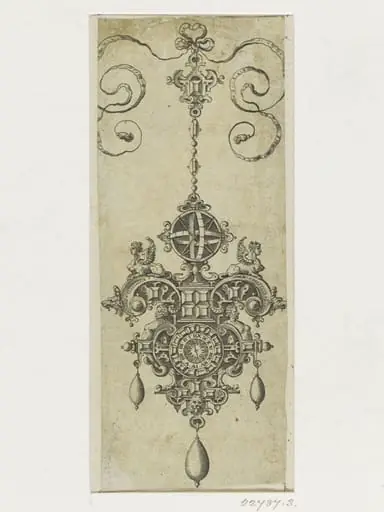 Monilivm Bvllarvm, Inavrivmqve Artificiocissimae Icones
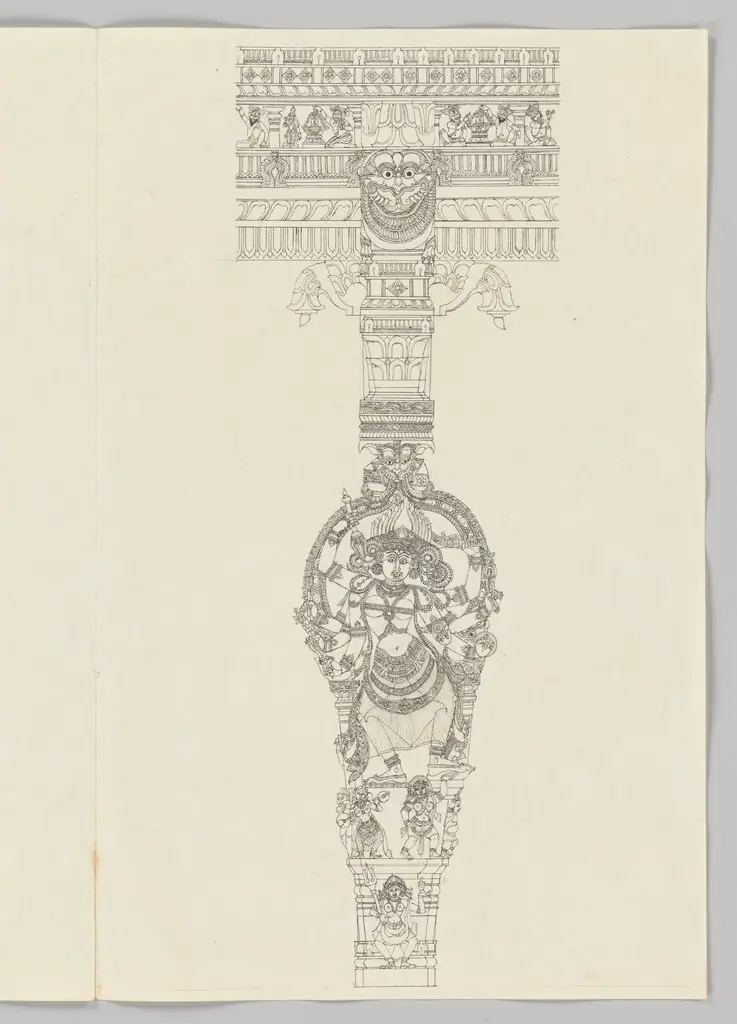 Kali
Kali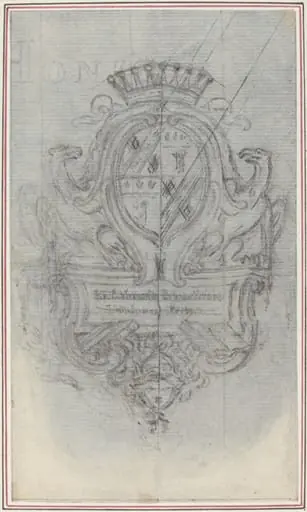 Coat of Arms with Two Eagles
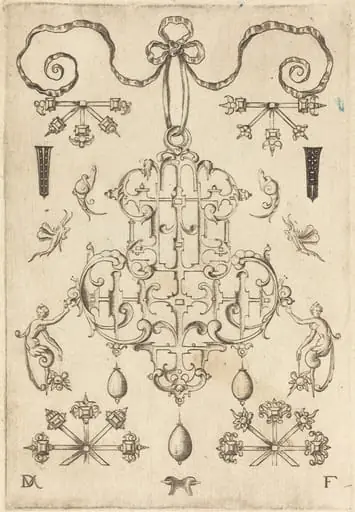 Large Pendant with Three Drops Below
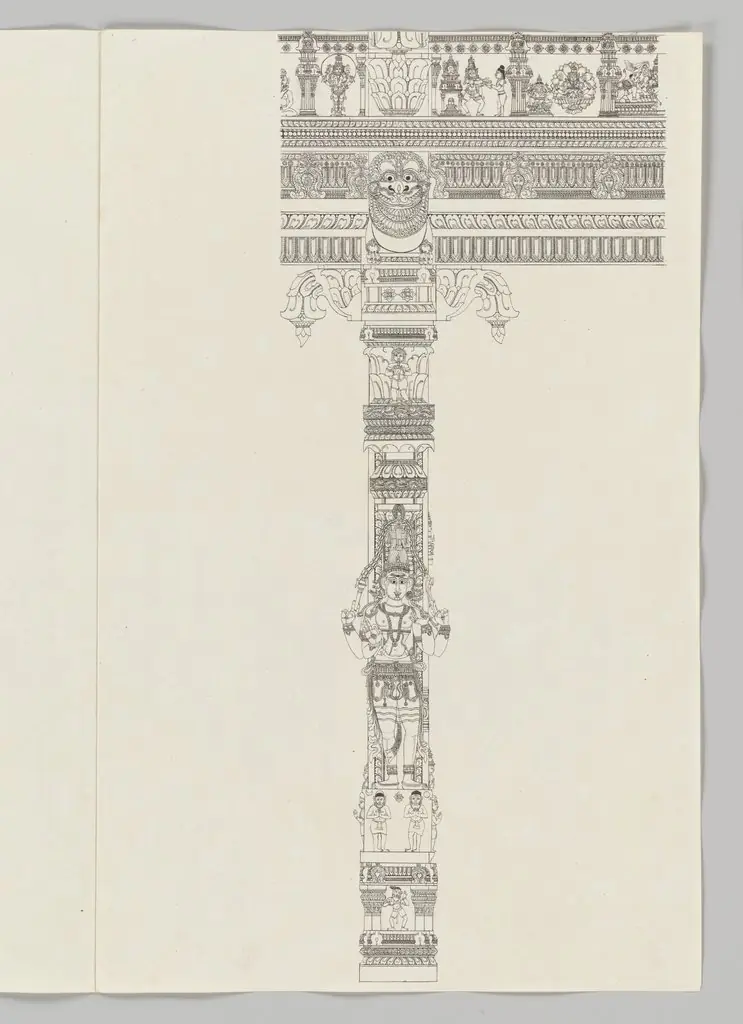 Sundareshvara teaching a bird a mantra
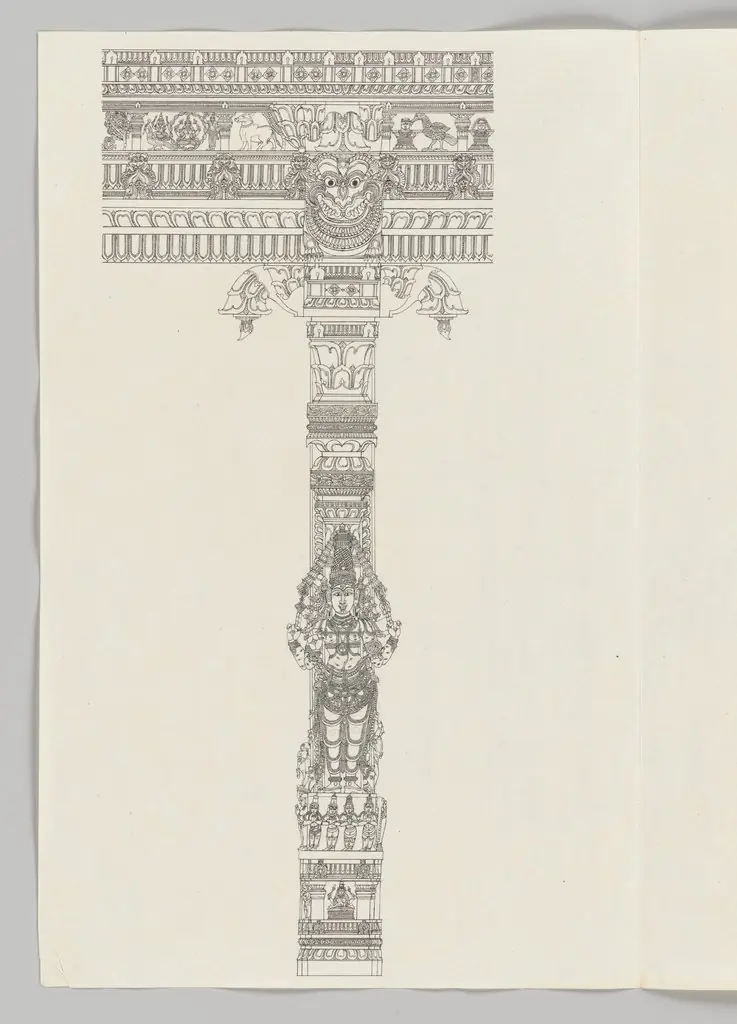 Subramanya
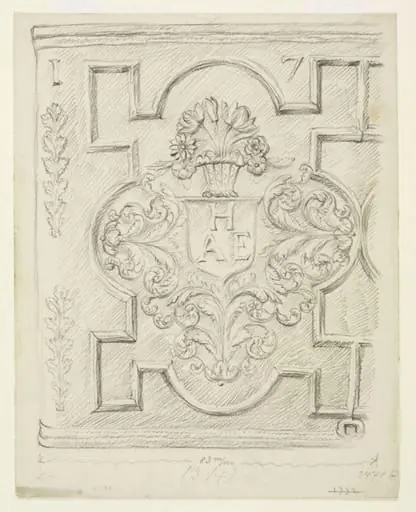 Untitled
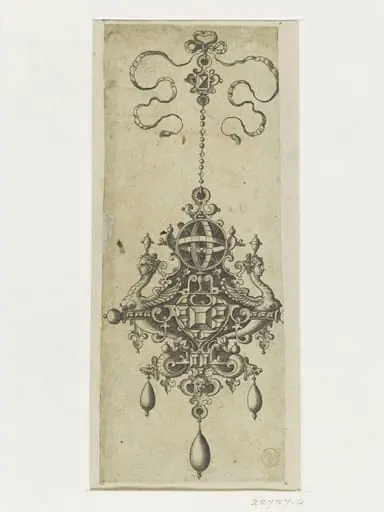 Designs for Necklaces, Pendants and Earrings of the Highest Skill
 Untitled
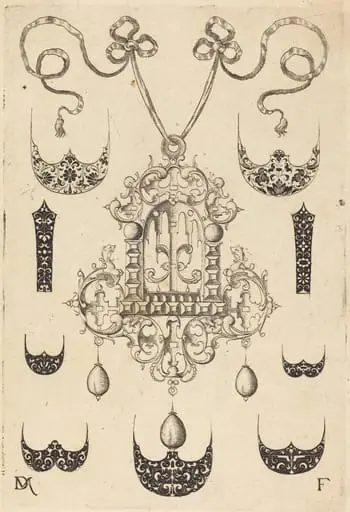 Pendant Surrounded by Seven Shields and Two Ornamental Bands
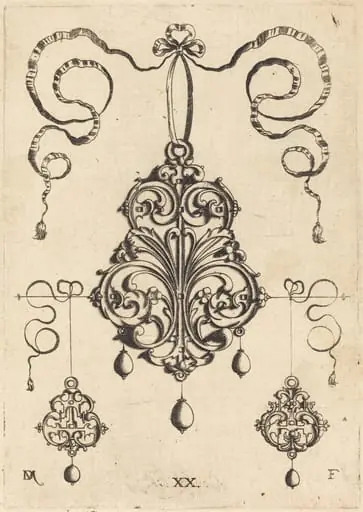 One Large and Two Smaller Strapwork Pendants
 Ornamental design