Artwork
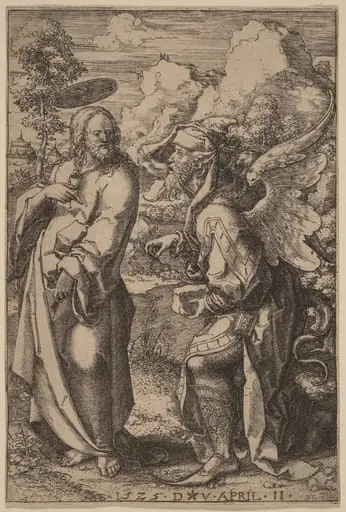
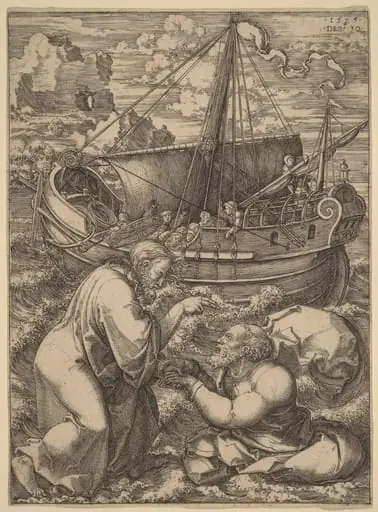
Christ Summoning Peter
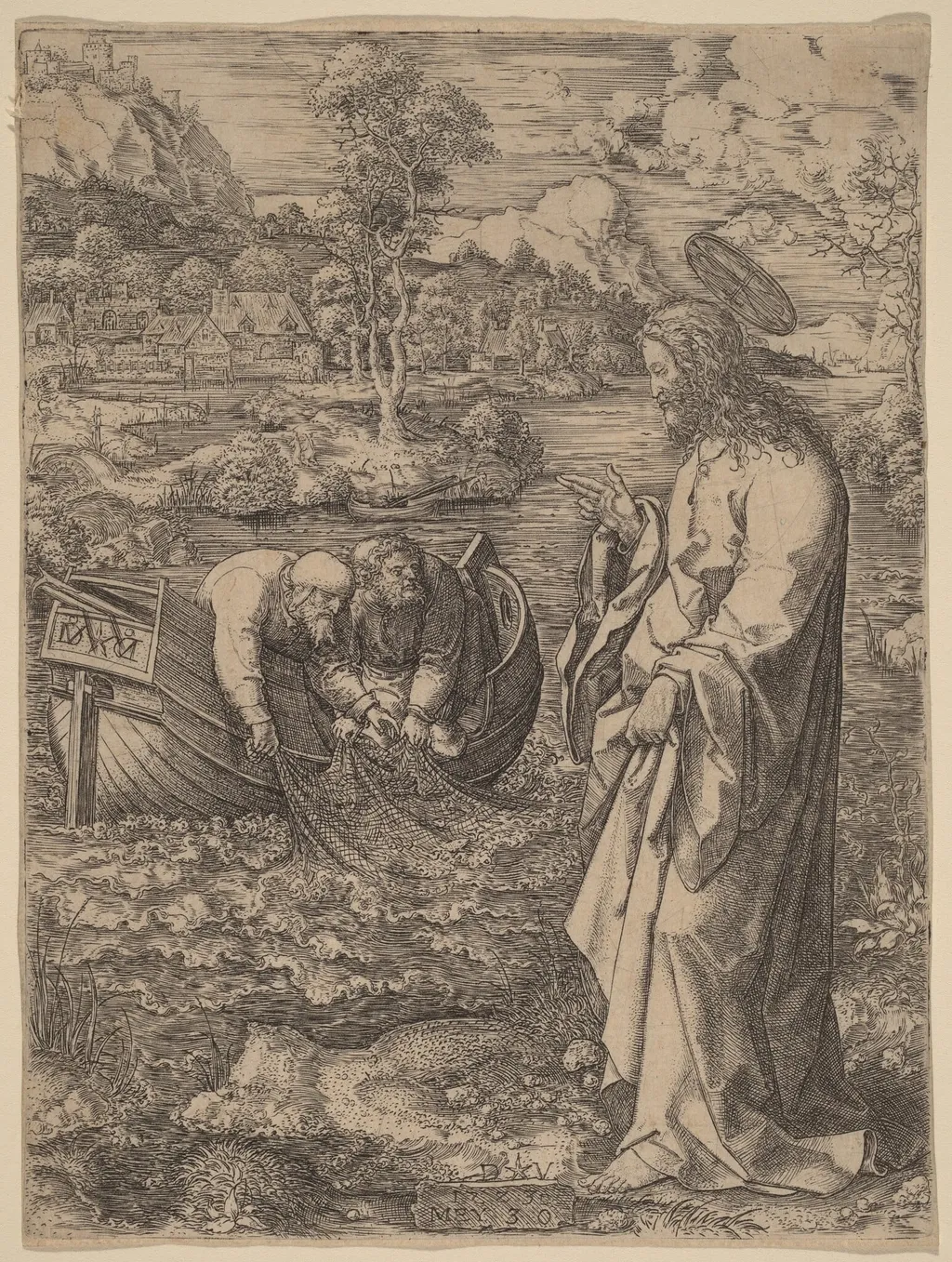
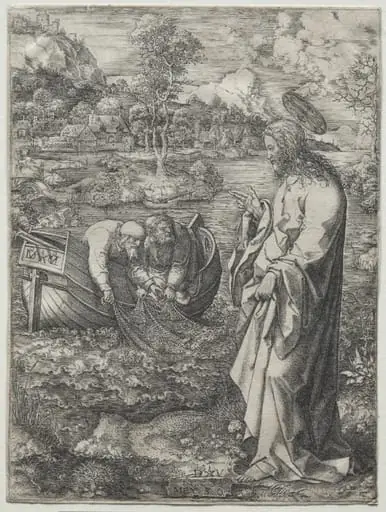
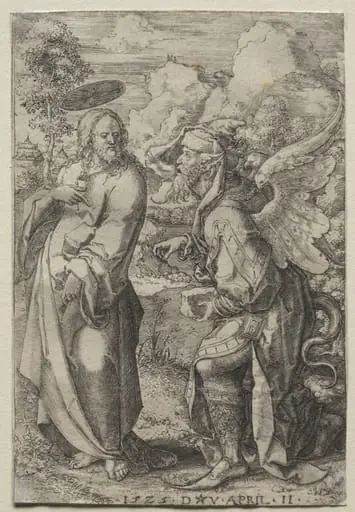
Christ Summoning Peter is an ink print by the Renaissance artist Dirk Jacobsz Vellert. It dates from 1523 and is held in the collection of the National Gallery of Art.
About this work
Overview
Created in 1523 by Dirk Jacobsz Vellert, this engraving depicts a moment from the New Testament in which Christ calls Peter to follow him.
Created in 1523 by Dirk Jacobsz Vellert, this engraving depicts a moment from the New Testament in which Christ calls Peter to follow him. Executed in fine linear detail, the work belongs to the tradition of Northern Renaissance printmaking, where religious narratives were rendered with precision for devotional and educational purposes. The composition centers on two figures against a quiet landscape, emphasizing spiritual intimacy over dramatic action.
Subject & Meaning
The scene illustrates Christ’s invitation to Peter, a foundational moment in Christian tradition where Peter leaves his fishing boat to become a disciple. Christ, identified by his halo and flowing robe, gestures gently from the shore, while Peter, dressed in humble garments, is shown mid-motion, responding to the call. The quiet demeanor of both figures underscores the theme of humble obedience, reflecting the devotional values of early 16th-century Protestant and Catholic audiences alike.
Technique & Style
Vellert employed fine, controlled lines typical of engraving to model form and space. Soft gradations of shadow define the figures’ robes and the undulating terrain, while the water and distant hills are suggested with minimal, rhythmic strokes. The absence of bold contrasts creates a subdued, contemplative mood. The style reflects Northern Renaissance priorities: clarity of line, attention to naturalistic detail, and restrained emotional expression.
History & Provenance
The engraving was produced in the early 1520s in the Netherlands, during a period of religious upheaval and growing demand for printed devotional imagery. Vellert, active in Haarlem, was known for religious prints distributed widely across Europe. While specific early ownership records are sparse, similar works by Vellert appear in institutional collections, suggesting this piece was part of a broader circulation of printed religious subjects for private devotion.
Context
This work emerged during the early Reformation, when printed images served as tools for spiritual instruction in both Catholic and emerging Protestant communities. Though not overtly polemical, its focus on Christ’s direct call to an individual disciple aligned with reformist ideals of personal faith. The calm, uncluttered composition reflects a broader shift away from ornate medieval altarpieces toward intimate, accessible religious imagery.
Legacy
Vellert’s engraving contributed to the dissemination of biblical narratives through accessible media. Though less celebrated than his contemporaries, his precise technique influenced regional printmakers who sought to balance devotional clarity with aesthetic restraint. Surviving impressions in public collections attest to its continued circulation in private and ecclesiastical settings throughout the 16th century.
Artist & collection