Artwork
Saint Peter Walking on the Water
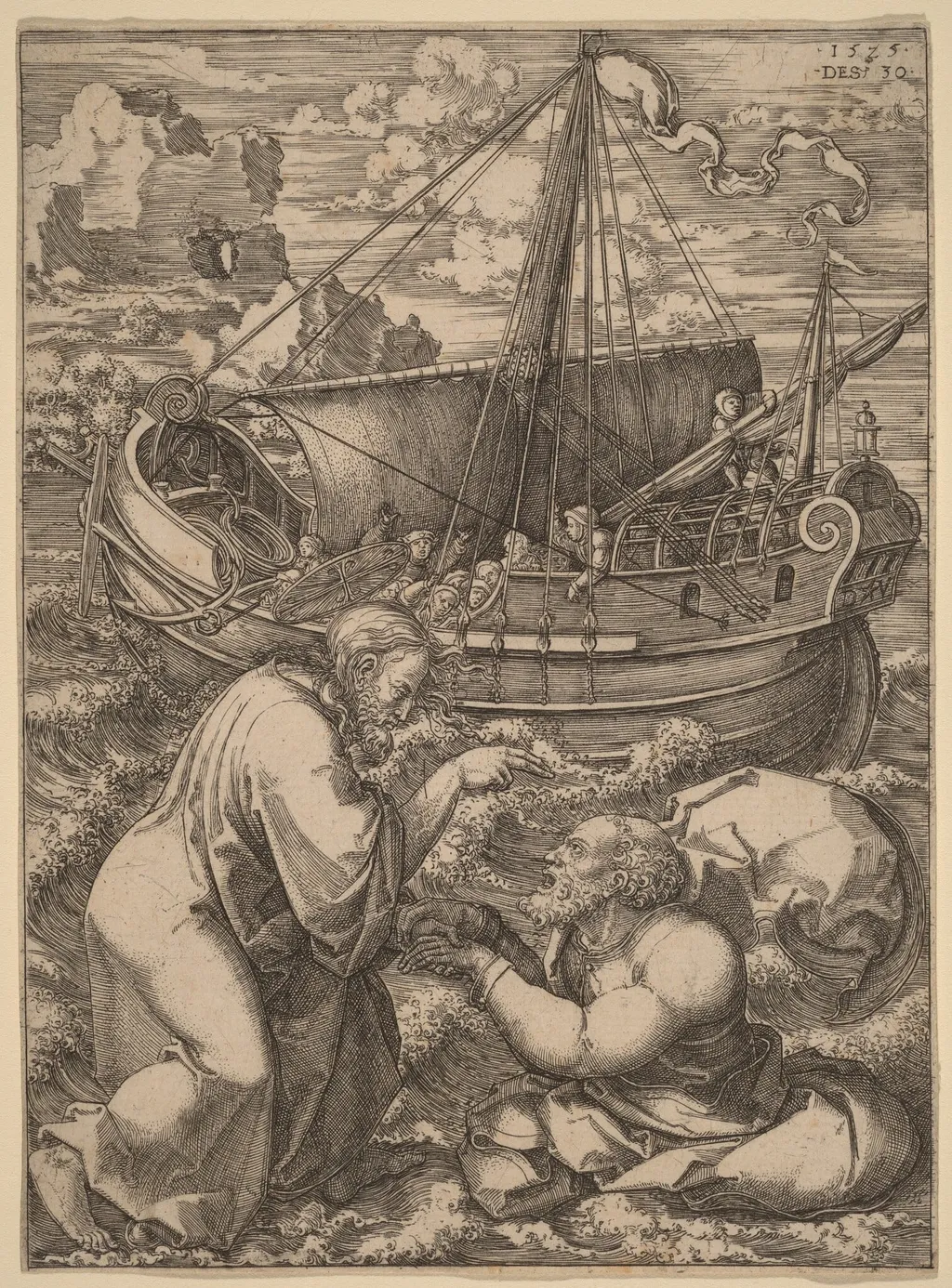
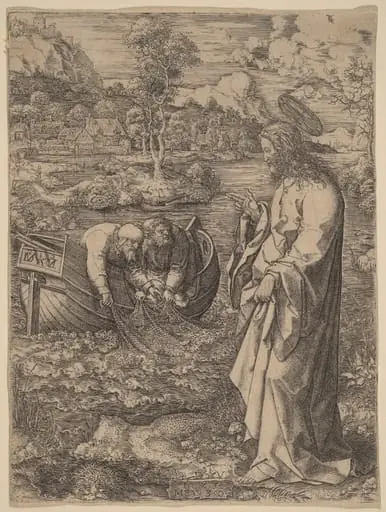
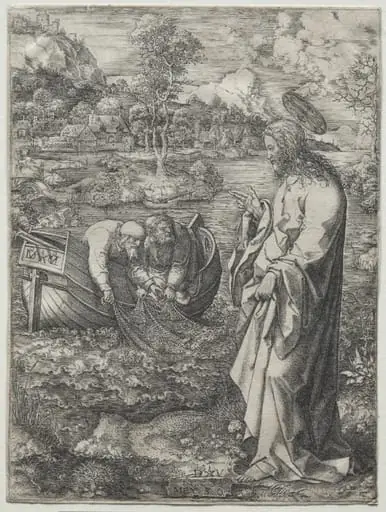
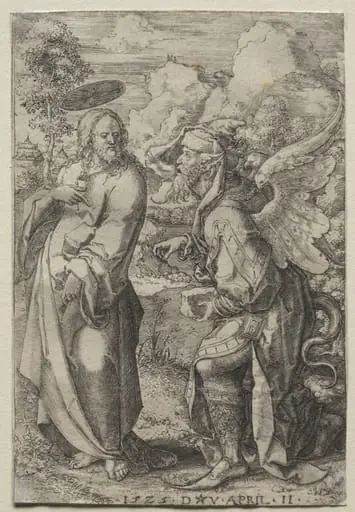
Saint Peter Walking on the Water is an ink print by the Renaissance artist Dirk Jacobsz Vellert. It dates from 1525 and is held in the collection of the National Gallery of Art.
About this work
Overview
The work belongs to a tradition of religious prints made for devotional use, reflecting the visual culture of early sixteenth-century Northern Europe.
Created in 1525, this engraving by Dirk Jacobsz Vellert illustrates the biblical episode of Saint Peter walking on water. Executed in the intaglio technique, the image was produced by incising lines into a metal plate, inked, and pressed onto paper. The work belongs to a tradition of religious prints made for devotional use, reflecting the visual culture of early sixteenth-century Northern Europe.
Subject & Meaning
The scene captures Peter stepping from the boat toward Christ, as described in the Gospel of Matthew. The turbulent sea and looming clouds emphasize divine power and human frailty. Figures in the vessel watch in awe, their postures reinforcing the miracle’s emotional weight. The image invites contemplation of faith and doubt, central themes in Christian teachings of the period.
Technique & Style
Vellert employed fine, controlled lines to render texture in water, fabric, and sky, demonstrating mastery of engraving. Shading and cross-hatching create atmospheric depth without color, relying on tonal variation. The composition is tightly framed, directing focus to Peter’s precarious step and the boat’s crowded interior, typical of Northern Renaissance printmaking’s precision and narrative clarity.
History & Provenance
The print was made during Vellert’s active years in Amsterdam, a center for religious and secular print production. Few signed works by him survive, making this piece a rare example of his output. It likely circulated among private collectors and clergy, serving both spiritual and artistic purposes in households and chapels across the Low Countries.
Context
Produced just before the Protestant Reformation intensified, the image reflects continued Catholic devotional practices in the Netherlands. Engravings like this were accessible alternatives to paintings, allowing broader dissemination of biblical stories. Vellert’s work aligns with contemporaries such as Lucas van Leyden, who similarly blended narrative detail with technical refinement.
Legacy
Vellert’s engraving contributes to the legacy of Northern European printmaking as a vehicle for religious storytelling. Though less celebrated than his peers, his precise technique influenced regional workshops. Surviving impressions in museum collections attest to its enduring role in the visual transmission of scripture during a time of profound religious change.
Artist & collection