Artwork
The Temptation of Christ
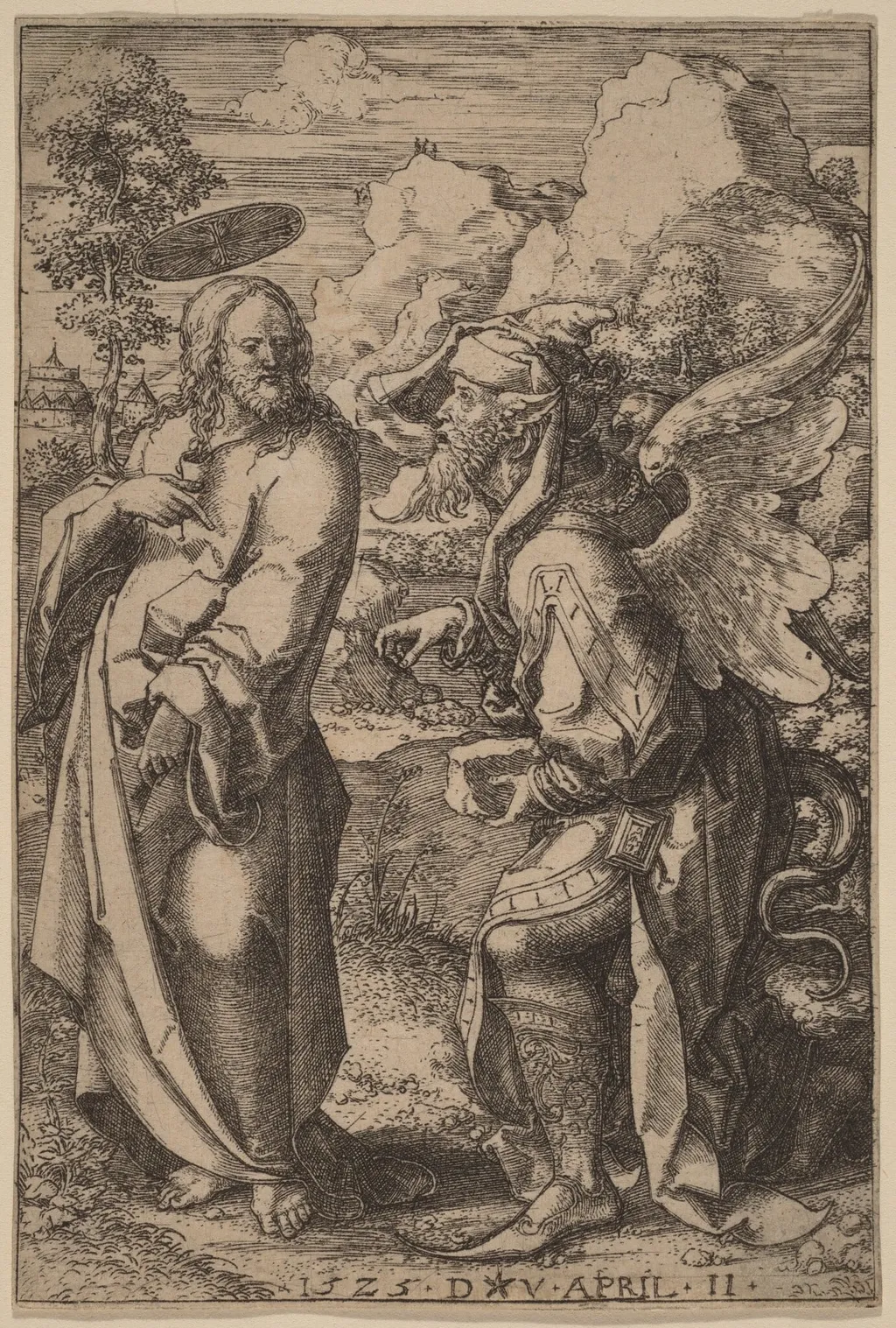
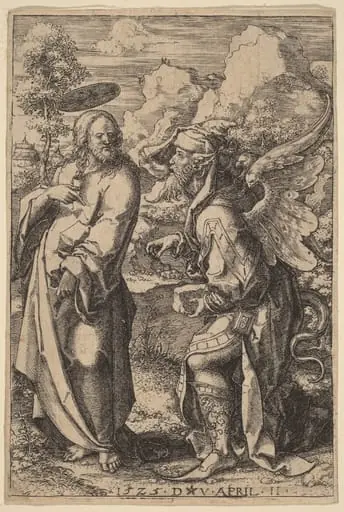
The Temptation of Christ is an ink print by the Renaissance artist Dirk Jacobsz Vellert. It dates from 1523 and is held in the collection of the National Gallery of Art.
About this work
Overview
Dirk Jacobsz Vellert’s 1523 engraving, titled The Temptation of Christ, presents a compact narrative scene from the New Testament. Executed on a metal plate, the print measures a modest size typical of early‑sixteenth‑century devotional images and was intended for personal contemplation or small‑scale distribution.
Subject & Meaning
The winged figure appears to hold a stone or tablet, suggesting the moment of temptation described in the Gospels, where Satan challenges Christ’s obedience.
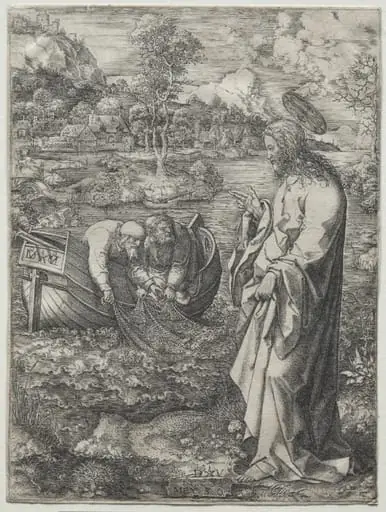
The composition juxtaposes two standing figures within a natural landscape. On the left, a robed figure bearing a halo—identified as Christ—gazes toward the right‑hand figure, who wears a hat and a cloak adorned with exaggerated wings, a conventional attribute of the devil. The winged figure appears to hold a stone or tablet, suggesting the moment of temptation described in the Gospels, where Satan challenges Christ’s obedience.
Technique & Style
Vellert employs the intaglio engraving method, incising fine lines into a copper plate to achieve delicate shading and texture. The rendering of foliage, hills, and clouded sky demonstrates a meticulous approach to atmospheric perspective, while the crisp contouring of the characters reflects the Renaissance emphasis on anatomical accuracy and narrative clarity.
History & Provenance
Created in the early years of the Northern Renaissance, the print reflects the spread of religious imagery following the advent of the printing press. Though specific ownership records are scarce, copies of the engraving have appeared in several 16th‑century collections of devotional prints, indicating its circulation among private patrons and possibly ecclesiastical libraries.
Context
The work belongs to a broader tradition of visualizing Christ’s temptations, a theme popular among reformist and humanist artists seeking to underscore moral fortitude. Vellert, active in the Low Countries, integrated Northern attention to detail with Italianate compositional balance, situating the scene within a recognizable, albeit idealized, landscape.
Legacy
While not as widely reproduced as later prints, Vellert’s engraving contributes to the visual vocabulary of temptation narratives that informed subsequent artists. Its precise line work and integration of symbolic attributes—halo, wings, stone—serve as reference points for later Northern engravers exploring biblical subjects.
Artist & collection