Artwork
The Return of the Prodigal Son
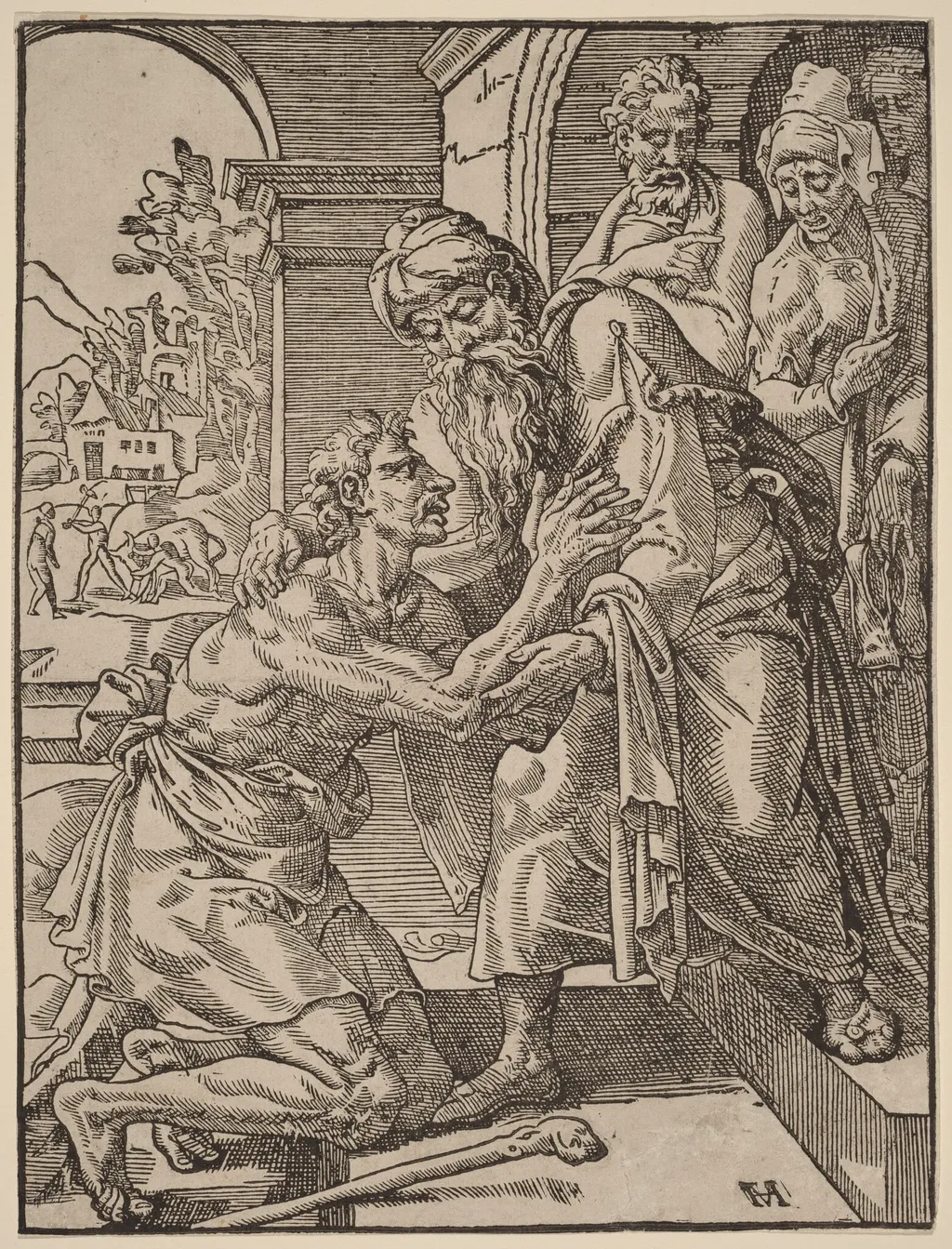
The Return of the Prodigal Son is an ink print by the Renaissance artist Dirck Volckertz Coornhert. It dates from 1548 and is held in the collection of the National Gallery of Art.
About this work
Overview
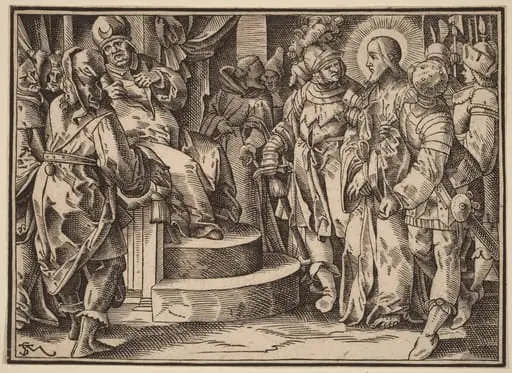
Dirck Volckertz Coornhert’s woodcut titled The Return of the Prodigal Son dates from around 1548. Executed on laid paper, the print presents a densely populated interior scene illuminated by a muted light source, with a view through a window that reveals a modest town beyond. The composition captures a moment of emotional reunion, framed by the stark contrasts typical of early modern woodcut.
Subject & Meaning
The central narrative depicts the biblical episode of the prodigal son’s homecoming. A kneeling figure embraces a standing man who clutches a staff, symbolizing the son’s repentance and the father’s forgiveness. Two additional onlookers observe the exchange, while the distant town suggests the broader social context of daily life continuing outside the intimate drama.
Technique & Style
Coornhert employed the woodcut process, carving the design into a wooden block, inking the surface, and pressing it onto laid paper. The lines are sharply defined yet retain a rough quality, and the heavy cross‑hatching creates deep shadows that model clothing folds and facial expressions. This approach allowed for relatively inexpensive reproduction, a common practice in the mid‑16th century.
History & Provenance
The print emerged in the late Renaissance, a period when religious subjects were frequently disseminated through affordable prints for devotional use. While specific ownership records are scarce, the work reflects the broader market for illustrated biblical scenes that circulated among both clerical and lay audiences in the Low Countries.
Context
In the 1540s, the Reformation and Counter‑Reformation heightened interest in biblical narratives, prompting artists like Coornhert to produce accessible visual interpretations. Woodcuts served as a vehicle for moral instruction and personal reflection, aligning with contemporary efforts to spread scriptural stories beyond the confines of illuminated manuscripts.
Artist & collection


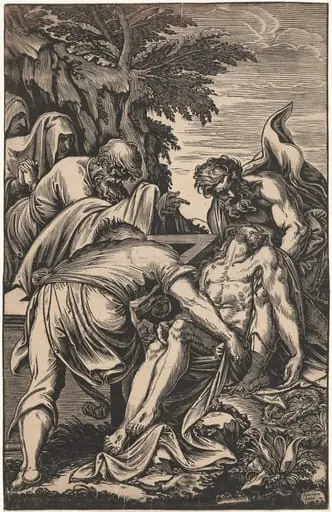 The Entombment
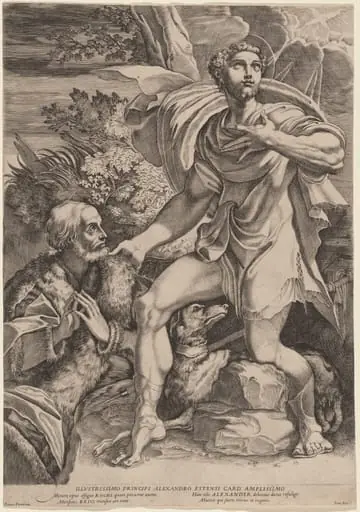 Saint Roch with a Donor
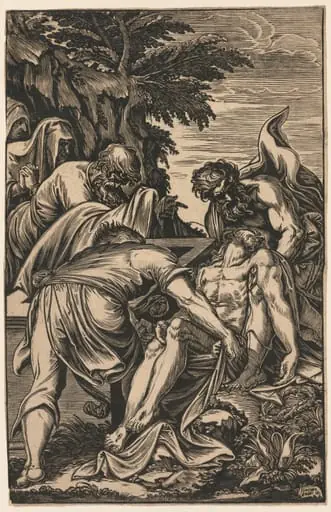 Entombment of Christ
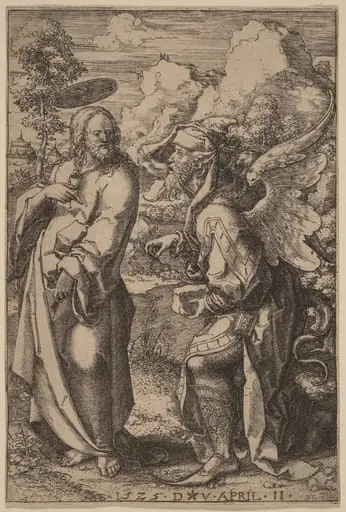 The Temptation of Christ
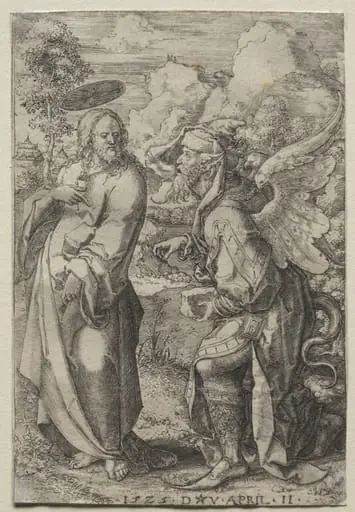 Temptation of Christ
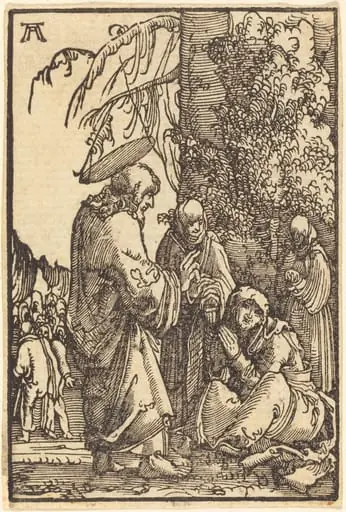 Christ Taking Leave of his Mother
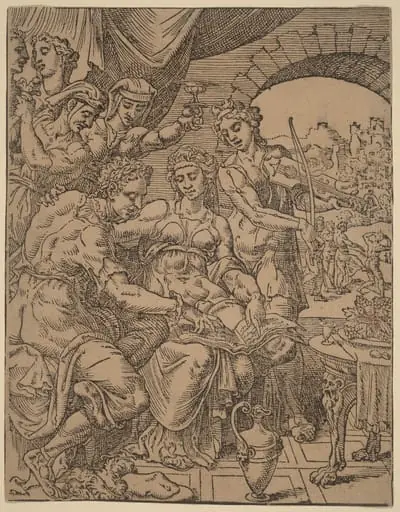
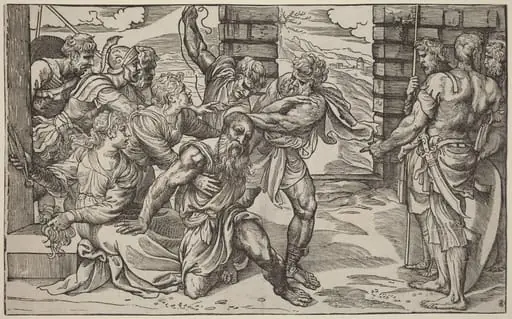 Samson and Delilah
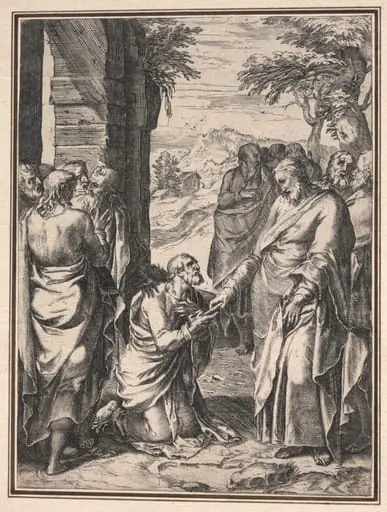 Copy of Cornelis Cort: Christ Giving the Key of the Church to Saint Peter
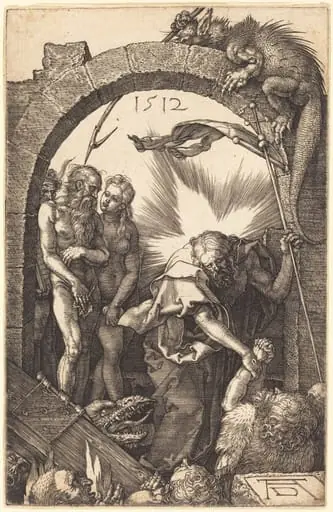 Christ in Limbo
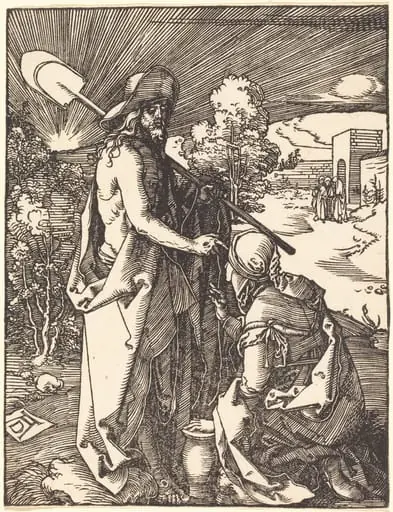 Christ Appearing to Mary Magdalene
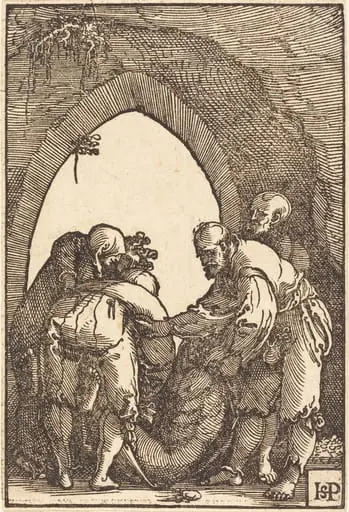 The Entombment
 Christ Tells His Disciples of the Last Judgment