Artwork
Încăierare între țărani
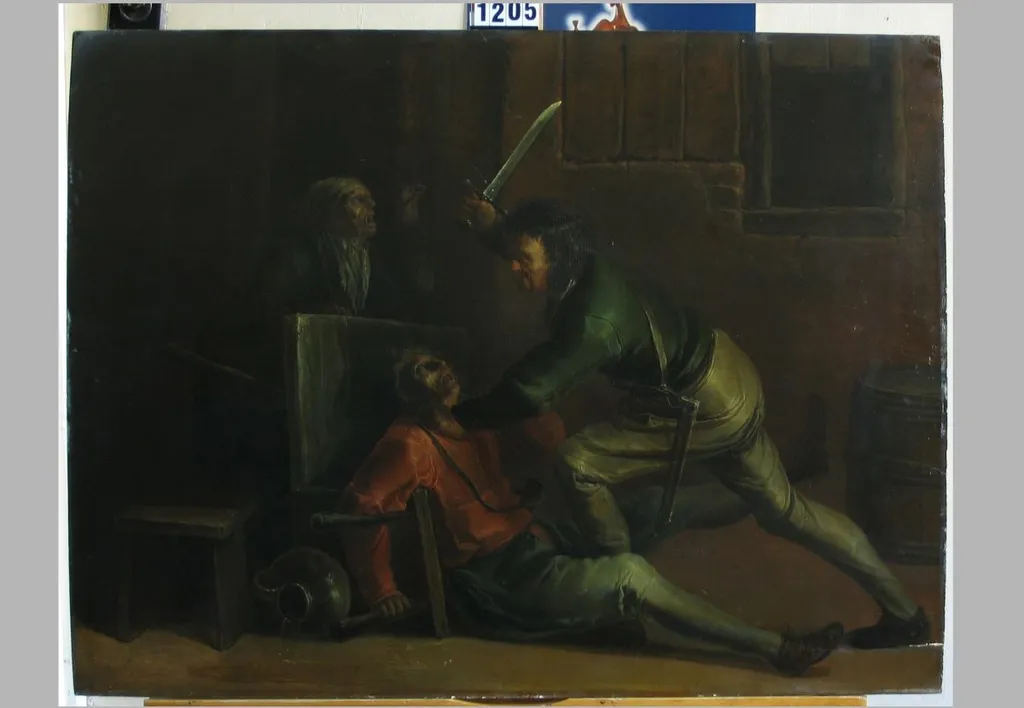
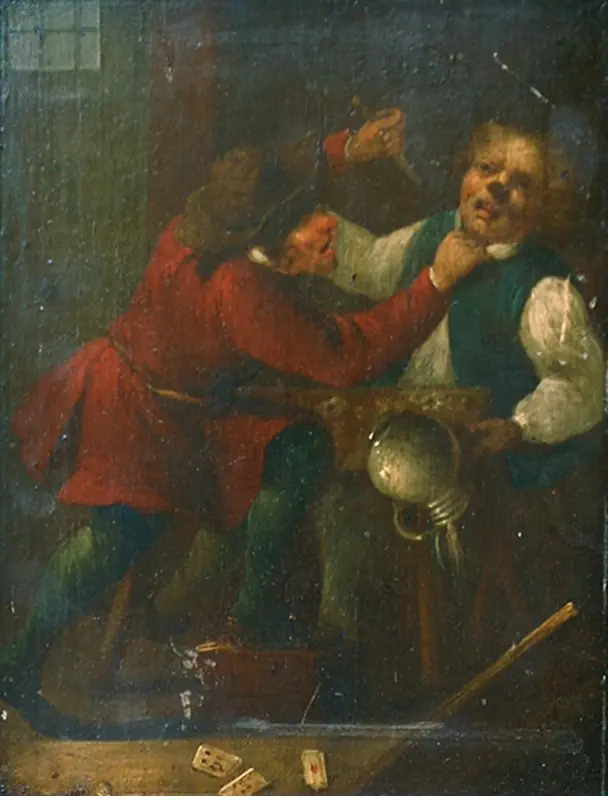
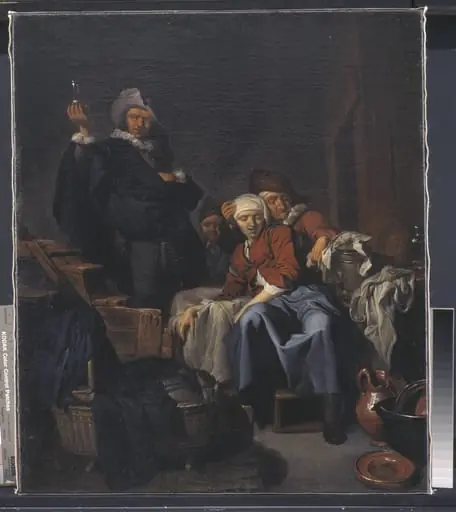
Încăierare între țărani is an unspecified painting by the Baroque artist Pseudo van de Venne. It is held in the collection of the Brukenthal National Museum. This image portrays a violent confrontation between two peasants, rendered in a stark, dramatic style.
About this work
Overview
This image portrays a violent confrontation between two peasants, rendered in a stark, dramatic style. One figure, armed with a knife, lunges forward while the other, seated and defenseless, reacts in agony. The dark, indistinct background amplifies the immediacy of the conflict, isolating the figures in a moment of raw physical struggle.
Subject & Meaning
The scene captures a moment of intense personal conflict, likely rooted in rural discord. The seated man’s posture suggests vulnerability, while the attacker’s aggressive stance implies sudden, unprovoked violence. The absence of witnesses or context invites interpretation as a symbol of broader social tension, perhaps reflecting the fragility of order in peasant life.
Technique & Style
The composition relies on high contrast between the brightly lit figures and the deep shadows behind them. Facial expressions are exaggerated to convey emotion, and clothing is rendered with minimal detail, emphasizing gesture over realism. The use of limited color—predominantly green, orange, and dark tones—heightens the emotional intensity without distraction.
History & Provenance
The work is attributed to Venne, Pseudo van de, a name associated with anonymous or misattributed rural scenes from the late 19th or early 20th century. Its origin remains undocumented, and no exhibition or collection history is verifiable. The attribution suggests it may have been produced as a genre piece, possibly for local or commercial distribution.
Context
Such depictions of peasant violence were uncommon in formal art but occasionally appeared in popular prints or regional illustrations. They often served to reinforce stereotypes about rural life as chaotic or brutish. This image aligns with a broader trend of sensationalized rural imagery, though its execution lacks the polish of academic traditions.
Legacy
The painting survives as an example of vernacular visual storytelling, valued for its emotional directness rather than artistic innovation. It contributes to the study of how violence was visually coded in non-academic art, offering insight into the cultural perceptions of rural conflict during a period of social transformation.
Artist & collection
Artist
Pseudo van de Venne made small, lively scenes of village life. Look at “Încăierare între țărani” for a rowdy clash between peasants with pitchforks and clubs. “Satirul și țăranul” shows a grinning, horned figure…

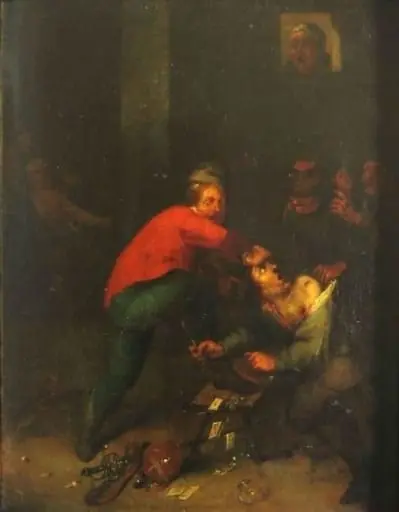 Încăierare la jocul de cărți
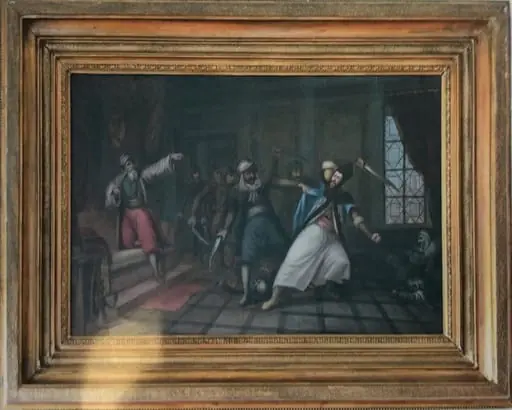 Uciderea lui Grigorie Ghica
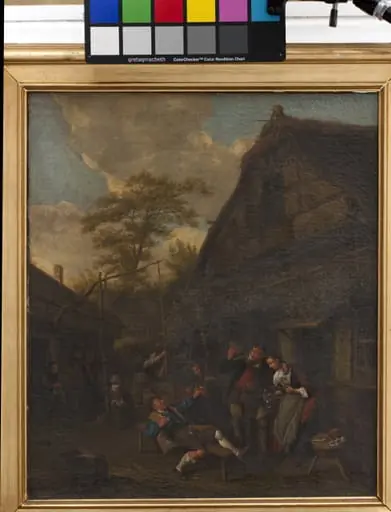 Peasants outside an Inn
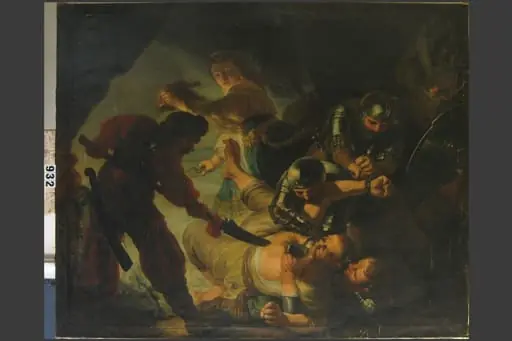 Orbirea lui Samson
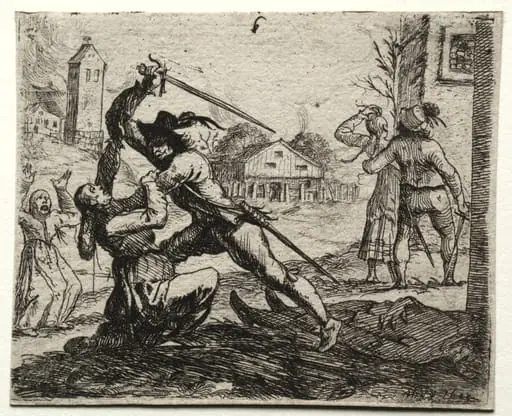 Military Subjects: Two Soldiers Pursuing Women in a Village
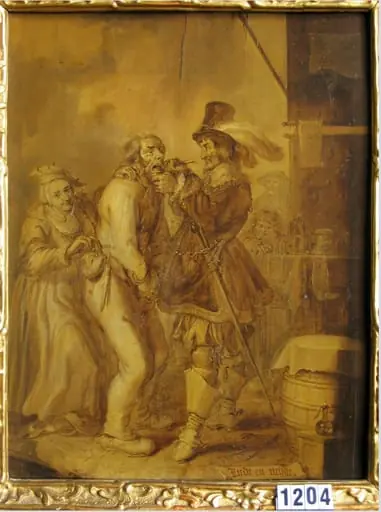 Țăranul în capcană
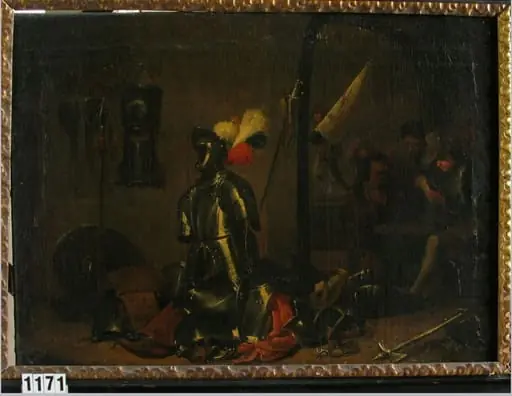 Camera de gardă
 Surprised in a Barn
 Skirmish between the Poles and the Swedes during the Northern War (1700–1718)
 Fight
Fight Bauernschlägerei (?)
 A Sick Peasant Woman