Artwork
Uciderea lui Grigorie Ghica
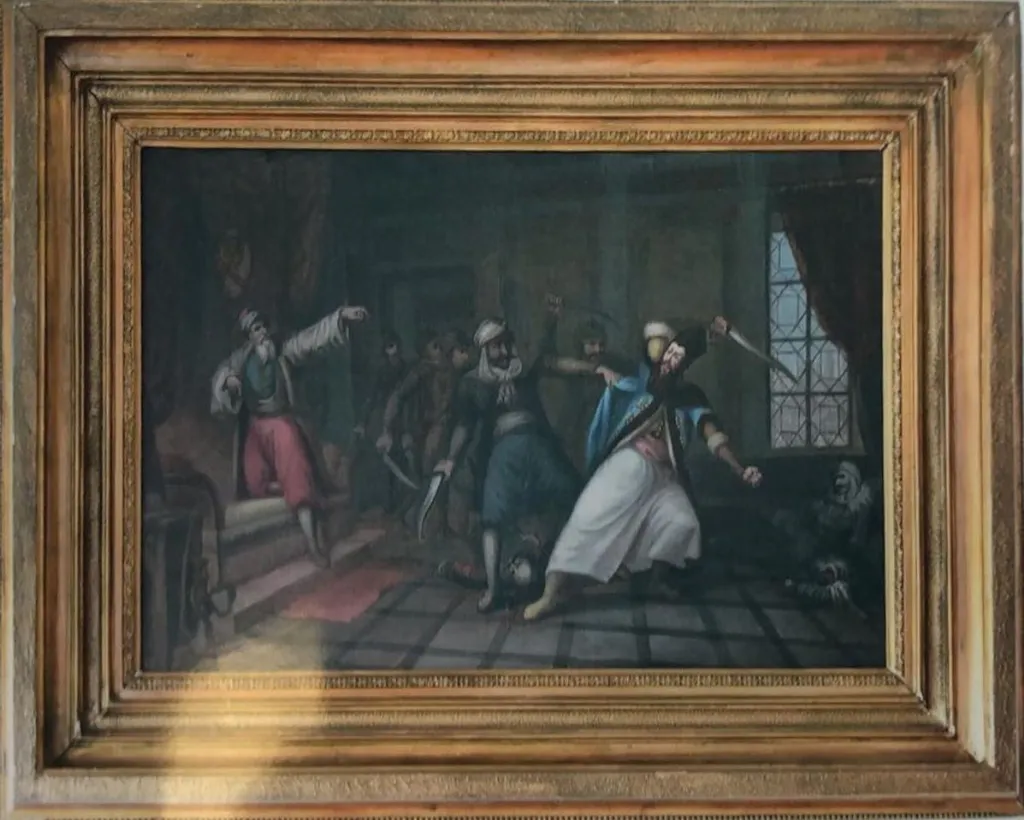
Uciderea lui Grigorie Ghica is an unspecified painting by Gheorghe (George) Pompilian Ioachim. It is held in the collection of the King Ferdinand I National Military Museum.
About this work
Overview
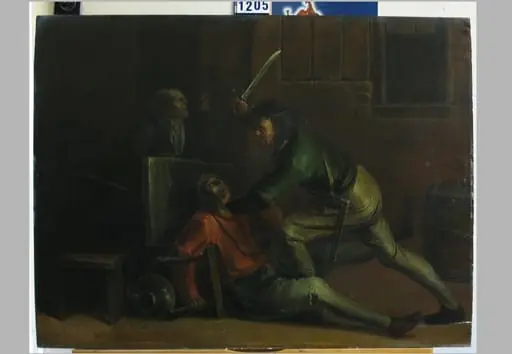
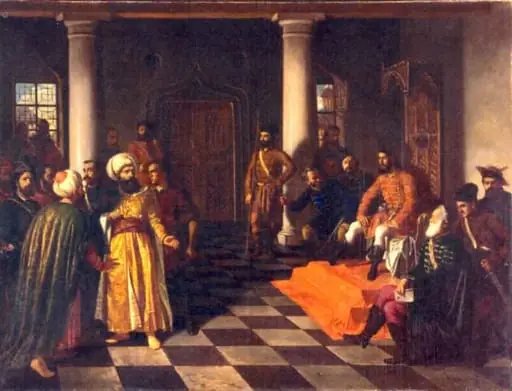
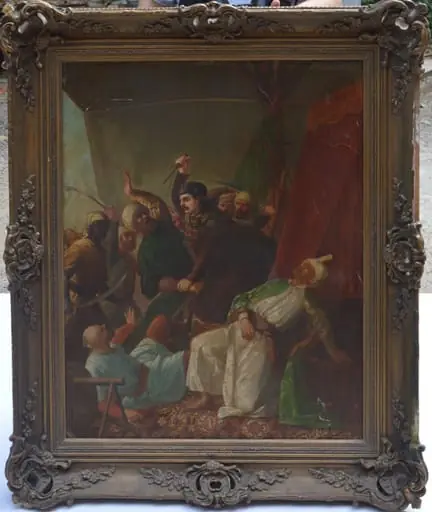
The work titled "Uciderea lui Grigorie Ghica" depicts a tumultuous interior scene in which multiple figures are caught in the midst of violent action.
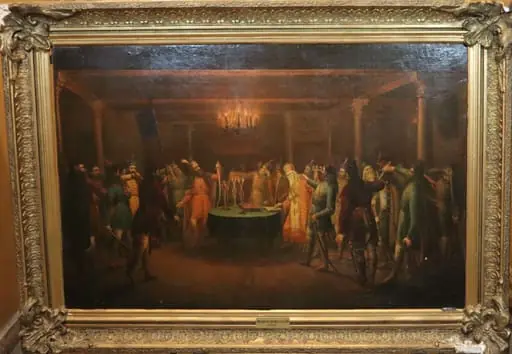
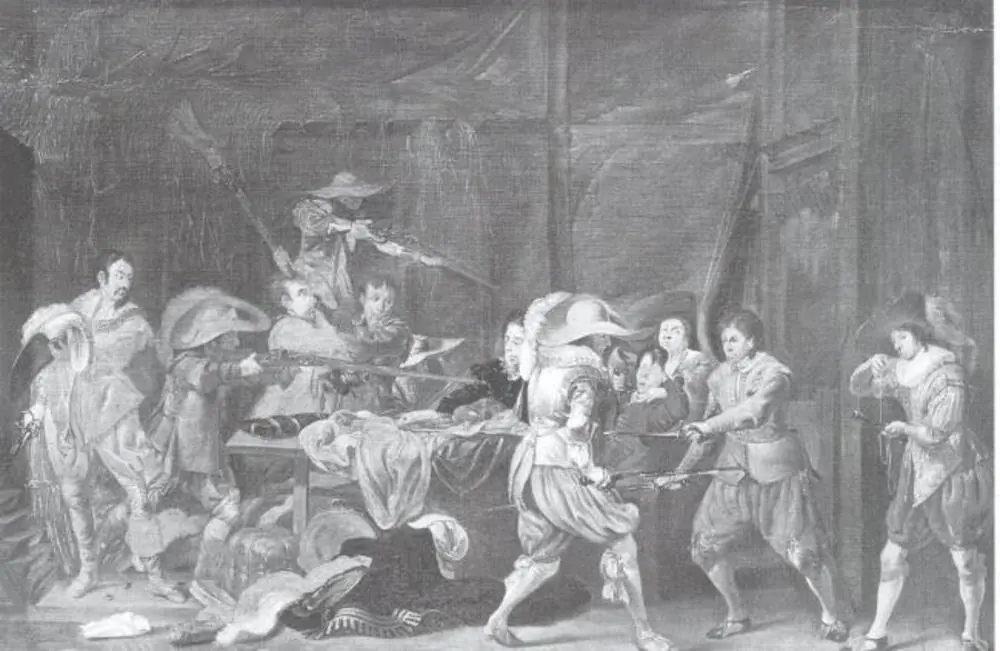
The work titled "Uciderea lui Grigorie Ghica" depicts a tumultuous interior scene in which multiple figures are caught in the midst of violent action. Central to the composition is a man dressed in white, whose back is turned as he is assaulted, while surrounding characters brandish swords or observe the conflict. The setting is defined by dark stone walls, a stained‑glass window, a tiled floor, and a red curtain that frames the background.
Subject & Meaning
The painting captures a moment of sudden aggression, likely referencing a historical or literary episode involving the figure of Grigorie Ghica. The blurred visage of the assailant emphasizes the chaotic nature of the encounter, focusing attention on the drama rather than individual identities. The interplay of attackers, onlookers, and the victim suggests themes of betrayal, power struggles, and the fragility of authority.
Technique & Style
A strong contrast of light and shadow dominates the composition, directing the viewer’s eye toward the central struggle. This chiaroscuro effect creates depth, allowing certain figures to emerge from darkness while others recede. The artist employs a limited palette of muted tones punctuated by the vivid red of the curtain, enhancing the emotional intensity of the scene.
History & Provenance
The piece is catalogued as an image medium, though specific details regarding its creation date, artist, or ownership lineage are not provided in the available information. Consequently, its provenance remains undocumented within the supplied data.
Context
Set within an interior space characterized by architectural elements such as stained glass and tiled flooring, the work reflects a tradition of narrative painting that situates dramatic episodes in recognizable, often aristocratic, environments. The inclusion of swords and formal attire aligns it with depictions of historical or mythological confrontations common in European visual culture.
Artist & collection
Artist
Gheorghe (George) Pompilian Ioachim
He painted history the way people actually remember it: messy, contradictory, and full of shadows.
Museum
King Ferdinand I National Military Museum
Continue through works from the same source collection.