Artwork
Satirul și țăranul
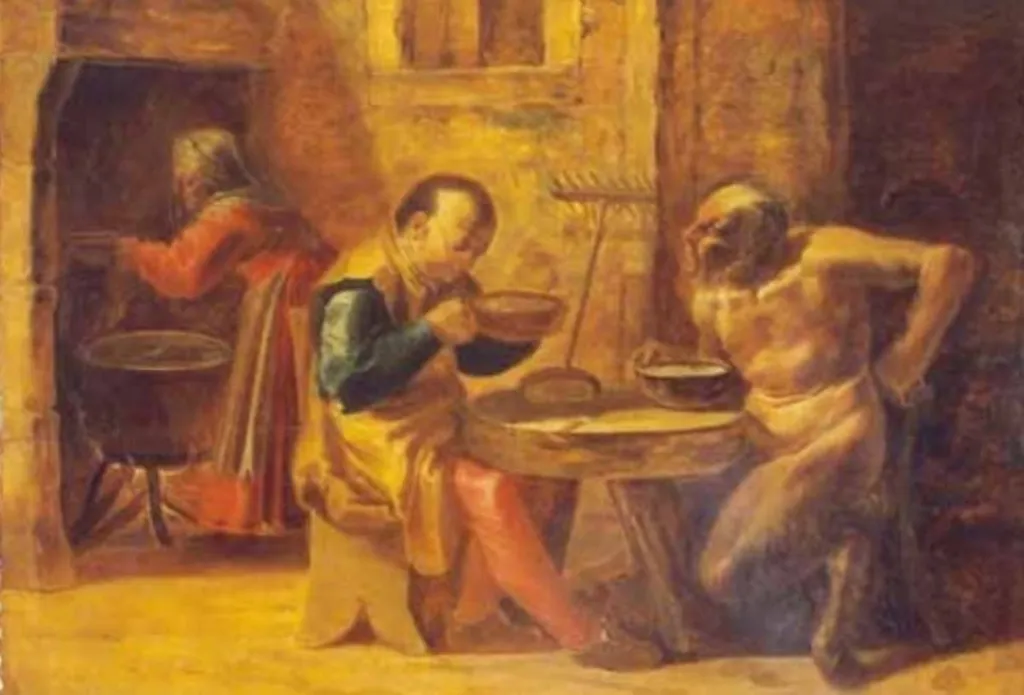
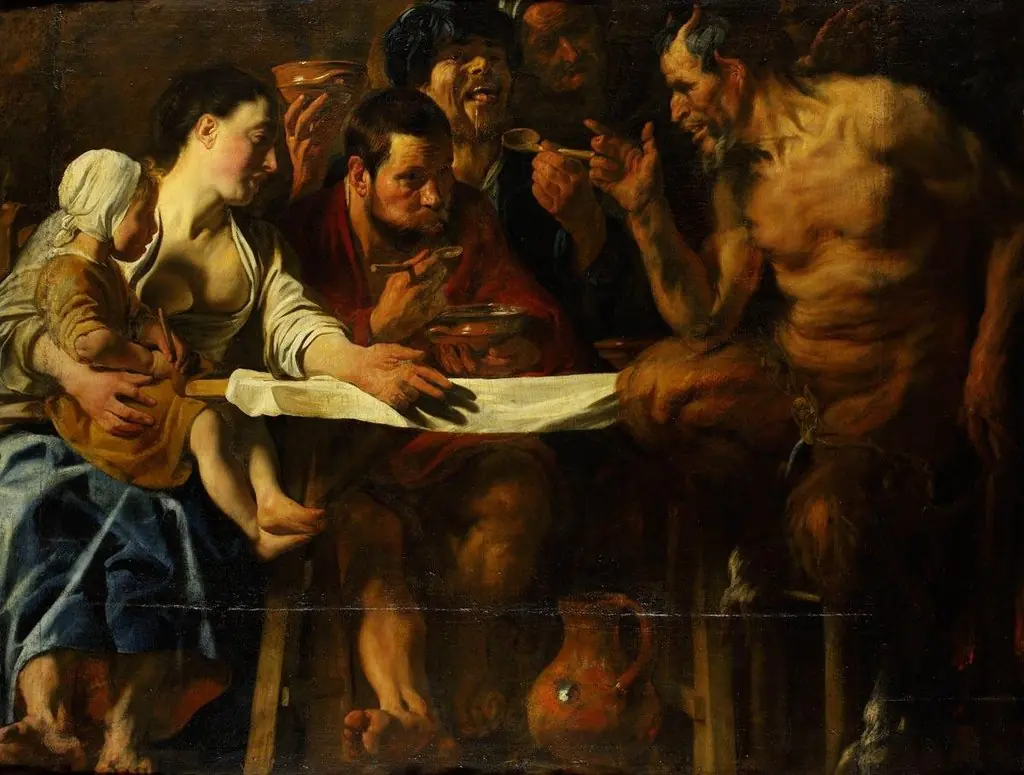
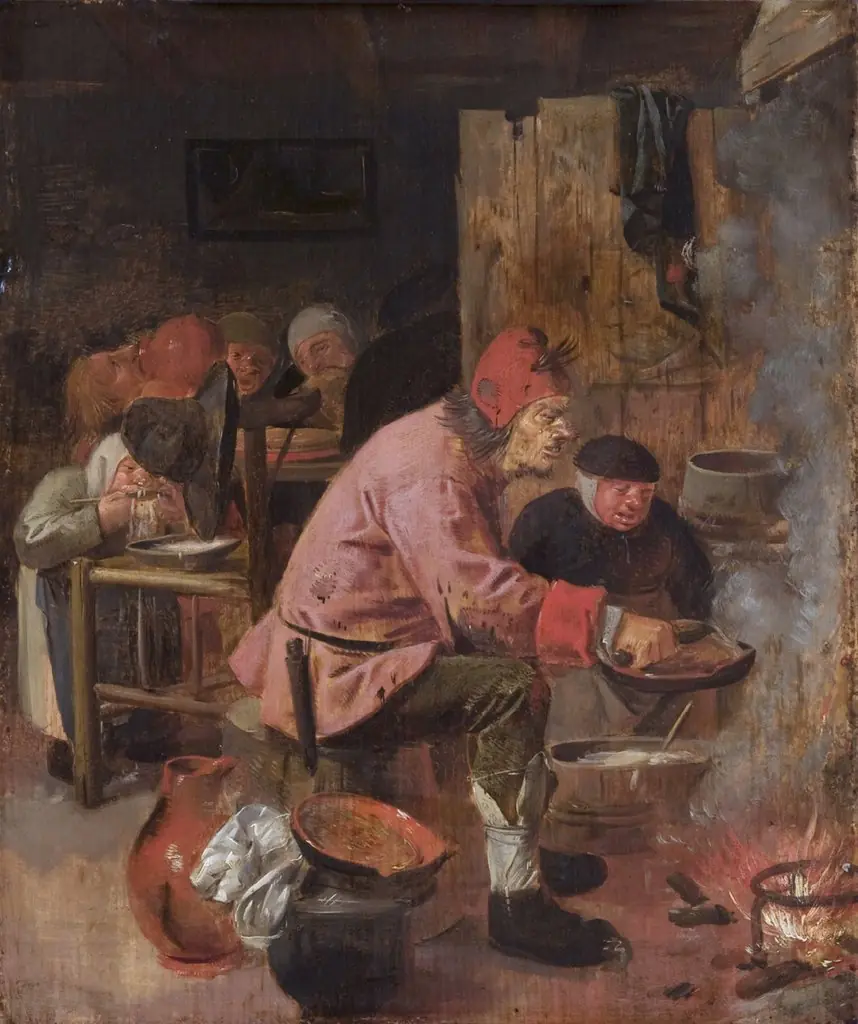
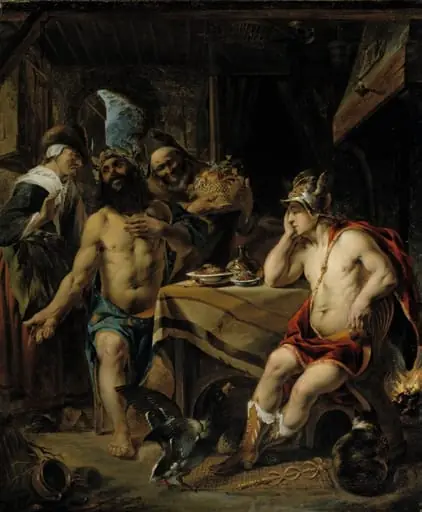
Satirul și țăranul is an unspecified painting by Pseudo van de Venne. It dates from 1650 and is held in the collection of the Brukenthal National Museum.
About this work
Overview
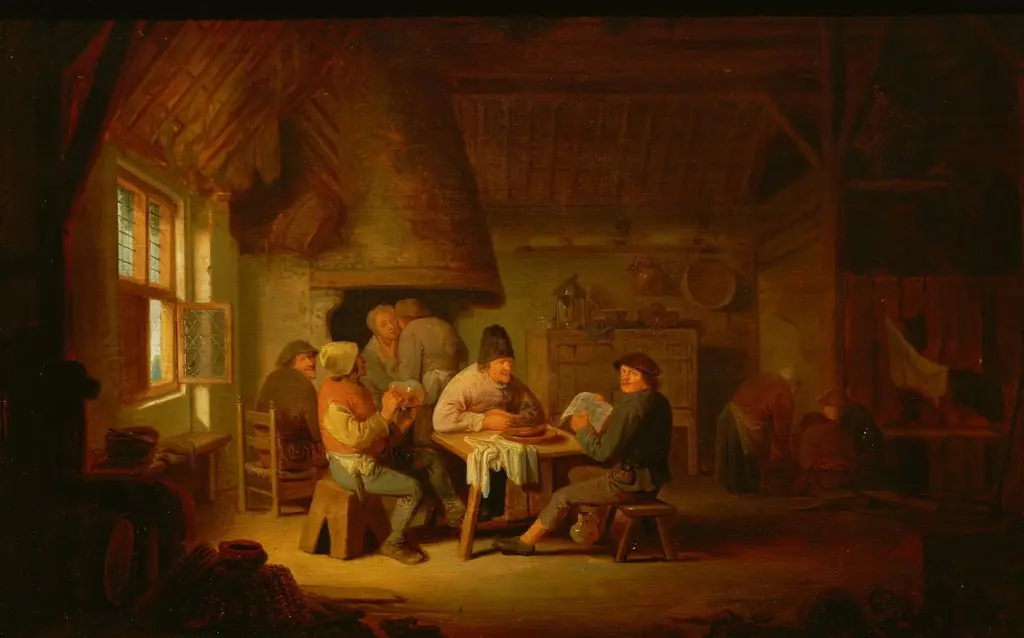
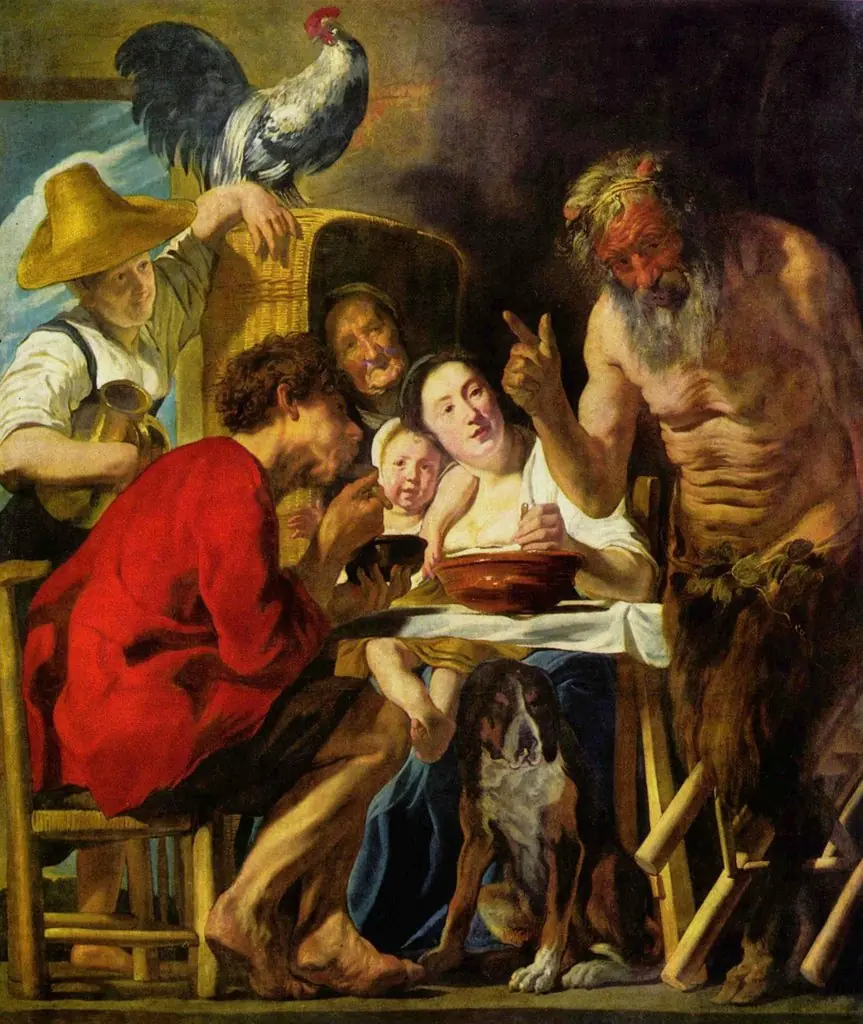
Attributed to Pseudo van de Venne, this painting dates to around 1650 and depicts a quiet domestic moment in a rural interior. Three figures occupy the space: a man eating at a table, another seated on the floor, and a woman tending to a pot by the hearth. The composition avoids dramatic action, focusing instead on stillness and routine, suggesting an everyday scene rather than a narrative event.
Subject & Meaning
No clear interaction or emotional exchange is shown, inviting interpretation of quiet resignation or the unspoken rhythms of rural existence.
The figures engage in solitary, unconnected activities, hinting at isolation within domestic life. The man eating appears absorbed, the seated figure turned away, and the woman occupied with labor. No clear interaction or emotional exchange is shown, inviting interpretation of quiet resignation or the unspoken rhythms of rural existence. The title, suggesting satire, remains ambiguous without textual context.
Technique & Style
Warm, muted tones and soft, directional light define the painting’s atmosphere. The fireplace provides the primary source of illumination, casting gentle shadows and highlighting textures of clothing, pottery, and wood. Chiaroscuro is used subtly, not for theatrical effect but to ground the scene in tangible realism, enhancing the sense of intimacy and material presence.
History & Provenance
The work is attributed to an anonymous painter working in the circle of Jan van de Venne, a Flemish artist known for genre scenes. Its origins are undocumented prior to modern cataloging, and it has no recorded ownership history before the 20th century. The attribution remains tentative, based on stylistic parallels rather than signed documentation.
Context
Created during the Dutch Golden Age, the painting reflects the era’s interest in humble interiors and peasant life, though without the moralizing tone common in Northern European genre works. Its quietness distinguishes it from more theatrical depictions of rural labor, aligning it with quieter, observational traditions that valued authenticity over moral lesson.
Legacy
Though not widely exhibited or studied, the painting contributes to the broader understanding of anonymous genre painting in 17th-century Flanders. It exemplifies how lesser-known artists captured domestic life with restraint and sensitivity, preserving visual records of ordinary existence that often escaped the attention of major art historical narratives.
Artist & collection
Artist
Pseudo van de Venne made small, lively scenes of village life. Look at “Încăierare între țărani” for a rowdy clash between peasants with pitchforks and clubs. “Satirul și țăranul” shows a grinning, horned figure…