Artwork
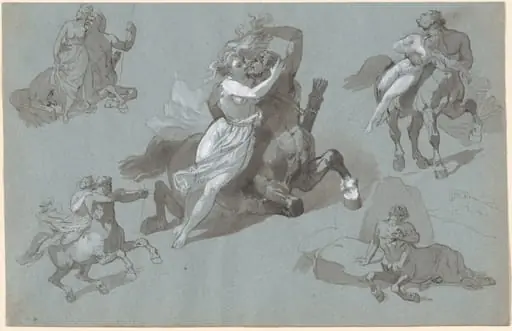
The Rape of Deianira
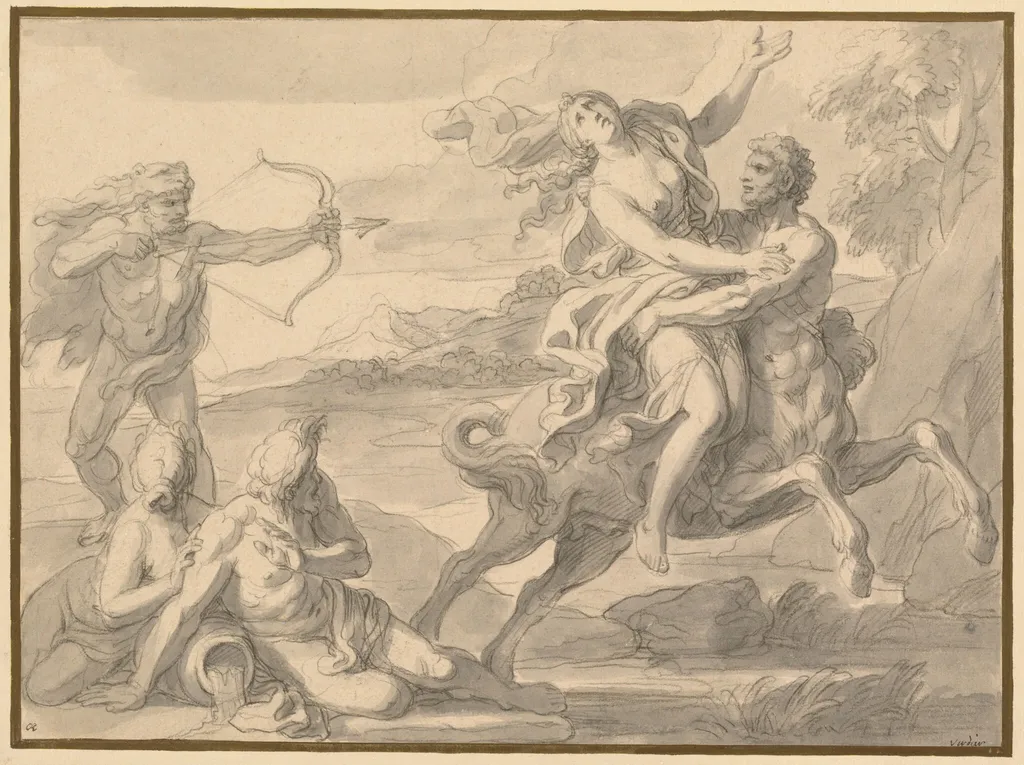
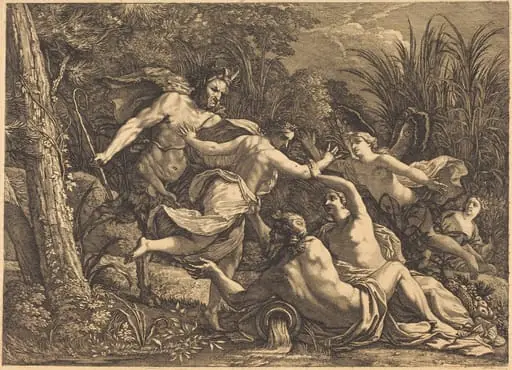
The Rape of Deianira is a chalk drawing by the Baroque artist François Verdier. It dates from 1674 and is held in the collection of the National Gallery of Art.
About this work
Overview
Created around 1674, this drawing by François Verdier depicts the mythological abduction of Deianira. Executed in black chalk and gray wash on laid paper, it is mounted on an album sheet, reflecting its origin as part of a collector’s compilation. The work belongs to the French Baroque tradition, showcasing Verdier’s skill in capturing dramatic movement through tonal contrasts and fluid line.
Subject & Meaning
The scene illustrates Deianira’s forcible taking by the river god Achelous, a moment from Ovid’s Metamorphoses. Verdier emphasizes tension and vulnerability, focusing on the struggle between the figure and the hybrid form of the deity. The subject reflects classical themes popular among 17th-century artists, often used to explore power, transformation, and divine intervention in human affairs.
Technique & Style
Verdier employs black chalk for sharp, expressive contours and gray wash to model volume and shadow, creating a sense of depth and motion. The wash softens edges where needed, enhancing the emotional gravity of the scene. The composition is tightly focused, with minimal background detail, directing attention to the figures’ dynamic interaction and physical strain.
History & Provenance
The drawing was likely produced during Verdier’s time in Rome, where he studied classical sculpture and Renaissance masters. It entered a private album collection in the late 17th century and remained in European hands through the 18th and 19th centuries. Its current location reflects its preservation as a study in draftsmanship rather than a public display piece.
Context
In mid-17th-century France, mythological subjects were favored in academic drawing circles as exercises in anatomy, narrative, and emotional expression. Verdier, influenced by his Italian travels, aligned with this tradition while developing a personal approach to chiaroscuro and gesture. This work exemplifies how classical myths served as vehicles for technical mastery among French draftsmen.
Legacy
Though not widely exhibited in Verdier’s lifetime, this drawing contributes to the understanding of his draftsmanship and the broader French Baroque interest in mythological themes. It remains a reference for scholars studying the transmission of classical narratives through 17th-century graphic art, particularly in private collections where such works were valued for their technical refinement.
Artist & collection