Artwork
Vas de formă rotundă, ușor aplatizat, smălțuit în interior, decorat pe suprafața interioară, motivul avimorf coada de păun fiind realizat prin tehnica jirăvitului cu gaița. Cromatică: verde, alb, maro, cărămiziu.
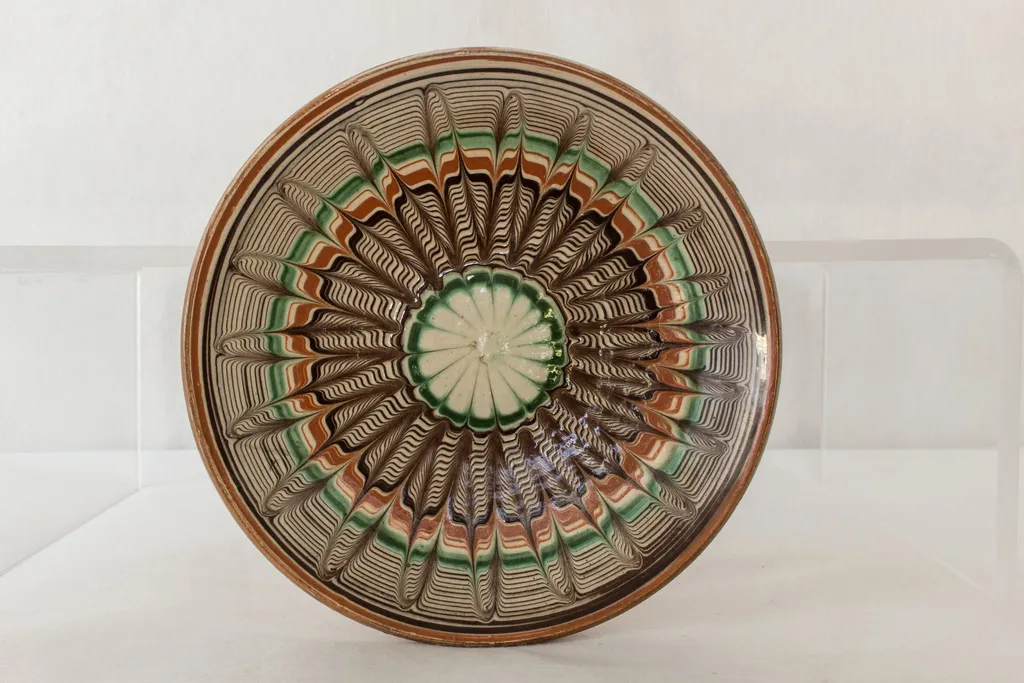
Vas de formă rotundă, ușor aplatizat, smălțuit în interior, decorat pe suprafața interioară, motivul avimorf coada de păun fiind realizat prin tehnica jirăvitului cu gaița. Cromatică: verde, alb, maro, cărămiziu. is a print by Vicșoreanu Victor. It is held in the collection of the Gavrila Simion Eco-Museum Research Institute Tulcea.
About this work
Overview
The piece is attributed to the Romanian ceramicist Victor Vicșoreanu, reflecting a blend of traditional craftsmanship and individual artistic expression.
A round, slightly flattened ceramic bowl with an interior glaze features a decorative motif of a peacock’s tail, rendered using the jirăvitul cu gaița technique. The surface is adorned in green, white, brown, and brick-red hues, creating a layered, flowing pattern. The piece is attributed to the Romanian ceramicist Victor Vicșoreanu, reflecting a blend of traditional craftsmanship and individual artistic expression.
Subject & Meaning
The central motif mimics the fanned tail of a peacock, a symbol often associated with beauty and elegance in folk traditions. Its curvilinear form suggests motion and rhythm, evoking natural grace rather than literal representation. The choice of this motif may reflect cultural admiration for avian forms or serve as an abstract ornamentation rooted in regional aesthetic values.
Technique & Style
The peacock tail design was executed using jirăvitul cu gaița, a hand-incised method involving precise carving with a small tool to create fine, continuous lines. The colors—green, white, brown, and red—were applied beneath a transparent glaze, enhancing depth and contrast. The style emphasizes fluidity and detail, with each stroke contributing to a dynamic, almost organic composition.
History & Provenance
The bowl was crafted by Victor Vicșoreanu, a Romanian ceramicist active in the mid-20th century, known for reviving and adapting local pottery techniques. While specific acquisition records are not widely documented, the piece aligns with his broader body of work produced in Romanian ceramic studios during a period of renewed interest in folk-inspired ceramics.
Context
This piece emerged during a time when Romanian artisans were re-engaging with indigenous decorative traditions amid broader cultural revitalization efforts. The use of the peacock motif and jirăvitul cu gaița technique connects it to regional ceramic practices, while its refined execution distinguishes it as a personal interpretation within a collective artistic movement.
Legacy
Victor Vicșoreanu’s work, including this bowl, contributed to the preservation and evolution of Romanian ceramic techniques in the 20th century. His integration of folk motifs into functional pottery influenced later generations of artisans, ensuring that traditional methods remained relevant within modern studio ceramics without losing their cultural specificity.
Artist & collection
Artist
These prints show Horezu pottery—round, glazed vessels decorated with traditional motifs like roosters, peacocks, and clover.
Museum
Gavrila Simion Eco-Museum Research Institute Tulcea
Continue through works from the same source collection.
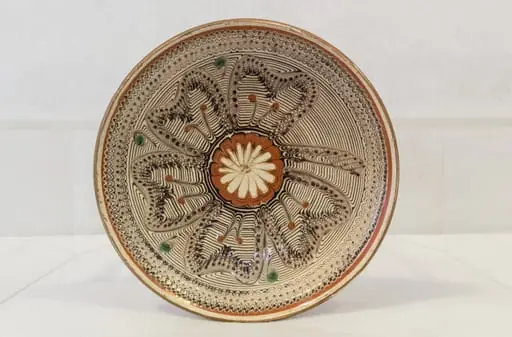 Vas de formă rotundă, plat, smălțuit pe interior, cu margini ușor răsfrânte spre exterior, decorat pe toată suprafața interioară prin pictare astfel: în centru, un motiv floral și trifoiul cu cinci foi, alături de patru motive punctiforme, amplasate printre frunzele trifoiului, câmpul cu motive liniare concentrice, iar pe margini, un registru mai lat cu motive geometrice concentrice (valul). Pe partea exterioară, apare ștampila meșterului (VICTOR VICSOREANU) și localitatea de fabricație (HOREZU). Cromatică: alb, verde, cafeniu, maro.
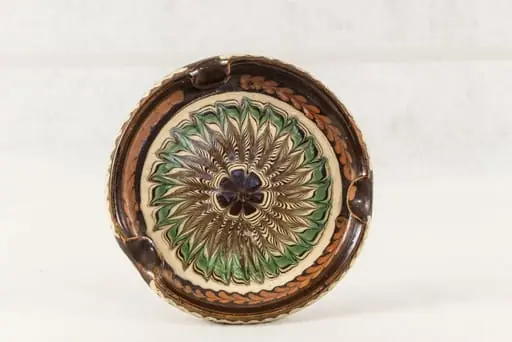 Vas de formă rotundă, smălțuit în interior, cu o buză ușor înălțată, teșită în trei locuri, decorat pe suprafața interioară prin tehnica jirăvitului cu gaița, cu motivele floarea, coada de cocoș și spicul de grâu. Pe marginea exterioară apare motivul vălurelul (șalul). Cromatică: negru, verde, alb, maro, cărămiziu.
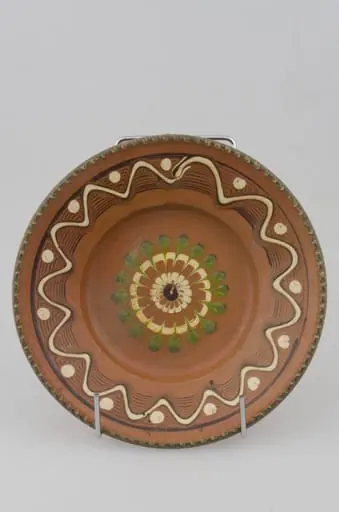 Farfurie cu pereții rotunjiți, marginea oblică lată și buza crestată. Prezintă decor geometric pe margine: linii frânte și curbe; pete de culoare; central avem o floare stilizată. Cromatică: fond: maro; motive: verde; alb.
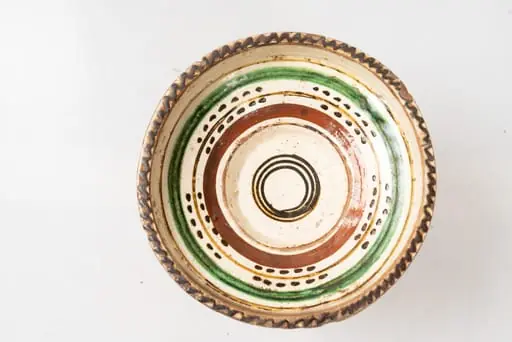 Farfurie adâncă, de tip castron, cu corp îngust tronconic și buză dreaptă. Piesa este modelată din lut la roata olarului și angobată cu humă albă pe fața interioară. Decorul este realizat prin pictare cu cornul și cu pensula și constă în motive decorative geometrice (linie spiralată, două linii groase și trei linii mai subțiri dispuse sub formă de cerc, șiruri de puncte). Muchia buzei este decorată cu o linie ondulată mărunt, de culoare maro. Cromatica: alb, maro, verde, brun roșcat. Farfuria este acoperită cu un strat de smalț transparent pe fața ornamentată.
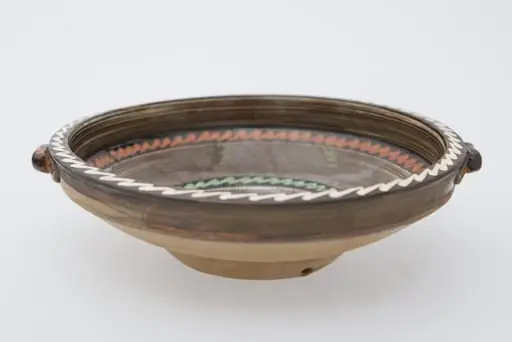 Castronul, pe bază inelară, are fundul îngust, pereții înalți și evazați, gura vasului este înaltă și dreaptă. Centrul este marcat de o spirală, înconjurată de o linie vălurită pe maron deschis, în nuanță cu câmp jirăvit. Pe pereții vasului este un brâu verde, în zig-zag, apoi un câmp jirăvit și din nou un brâu în zig-zag maro. Pe gâtul vasului o spirală, iar pe buza lui, un zig-zag pe alb. Castronul este prevăzut cu două urechi de prindere și o gaură pe partea posterioară, pentru agățare. Cromatică: fond: maron închis; motive: verde; alb; maro.
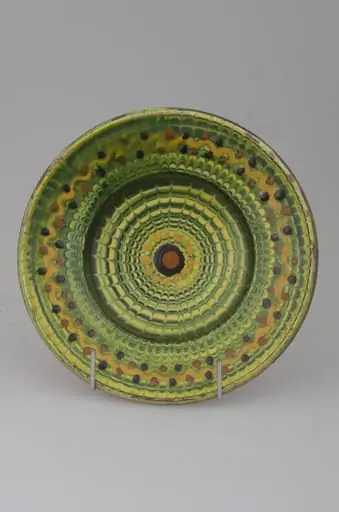 Vas cu fundul plat cu marginea puțin ridicată ce se continuă cu buza ușor oblică, având marginea puțin rotunjită. Întreaga suprafață este ornamentată în tehnica jirăvirii. Pe buza farfuriei peste jirăveală este trasă cu cornul o linie șerpuită însoțită de o parte și de alta de puncte maron închis și cărămiziu. Fondul este de culoare verde. Motive: negru; galben; cărămiziu.
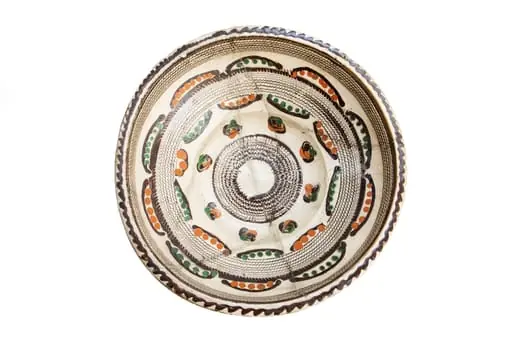 Formă tronconică; fond alb fildeșiu; pe fundul vasului este dispusă o bandă circulară lată decorată cu motivul specific centrului: pînza de păianjen - realizată prin tehnică jirăvirii cu gaița, încadrată de boboci de floare stilizați, colorați în verde și cărămiziu și linii ușor curbate care au interior puncte de culoare cărămizie, respectiv: verde. Pe umărul vasului este dispusă o altă bandă circulară jirăvită cu motivului pînzei de păianjen care prezintă în exterior linii curbe similare cu cele descrise mai sus. Întreaga compoziție sugerează un soare stilizat. Buza este decorată cu un val circular de culoare brună. Piesa reprezintă una dintre primele achiziții ale lui Alexandru Tzigara Samurcaș. Folosită la decorarea interiorului țărănesc în așa numita - cameră bună
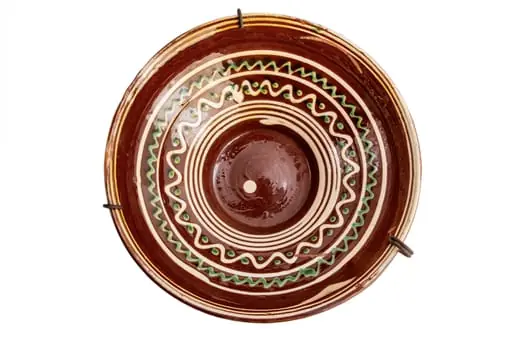 Formă tronconică; fond cărămiziu închis; culori: alb, verde; decorul geometrizant constă într-un cerc de culoare albă dispus pe fundul farfuriei încadrat de patru cercuri concentrice de culoare albă. Pe peretele farfuriei sînt dispuse două registre decorative delimitate de cercuri de culoare albă; în registrul inferior este amplasată o linie vălurită de culoare albă cu puncte verzi sugerînd un vrej; în registrul superior un zig -zag de culoare verde dispus circular. Sub buză sînt plasate două cercuri de culoare albă.
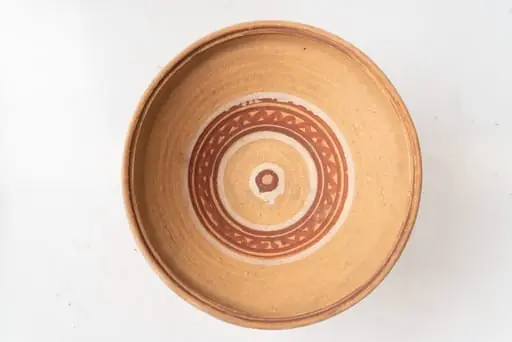 Farfurie adâncă de tip castron, cu bază îngustă și corp tronconic, buză mică dreaptă; piesa este modelată din lut la roata olarului nefiind angobată. Decorul foarte simplu este realizat cu albă și roșu-închis, prin pictare cu cornul și se compune din motive geometrice: linii circulare, linie ondulată, cercuri concentrice. Cromatica: alb, roșu-închis, pe fondul lutului ars. Farfuria este nesmălțuită.
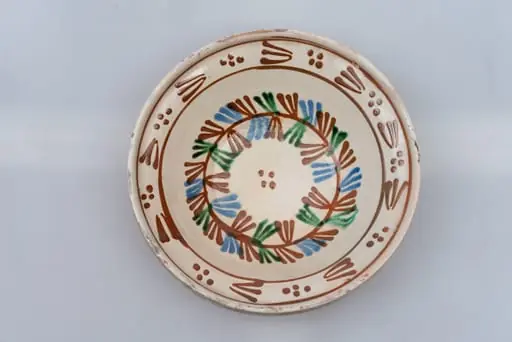 Farfurie adâncă de tip castron, cu corp tronconic și buză îngustă verticală. Este acoperită pe fața interioară și pe exteriorul buzei cu un strat de humă albă, peste care este pictat cu cornul decorul format din motive geometrice: centrul farfuriei este decorat cu o linie circulară de culoare maro, decorată cu grupuri de câte trei linii drepte dispuse în formă de V, de culoare maro, verde, albastru și un grup de patru puncte în centru. Un al doilea registru decorativ, situat sub buza farfuriei și încadrat între două linii circulare, se compune din motive formate din grupuri de câte trei linii maro dispuse în formă de V, intercalate de grupuri de câte patru puncte maro. Cromatica: alb, verde, albastru, maro. Suprafața ornamentată a farfuriei este acoperită cu un strat de smalț transparent.