Artwork
Vas de formă rotundă, smălțuit în interior, cu o buză ușor înălțată, teșită în trei locuri, decorat pe suprafața interioară prin tehnica jirăvitului cu gaița, cu motivele floarea, coada de cocoș și spicul de grâu. Pe marginea exterioară apare motivul vălurelul (șalul). Cromatică: negru, verde, alb, maro, cărămiziu.
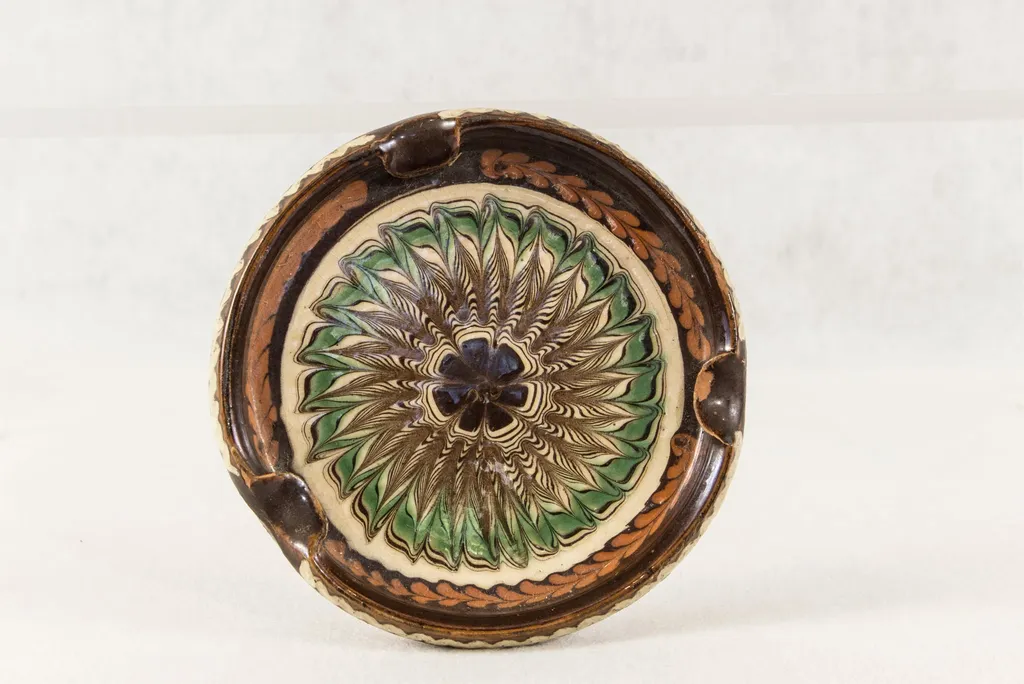
Vas de formă rotundă, smălțuit în interior, cu o buză ușor înălțată, teșită în trei locuri, decorat pe suprafața interioară prin tehnica jirăvitului cu gaița, cu motivele floarea, coada de cocoș și spicul de grâu. Pe marginea exterioară apare motivul vălurelul (șalul). Cromatică: negru, verde, alb, maro, cărămiziu. is a photography by Vicșoreanu Victor. It is held in the collection of the Gavrila Simion Eco-Museum Research Institute Tulcea. This round ceramic bowl features a slightly raised, triple-notched rim and two small side handles.
About this work
Overview
The exterior rim bears a repeating shawl-like motif, while the body displays a restrained palette of black, green, white, brown, and reddish-brown.
This round ceramic bowl features a slightly raised, triple-notched rim and two small side handles. Its interior surface is decorated using the jirăvit technique, a hand-painted method involving fine brushwork. The exterior rim bears a repeating shawl-like motif, while the body displays a restrained palette of black, green, white, brown, and reddish-brown. The form suggests utilitarian use, likely for storage or serving, with decoration confined to the interior for visual focus during use.
Subject & Meaning
The interior motifs—flowers, rooster tails, and wheat stalks—draw from rural Romanian symbolic traditions. These elements likely represent fertility, vigilance, and agricultural abundance, common themes in folk ceramics. Their arrangement in swirling patterns implies movement and continuity, possibly reflecting seasonal cycles or domestic harmony. The absence of figural imagery keeps the symbolism abstract, aligning with regional decorative norms that favor natural forms over narrative scenes.
Technique & Style
The decoration was applied using the jirăvit technique, a hand-painted method involving precise brushstrokes to create fine, flowing lines. The colors were applied over a glazed interior, with black and green dominating, accented by white and earthy tones. The exterior rim’s shawl motif is rendered in a simpler, repetitive band, contrasting with the intricate interior. The craftsmanship suggests skilled, localized production, with attention to detail in the brushwork and color layering.
History & Provenance
This piece belongs to a tradition of Romanian folk ceramics from the late 19th to early 20th century, likely produced in rural workshops. Its stylistic features align with works attributed to artisans like Victor Vicșoreanu, who systematized regional decorative motifs. While exact provenance is unrecorded, similar vessels were commonly made in Moldavia and Muntenia for household use, passed down through generations before entering collections.
Context
This bowl reflects a broader Romanian folk ceramic tradition where domestic pottery combined utility with symbolic decoration. Regional styles varied by village, but motifs like wheat and rooster tails were widely shared, rooted in agrarian life and Orthodox cultural symbols. The use of limited pigments reflects local material constraints and the preference for natural earth tones. Such vessels were not ceremonial but integral to daily domestic rituals.
Legacy
The vessel exemplifies a regional ceramic style preserved through artisanal practice rather than institutional production. Its motifs and techniques influenced later revivals in Romanian folk art, particularly in the 20th century when ethnographers documented and codified such designs. Artists like Victor Vicșoreanu helped standardize these patterns, ensuring their survival in museum collections and educational materials, though original production declined with industrialization.
Artist & collection
Artist
These prints show Horezu pottery—round, glazed vessels decorated with traditional motifs like roosters, peacocks, and clover.
Museum
Gavrila Simion Eco-Museum Research Institute Tulcea
Continue through works from the same source collection.
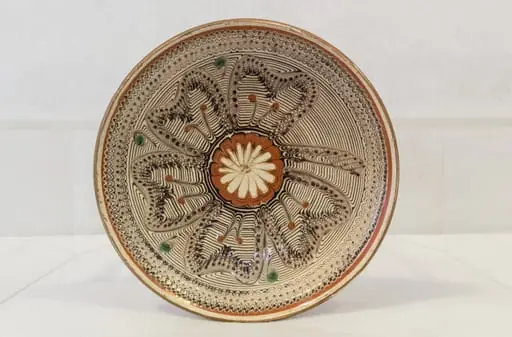 Vas de formă rotundă, plat, smălțuit pe interior, cu margini ușor răsfrânte spre exterior, decorat pe toată suprafața interioară prin pictare astfel: în centru, un motiv floral și trifoiul cu cinci foi, alături de patru motive punctiforme, amplasate printre frunzele trifoiului, câmpul cu motive liniare concentrice, iar pe margini, un registru mai lat cu motive geometrice concentrice (valul). Pe partea exterioară, apare ștampila meșterului (VICTOR VICSOREANU) și localitatea de fabricație (HOREZU). Cromatică: alb, verde, cafeniu, maro.
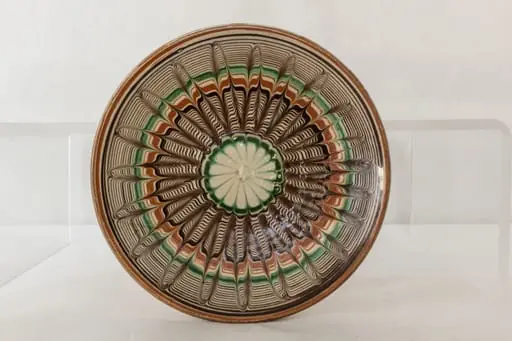 Vas de formă rotundă, ușor aplatizat, smălțuit în interior, decorat pe suprafața interioară, motivul avimorf coada de păun fiind realizat prin tehnica jirăvitului cu gaița. Cromatică: verde, alb, maro, cărămiziu.
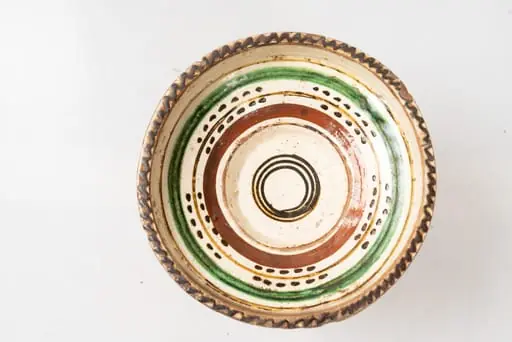 Farfurie adâncă, de tip castron, cu corp îngust tronconic și buză dreaptă. Piesa este modelată din lut la roata olarului și angobată cu humă albă pe fața interioară. Decorul este realizat prin pictare cu cornul și cu pensula și constă în motive decorative geometrice (linie spiralată, două linii groase și trei linii mai subțiri dispuse sub formă de cerc, șiruri de puncte). Muchia buzei este decorată cu o linie ondulată mărunt, de culoare maro. Cromatica: alb, maro, verde, brun roșcat. Farfuria este acoperită cu un strat de smalț transparent pe fața ornamentată.
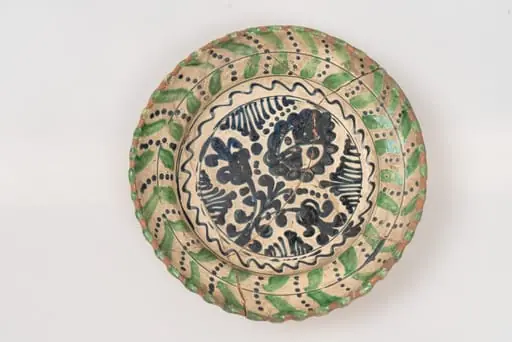 Farfurie de formă semi-adâncă, cu buză evazată și muchia buzei ondulată. Farfuria este angobată pe fața interioară cu un strat de humă albă, peste care este pictat cu cornul și cu pensula decorul format din motive florale și fitomorfe stilizate și din motive geometrice: în registrul central de pe fundul farfuriei este pictată o tulpină cu trei flori și frunze mici de culoare albastră, înscrisă într-un cerc dublu ce are la mijloc o linie ondulată circulară, de culoare albastră. Acest registru este completat cu motive formate din linii albastre crescătoare și descrescătoare dispuse în formă de triunghi. Buza farfuriei este decorată cu un șir continuu de frunze duble verzi între linii punctate de culoare albastră. Buza farfuriei este marcată cu o dungă de culoare verde. Cromatica: alb, albastru, verde. Farfuria este acoperită pe fața decorată cu un strat de smalț transparent.
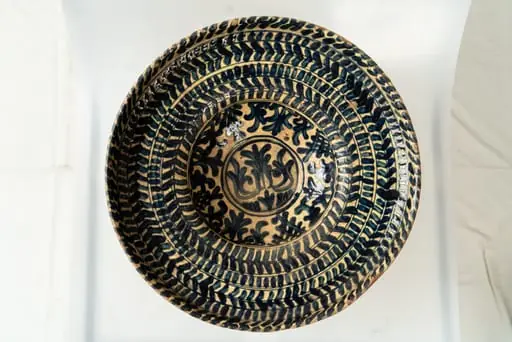 Farfurie mare, adâncă, cu corp tronconic și buză foarte lată, răsfrântă și cu muchia buzei dreaptă. Piesa este modelată la roata olarului, angobată cu humă albă pe fața interioară a acesteia. Decorul este unul foarte bogat, acoperă întreaga suprafață a piesei și este realizat prin pictare cu pensula, cu linii groase. Motivele decorative sunt florale și vegetale stilizate (flori și frunze, dispuse în zona centrală a farfuriei) și geometrice (șiruri de linii paralele și oblice, înscrise în cercuri concentrice, pe buza și muchia farfuriei). Cromatica decorului: alb, albastru. Farfuria este smălțuită pe interior, cu smalț transparent.
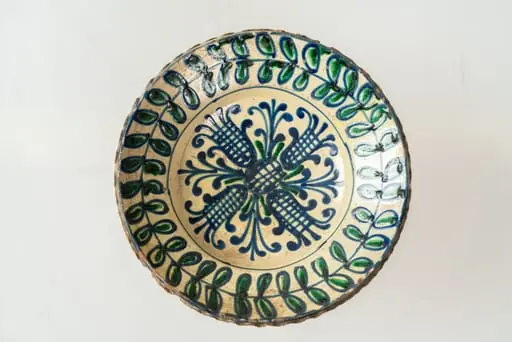 Farfurie semi-adâncă, cu buză răsfrântă și muchia buzei ondulată (mici alveole); piesa este modelată la roata olarului și angobată cu humă albă pe fața interioară. Decorul este realizat prin pictare cu cornul și cu pensula și constă în motive decorative florale și vegetale stilizate, dispuse astfel: un registru central, pe fundul farfuriei, ce conține patru flori de crin, de culoare albastră, cu frunze, iar buza farfuriei este decorată cu un șir continuu de frunze verzi cu contur albastru, înșirate pe o linie albastră sub formă de cerc. Bordura interioară a farfuriei și muchia buzei sunt marcate cu câte o linie de culoare albastră. Cromatica: alb, verde, albastru. Farfuria este acoperită pe fața decorată cu un strat de smalț transparent.
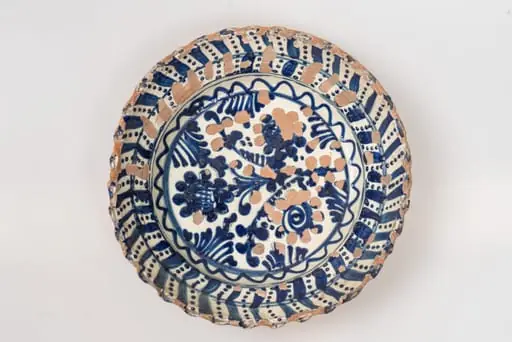 Farfurie de formă semi-adâncă, cu buză lată, evazată și muchia buzei ondulată. Farfuria este angobată pe fața interioară cu un strat de humă albă, peste care este pictat cu cornul și cu pensula decorul monocromatic, format din motive florale și fitomorfe stilizate (tulpină cu trei flori și frunze, reprezentate pe centrul farfuriei și un șir continuu de frunze duble între linii punctate, pe buza farfuriei) și geometrice (linii simple circulare, linie ondulată dispusă sub formă de cerc, puncte, grupuri de linii paralele, crescătoare și descrescătoare ca mărime, linii spiralate, linii hașurate). Buza farfuriei este marcată cu o dungă de culoare albastră. Cromatica: alb, albastru. Farfuria este acoperită pe fața decorată cu un strat de smalț transparent.
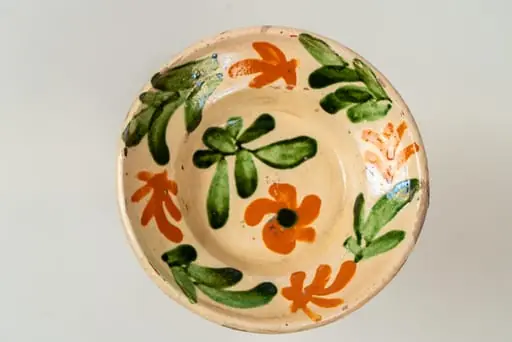 Farfurie mică, adâncă, cu buză răsfrântă. Piesa este modelată la roata olarului, angobată. Decorul este realizat prin pictare cu pensula și constă în motive decorative florale și vegetale (flori și frunze), dispuse central, pe fundul farfuriei și pe toată buza acesteia, sub formă de ghirlandă. Cromatica: alb, verde, siena naturală. Farfuria este smălțuită pe interior, cu smalț transparent.
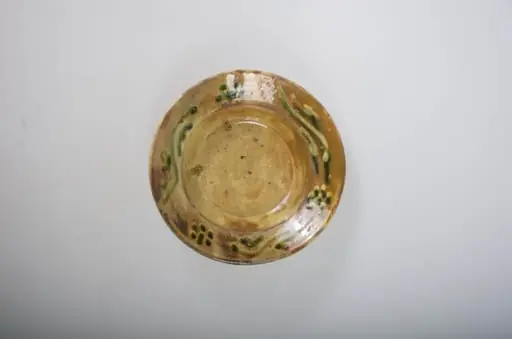 Blid de formă tronconică, adâncit cu margini puțin ridicate. Decorul este format din ornamente florale și vegetale stilizate, amplasate pe margini, buză. Blidul este smălțuit la interior și la exterior. Cromatică: maro; galben; verde.
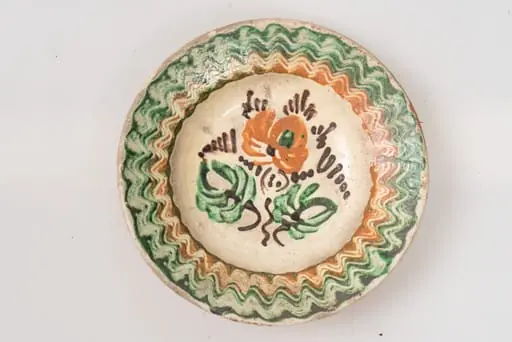 Farfurie adâncă, angobată pe suprafața interioară cu un strat de humă albă, peste care este pictat cu cornul și cu pensula decorul format din motive florale stilizate și geometrice: fundul farfuriei conține un buchet format din trei flori cu petale alungite, două de culoare verde, cea de-a treia de culoare siena arsă, și din elemente vegetale de culoare maro. Buza farfuriei este ornamentată cu linii ondulate de culoare siena arsă și verde. Suprafața ornamentată a farfuriei este acoperită cu un strat de smalț transparent. Cromatica: alb, verde, siena arsă, maro.