Artwork
The vision of Fray Martín (Poem by Gaspar Núñez de Arce)
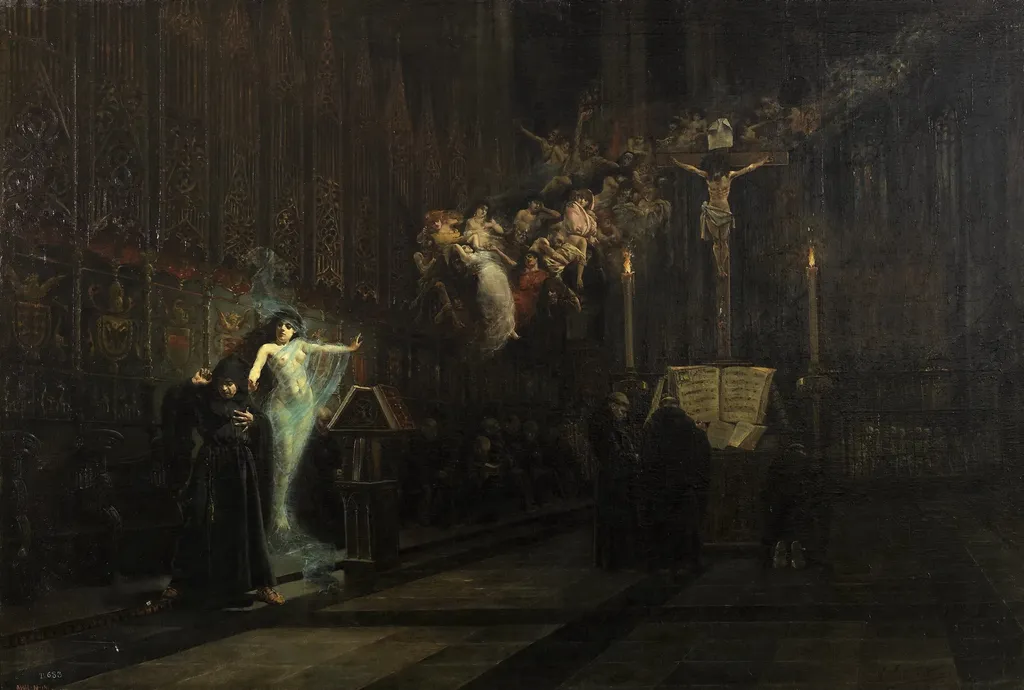
The vision of Fray Martín (Poem by Gaspar Núñez de Arce) is an oil painting by the Post-Impressionist artist Vicente Nicolau Cotanda. It dates from 1892 and is held in the collection of the Museo del Prado.
About this work
Overview
Painted in 1892 by Vicente Nicolau Cotanda, this oil work illustrates a moment from Gaspar Núñez de Arce’s poem 'The Vision of Fray Martín.' The scene unfolds within a shadowed ecclesiastical interior, where a solitary monk witnesses a supernatural apparition. The painting’s somber palette and focused lighting emphasize spiritual tension, anchoring the viewer in a moment of divine encounter.
Subject & Meaning
The dimly rendered figures in the background imply witnesses to the vision, yet their obscurity underscores the personal, inner nature of the experience.
The monk, clad in a dark robe, gazes upward at a luminous female figure suspended in midair, draped in white and encircled by a soft blue radiance. Her outstretched arms suggest revelation or transcendence. The dimly rendered figures in the background imply witnesses to the vision, yet their obscurity underscores the personal, inner nature of the experience. The scene reflects themes of faith, mysticism, and the ineffable presence of the sacred.
Technique & Style
Cotanda employs chiaroscuro to heighten the drama, contrasting the monk’s deep shadows with the ethereal glow surrounding the apparition. Brushwork is precise in the figures’ forms but looser in the surrounding darkness, enhancing the sense of mystery. The limited color range—dominated by blacks, deep browns, and the spectral blue—reinforces the painting’s introspective mood and spiritual gravity.
History & Provenance
Completed in 1892, the painting entered the collection of the Museo del Prado shortly after its creation. It remains part of the museum’s 19th-century Spanish painting holdings, where it is displayed alongside other works reflecting religious and literary themes of the period. Its provenance is well-documented, with no record of private ownership beyond its acquisition by the institution.
Context
The painting responds to a late 19th-century Spanish cultural interest in spiritual poetry and mystical experience, particularly as expressed in the works of Gaspar Núñez de Arce. Cotanda’s interpretation aligns with broader European trends in symbolic and religious painting, where inner vision replaced literal narrative. The work reflects a moment when art sought to visualize the intangible through emotional and atmospheric means.
Legacy
Though not widely reproduced, the painting stands as a quiet example of Spanish academic art’s engagement with literary mysticism. It reveals Cotanda’s skill in translating poetic imagery into visual form, and it continues to serve as a reference for studies on the intersection of literature and religious painting in late 19th-century Spain.
Own this work as a print
Artist & collection

 Las postrimerías de Fernando III el Santo
 The Mourning of László Hunyadi
 Exorcism of Joanna of Castile
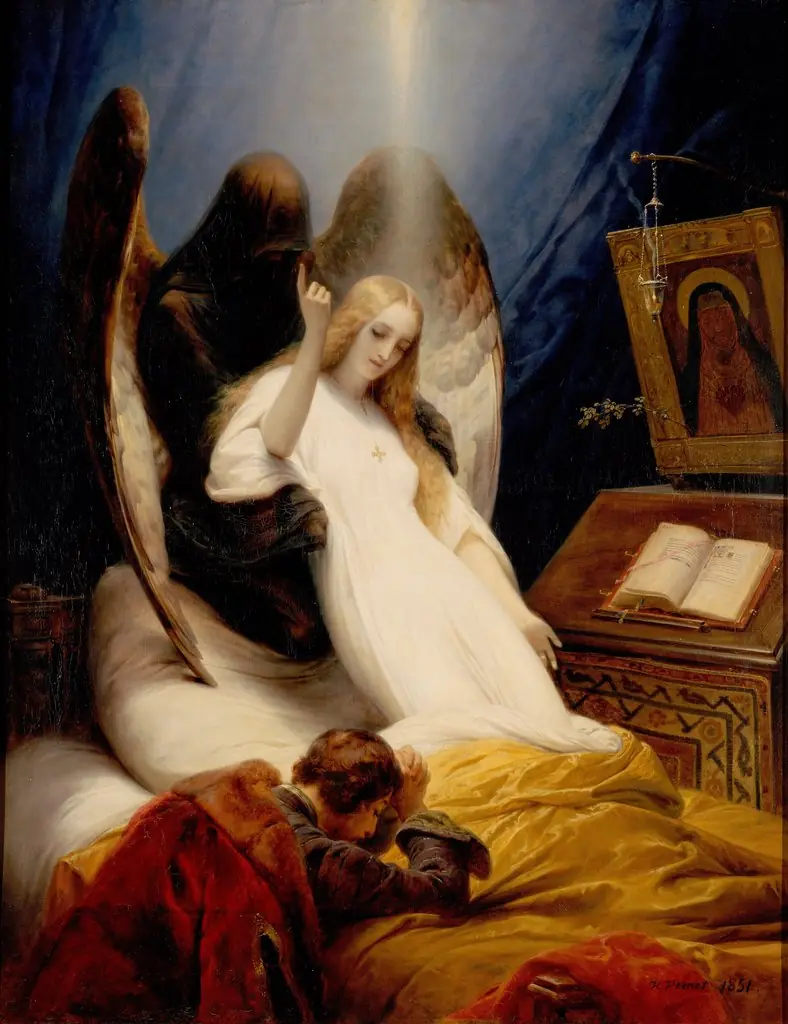 Angel of the Death
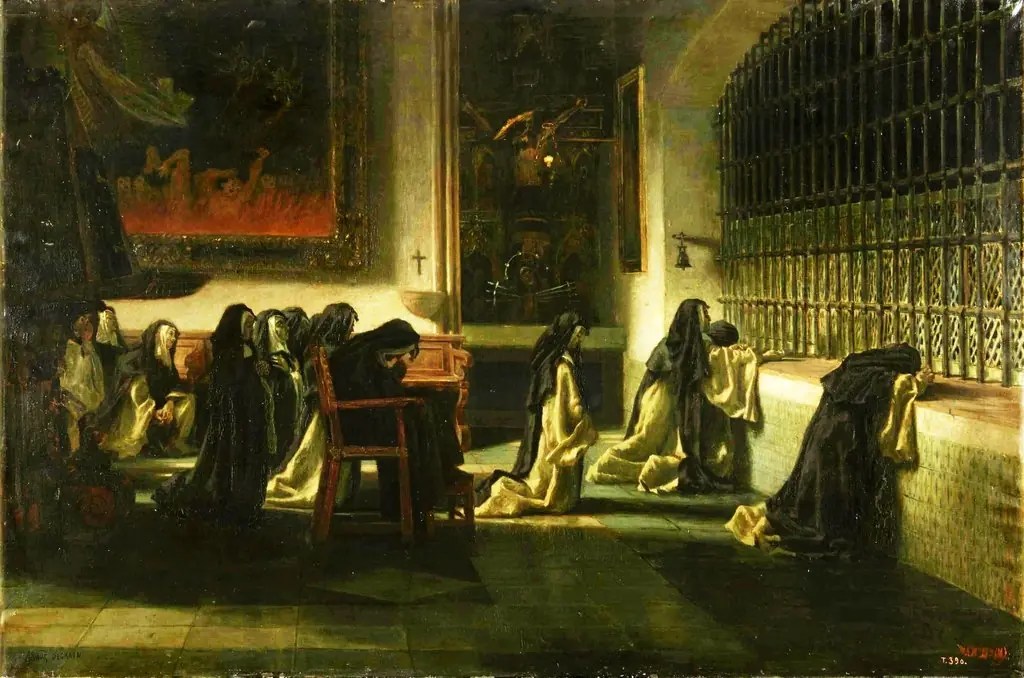 La oración
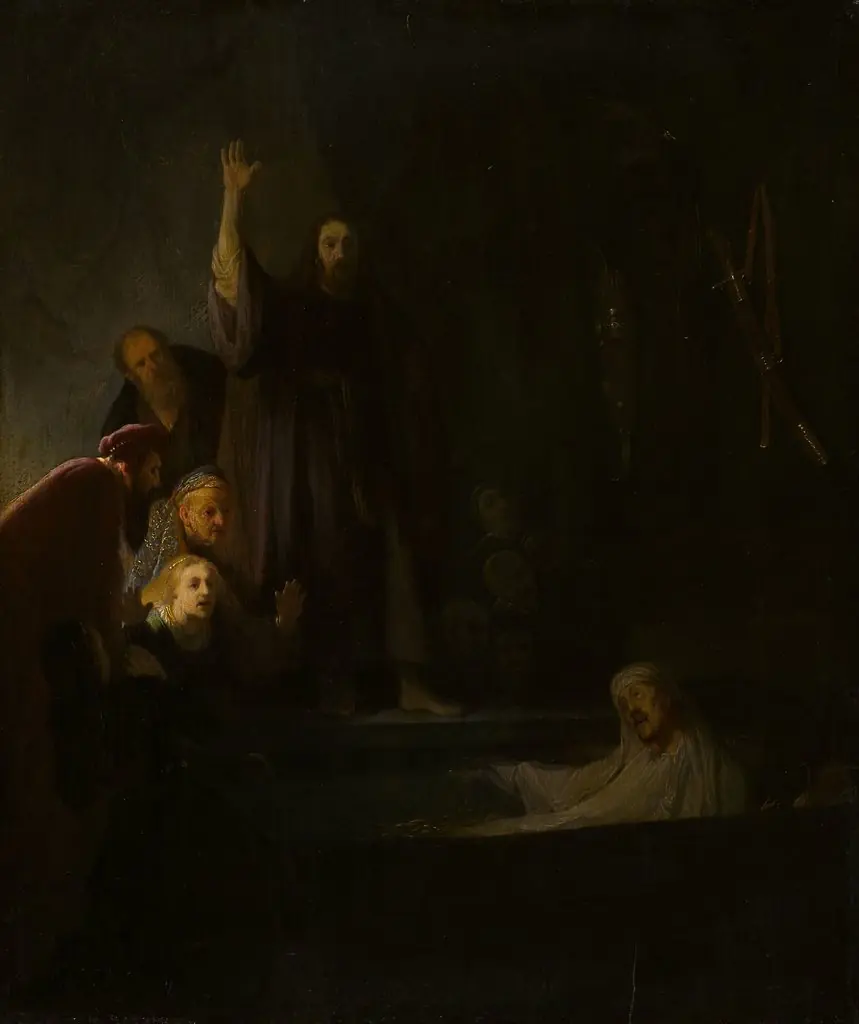 The Raising of Lazarus
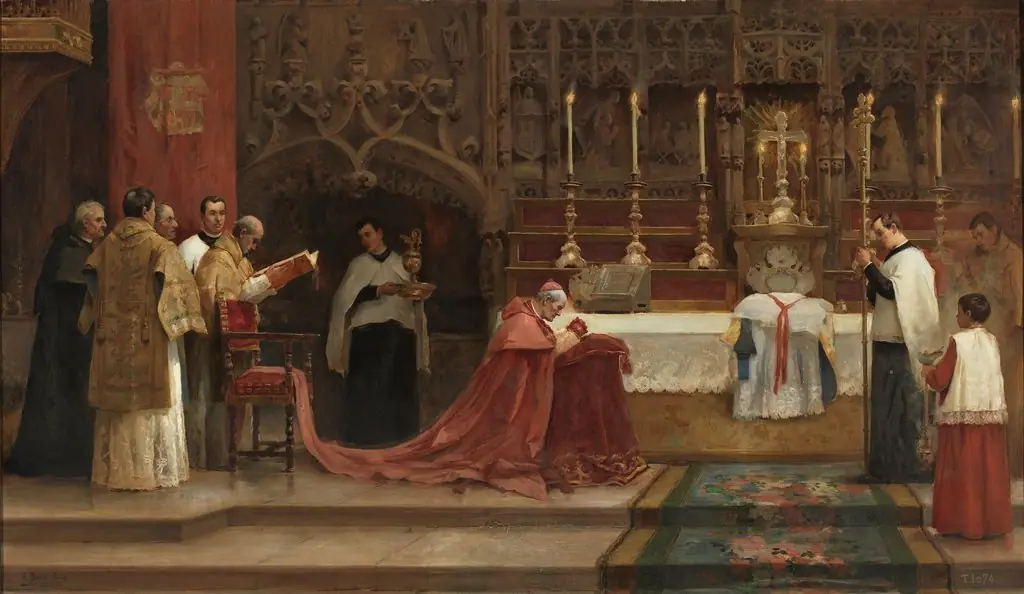 La misa de pontifical
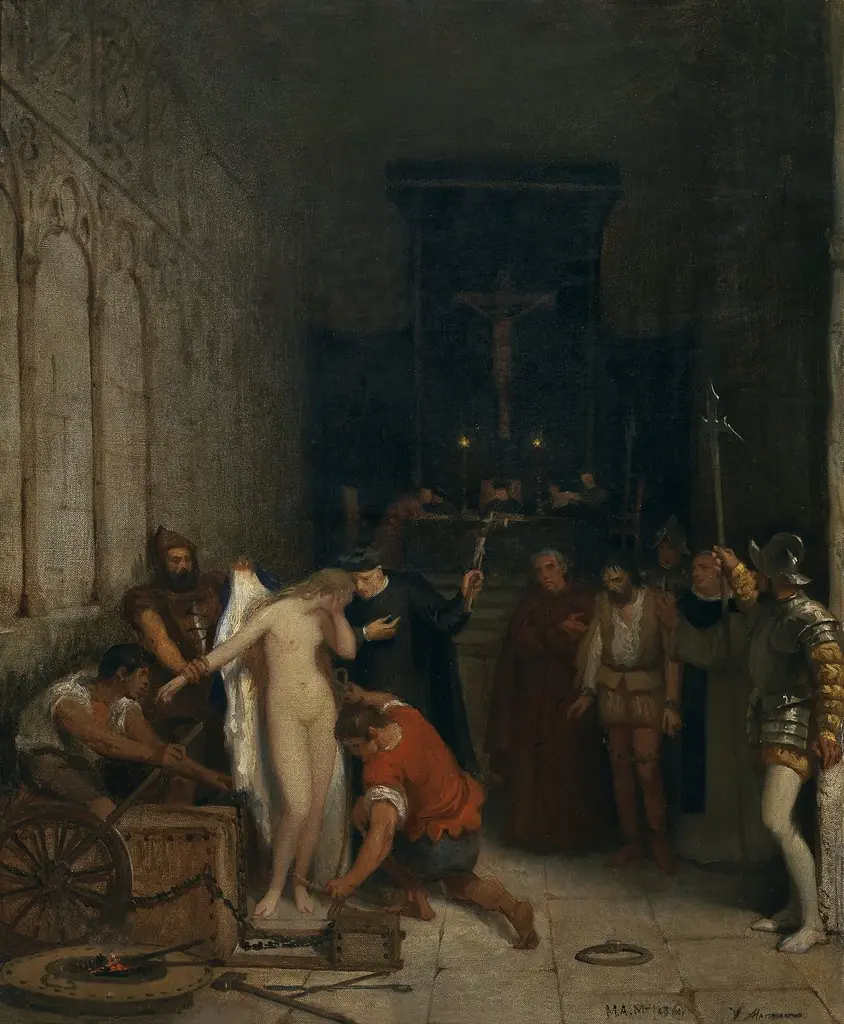 Una escena de la Inquisición
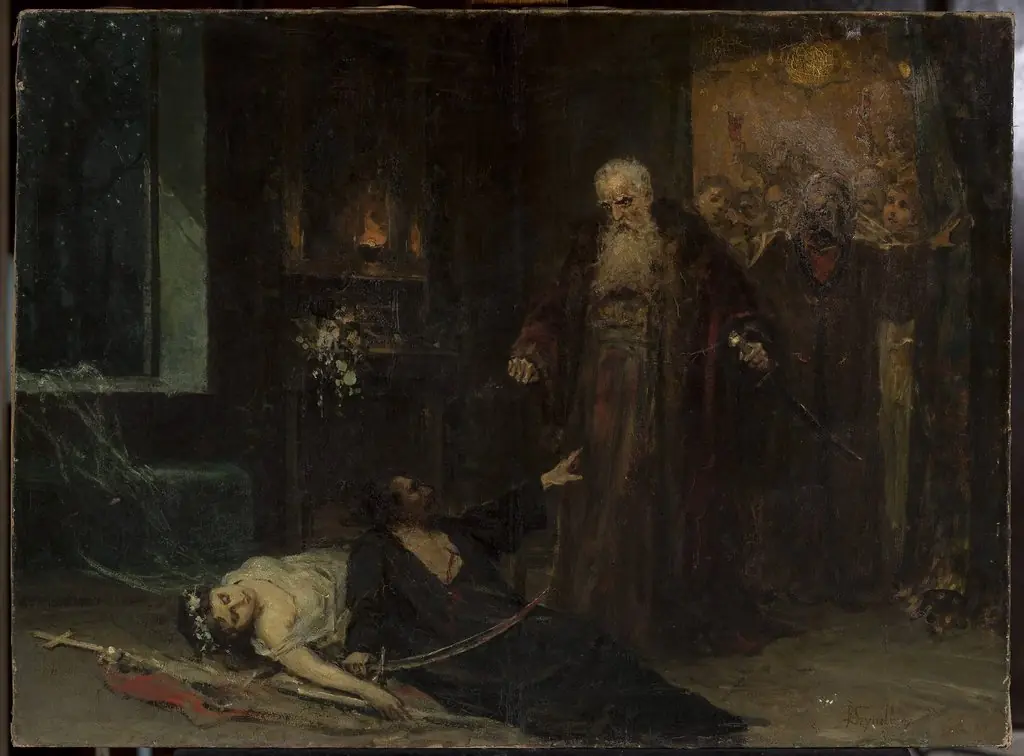 Murder scene
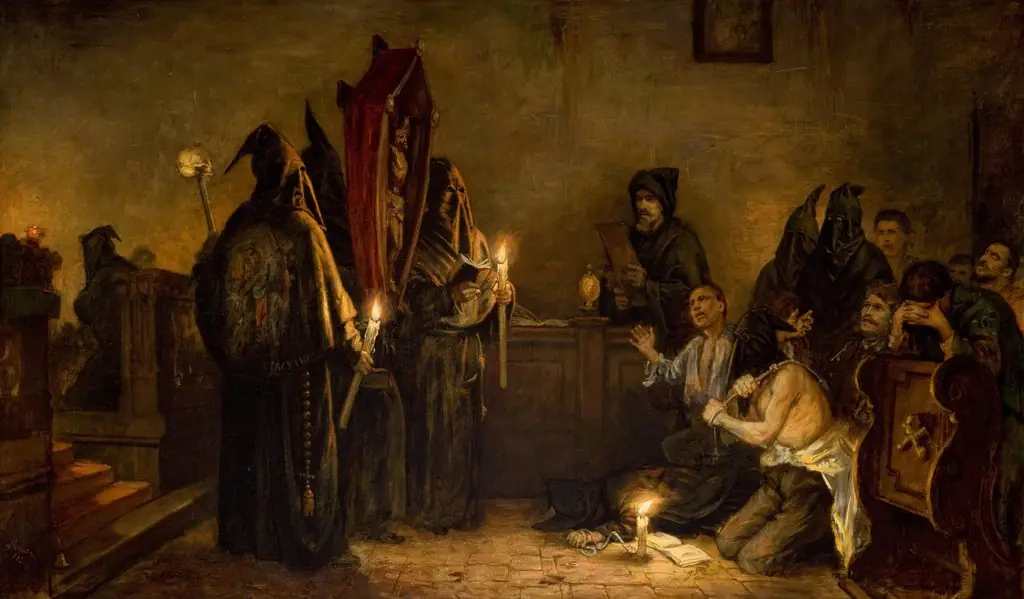 Flagellants
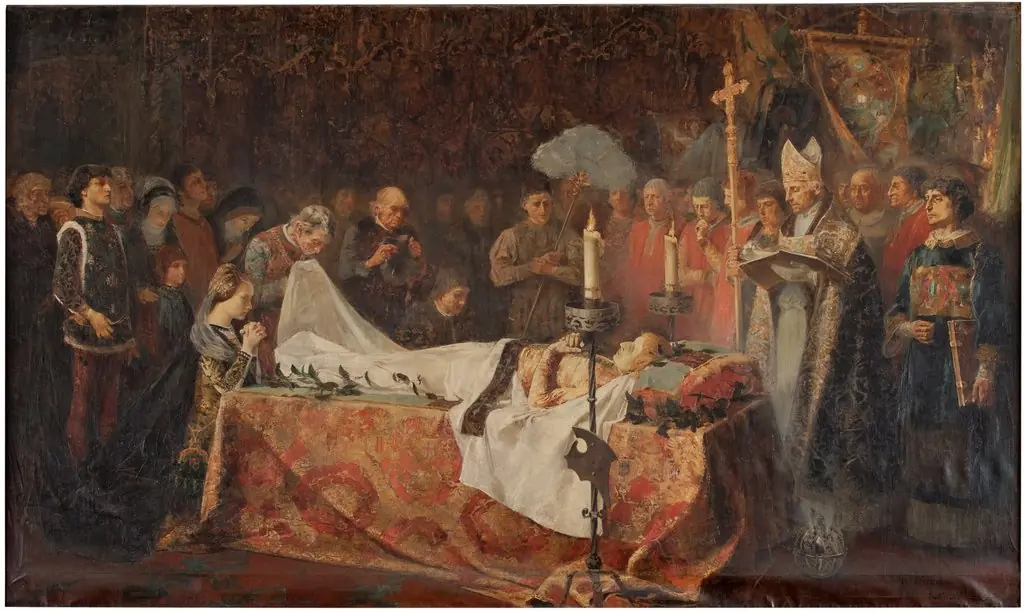 Muerte del príncipe de Viana
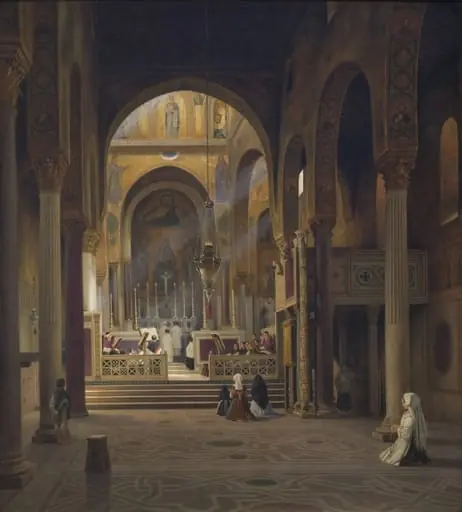 Interior of the Capella Palatina in Palermo, Italy