Artwork
Rhinoceros
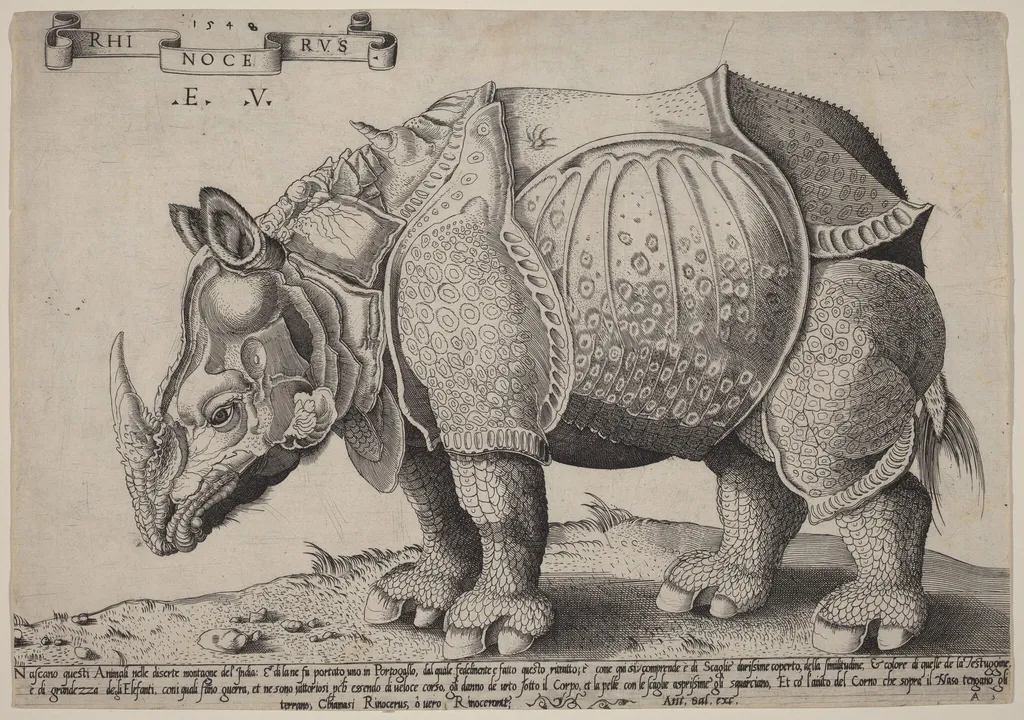
Rhinoceros is an ink print by the Renaissance artist Enea Vico. It dates from 1548 and is held in the collection of the National Gallery of Art.
About this work
Overview
The animal is depicted with an armored carapace, a prominent single horn, and diminutive hooves, while a small dog is shown sniffing at its feet.
Created in 1548, this engraving presents a fanciful representation of a rhinoceros rendered in fine line work on laid paper. The animal is depicted with an armored carapace, a prominent single horn, and diminutive hooves, while a small dog is shown sniffing at its feet. The composition combines naturalistic detail with imaginative embellishment, characteristic of mid‑sixteenth‑century printmaking.
Subject & Meaning
The image portrays a rhinoceros imagined through the lens of contemporary travelers’ reports and artistic conventions, rather than direct observation. Its overlapping plates and exaggerated armor suggest a fascination with exotic beasts and a desire to convey their formidable nature. The accompanying dog adds a domestic contrast, emphasizing the creature’s otherness within a familiar setting.
Technique & Style
Executed by incising lines into a metal plate, the work demonstrates Vico’s skill in rendering texture through delicate hatching and cross‑hatching. The laid paper surface enhances the subtle tonal variations, while the precise line work delineates the animal’s scaled hide and the dog’s fur. The overall style reflects the grotesque tradition of Italian engravers who adapted classical motifs for contemporary subjects.
History & Provenance
The print was produced by Enea Vico, an engraver from Parma who worked for notable patrons such as Cosimo I de’ Medici and Alfonso II of Ferrara. Vico’s career spanned the 1540s and 1550s, and he died in Ferrara in 1567. The engraving circulated among collectors of the period, contributing to the visual vocabulary of exotic wildlife in European art.
Artist & collection

Artist
Enea Vico (29 January 1523 – 18 August 1567) was an Italian engraver. Vico was born in Parma. He specialized in grotesque engravings based on antique paintings. Vico made engravings for Cosimo I de' Medici, Grand Duke…

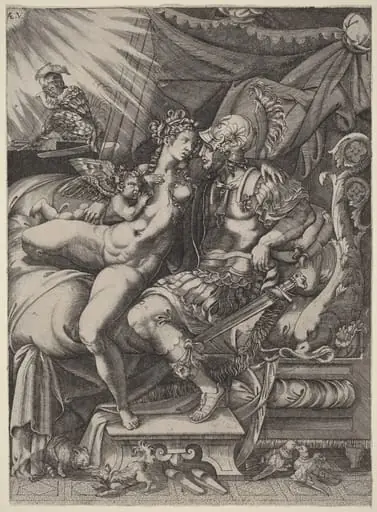 The Loves of Mars and Venus
![Fragments from Ancient Cameos in the Grimani Collection [Plate I], by Enea Vico](https://artifactworldgallery.com/img/enea-vico--fragments-from-ancient-cameos-in-the-grimani-collection-plat--1f564c058ab46ade-w320.webp) Fragments from Ancient Cameos in the Grimani Collection [Plate I]
Fragments from Ancient Cameos in the Grimani Collection [Plate I]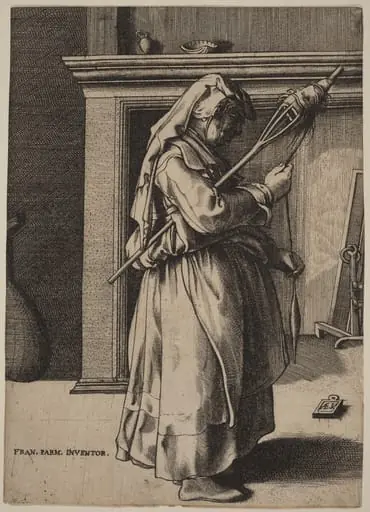 Old Woman with a Distaff
![Fragments from Ancient Cameos in the Grimani Collection [Plate II], by Enea Vico](https://artifactworldgallery.com/img/enea-vico--fragments-from-ancient-cameos-in-the-grimani-collection-plat--6333de7ba7491db7-w320.webp) Fragments from Ancient Cameos in the Grimani Collection [Plate II]
Fragments from Ancient Cameos in the Grimani Collection [Plate II]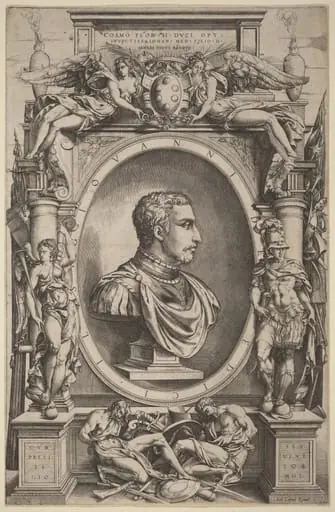 Giovanni de' Medici
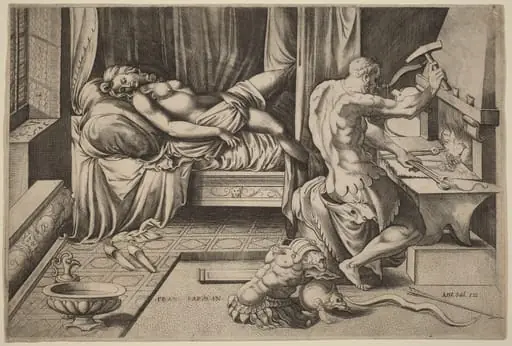 Venus Reclining with Vulcan at His Forge
![Fragments from Ancient Cameos in the Grimani Collection [Plate III], by Enea Vico](https://artifactworldgallery.com/img/enea-vico--fragments-from-ancient-cameos-in-the-grimani-collection-plat--bf2c0f15852500f8-w320.webp) Fragments from Ancient Cameos in the Grimani Collection [Plate III]
Fragments from Ancient Cameos in the Grimani Collection [Plate III]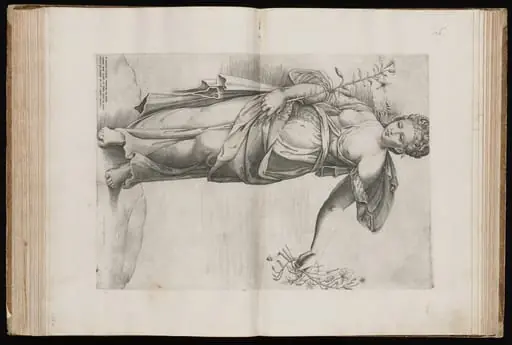 Flora
Flora
![Animals from an Ancient Wall Painting [Plate III], by Italian 16th Century](https://artifactworldgallery.com/img/italian-16th-century--animals-from-an-ancient-wall-painting-plate-iii--14d3e3b797914853-w320.webp)
![Animals from an Ancient Wall Painting [Table II], by Italian 16th Century](https://artifactworldgallery.com/img/italian-16th-century--animals-from-an-ancient-wall-painting-table-ii--fdc669e7ba8752d4-w320.webp)