Artwork
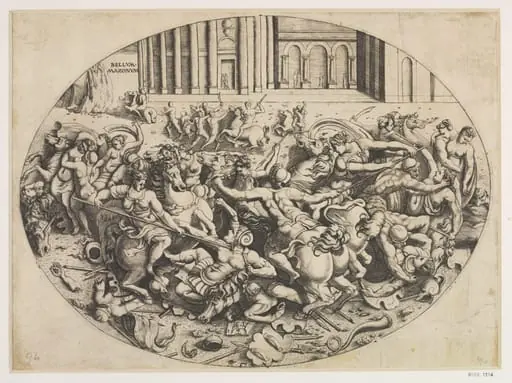
The Battle of the Amazons [recto]
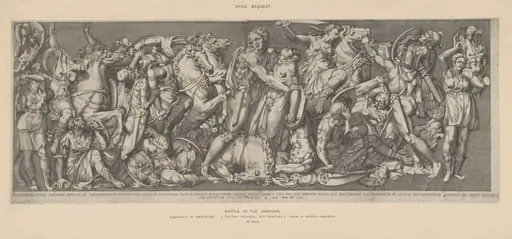
![The Battle of the Amazons [recto], by Enea Vico, ink, 1543](https://artifactworldgallery.com/img/enea-vico--the-battle-of-the-amazons-recto--edbb0f782a0b23e2-w1024.webp)
The Battle of the Amazons [recto] is an ink print by the Renaissance artist Enea Vico. It dates from 1543 and is held in the collection of the National Gallery of Art.
About this work
Overview
The Battle of the Amazons (1543) is an engraving by Enea Vico, an Italian artist from Parma. The work depicts a tumultuous battle scene, characteristic of Vico's style, which often drew from antique sources.
Subject & Meaning
The engraving illustrates a chaotic battle between armored warriors, set against a backdrop of a grand, empty building and a subtly glowing sky. The subject matter is rooted in historical or mythological themes, typical of Renaissance printmaking.
Technique & Style
Vico's composition is densely packed with dynamic elements: rearing horses, clashing swords, tumbling figures, scattered weapons, and swirling hair. This emphasis on dramatic action and intricate detail exemplifies Renaissance storytelling through art.
History & Provenance
Created in 1543, The Battle of the Amazons was produced during Vico's period of working for prominent patrons, including Cosimo I de' Medici and Alfonso II, Duke of Ferrara. Vico passed away in Ferrara in 1567.
Context
This engraving sits within the broader Renaissance printmaking tradition, characterized by interpretations of antique paintings and the depiction of mythological or historical battles.
Legacy
The Battle of the Amazons serves as a classic example of how Renaissance artists employed dramatic action to narrate stories, influencing the understanding and appreciation of engraving techniques in this period.
Artist & collection

Artist
Enea Vico (29 January 1523 – 18 August 1567) was an Italian engraver. Vico was born in Parma. He specialized in grotesque engravings based on antique paintings. Vico made engravings for Cosimo I de' Medici, Grand Duke…

 The Loves of Mars and Venus
![Fragments from Ancient Cameos in the Grimani Collection [Plate I], by Enea Vico](https://artifactworldgallery.com/img/enea-vico--fragments-from-ancient-cameos-in-the-grimani-collection-plat--1f564c058ab46ade-w320.webp) Fragments from Ancient Cameos in the Grimani Collection [Plate I]
Fragments from Ancient Cameos in the Grimani Collection [Plate I] Old Woman with a Distaff
![Fragments from Ancient Cameos in the Grimani Collection [Plate II], by Enea Vico](https://artifactworldgallery.com/img/enea-vico--fragments-from-ancient-cameos-in-the-grimani-collection-plat--6333de7ba7491db7-w320.webp) Fragments from Ancient Cameos in the Grimani Collection [Plate II]
Fragments from Ancient Cameos in the Grimani Collection [Plate II] Giovanni de' Medici
 Rhinoceros
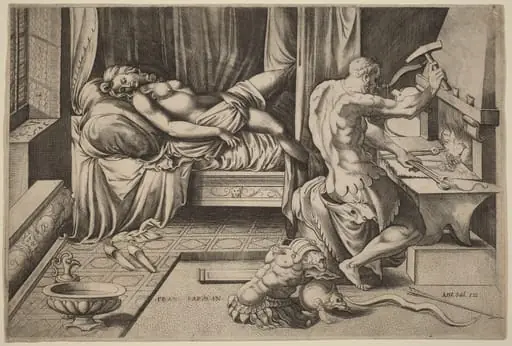 Venus Reclining with Vulcan at His Forge
![Fragments from Ancient Cameos in the Grimani Collection [Plate III], by Enea Vico](https://artifactworldgallery.com/img/enea-vico--fragments-from-ancient-cameos-in-the-grimani-collection-plat--bf2c0f15852500f8-w320.webp) Fragments from Ancient Cameos in the Grimani Collection [Plate III]
Fragments from Ancient Cameos in the Grimani Collection [Plate III]
 The Battle of the Lapithæ and Centaurs
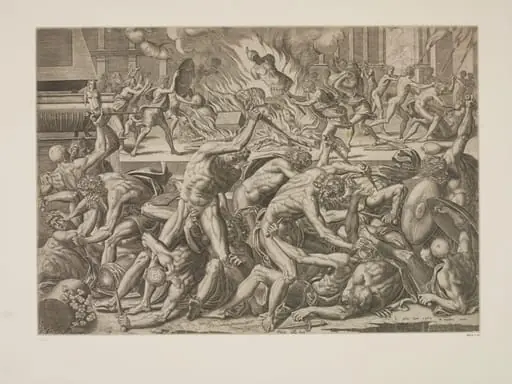 The Gladiators
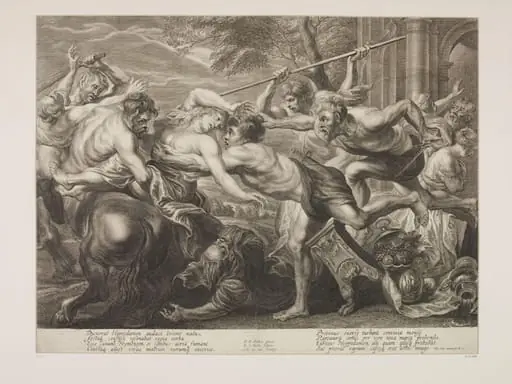 The Rape of Hippodamia
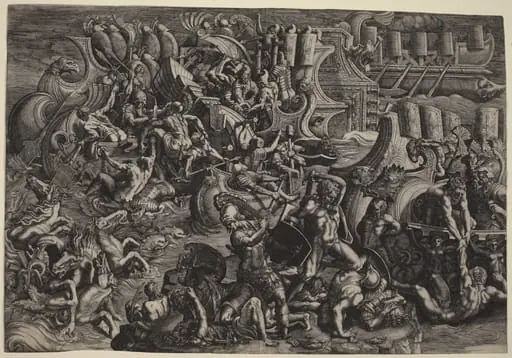 The Trojans Repulsing the Greeks
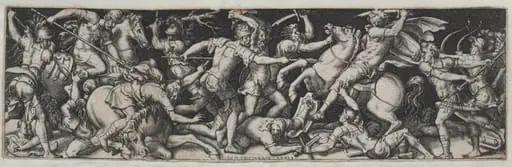 Combats and Triumphs No. 11
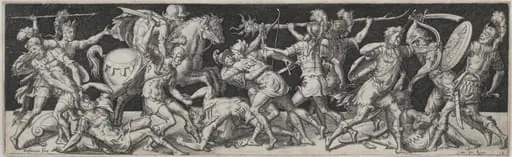 Combats and Triumphs No. 10
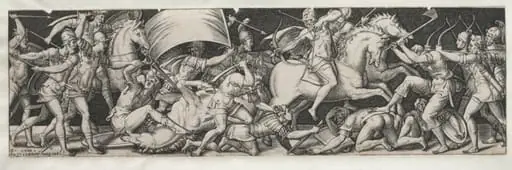 Combats and Triumphs No. 9
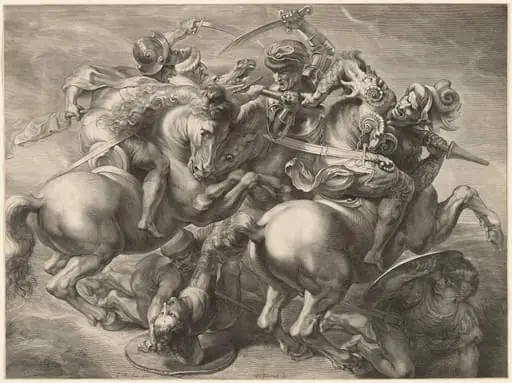 The Fight for the Standard
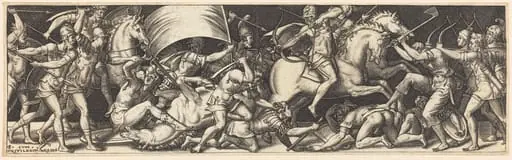 Battle of Horsemen and Foot Soldiers
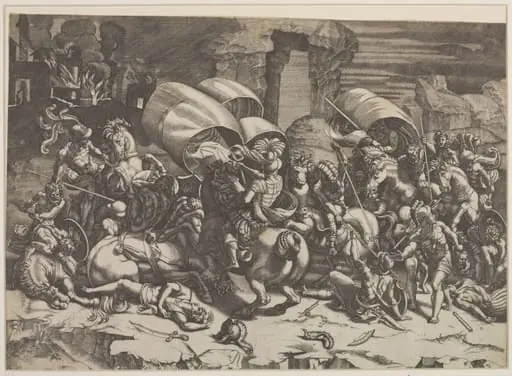 La bataille au coutelas
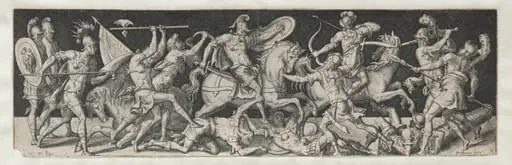 Combats and Triumphs No. 12
 Battle of the Amazons