Artwork
Battle of the Amazons
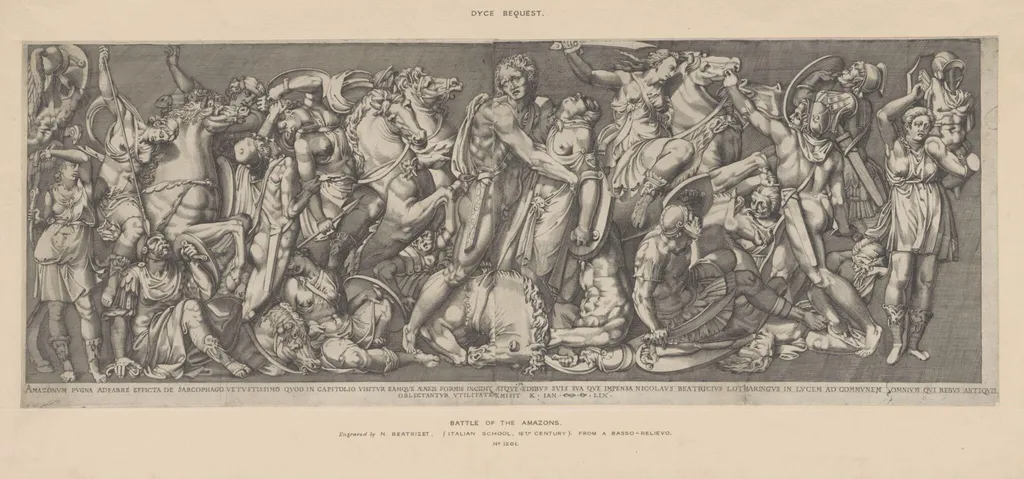
Battle of the Amazons is a print by the Renaissance artist Nicolas Beatrizet. It dates from 1520 and is held in the collection of the Victoria and Albert Museum.
About this work
Overview
Nicolas Beatrizet’s engraving *Battle of the Amazons*, dated circa 1520, presents a dynamic scene of mythic combat across two joined sheets.
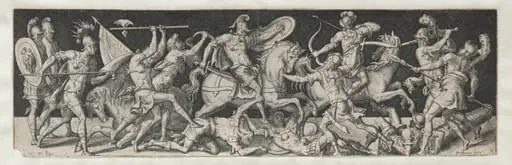
Nicolas Beatrizet’s engraving *Battle of the Amazons*, dated circa 1520, presents a dynamic scene of mythic combat across two joined sheets. Rendered in fine linear detail, the composition captures a chaotic melee of armored and nude figures engaged in violent struggle. The Latin inscription *Amazonvm pvgna* identifies the subject, while later revisions to the artist’s name reflect evolving print states. The work exemplifies Renaissance printmaking’s engagement with classical themes through technical precision.
Subject & Meaning
The scene illustrates the legendary conflict between Greek heroes and the Amazon warrior women, a mythological episode popular in antiquity. Figures are arranged in dense, overlapping groups, suggesting relentless combat. A central female figure, possibly an Amazon queen, appears to intervene in the fray, introducing a moment of tension amid the violence. The inclusion of fallen bodies and varied weaponry underscores the brutality and scale of the mythical battle, reinforcing its narrative weight.
Technique & Style
Beatrizet employed copperplate engraving to achieve sharp, controlled lines that define muscular forms and intricate armor. The contrast between dark, crowded backgrounds and sharply etched figures enhances spatial depth and movement. Fine hatching and cross-contour lines model anatomy and fabric, while the absence of tone relies entirely on line weight for dramatic effect. The composition’s density reflects a Mannerist preference for complexity over clarity, typical of prints after classical reliefs.
History & Provenance
The print derives from a classical bas-relief, likely known through Renaissance copies or casts. Beatrizet, a French engraver active in Rome, specialized in reproducing antiquities for Northern European collectors. The correction of *Lothoringvs* to *Lotharingvs* in later impressions indicates ongoing revisions to attribution, possibly to align with contemporary scholarly usage. Surviving impressions are held in major European collections, including the Victoria and Albert Museum.
Context
In early 16th-century Europe, interest in classical mythology surged among humanist circles and printmakers. Engravings like this served as both artistic study and portable antiquities for collectors. Beatrizet’s work fits within a broader trend of translating sculptural reliefs into printed form, making ancient narratives accessible beyond elite audiences. The emphasis on anatomical detail and mythological subject matter aligns with Roman artistic revival in Renaissance Italy.
Legacy
Beatrizet’s engraving contributed to the dissemination of classical themes through reproductive printmaking, influencing later artists and collectors. Its technical rigor set a standard for engraving after antiquities, and its survival in multiple states offers insight into print workshop practices. Though not widely exhibited today, it remains a documented example of how Renaissance artists mediated ancient imagery for contemporary audiences.
Artist & collection


![Castello S. Angelo di Roma [Castel Sant'Angelo in Rome], by Nicolas Beatrizet](https://artifactworldgallery.com/img/nicolas-beatrizet--castello-s-angelo-di-roma-castel-sant-angelo-in-rome--6c77d3bfe127c436-w320.webp)
![Pantheum Romanum [The Roman Pantheon], by Nicolas Beatrizet](https://artifactworldgallery.com/img/nicolas-beatrizet--pantheum-romanum-the-roman-pantheon--8069db7dd8e6f190-w320.webp)
 Combats and Triumphs No. 12
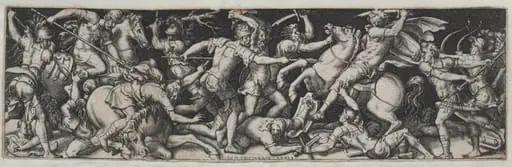 Combats and Triumphs No. 11
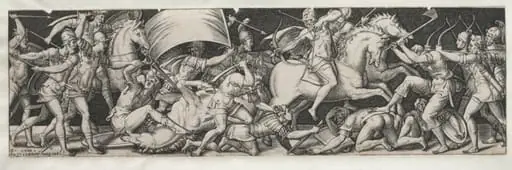 Combats and Triumphs No. 9
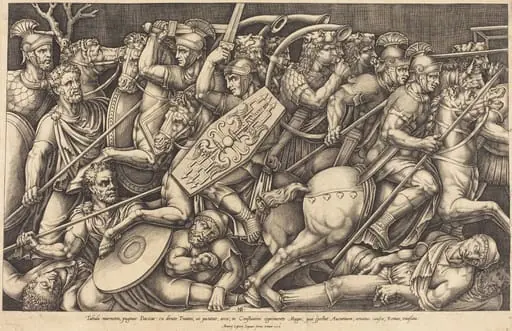 Roman Soldiers Fighting the Dacians
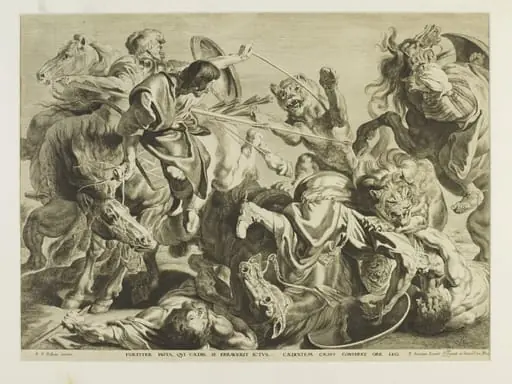 The Hunt of the Lion and Lioness
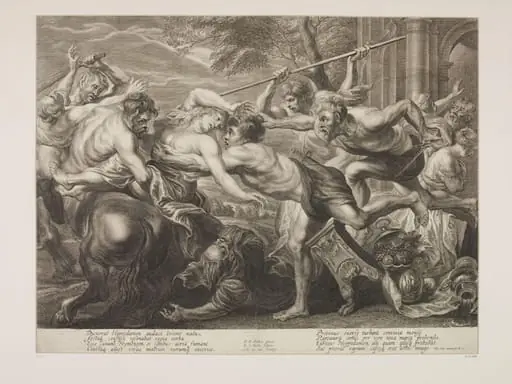 The Rape of Hippodamia
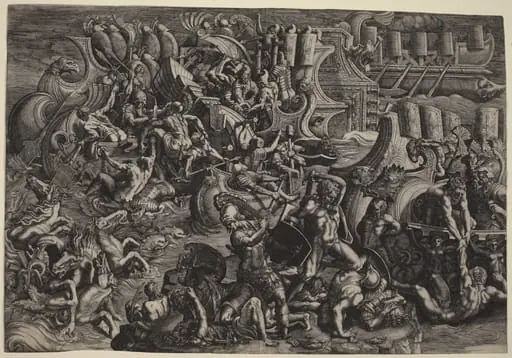 The Trojans Repulsing the Greeks
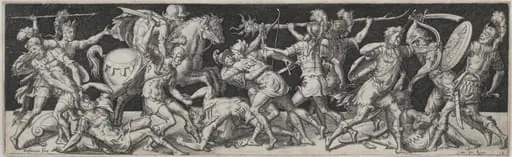 Combats and Triumphs No. 10
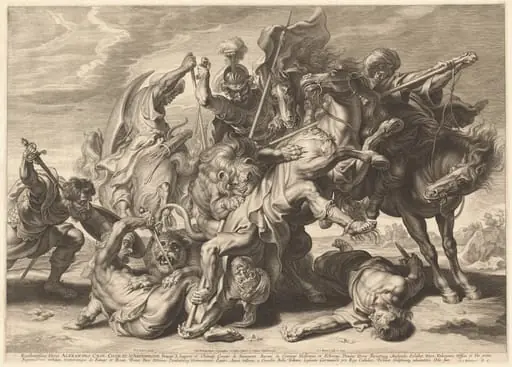 Lion Hunt
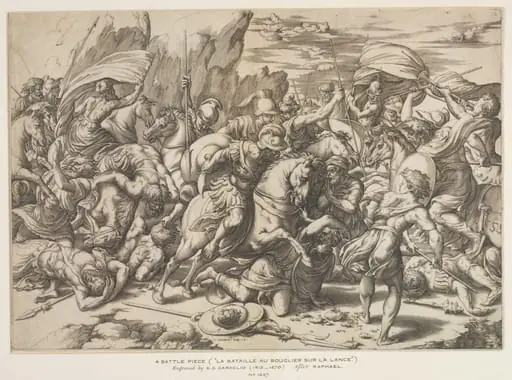 La bataille au bouclier sur la lance
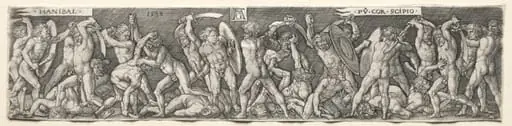 Hannibal Fighting Scipio
![The Battle of the Amazons [recto], by Enea Vico](https://artifactworldgallery.com/img/enea-vico--the-battle-of-the-amazons-recto--edbb0f782a0b23e2-w320.webp) The Battle of the Amazons [recto]
The Battle of the Amazons [recto]