Artwork
La bataille au coutelas
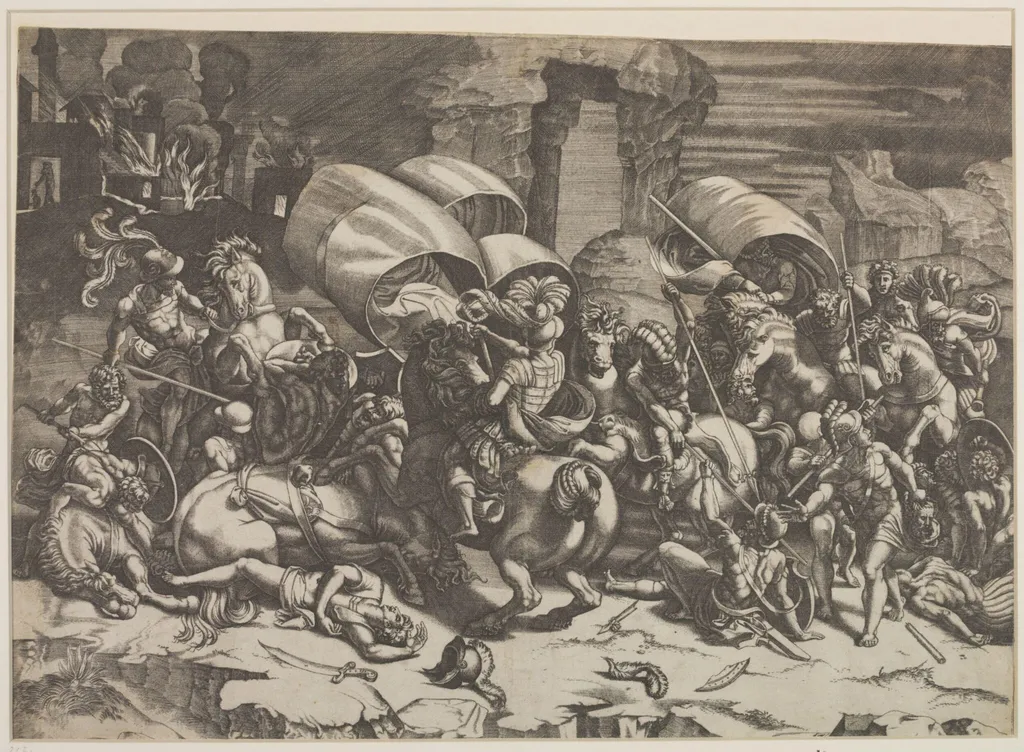
La bataille au coutelas is a print by the Renaissance artist Agostino dei Musi. It dates from 1500 and is held in the collection of the Victoria and Albert Museum.
About this work
Overview
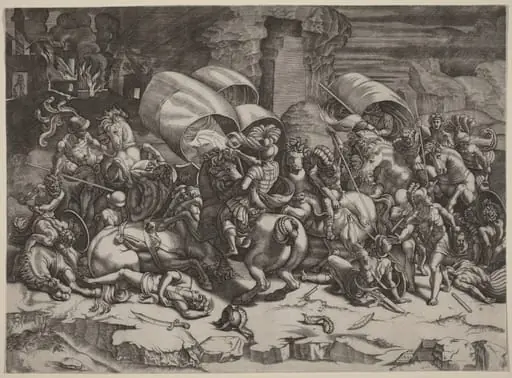
La bataille au coutelas is a printed engraving by Agostino dei Musi, created after a composition by Raphael. The work captures a violent clash between Roman and Carthaginian troops, rendered in monochrome ink on paper. Its dense composition and dynamic figures reflect the influence of High Renaissance narrative painting, adapted for the reproductive print medium of the early 16th century.
Subject & Meaning
The scene portrays a moment from the Punic Wars, likely referencing Scipio Africanus’s campaigns against Carthage. Rather than glorifying victory, the image emphasizes the brutality and confusion of close combat. Weapons, fallen bodies, and tangled limbs convey the chaos of battle, avoiding clear heroism in favor of visceral immediacy and the universal disorder of war.
Technique & Style
Dei Musi employed fine, incised lines to model forms with sharp contrasts of light and shadow, a technique known as chiaroscuro. The figures are tightly packed, their muscular poses suggesting violent motion. Background elements like crumbling architecture and a brooding sky deepen the sense of turmoil, while the absence of color focuses attention on form, gesture, and dramatic tension.
History & Provenance
Created around 1515–1520, the print was part of a broader effort to disseminate Raphael’s designs through engraving. Agostino dei Musi, a skilled reproductive artist, worked closely with Raphael’s circle in Rome. The print circulated among collectors and artists, serving as both a record of Raphael’s vision and a study tool for compositional drama in battle scenes.
Context
In early 16th-century Italy, prints like this were vital for spreading artistic ideas beyond elite patrons.
In early 16th-century Italy, prints like this were vital for spreading artistic ideas beyond elite patrons. Raphael’s designs, though painted for frescoes or tapestries, gained wider reach through engravings. This work reflects the period’s fascination with classical history and the technical ambition to translate complex paintings into detailed, reproducible images for a growing educated audience.
Legacy
Though not widely known today, the engraving exemplifies the role of reproductive prints in shaping Renaissance visual culture. It influenced later artists studying composition and movement, and remains a key example of how Raphael’s aesthetic was transmitted across media. Its emphasis on emotional intensity and structural complexity informed the development of narrative printmaking in Europe.
Artist & collection
Artist
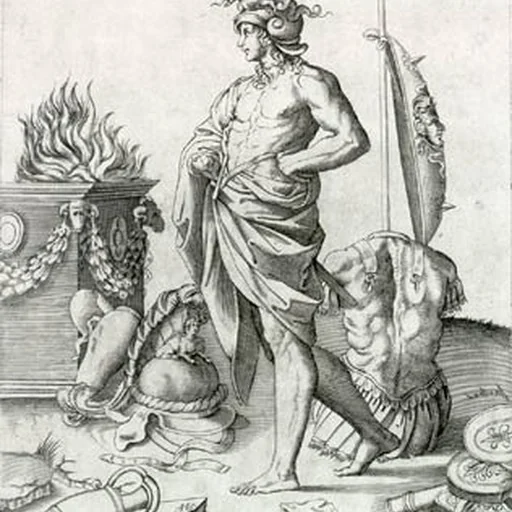
Agostino Veneziano ("Venetian Agostino"), whose real name was Agostino de' Musi (c. 1490 – c. 1540), was an important and prolific Italian engraver of the Renaissance.

 The Battle with the Cutlass
 The Victory of Scipio over Syphax
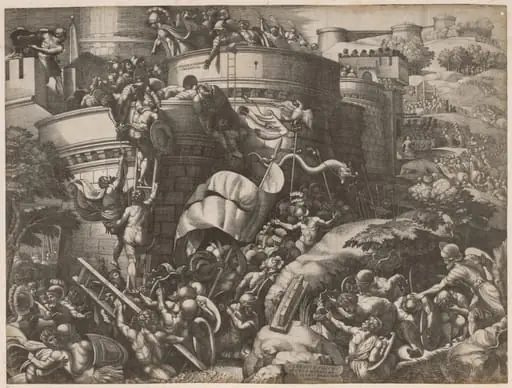 The Seige of Carthage
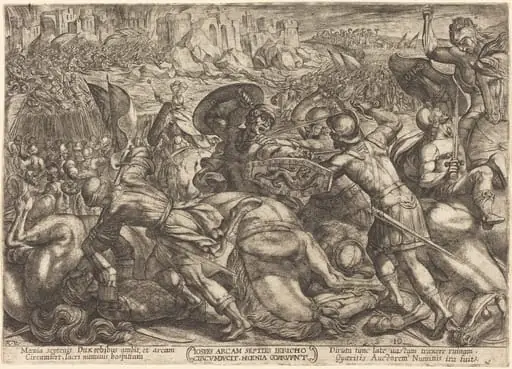 The Taking of the City of Jericho
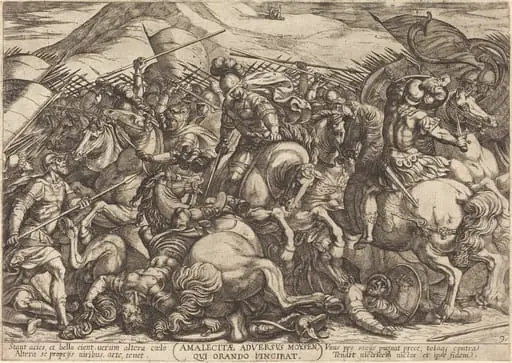 The Defeat of the Amalikits by the Hebrews
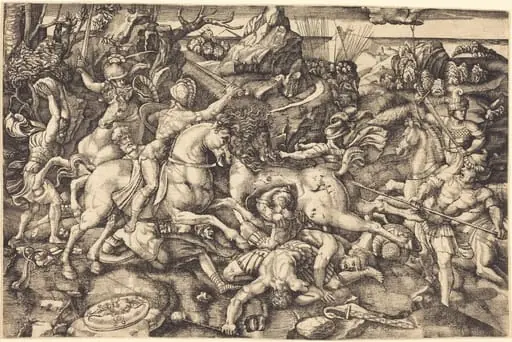 Combat between Horsemen and Foot Soldiers
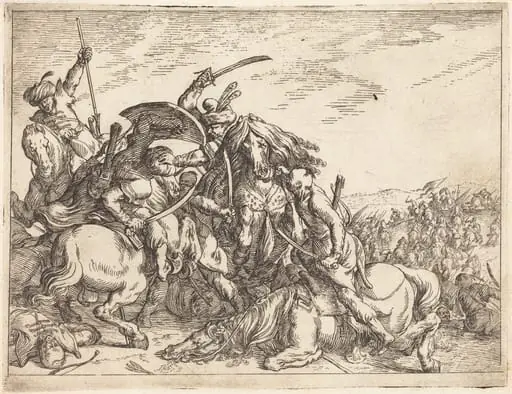 Capricci di varie battaglie
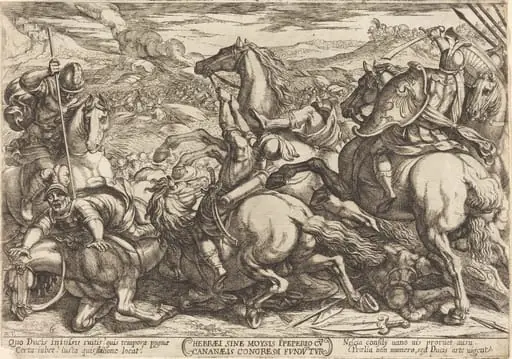 The Hebrews defeat the Canaans
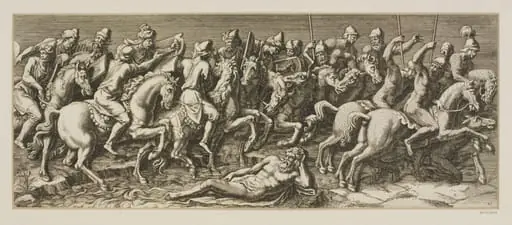 The Triumph and Entry of the Emperor Sigismund into Mantua
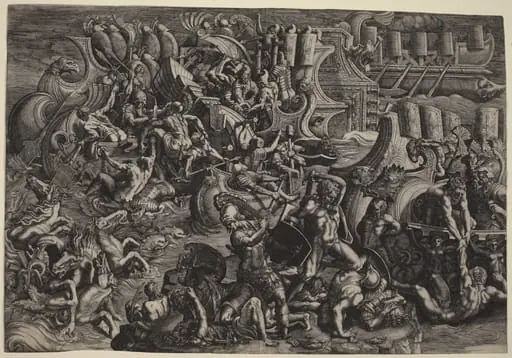 The Trojans Repulsing the Greeks
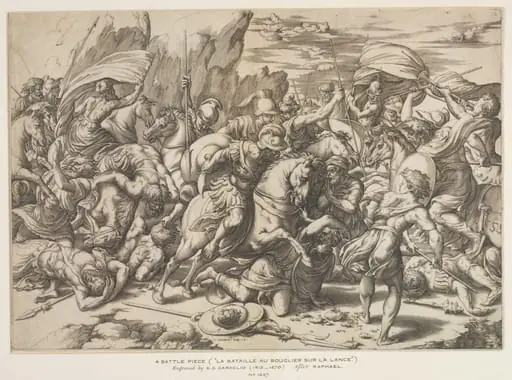 La bataille au bouclier sur la lance
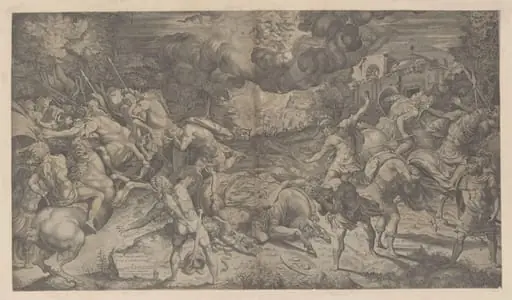 Conversion of Saul