Artwork
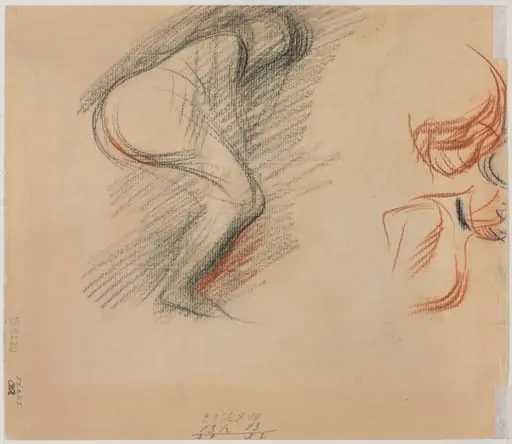
Study for a Decoration for the Salle des Fêtes of the Town Hall of Paris's 11th arrondissement
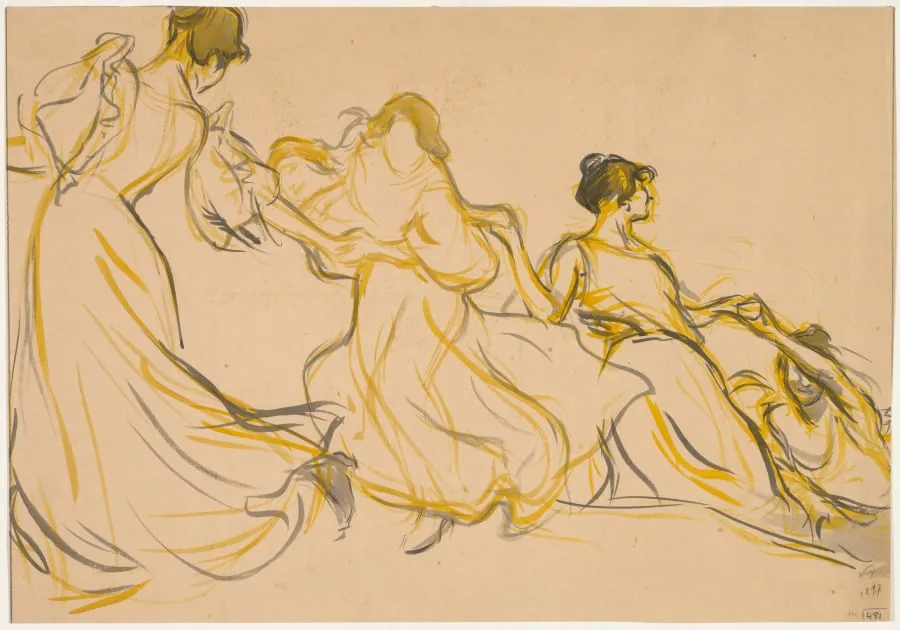
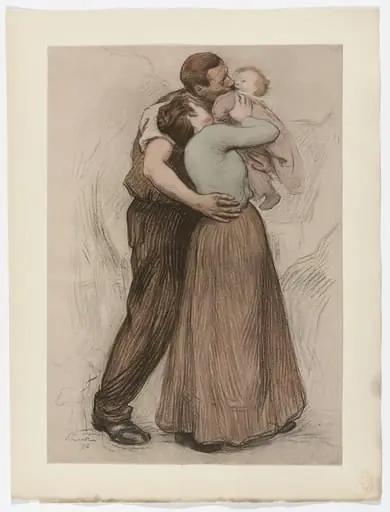
Study for a Decoration for the Salle des Fêtes of the Town Hall of Paris's 11th arrondissement is a drawing by the Impressionist artist Victor Emile Prouvé. It dates from 1897 and is held in the collection of the Cleveland Museum of Art.
About this work
Overview
This drawing by Victor Prouvé is a preparatory study for a mural commissioned for the Salle des Fêtes in Paris’s 11th arrondissement town hall.
This drawing by Victor Prouvé is a preparatory study for a mural commissioned for the Salle des Fêtes in Paris’s 11th arrondissement town hall. Executed in fine detail, it reflects his commitment to integrating artistic design into public civic spaces. As a key figure in the École de Nancy, Prouvé pursued the fusion of fine art with functional architecture, aiming to elevate everyday environments through deliberate aesthetic planning.
Subject & Meaning
The composition features stylized figures and organic forms arranged in a rhythmic, decorative pattern, suggesting themes of communal life and civic harmony. Rather than depicting a specific narrative, the design evokes an idealized sense of collective identity, aligning with the social ideals of the late 19th-century Arts and Crafts movement. The imagery serves as a visual metaphor for unity within the local community.
Technique & Style
Prouvé employed precise ink lines and subtle tonal washes to define intricate forms, blending Art Nouveau’s flowing contours with a structured, architectural sensibility. The drawing’s layered detail reveals a methodical approach to scale and spatial planning, indicating its function as a working model for a large-scale mural. His draftsmanship balances ornamental richness with compositional clarity.
History & Provenance
Created around the turn of the 20th century, the study was part of a municipal commission to beautify a public community space. Though the final mural was never executed, the drawing survived as a record of Prouvé’s civic engagement. It entered the collection of the Cleveland Museum of Art through a later acquisition, preserving a rare example of French decorative art intended for public use.
Context
Prouvé’s work emerged during a period when artists across Europe sought to dissolve boundaries between art and daily life. The École de Nancy, influenced by John Ruskin and William Morris, championed craftsmanship and accessibility. This drawing exemplifies that ethos, positioning art not as elite decoration but as an integral part of civic infrastructure and public experience.
Legacy
Though the mural was never realized, the study stands as a testament to Prouvé’s belief in art’s social function. It contributes to broader understandings of how Art Nouveau extended beyond private interiors into municipal projects. Today, it remains a significant artifact in tracing the intersection of design, democracy, and public space in fin-de-siècle France.
Artist & collection
Artist
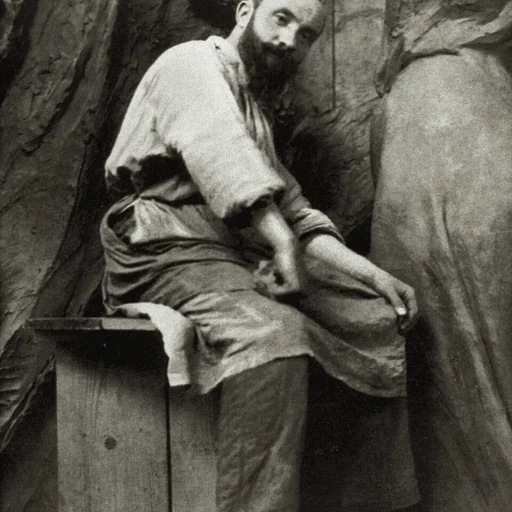
Victor Prouvé (French pronunciation: ; 13 August 1858 – 15 February 1943) was a French painter, sculptor and engraver of the Art Nouveau École de Nancy.

![The Fitting [recto], by Mary Cassatt](https://artifactworldgallery.com/img/mary-cassatt--the-fitting-recto--bdf1c75791eec1a5-w320.webp)