Artwork
Flower Girl
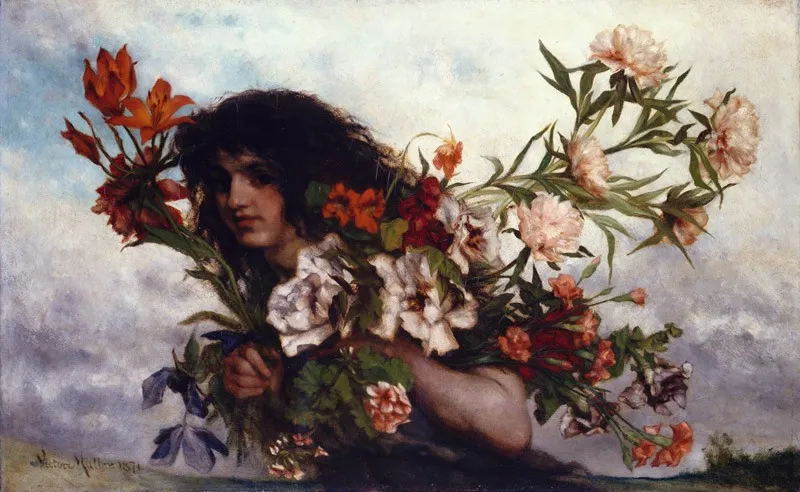
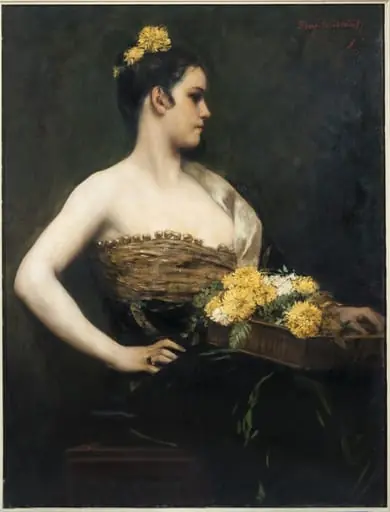
Flower Girl is an oil painting by the Realist artist Victor Müller. It dates from 1871 and is held in the collection of the Städel Museum.
About this work
Overview
The work resides in the Städel Museum in Frankfurt, where it is noted for its restrained composition and gentle atmosphere.
Painted in 1871 by Victor Müller, Flower Girl is an oil-on-canvas portrait depicting a young girl in quiet contemplation. The work resides in the Städel Museum in Frankfurt, where it is noted for its restrained composition and gentle atmosphere. Unlike grand historical or mythological subjects common in the period, this piece focuses on an ordinary moment, elevating simplicity through careful observation and soft tonal harmony.
Subject & Meaning
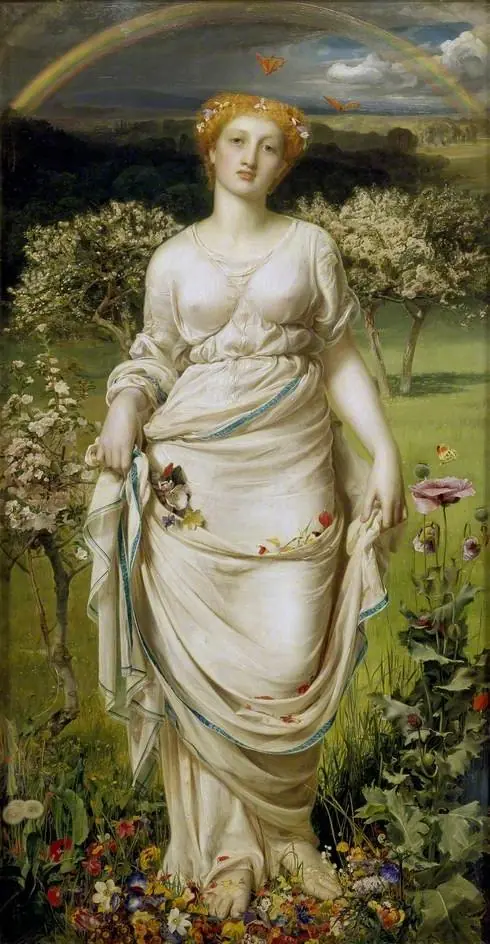
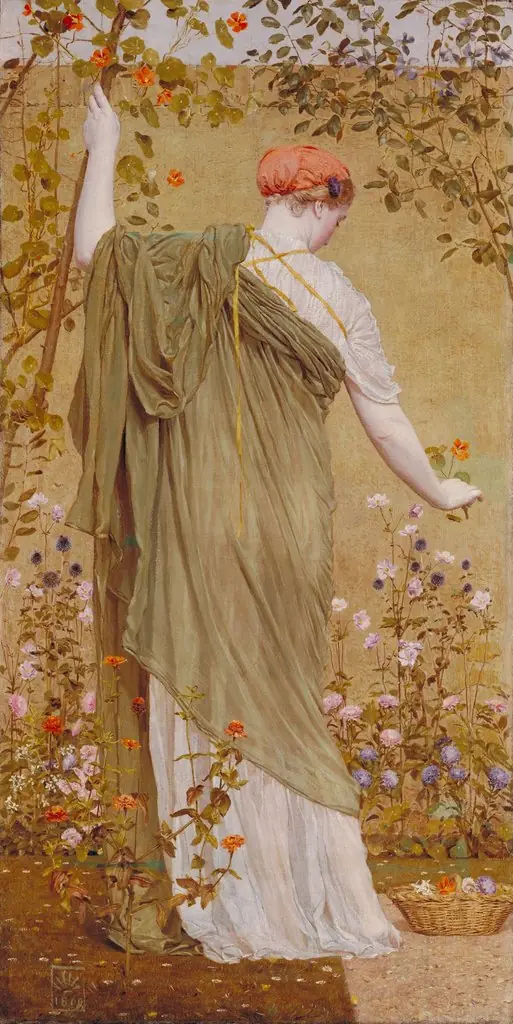
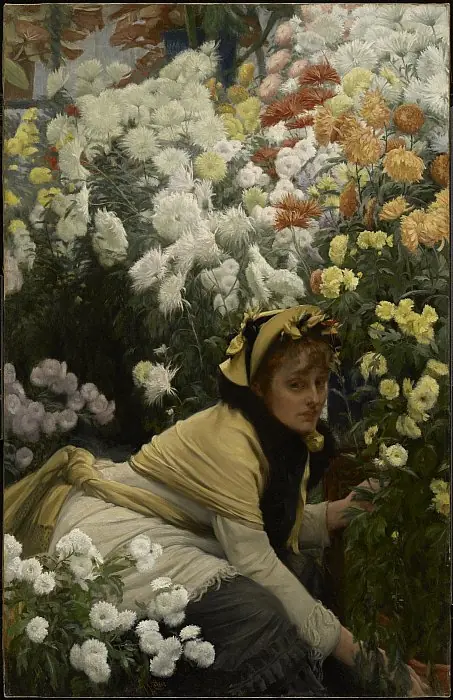
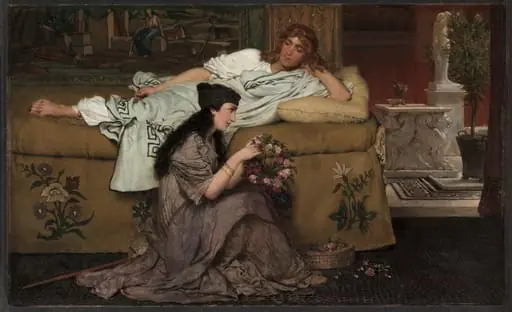
The subject is a young girl, dressed in dark clothing, holding a modest bouquet of white and pink blossoms with green foliage. Her downward gaze suggests introspection rather than performance, emphasizing a private, unguarded moment. The flowers, neither exotic nor overly ornate, imply domestic life and quiet beauty. The absence of narrative or symbolic flourish invites viewers to find meaning in stillness and the dignity of everyday presence.
Technique & Style
Müller employs a muted palette with delicate transitions between tones, avoiding sharp contrasts. The girl’s dress and the background sky are rendered with loose, atmospheric brushwork, while the flowers are more precisely defined, drawing attention to their texture and form. The composition is balanced yet informal, with the figure slightly off-center, enhancing the sense of naturalism. Light falls gently, unobtrusively, reinforcing the painting’s serene mood.
History & Provenance
Created in 1871, the painting entered the collection of the Städel Museum in Frankfurt, where it has remained since. There is no record of public exhibition prior to its acquisition, suggesting it was likely a private commission or personal study. Müller, a German artist active in the mid-to-late 19th century, produced few widely known works, and this painting stands as one of his more enduring pieces within institutional collections.
Context
Flower Girl emerged during a period when European art increasingly turned toward realism and intimate scenes of daily life. While academic traditions still dominated major exhibitions, artists like Müller explored quieter subjects—children, rural figures, domestic moments—often influenced by Dutch genre painting and early Impressionist sensibilities. This work reflects a broader shift toward valuing emotional subtlety over dramatic spectacle.
Legacy
Though not widely reproduced or celebrated in popular culture, Flower Girl continues to be studied for its understated emotional resonance and technical restraint. It represents a quiet counterpoint to the grand narratives of 19th-century art, offering a model of contemplative portraiture. Within the Städel’s collection, it remains a touchstone for discussions on the poetic potential of ordinary subjects in academic painting.
Artist & collection